
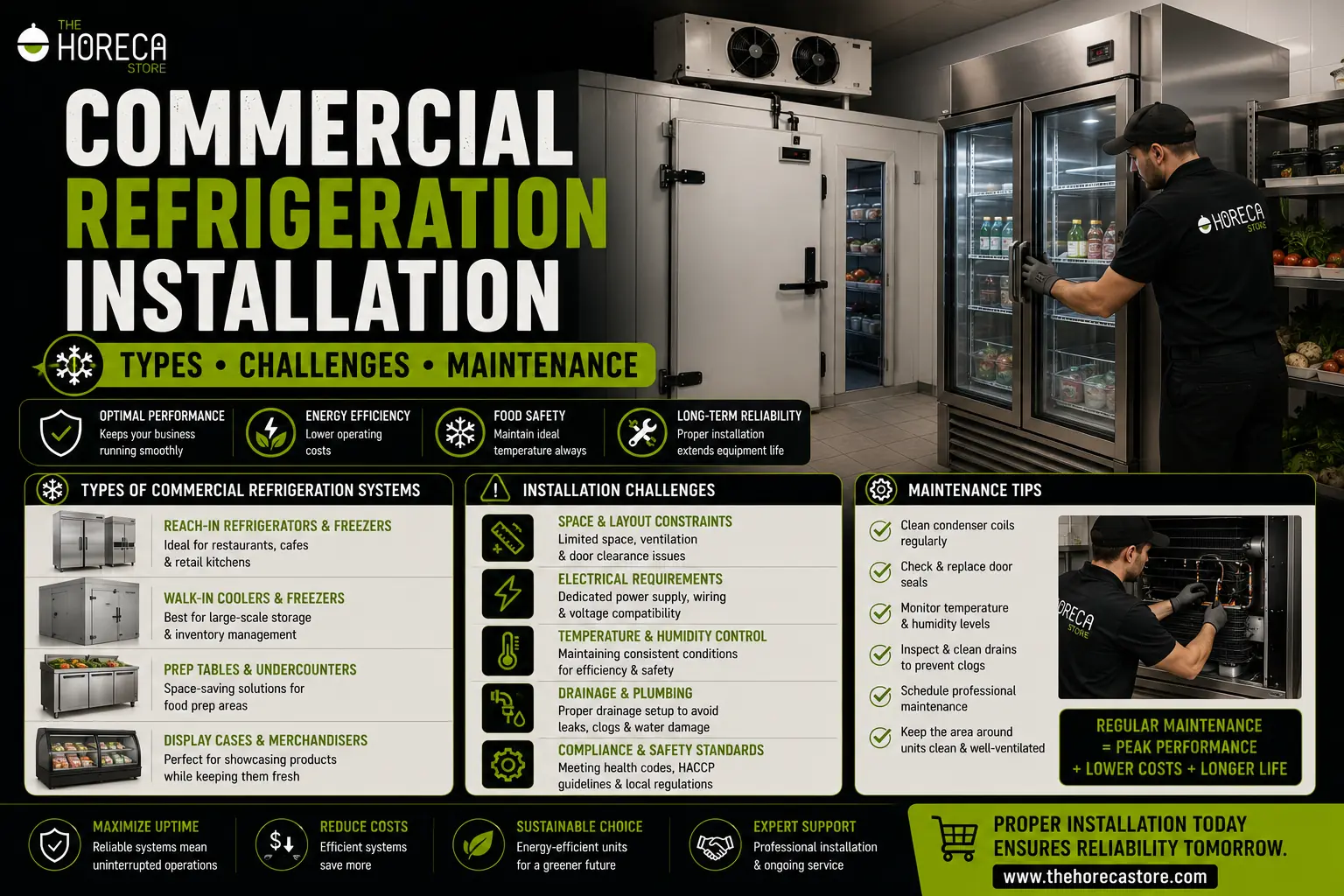
Every successful restaurant, grocery store, and food service business relies heavily on one crucial element: keeping perishables perfectly chilled. When it comes to Commercial Refrigeration Installation: Types, Challenges, and Maintenance Tips, understanding the nuances of these heavy-duty systems can save your business thousands of dollars in spoiled inventory, health code violations, and exorbitant energy bills.
Whether you are building a new commercial kitchen from scratch or upgrading aging equipment, navigating the world of commercial cooling requires careful planning. Let's explore everything you need to know to make the smartest decisions for your facility.
Understanding the Main Types of Commercial Refrigeration
Before you purchase any equipment, you must identify which type of cooling system aligns with your operational needs and physical space.
Remote vs Self-Contained Refrigeration Systems
One of the most foundational decisions you will make is choosing between remote vs self-contained refrigeration systems.
Self-Contained Units: In these systems, all cooling components (the compressor, condenser, and evaporator) are housed within the cabinet itself. They are incredibly popular because they are easy to install, simple to relocate, and require less upfront capital. However, they vent heat directly into your kitchen and can be quite noisy.
Remote Systems: For larger operations, remote systems are often preferred. The condenser is placed outside the building (usually on the roof), while the cold storage remains inside. This setup keeps the kitchen significantly cooler and quieter, though the installation process is more complex and involves running refrigerant lines through the building structure.
Reach-In vs Walk-In Units
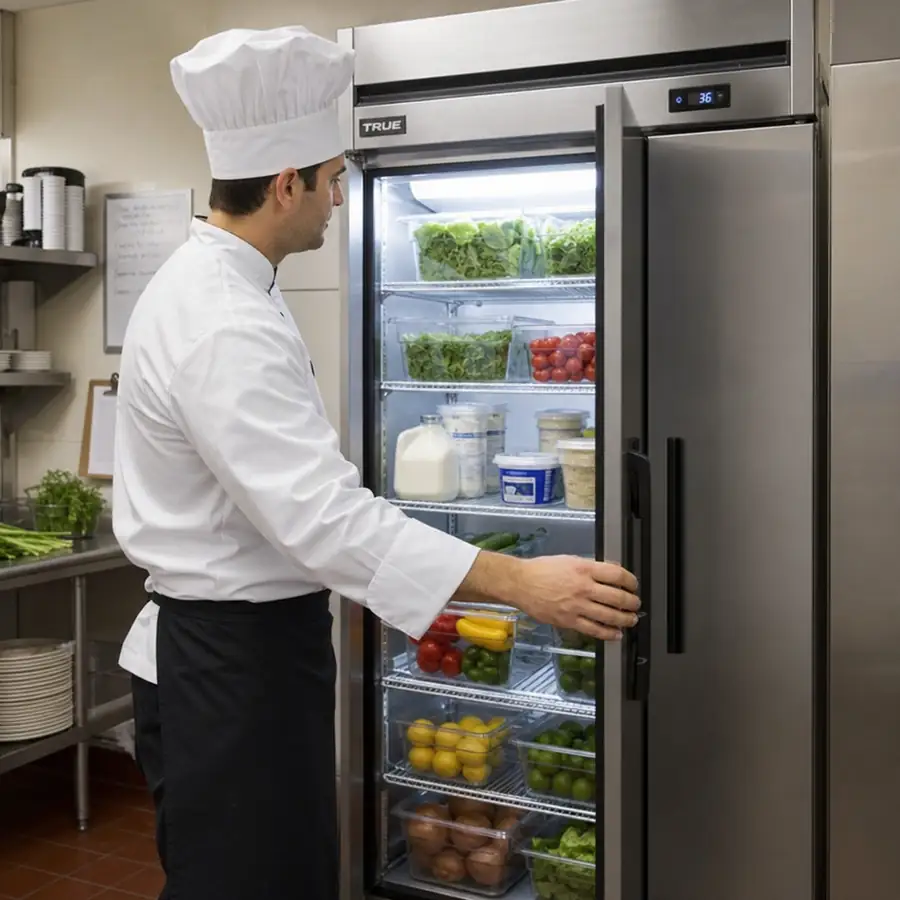
Facility layout and inventory volume will dictate your choice of storage style. Understanding reach-in vs walk-in freezer benefits is essential for optimizing your floor space. Reach-in refrigerators are perfect for the prep line, granting chefs quick access to frequently used ingredients without breaking their workflow.
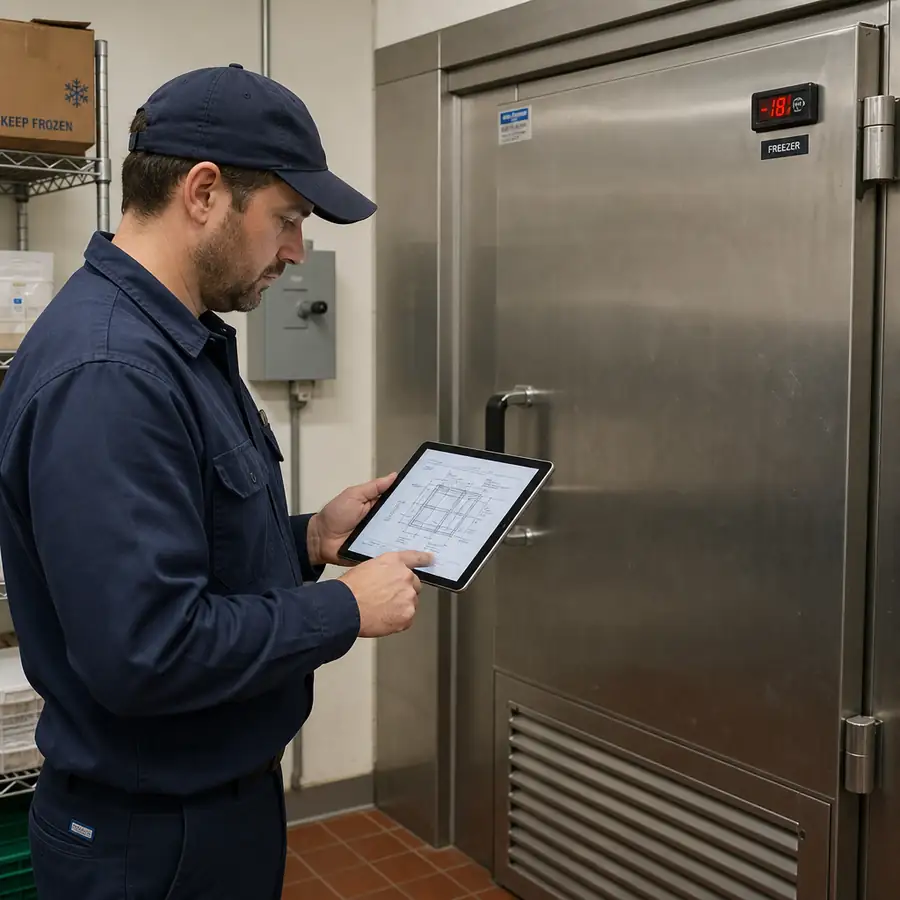
Conversely, walk-ins provide massive bulk storage for high-volume operations. Because walk-ins are effectively built-in rooms, they require meticulous planning. Consulting a detailed walk-in cooler installation guide prior to construction ensures you properly account for specialized insulation, reinforced flooring requirements, and adequate structural support.
Essential Steps Before Installation
Preparation is the key to a seamless installation process. Skipping these foundational steps can lead to inefficiencies down the line.
Proper Sizing and Brand Selection
Never guess the size of your cooling unit. Utilizing a professional refrigeration system sizing guide helps you determine the exact BTU (British Thermal Unit) capacity required for your specific inventory volume and ambient room temperature. Oversized units tend to short-cycle, wasting energy, while undersized units run constantly and struggle to maintain food-safe temperatures.
Additionally, not all equipment is created equal. Take the time to research the best commercial refrigeration brands for restaurants. High-quality brands often offer better warranties, more accessible replacement parts, and superior energy efficiency ratings.
Finding the Right Professional
Even the best equipment will fail if installed incorrectly. Therefore, choosing a refrigeration contractor is just as important as choosing the fridge itself. Look for licensed professionals with a proven track record in commercial food service. Ask for references, verify their insurance, and ensure they offer emergency support after the installation is complete.
Overcoming Common Installation Challenges
Even with a top-tier contractor, commercial refrigeration installation presents unique hurdles that must be managed proactively.
Airflow Management: A common mistake in cramped kitchens is blocking the unit’s vents. Optimizing commercial refrigeration airflow is critical to the lifespan of the equipment. Units placed too close to walls, or situated right next to heat-generating appliances like ovens and fryers, will force the compressor into overdrive, leading to premature mechanical failure.
System Integration: Poor commercial HVAC and refrigeration integration can completely disrupt your building's climate control. Refrigerators generate a substantial amount of heat. If your overall HVAC system isn't balanced to handle this excess exhaust, your kitchen will become unbearably hot, resulting in miserable staff and skyrocketing air conditioning costs.
Regulatory Compliance: The cooling industry is heavily regulated to protect the environment. You must adhere strictly to EPA regulations for commercial coolants. The Environmental Protection Agency frequently updates the approved lists of refrigerants, actively phasing out ozone-depleting substances and high global-warming-potential gases. Your contractor must guarantee that the coolants used in your new system are 100% compliant with current federal laws.
Maintenance Tips for Longevity and Efficiency
Once your setup is running, proactive care becomes your first line of defense against costly breakdowns. Establishing a rigorous preventative maintenance checklist for businesses is the most effective way to protect your investment.
Clean the Condenser Coils
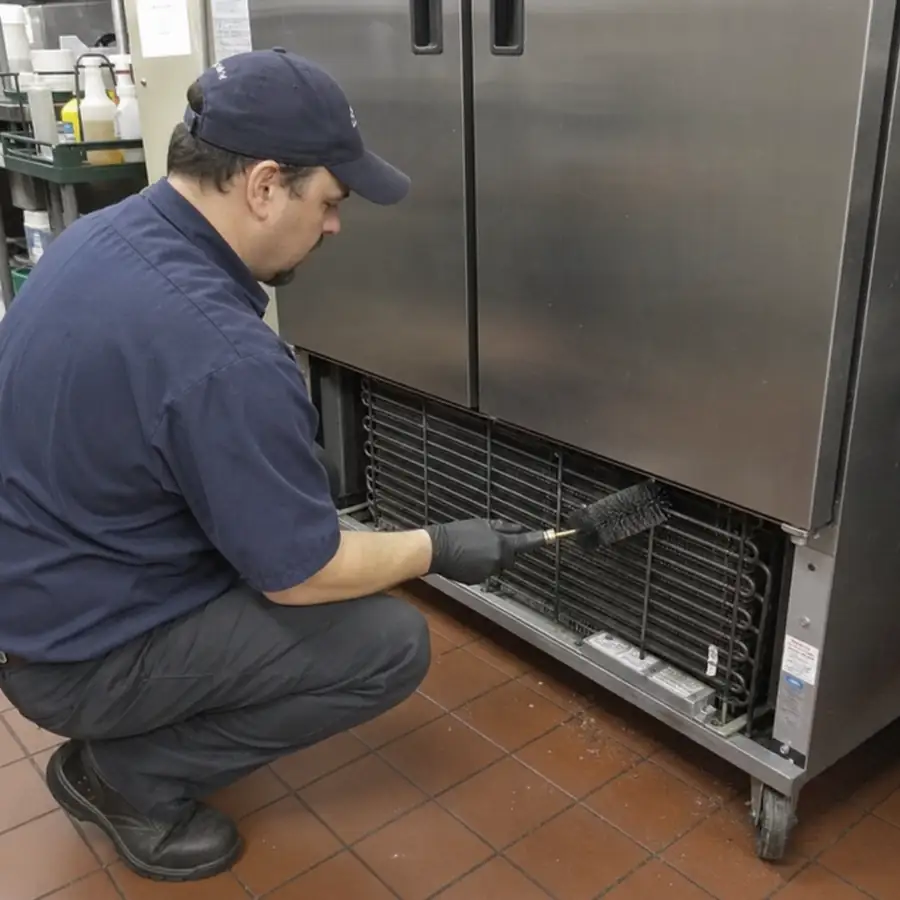
Learning how to maintain commercial refrigerator coils is a fundamental skill for any facility manager. Over time, dust, grease, and debris build up on the condenser coils, acting as an insulating blanket that restricts heat transfer. Vacuum and gently brush these coils at least once a month to keep the compressor running smoothly.
Monitor Internal Temperatures
Don't rely solely on manual thermometer checks. Investing in advanced commercial freezer temperature monitoring systems allows you to track internal temperatures 24/7. These smart, cloud-based systems log data automatically and send instant alerts straight to your smartphone if the temperature drops below safe thresholds, preventing catastrophic overnight food spoilage.
Watch for Refrigerant Leaks
Train your kitchen staff to recognize the early signs of commercial refrigerant leaks. Symptoms include faint hissing sounds near the compressor, warmer-than-usual cabinet temperatures, longer cooling cycles, or unexpectedly high energy bills. Catching leaks early not only protects the environment but also saves your compressor from burning out.
Prioritize Energy Efficiency
Routine maintenance directly impacts your industrial cooling system energy efficiency. Simple, inexpensive tasks-such as wiping down door gaskets daily with warm soapy water, replacing torn seals immediately, and ensuring auto-closing door hinges are properly calibrated-can drastically reduce power consumption by keeping the cold air exactly where it belongs.
Budgeting for the Future: Repair Costs
No matter how well you care for your equipment, parts eventually wear out. Having a baseline understanding of common commercial refrigeration repair costs helps you budget effectively for the future. Minor fixes, such as replacing a faulty thermostat, swapping out a torn door seal, or clearing a clogged drain line, might only cost a few hundred dollars.
However, major repairs-like replacing a burnt-out compressor or tracking down and sealing a severe refrigerant leak in a remote system-can easily run into the thousands. This stark contrast in pricing highlights exactly why daily upkeep and scheduled professional maintenance should be viewed as a vital investment rather than an operational expense.
Shop Commercial Refrigeration at The Horeca Store
Looking for reliable refrigeration for your restaurant or commercial kitchen? The Horeca Store offers a wide range of commercial refrigerators, freezers, undercounter refrigeration, prep tables, backbar coolers, and other foodservice equipment designed for professional operations. Explore The Horeca Store's refrigeration collection to find equipment that fits your kitchen space, storage requirements, and daily workload.
Final Thoughts
Mastering the intricacies of commercial refrigeration installation: types, challenges, and maintenance tips is absolutely vital for the success and sustainability of your food-reliant business. By carefully selecting the appropriately sized equipment, partnering with an experienced installation contractor, and adhering to a strict preventative maintenance schedule, you can ensure your perishables stay safe and your overhead costs stay manageable. Treat your refrigeration system as the beating heart of your kitchen, and it will serve your business reliably for years to come.