
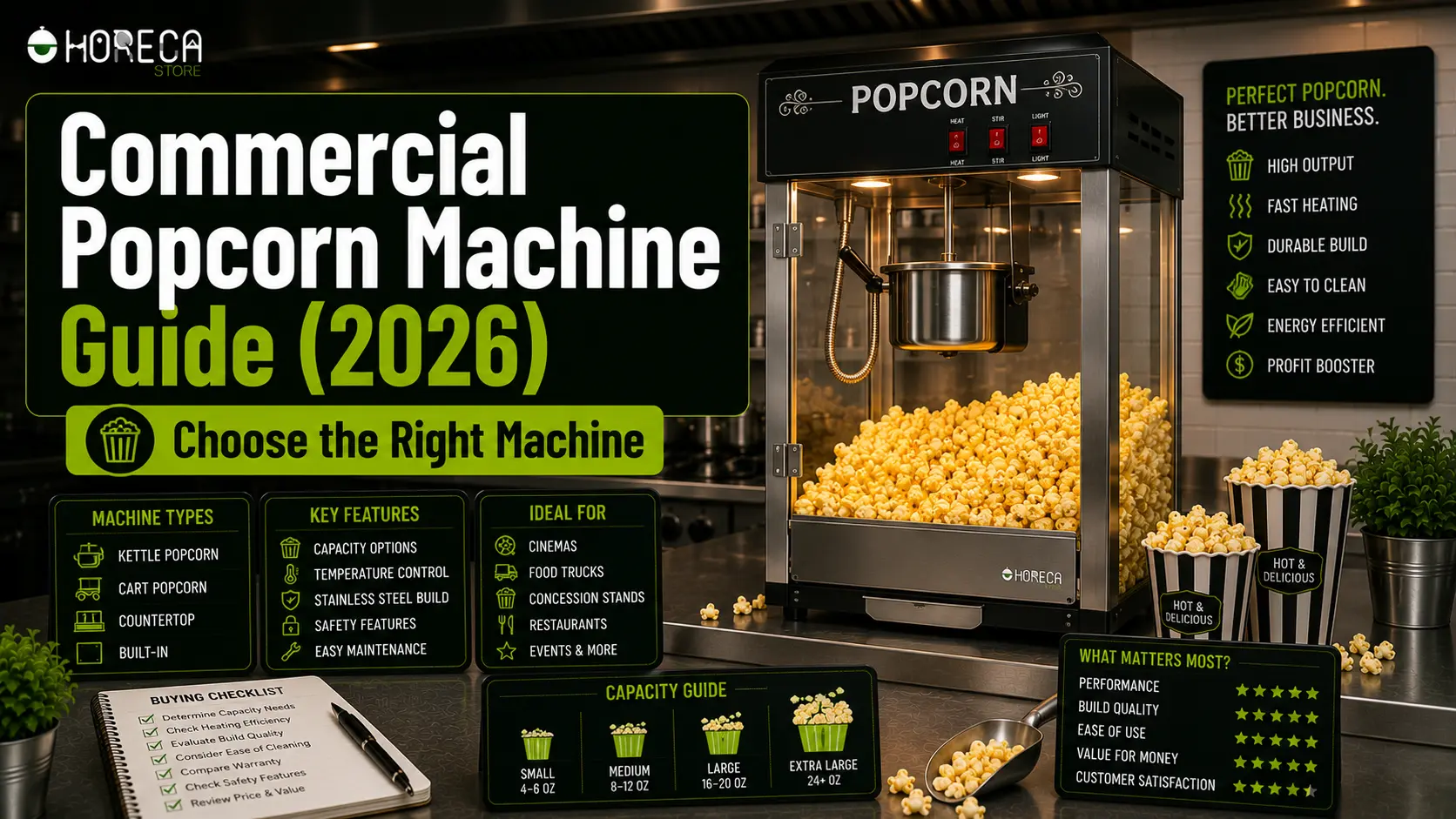
If your popcorn program is moving beyond occasional batches, the right machine can improve speed, consistency, food safety, and customer experience. The wrong machine can create bottlenecks, cleaning headaches, electrical surprises, and uneven product quality. This commercial popcorn machine buying guide 2026 walks through the practical decisions that matter before you buy: kettle size, production volume, power, sanitation, merchandising, operator workflow, and long-term cost.
Before choosing a model, confirm the requirements of your local health department, fire marshal, building department, and electrical contractor. In the U.S., the FDA’s 2022 Food Code remains the most recent full edition, and it recognizes food equipment certified or classified for sanitation by an ANSI-accredited certification program as meeting key equipment requirements. NSF/ANSI 4 is one of the relevant standards for commercial cooking, rethermalization, hot food holding, and transport equipment.
Start With Your Use Case, Not the Machine
A commercial popcorn machine should match the way popcorn will actually be sold or served. A school concession stand serving short rushes needs different equipment than a cinema, grocery store, stadium kiosk, office amenity station, or gourmet popcorn shop.
Ask these questions first:
- How many servings do you need during your busiest hour?
- Will the machine run daily, weekly, seasonally, or only for events?
- Will trained staff operate it, or does it need to be simple for rotating employees?
- Do you need countertop equipment, a cart, a base cabinet, or a back-counter setup?
- Will popcorn be scooped by staff, dispensed by customers, bagged in advance, or used for flavored products?
- Do you have enough electrical capacity for the model you want?
- Will the machine be visible to customers as part of merchandising?
Buying for your peak period is usually safer than buying for your average period. Popcorn is impulse-driven, and long lines can quickly reduce sales if the machine cannot recover fast enough.
Understand Kettle Size
Kettle size is one of the most important specifications, but it is often misunderstood. In general, kettle size refers to how many ounces of kernels the kettle can pop in one cycle. Cretors explains that a 6-ounce popcorn machine pops six ounces of popcorn in one popping cycle of about three minutes.
As a broad sizing framework:
- 4- to 8-ounce machines work best for small venues, low-volume counters, tasting stations, breakrooms, boutique retail, and light concession use.
- 12- to 16-ounce machines fit many schools, bars, small cinemas, churches, dealerships, corporate events, and standard concession stands.
- 20-ounce and larger machines are better suited for high-traffic theaters, arenas, stadiums, large event venues, and serious popcorn retailers.
- 32- to 60-ounce production machines are typically for large-volume operations where popcorn is made continuously or in bulk.
Manufacturers publish different production assumptions, so compare output using the same measurement. For example, Gold Medal describes 4-, 6-, and 8-ounce poppers as producing roughly 60 to 160 ounces per hour, 12/14-ounce machines as producing up to 210 ounces per hour, 16-ounce machines as producing roughly 240 to 320 ounces per hour, and larger 32- to 60-ounce poppers for quantity-focused production.
Choose the Right Machine Style
Commercial popcorn machines come in several formats. The best choice depends on space, visibility, staff workflow, and sales volume.
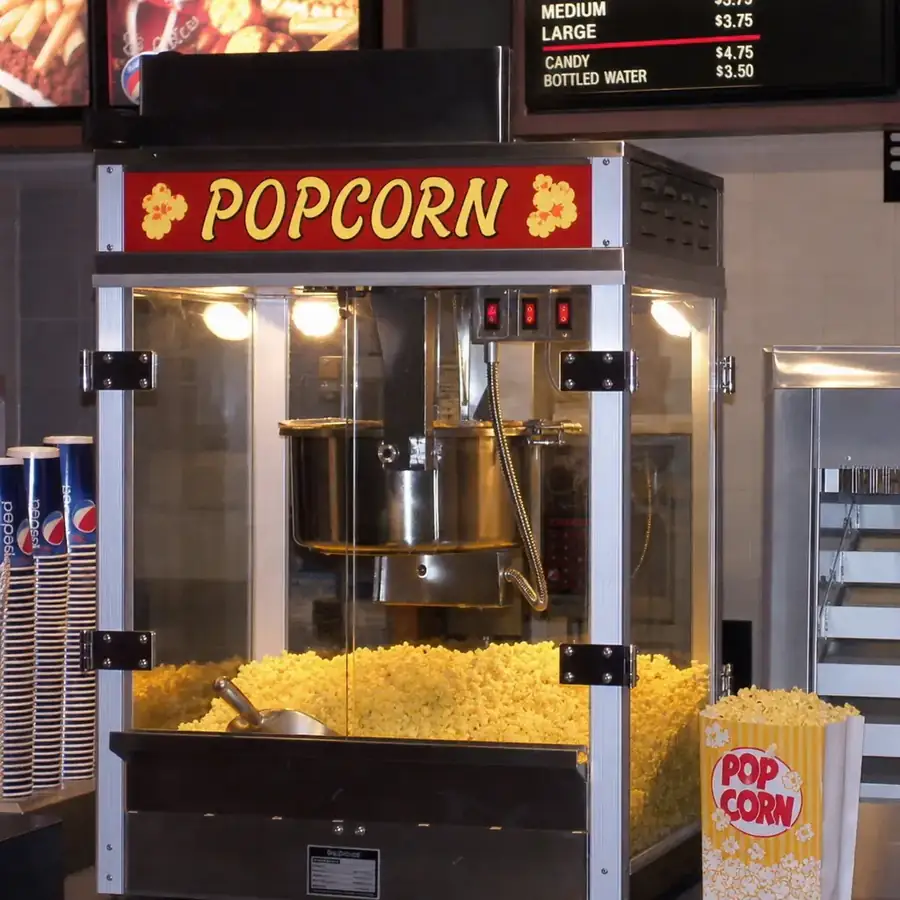
Countertop poppers are compact and familiar. They are easy to place near a register, bar, snack counter, or concession window. They work well when staff can scoop popcorn directly from the cabinet.
Cart-mounted poppers add mobility and presentation. They are useful for schools, events, hotels, theaters, and venues that need a classic popcorn look without building a permanent concession counter.
Base cabinet machines provide storage for bags, oil, kernels, scoops, and cleaning supplies. They also raise the machine to a more comfortable working height.
Back-counter or self-serve systems are useful when the operation wants faster dispensing, portion control, or reduced staff contact. Some modern commercial systems combine a popper with a dispensing format for convenience-store, stadium, grocery, or retail environments.
High-output production poppers are designed for continuous popping, bulk bagging, or peak-demand environments. These often require more planning for power, space, ventilation, heat, and staff training.
Check Electrical Requirements Early
Electrical compatibility can decide which machine is realistic. Smaller and mid-size commercial poppers may run on standard 120V circuits, but higher-output equipment can require dedicated circuits, higher amperage, or 208/240V service. Gold Medal’s published examples show smaller commercial categories using 120V 15-amp plugs, while some larger models specify 208/240V power and higher-amperage plugs.
Do not assume an outlet is sufficient because the plug appears familiar. Before ordering, verify:
- Voltage
- Amperage
- Plug type
- Dedicated circuit requirements
- Cord location
- Clearance around the machine
- Whether your venue allows the equipment in that location
If the machine is for a workplace, look for a recognized electrical safety certification mark appropriate to the equipment. OSHA’s Nationally Recognized Testing Laboratory program lists recognized labs, and each NRTL uses its own certification mark to show conformance to applicable product safety standards within its scope.
Prioritize Sanitation and Cleanability
Popcorn machines handle oil, salt, kernels, steam, and residue. Over time, poor cleanability leads to off-flavors, smoke, stuck doors, cloudy glass, pest attraction, and unhappy inspectors.
Look for:
- Removable kettles or accessible kettle interiors
- Smooth, durable, cleanable food-contact areas
- Stainless steel where appropriate
- Removable crumb trays
- Easy-access doors and panels
- Simple oil-line cleaning if using an oil pump
- Clear cleaning instructions from the manufacturer
- Replacement parts for wear items
The FDA Food Code emphasizes that food-contact and non-food-contact surfaces should be smooth, durable, and easily cleanable, which is why sanitation-focused design matters before the first batch is ever popped.
Look Beyond the Kettle: Features That Matter
A larger kettle is not always better if the machine lacks the features your staff needs. Important buying factors include:
- Heat control: Better controls help reduce scorching and improve batch consistency.
- Stirring mechanism: A dependable agitator supports even popping and helps prevent burning.
- Heated deck or warming area: Keeps finished popcorn crisp and ready to serve.
- Cabinet lighting and signage: Improves visibility and impulse appeal.
- Exhaust or filtration features: Helps manage steam, aroma, and cabinet conditions.
- Oil pump compatibility: Speeds repetitive popping and improves portion consistency.
- Half-batch capability: Useful when demand changes throughout the day.
- Auto shutoff or idle controls: Helpful when staff are busy or equipment sits between rushes.
- Operator-friendly controls: Reduce training time and mistakes.
For high-volume venues, also consider reporting, recipe settings, integrated fire suppression options, and service diagnostics where available. Some commercial popcorn systems include advanced controls, oil monitoring, recipe features, and built-in fire suppression options for code-sensitive environments.
Plan the Full Cost of Ownership
The purchase price is only one part of the investment. A realistic budget should include:
- Machine or popper cabinet
- Cart, base, stand, or counter modifications
- Electrical work
- Freight and installation
- Kernels, oil, salt, seasoning, bags, tubs, and scoops
- Cleaning products approved for the equipment
- Replacement parts such as bulbs, stirrer components, doors, decals, filters, or kettle parts
- Preventive maintenance
- Staff training
- Permits or inspections, where required
Also consider yield and waste. A machine that is too small may force staff to rush batches. A machine that is too large may encourage overproduction during slow periods. The goal is not simply maximum capacity; it is profitable capacity at the right times.
Match the Machine to Your Menu
If you only sell classic butter-style popcorn, a standard commercial popper may be enough. If you plan to sell caramel corn, cheddar popcorn, kettle corn, candy-coated popcorn, or rotating gourmet flavors, you may need additional equipment.
Flavor programs often require:
- Separate mixing or coating equipment
- Cooling tables or trays
- Seasoning tumblers
- Food-safe storage bins
- Packaging stations
- Labeling supplies
- Allergen controls
- Cleaning procedures between flavors
Do not assume one popper can do every recipe well. Sweet coatings, oils, sugars, and powders can change cleaning needs and may require equipment specifically designed for that process.
Common Buying Mistakes to Avoid
Many buyers choose too quickly because popcorn machines look simple. Avoid these mistakes:
- Buying a residential machine for commercial daily use
- Choosing by cabinet appearance instead of output
- Ignoring electrical requirements until delivery
- Forgetting about cleaning time
- Underestimating peak-hour demand
- Buying a machine with no local service support
- Choosing a size that cannot fit the counter, cart, or concession window
- Failing to check local health, fire, and building requirements
- Overlooking supply storage for kernels, oil, bags, and tubs
- Assuming all certification marks mean the same thing
A good buying process should include spec-sheet review, space measurement, service questions, and confirmation with local authorities when the machine will be used in a regulated foodservice environment.
Final Checklist Before You Buy
Before placing an order, confirm:
- Your busiest-hour serving target
- The kettle size and expected hourly output
- Machine dimensions and door swing
- Counter, cart, or base compatibility
- Electrical service and plug type
- Sanitation certification expectations
- Electrical safety listing or certification mark
- Cleaning procedure and required tools
- Availability of replacement parts
- Warranty coverage and service process
- Staff training needs
- Packaging and ingredient storage
- Fire, ventilation, and local inspection requirements
Bottom Line
The best commercial popcorn machine is the one that fits your volume, space, staff, menu, and compliance needs without creating hidden operational costs. Use this commercial popcorn machine buying guide 2026 as a planning framework: estimate peak demand, choose the right kettle size, verify power and safety requirements, prioritize cleanability, and buy from a supplier that can support the machine after delivery. A well-matched popper does more than make popcorn; it helps your concession program run faster, cleaner, and more profitably.
Commercial Popcorn Machine Buying Guide 2026
The Horeca Store a commercial popcorn machine is a valuable addition for cinemas, concession stands, restaurants, cafés, amusement venues, and event businesses looking to serve fresh popcorn quickly and efficiently. When choosing a popcorn machine, consider factors such as kettle capacity, production output, heating performance, durability, ease of cleaning, and display design. The right machine helps maintain consistent quality while handling high customer demand during busy periods.
Investing in reliable popcorn equipment can improve service speed, reduce preparation time, and create additional revenue opportunities. The Horeca Store offers a wide range of commercial foodservice equipment, including popcorn machines, cooking appliances, beverage equipment, and restaurant supplies designed for professional operations. With quality products, competitive pricing, and dependable support, The Horeca Store helps businesses select equipment that delivers performance and long-term value.