

Commercial Pizza Ovens for Pizzerias, Restaurants & Food Trucks are purpose-built cooking systems designed to bake pizzas consistently in a business setting, whether that means a full-service pizzeria, a busy restaurant kitchen, a bar menu, or a mobile food truck. The right oven depends on your pizza style, hourly volume, available space, utilities, ventilation, labor model, and budget-not just the highest temperature or the biggest deck.
This pizza oven buying guide walks through the main pizza oven types, the specifications that matter, and how to match oven features to real operating needs. Use it as a practical pizza oven comparison before reading pizza oven reviews, requesting quotes, or choosing commercial pizza equipment for a new or growing operation.
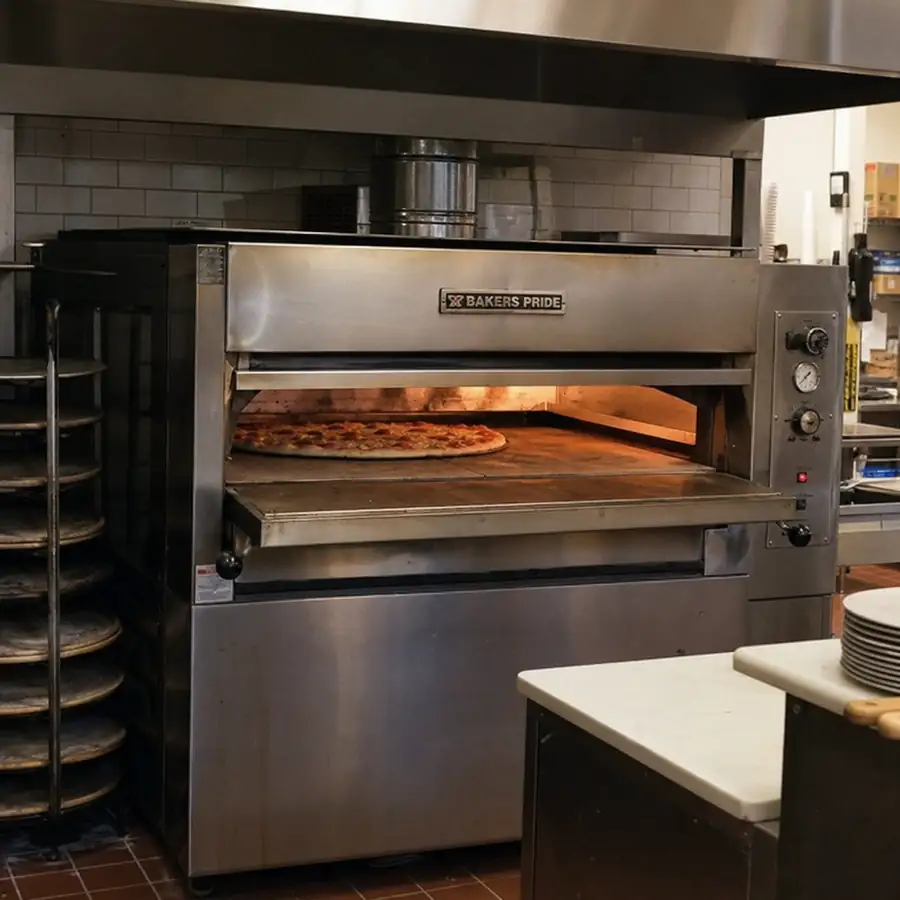
What are commercial pizza ovens?
Commercial pizza ovens are heavy-duty cooking ovens built for repeated, foodservice-grade use. Compared with residential ovens, pizza ovens commercial operators use are designed around faster recovery, higher output, consistent heat transfer, durable components, and service access.
The category includes deck ovens, conveyor ovens, countertop units, high-speed ventless ovens, and specialty gas, electric, or solid-fuel designs. Some are best for artisan pies with a crisp hearth bake. Others are built for predictable, repeatable output where staff place pizzas on a belt and the oven controls time, airflow, and temperature.
The main pizza oven types and where they fit
Choosing between pizza oven types is mostly a choice between craft control, throughput, footprint, and labor simplicity. No single format is automatically the best commercial pizza oven for every kitchen.
Deck pizza ovens
Deck ovens use a heated baking surface, often stone, ceramic, or steel, to deliver strong bottom heat. They suit pizzerias, bakeries, Italian restaurants, and operators who want control over crust color, bake position, and product finish.
Bakers Pride offers commercial countertop deck ovens with independent top and bottom heat controls, a useful feature when operators need to balance cheese melt with crust development. Its gas deck and countertop lines are common examples of industrial pizza ovens built around hearth-style baking rather than belt-driven automation.
Conveyor pizza ovens
Conveyor pizza ovens commercial teams use are built for consistency and volume. Dough enters one side, travels through a heated chamber, and exits at the other side after a controlled bake time.
This format works well for delivery-focused pizzerias, QSRs, campuses, entertainment venues, and multi-unit brands because it reduces guesswork. Middleby Marshall describes its conveyor systems as focused on faster cooking speeds, consistent baking, productivity, labor reduction, and energy savings; its PS360 line is available in gas or electric versions.
Countertop and compact ovens
Commercial countertop pizza ovens are designed for smaller spaces, secondary menus, slice reheating, cafes, bars, kiosks, and food trucks. They are usually easier to place than full-size deck or conveyor systems, but capacity is limited by chamber size, recovery speed, and electrical load.
Waring, for example, offers single-deck commercial pizza ovens, including compact and stackable formats for fresh pizza or hot snacks. That makes this category useful when pizza is an add-on revenue item rather than the entire business model.
High-speed and ventless ovens
High-speed ovens combine heat technologies to shorten cook times and support menus beyond pizza. TurboChef focuses on commercial high-speed ventless ovens, and its FIRE artisan pizza oven is promoted as ventless with a small footprint.
These ovens suit airports, hotels, convenience stores, food halls, bars, and compact kitchens where hood space is limited. Always confirm local code requirements before assuming any oven can operate without a hood.
Which oven type is best for your business?
The best choice is the oven that matches your product, volume, and operating model. A chef-led pizzeria may prefer a deck oven for crust control, while a delivery shop may prefer a conveyor oven for repeatability and speed.
If you sell pizza as a signature item, prioritize bake quality and recovery. If you sell pizza as a convenient add-on, prioritize footprint, training time, and cleaning. The horeca store or any equipment supplier should help you compare cut sheets, utility needs, and service support before purchase.
Features and specifications that affect performance
A pizza oven specification only matters when it changes what your staff can do during service. Focus on the operational impact behind each feature.
Capacity and chamber size
Capacity is not just the number of pizzas that physically fit in the oven. It also depends on pizza diameter, bake time, loading pattern, recovery speed, and whether staff can work the oven without slowing the line.
A large deck can bake multiple pies, but it needs skilled loading, turning, and timing. A conveyor may deliver steadier hourly output because every pizza receives the same belt time, especially when recipes are standardized.
Power source and utilities
Commercial electric pizza ovens and electric commercial pizza ovens are often appealing where gas is unavailable or where operators want simpler utility planning. Gas ovens may offer strong heat and high output, but they require proper gas supply, combustion air, flue planning, and code-compliant installation.
Always compare voltage, phase, amperage, plug or hardwire requirements, gas BTU input, and clearance requirements. Middleby's shop listing for a PS640G conveyor oven, for instance, shows a natural gas configuration with 99,000 BTU, which illustrates why utility planning must happen before ordering.
Heat control and baking technology
Top and bottom heat controls matter because pizza is two products at once: a crust and a topping system. A thin crust, pan pizza, flatbread, or par-baked crust may need different heat balance.
Impingement conveyor ovens use directed hot air to transfer heat efficiently and consistently. Deck ovens rely more on contact heat and radiant heat. High-speed ovens may combine several technologies for fast service and menu flexibility.
Footprint, stacking, and line flow
A compact oven can still be the wrong choice if the door swing blocks the prep table or the exhaust path overheats the truck. Measure width, depth, height, clearances, stand height, landing space, and service access.
Stackable models can increase output without doubling floor space. However, stacked ovens can create ergonomic challenges and may require stronger ventilation, more utility capacity, and safe loading procedures.
Brands and model examples to know
Brand research should start with category fit, not brand popularity. The best commercial ovens for one concept can be inefficient or awkward in another.
- Middleby Marshall PS Series: Conveyor ovens for high-volume pizza programs, chain operations, and standardized production. Middleby highlights conveyor innovation, productivity, speed, and consistency.
- Lincoln Impinger Series: Conveyor ovens with impingement technology, including low-profile and ventless options in the Lincoln lineup. These fit operators seeking belt-driven consistency.
- Bakers Pride deck and countertop ovens: Deck-style baking for pizzerias, slice shops, bars, and restaurants wanting hearth-like results. Bakers Pride notes independent top and bottom heat controls on some electric countertop deck ovens.
- Blodgett 1048 and 1060 pizza deck ovens: Heavy-duty deck options for high-volume baking; Blodgett describes the 1048 and 1060 as fast-recovery pizza ovens.
- TurboChef FIRE: A high-speed artisan pizza oven promoted for small-footprint, ventless placement, useful where speed and space are major constraints.
- Moretti Forni serieS and serieP: Electric deck-style systems aimed at pizza, bakery, pastry, and gastronomy applications, including models positioned for pizza by the slice and Roman-style products.
Use these examples as starting points, not final recommendations. Current availability, code requirements, warranty coverage, and service access can change the right answer for your location.
Installation, cleaning, and maintenance shape total cost
Pizza oven maintenance affects uptime, food consistency, safety, and total cost of ownership. A cheaper oven can become expensive if parts are hard to source, local technicians are unfamiliar with it, or cleaning takes too much labor.
Daily work usually includes removing crumbs, wiping exterior surfaces, brushing decks when appropriate, and clearing conveyor belts or crumb trays. Weekly and periodic work may involve deeper belt cleaning, air filter attention, calibration checks, stone or deck inspection, door gasket inspection, and verification that controls respond accurately.
Installation planning should include:
- Ventilation and code review before purchase, especially for gas and high-output ovens.
- Utility confirmation for voltage, phase, amperage, gas pressure, and breaker capacity.
- Delivery access through doors, elevators, corridors, and truck openings.
- Clearance and landing space so staff can load, unload, cut, and box safely.
- Service access so technicians can reach panels, belts, controls, and burners.
- Parts and warranty support from a dealer or manufacturer with practical coverage in your area.
TCO includes purchase price, freight, installation, ventilation, energy use, cleaning labor, downtime risk, replacement parts, and staff training. When comparing pizza oven reviews, separate excitement about bake quality from the harder question: can your team run this oven profitably every day?
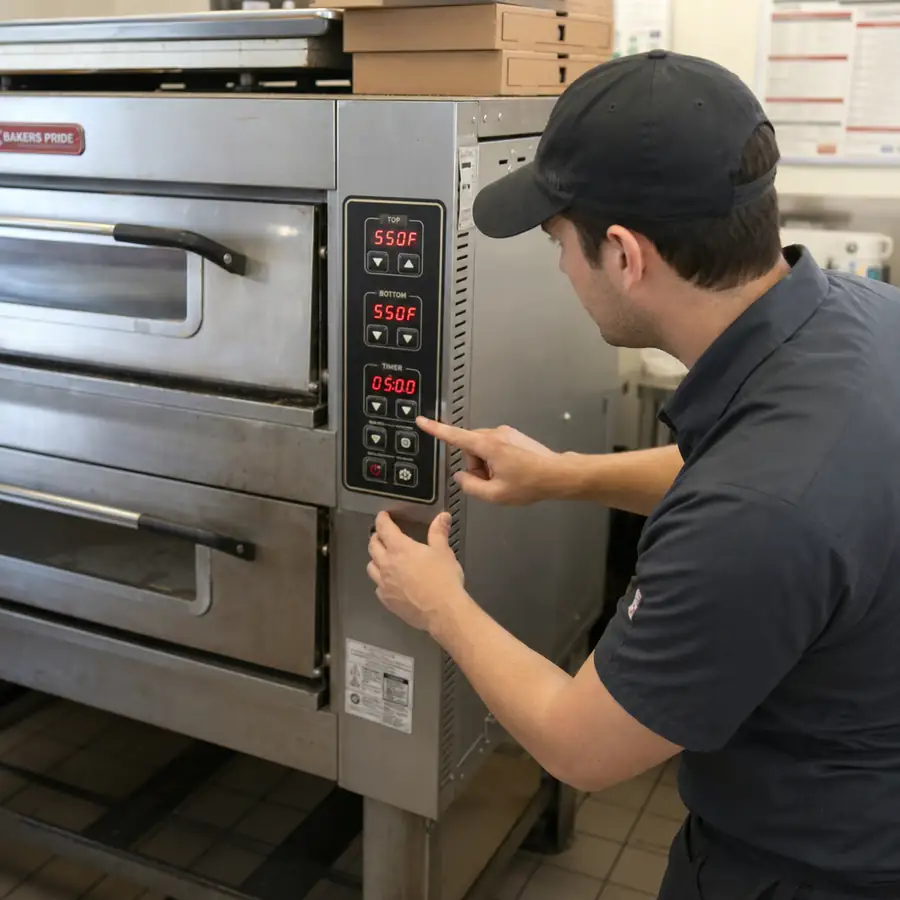
A practical buying decision guide
If you are opening a traditional pizzeria, start with a deck oven or high-capacity conveyor depending on your pizza identity. Deck ovens reward skill and are ideal when crust character is central to the brand. Conveyors are often better when speed, repeatability, and simpler training drive the business model.
If you run a restaurant, bar, or cafe adding pizza to an existing menu, look at commercial countertop pizza ovens or compact deck ovens first. They usually reduce disruption and help you test demand before committing to larger industrial pizza ovens.
If you operate a food truck, kiosk, or compact venue, prioritize footprint, electrical planning, heat output into the workspace, and local ventilation rules. A ventless or compact electric unit may be attractive, but only if it can keep up during your rush and fits your menu style.
If you are building a delivery-heavy operation, conveyor pizza ovens commercial kitchens can standardize output across shifts. Match belt width, chamber length, recovery, and stackability to your expected peak-hour demand.
FAQs
1. Are commercial electric pizza ovens good for serious pizzerias? Yes, commercial electric pizza ovens can be a strong choice when they provide the chamber size, recovery, and heat control your menu requires. They are especially useful where gas is unavailable or where electric infrastructure is easier to plan.
2. What size pizza oven do I need? Start with peak-hour demand, not average daily sales. Consider pizza diameter, bake time, staff speed, order batching, and whether the oven must also handle bread, wings, flatbreads, or reheating.
3. Are conveyor ovens better than deck ovens? They are better for consistency and simplified labor, but not always for artisan control. Deck ovens give skilled operators more influence over crust and finish, while conveyors make standardized production easier.
4. How often should a commercial pizza oven be cleaned? Light cleaning should happen daily, with deeper cleaning scheduled according to the manufacturer's manual and use level. Conveyor belts, crumb trays, decks, fans, filters, and gaskets all need routine attention.
5. What should I check before buying used commercial pizza equipment? Confirm model number, age, utility requirements, service history, parts availability, physical condition, and whether the oven can be installed legally in your space. Used equipment can save money, but repairs, freight, and code issues can erase the savings.
Final takeaway
The smartest pizza oven buying guide is your own operating plan. Define your pizza style, peak volume, space, utilities, labor skill, and cleaning capacity before choosing between deck, conveyor, countertop, high-speed, gas, or electric commercial ovens.
For craft-focused pizza, consider a deck oven. For high-volume repeatability, compare conveyor systems. For small menus, bars, cafes, and trucks, start with compact commercial cooking ovens that fit your real space and power limits. The best commercial pizza ovens are not simply the biggest or most expensive-they are the ones your team can run consistently, safely, and profitably.