
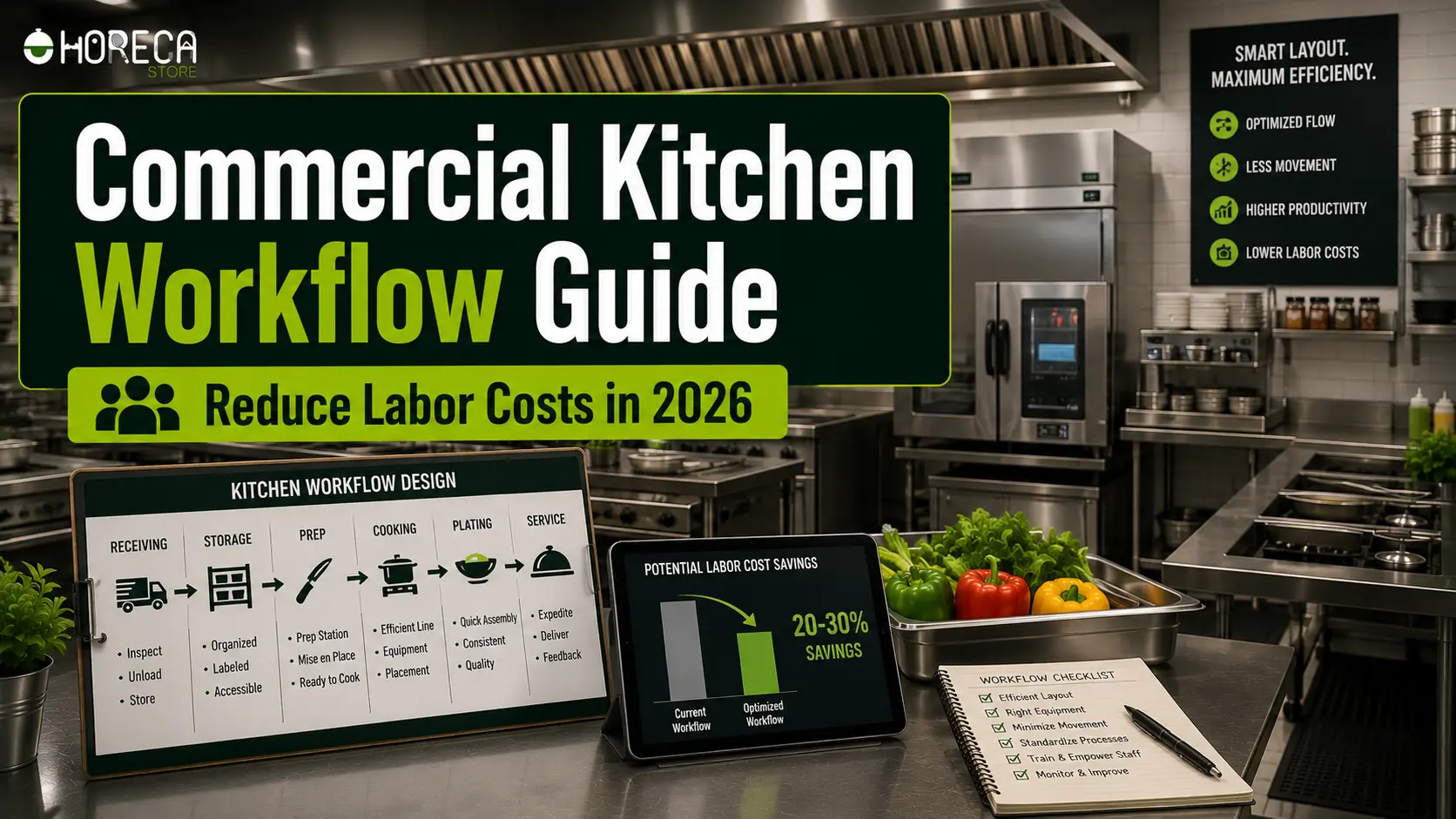
The hospitality industry is facing unprecedented operational challenges. Rising wages, chronic staff shortages, and shrinking profit margins are forcing restaurant owners and food service directors to rethink how their back-of-house operates. If you want to future-proof your restaurant, focusing on a Commercial Kitchen Workflow Design to Cut Labor Costs in 2026 is no longer just a trend—it is a critical strategy for survival.
By strategically reshaping how your culinary team interacts with their environment, you can maintain high food quality and fast service times with a smaller, highly efficient crew.
The Core of Efficiency: Strategic Floor Layouts
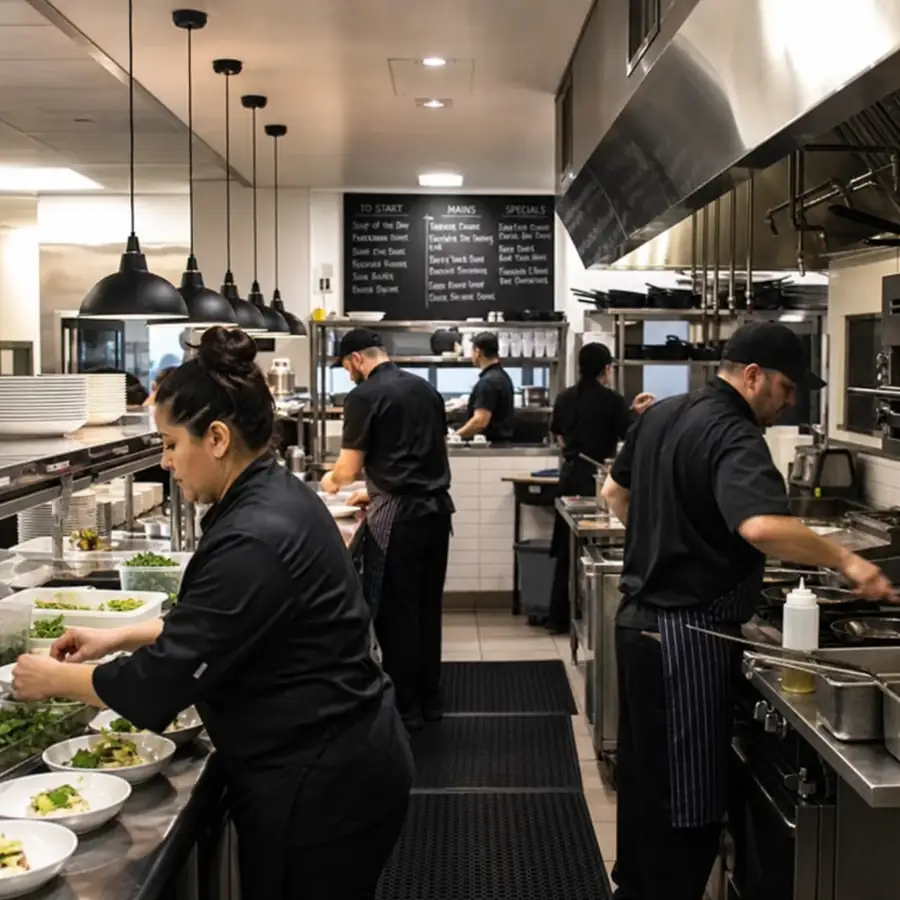
When operators look at their P&L statements, a common question arises: how to reduce restaurant labor through kitchen layout? The answer lies in engineering a space where food flows logically from delivery to the dining room without bottlenecks.
The foundation of this strategy is designing kitchen floor plans for maximum throughput. When planning your space, you must evaluate linear vs. island kitchen workflow efficiency based on your menu:
- Linear Layouts: Often called an assembly line layout, this design is perfect for high-volume, limited-menu establishments (like quick-service restaurants). Because food moves in a straight line from prep to cooking to plating, fewer staff members are needed to assemble a dish, drastically reducing labor hours.
- Island Layouts: Best suited for diverse menus and fine dining, an island layout centralizes the primary cooking equipment. This allows an executive chef or expeditor to easily monitor all stations at once, improving communication and reducing the need for extra supervisory staff.
Ergonomics and Prep Zone Mastery
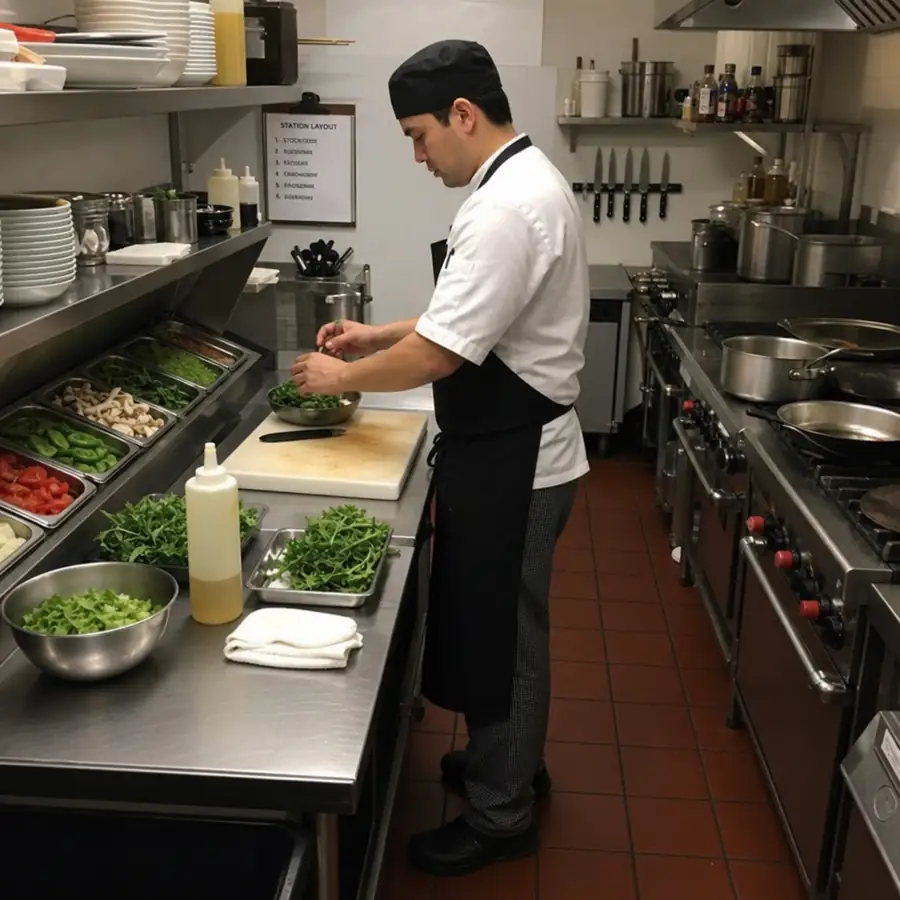
A beautiful kitchen is useless if it exhausts your staff. Implementing an ergonomic kitchen workstation layout is vital for speed and employee retention. By adjusting counter heights, placing heavy items at waist level, and ensuring high-use tools are within arm’s reach, you reduce physical fatigue.
This ergonomic approach is the secret to minimizing redundant movement in food preparation. Every time a chef has to take three steps to grab a spatula or walk across the kitchen for a primary ingredient, you lose money. To fix this, consider these actionable steps to optimize commercial kitchen prep zones:
- Point-of-Use Storage: Keep refrigerated under-counter drawers stocked with the specific ingredients needed for that exact station.
- The "Pivot" Rule: Design stations so a cook only needs to pivot on one foot to reach their cutting board, cooking surface, and plating area.
- Standardized Tool Kits: Equip every station with identical, dedicated tools to eliminate time spent searching for shared equipment.
We can look to modern delivery hubs for inspiration. Achieving ghost kitchen operational flow efficiency relies heavily on these ergonomic principles. Because ghost kitchens lack front-of-house distractions, their layouts are ruthlessly optimized for prep-to-pack speed, allowing a skeleton crew to output hundreds of meals an hour.
The Tech Revolution: Smart Appliances and AI
By 2026, technology will be the ultimate sous-chef. We are rapidly moving toward reducing kitchen staffing requirements with smart appliances. When machines take over the mundane, your human staff can focus on the culinary artistry that actually drives revenue.
One of the most impactful ways to trim payroll is by automating repetitive tasks in high-volume kitchens. Automated fry basket lifters, self-cleaning ovens, and programmable robotic dispensers ensure perfect consistency without requiring a dedicated line cook to babysit the equipment.
Furthermore, kitchen management is becoming heavily digitized:
- Inventory Automation: Integrated IoT inventory management systems use connected scales and shelving to automatically track stock levels. This eliminates the need to pay a manager to stay late and count inventory manually.
- Production Tracking: Installing smart kitchen sensors for production tracking allows operators to monitor ticket times and identify bottlenecks in real time, negating the need for a dedicated expeditor during mid-volume shifts.
- Preventative Maintenance: Nothing ruins labor efficiency like broken equipment that forces staff to work around a downed station. AI-driven kitchen equipment maintenance schedules monitor the performance of your appliances and alert you to potential failures before they happen, keeping your workflow uninterrupted.
Flexibility and Cross-Training
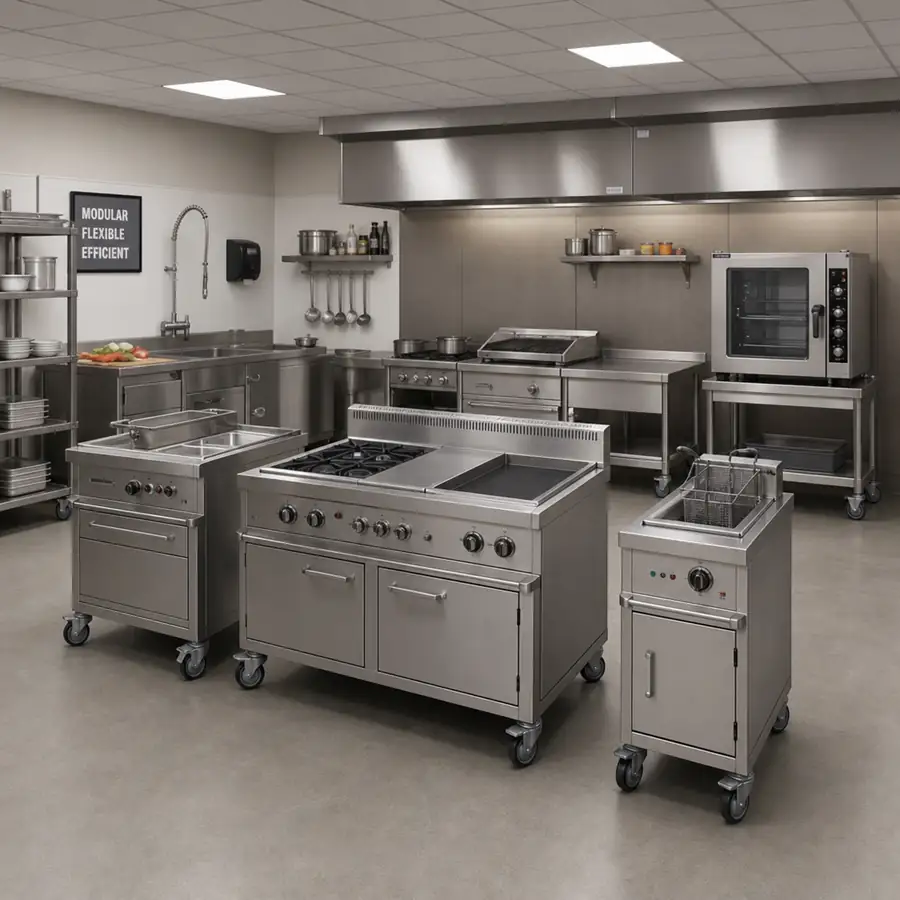
Real estate is expensive, and massive kitchens are becoming a thing of the past. To maximize output in a smaller footprint, operators frequently ask: what are the best modular commercial kitchen systems?
The best systems are those that can be reconfigured on the fly. Equipment mounted on heavy-duty casters with quick-disconnect utilities allows you to change your kitchen layout based on the day's menu or the season's demands.
Coupled with modularity is the integration of multi-functional cooking equipment for small footprints. Modern combi-ovens and rapid-cook ventless systems can bake, steam, roast, and fry all in one unit. By replacing a traditional grill, steamer, and convection oven with a single piece of equipment, you instantly reduce the number of stations that need to be staffed and cleaned.
This consolidation directly aids in cross-training staff through versatile workstation design. When multiple stations utilize similar multi-functional interfaces, it becomes incredibly easy to train a prep cook to cover the sauté station, or vice versa. This versatility means you do not need highly specialized (and highly paid) individuals for every single role. A smaller, well-cross-trained team can seamlessly absorb the rush hour impact.
Commercial Kitchen Workflow Design to Cut Labor Costs in 2026
An efficient commercial kitchen workflow is essential for reducing labor costs, improving productivity, and delivering faster service. A well-designed kitchen layout minimizes unnecessary movement by strategically placing cooking equipment, refrigeration units, prep stations, storage areas, and dishwashing zones. The Horeca Store organizing workstations based on your menu and production flow helps staff complete tasks more efficiently, reduces bottlenecks during peak hours, and supports consistent food quality.
Optimizing your kitchen with the right commercial equipment and layout can improve daily operations while lowering operating expenses. The Horeca Store offers a complete range of commercial kitchen equipment, including refrigerators, prep tables, cooking appliances, stainless steel workstations, storage solutions, and restaurant supplies designed for professional foodservice businesses. With quality products, competitive pricing, and reliable support, The Horeca Store helps restaurants, cafés, hotels, and cloud kitchens create efficient workspaces built for long-term success.
Conclusion
Navigating the future of the food service industry requires moving away from brute-force staffing and moving toward intelligent design. Upgrading your back-of-house operations is an investment that yields daily dividends in reduced payroll, lower employee turnover, and faster table turns.
Ultimately, utilizing an intentional commercial kitchen workflow design to cut labor costs in 2026 is about empowering the staff you do have. By combining ergonomic layouts, modular equipment, and cutting-edge AI technology, you create an environment where a lean team can perform like a massive culinary brigade—keeping your restaurant profitable for years to come.