
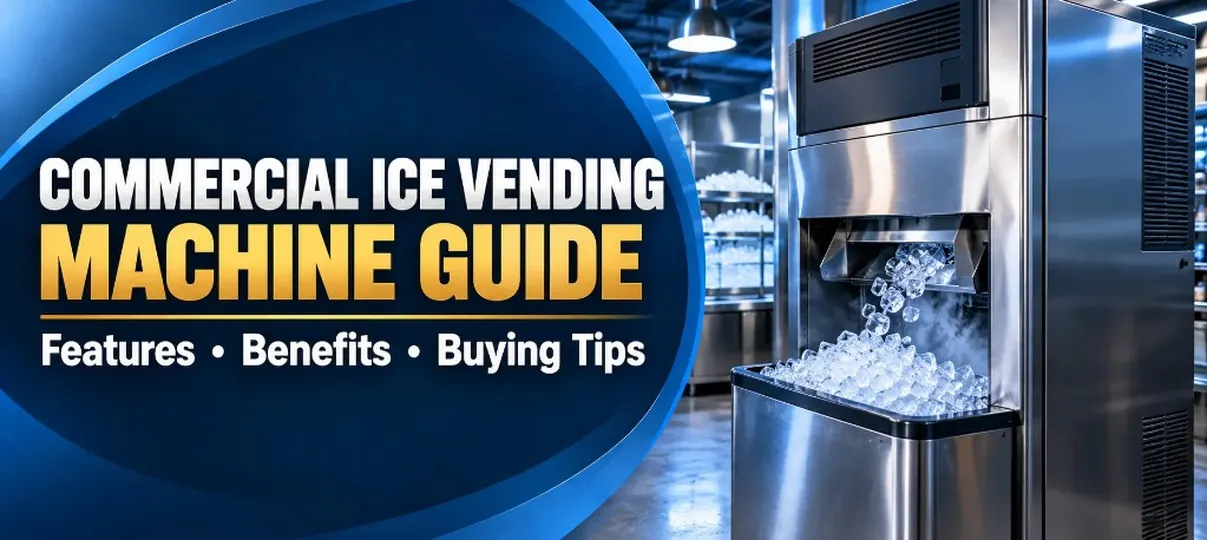
Commercial ice vending machines combine ice production, storage, payment, and dispensing in a self-service unit; some models also sell drinking water. Available configurations include compact machines, larger kiosks, bagged-ice systems, and direct-to-cooler dispensing. This guide explains how to compare those features, check a proposed location, and request quotes that reflect the complete installation rather than just the equipment.
What features matter most in commercial ice vending machines?
The most useful features are production capacity, storage capacity, a suitable dispensing format, straightforward payment, accessible cleaning points, and dependable service support. Compare these as a complete operating system: an impressive ice maker is not enough if customers struggle to buy ice or technicians cannot maintain it conveniently. Manufacturer ranges show that production, storage, payment, and installation configurations differ between models.
Production and storage capacity
Production describes how much ice a machine can make over a stated period; storage describes how much finished ice it can hold. Keep those figures separate when comparing commercial ice machines. Request the conditions behind the production rating, since performance testing uses specified air and water temperatures, while your proposed location may operate under different conditions.
Build your comparison around the busiest buying period, not just an average day. Ask each supplier to explain how the proposed combination of production and storage would serve your expected demand. For example, a site serving customers before morning fishing trips needs a different demand assessment from one expecting purchases throughout the afternoon.
Give suppliers the same assumptions so their recommendations are comparable:
- Expected purchases: Estimate transactions and ice quantity per purchase separately.
- Peak buying window: Identify when customers are most likely to arrive together.
- Site conditions: Supply expected temperatures and the proposed installation layout.
- Recovery requirement: Ask how the machine replenishes stock after a busy period.
Dispensing and payment options
Decide whether customers should receive a bag of ice, dispense directly into a cooler, or have both choices. Some machines offer multiple bag sizes, while payment options can include cash, cards, mobile wallets, tokens, or coupons. Confirm the exact configuration in the quote rather than assuming every advertised capability is included.
Request a demonstration of the complete purchase, including bag collection and dispensing. Check whether instructions are understandable without assistance and whether a customer carrying a cooler can use the machine comfortably. Ask how failed transactions, refunds, empty bag supplies, and payment-system interruptions are handled before selecting optional features.
Remote monitoring and service access
Remote management can provide sales information, machine-status alerts, bag counts, and filter-replacement notifications. For example, Ice House America describes these functions within its SmartIce system, alongside remote troubleshooting capabilities. Verify which functions, connectivity arrangements, and subscription charges apply to the machine you are considering.
Ask the supplier to demonstrate an alert from detection through resolution. Who receives it, what information appears, and what still requires an onsite visit? Treat monitoring as a management tool rather than a substitute for inspections, cleaning, replenishment, and repairs.
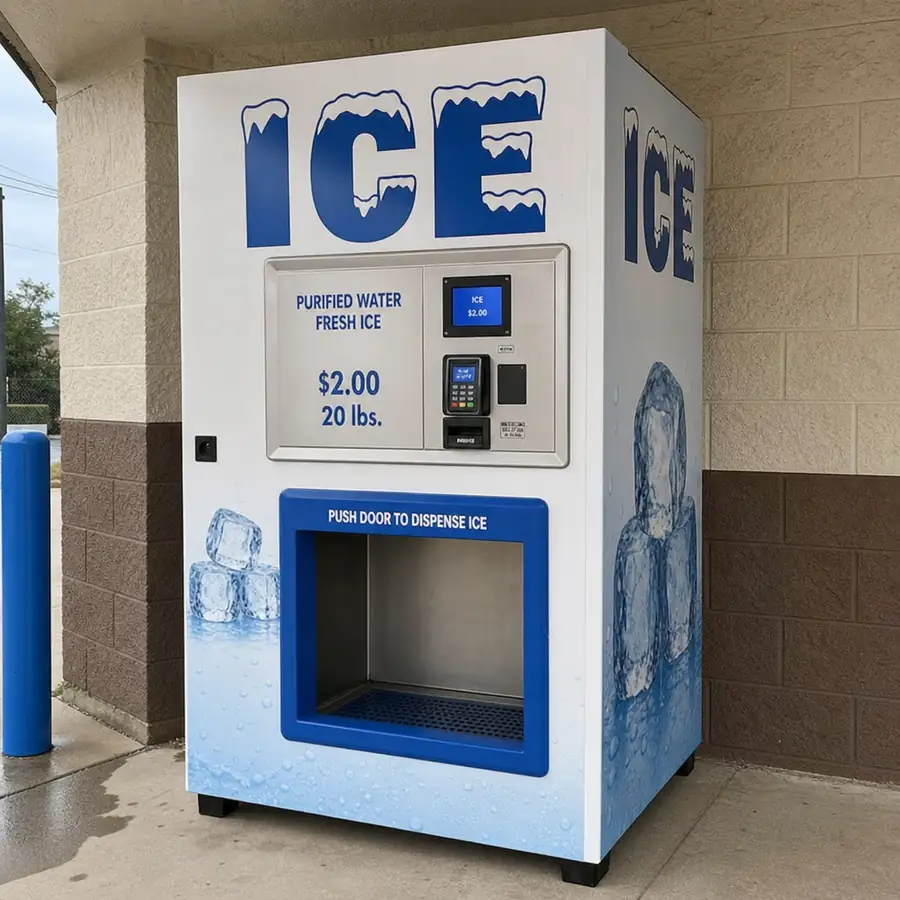
Ice-only and combined water vending configurations
Commercial ice and water vending machines add a drinking-water dispensing option to the ice offer. Manufacturers may offer different filtration packages and optional reverse-osmosis systems, so compare the complete water-treatment configuration rather than simply checking whether water vending is available. Ask for an explanation of how the proposed package matches your water supply.
Evaluate the two products separately in your business plan. Estimate who would buy ice, who would refill water containers, and whether each group can access the machine conveniently. Do not assume that interest in one product proves demand for the other.
Request separate figures for the water-vending option, its consumables, and its servicing requirements. If reverse osmosis is proposed, ask about wastewater volume and drainage: Kooler Ice's setup guidance specifically notes that reverse osmosis produces additional wastewater requiring drainage planning.
Location and utility checks come before ordering
Before choosing equipment, request a model-specific installation drawing and have qualified contractors review it against the site. Manufacturer requirements can include electrical service, a water connection, drainage, a suitable pad, unloading equipment, and installation access. Do not use a specification from another model or an older sales sheet as your construction plan.
Use this checklist during the site review:
- Electrical supply: Confirm voltage, phase, circuit requirements, disconnects, and the cost of any upgrade.
- Water connection: Verify the approved supply, connection location, pressure requirements, and treatment equipment.
- Drainage: Obtain an approved solution for discharge, including any treatment-system wastewater.
- Physical installation: Check the pad, anchoring, delivery route, unloading arrangements, and protective barriers.
- Working space: Confirm ventilation clearances and room for servicing without obstructing customers.
Then walk through an ordinary purchase at the proposed position. Can drivers enter, park, carry ice, and leave without an awkward maneuver? Record questions about visibility, lighting, queues, pedestrian access, and permitted operating hours for the property owner and relevant authorities.
Make the site agreement part of your purchasing decision. Clarify who pays for utility work, who maintains the surrounding area, and what happens if the machine must be relocated. Seek appropriate professional review before committing to lease or purchase terms.
Sanitation and compliance are operating essentials
Ice intended for consumption needs food-safety attention, not just refrigeration. The FDA regulates packaged ice in interstate commerce as food and emphasizes sanitary production, safe water, properly maintained equipment, and plumbing that prevents contamination. Use those principles when reviewing a machine's cleaning access and the supplier's operating instructions.
Ask for the cleaning and sanitizing procedure before buying. Identify which components must be removed, which products are approved, and how the ice bin and dispensing pathway are reached. The FDA Food Code addresses cleaning ice bins and enclosed ice-making components according to manufacturer instructions or, without them, often enough to prevent soil or mold accumulation.
Requirements depend on the jurisdiction and operation. Florida, for example, permits and inspects ice and water vending machines and requires operators to conduct routine product testing and retain results. Contact the authority responsible for your proposed site to confirm permits, inspections, testing, and records rather than assuming another state's process applies.
Build a maintenance calendar from the approved instructions and local requirements. Assign responsibility for cleaning, filter changes, inspections, test records, and responding to customer complaints. Keep the procedures accessible to whoever will actually service the machine.
Compare efficiency without confusing the ice maker and kiosk
Request energy and water consumption data with the relevant test conditions. EPA guidance explains that air-cooled ice makers avoid the water used for condenser cooling, but they still need suitable airflow and operating conditions. Compare the refrigeration arrangement with the actual location rather than choosing on an efficiency label alone.
Be precise about certification claims. ENERGY STAR lists eligible commercial ice-maker categories but excludes ice and water dispensing systems from that product specification. If a supplier advertises an ENERGY STAR ice-making component, ask which exact component is certified; do not interpret that as certification of the complete vending installation.
For budgeting, request an estimate covering the whole proposed configuration, including treatment equipment and other powered accessories. Ask suppliers to state assumptions clearly so you can compare like with like. Keep uncertain utility costs visible instead of disguising them inside a single optimistic operating figure.
How should you compare commercial ice vending machines for sale?
Compare commercial ice vending machines for sale using a written specification, a complete installed-cost breakdown, and a clear support agreement. Require each bidder to distinguish included equipment from options and to identify work your contractors must complete. Manufacturer installation guidance illustrates why delivery, utilities, placement, and training need attention beyond the machine itself.
Send the same request to each supplier. A useful comparison sheet should capture these items:
Use the sheet to expose unanswered questions, not merely rank prices. A lower equipment quote deserves closer examination if the installation scope is incomplete. Equally, ask a higher-priced bidder to explain the practical value of each additional feature.
When contacting ice machine suppliers, request manuals and a live demonstration before paying a deposit. Whether your shortlist includes a specialist manufacturer, an equipment dealer, or the horeca store, verify the specific model's suitability for unattended vending. A general equipment listing should not replace written confirmation of the complete customer-facing system.
Build the business case around total ownership cost
For an ice vending business, separate startup spending, recurring expenses, and repair reserves in your planning worksheet. Obtain written quotes wherever possible and label every remaining figure as an assumption. This makes it easier to see what needs verification before you commit.
Use three planning groups:
- Startup: Equipment, site preparation, professional reviews, permits, delivery, installation, branding, and initial supplies.
- Recurring: Site payments, utilities, payment processing, connectivity, insurance, cleaning, consumables, and service visits.
- Reserves: Repairs, replacement components, downtime, and future removal or relocation.
Prepare conservative, expected, and stronger-demand scenarios rather than relying on a single sales forecast. Estimate ice and water transactions separately, then deduct the costs associated with each. Have an accountant or other qualified adviser review the assumptions before treating the worksheet as an investment decision.
Keep cash flow distinct from operating performance. Show financing payments separately, account for your own work, and avoid calling revenue profit. If a sales presentation promises a payback period, request its underlying purchase price, installation scope, transaction assumptions, expenses, and treatment of downtime.
A disciplined purchase starts with a verified site
The strongest shortlist is one you can explain: the equipment suits the intended purchase pattern, the site can support it, and the operating responsibilities are clear. Resolve installation and compliance questions before choosing optional technology or signing an equipment order. Leave yourself a written record of what each supplier has promised.
Your next step is to prepare a site brief and send identical quote requests to shortlisted suppliers. Compare installed scope, maintenance requirements, and support alongside capacity and price. Buy only when the remaining assumptions are clear enough to evaluate-not because an attractive machine makes the business case feel complete.