

Choosing the right glasswashing setup starts with three checks: your peak-hour glass volume, your available space, and your water, drainage, and power supply. The best commercial glasswashers are not always the biggest machines; they are the ones that keep clean glasses moving fast without wasting labour, water, chemicals, or bar space.
A commercial glasswasher is a professional warewashing machine built to clean drinking glasses, stemware, tumblers, beer glasses, and other barware quickly and consistently. Unlike domestic machines, commercial bar glasswashers are designed for repeated daily cycles, fast turnaround, controlled rinse temperatures, chemical dosing, and rack-based loading.
What is a commercial glasswasher?
A back bar cooler and a bottle cooler still sit beside the wash station.
A commercial glasswasher is a compact or undercounter machine used by bars, cafes, restaurants, hotels, clubs, event venues, and catering teams to wash glassware during service. It uses short wash cycles, detergent, rinse aid, heated water, and purpose-made racks to clean large numbers of glasses with less manual handling.
In simple terms, it protects your service speed. If staff are handwashing or waiting too long for clean glasses, drinks slow down, labour rises, and the risk of spotting or breakage increases. A good machine gives the bar a steady supply of clean, presentable glassware.
This Commercial Glasswashers and Bar Glasswashing Equipment : Buying Guide will help you compare sizes, features, brands, and buying priorities before you look at commercial glasswashers for sale.
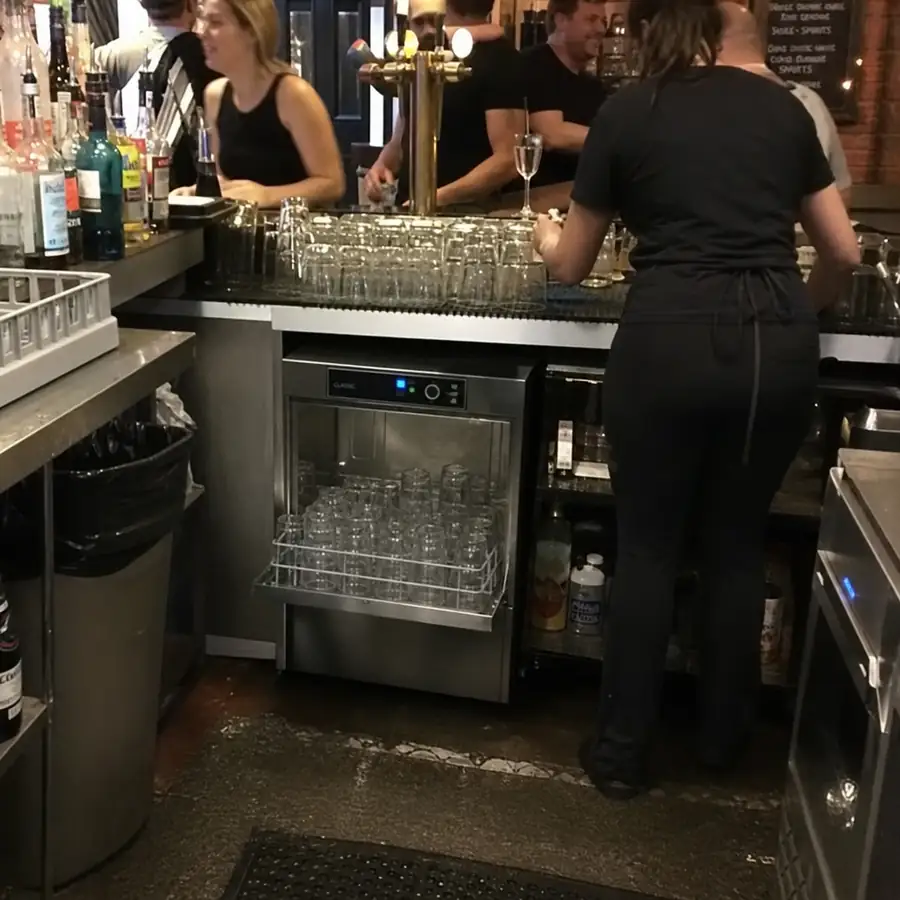
The main types of bar glasswashing equipment
Underbar glass rack storage gives clean racks a place that is not the bar top.
Most buyers compare glasswashers by footprint, rack size, drainage type, and sanitising method. Each choice affects how the machine fits into your workflow.
Undercounter glasswashers
A hanging bar glass rack keeps stems off the pass between cycles.
Undercounter machines sit below a counter or bar bench. They are the most common choice for pubs, bars, cafes, small restaurants, and hotel lounges.
They save space and keep washing close to the point of service. This matters when bartenders need fast access to clean glasses during a rush. Smaller models often use 350 mm or 400 mm baskets, while larger undercounter units may use 500 mm baskets.
Front-loading commercial glasswashers
A commercial upright dishwasher is a different machine for plates, not a bar glass load.
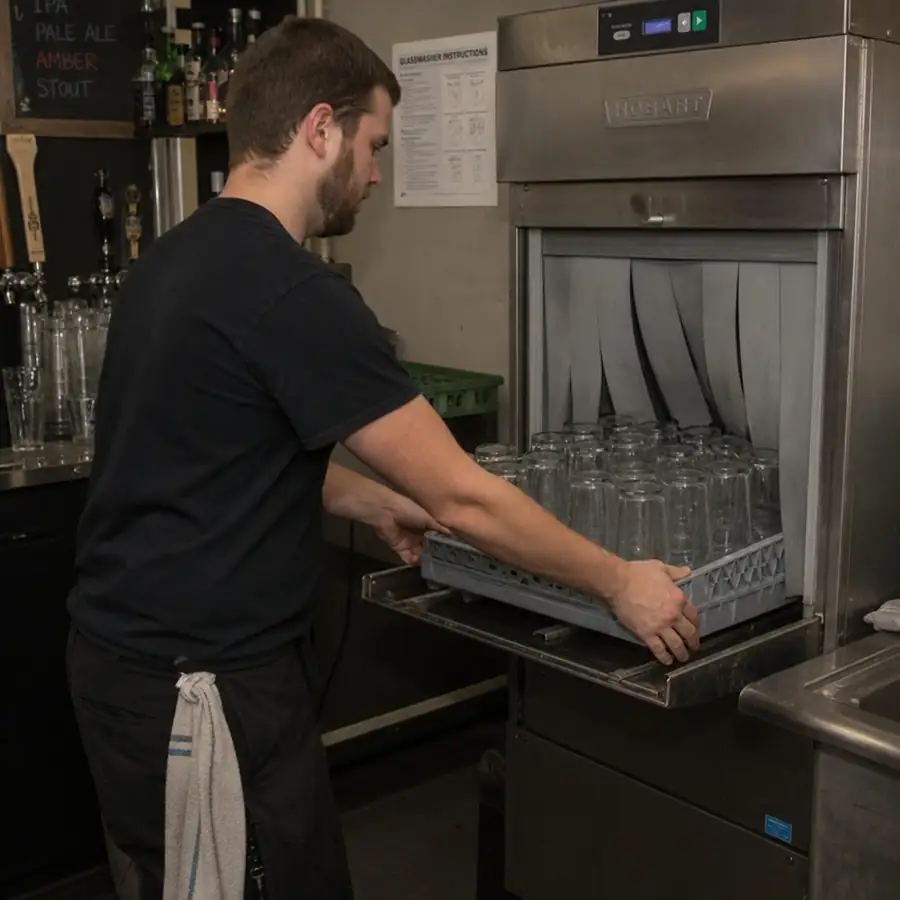
Front-loading machines work like compact commercial dishwashers. Staff load a rack, close the door, and run a short cycle.
They suit venues where the same team serves drinks and handles glasswashing. Simple controls reduce training time, especially when casual or seasonal staff are common.
Gravity drain and pumped drain models
A 3 compartment sink is the backup when the machine is down.
A gravity drain model works when the waste outlet is lower than the machine drain. A pumped drain model is used when wastewater must be lifted to a standpipe or higher drain point.
This is a small detail with a big installation impact. Choosing the wrong drain type can lead to slow draining, poor performance, or extra plumbing work.
High-temperature and chemical sanitising machines
Glass chillers and frosters cool service glass; they do not wash it.
Some machines sanitise with high-temperature rinse water. Others use chemical sanitising, often with lower rinse temperatures.
High-temperature units can support fast drying and strong sanitising, but they may need more electrical capacity. Chemical models can suit sites with limited power, though chemical supply and correct dosing become more important.
Key specifications that affect daily service
Shot glasses and rocks glasses need different slots in the same rack.
A glasswasher specification sheet can look technical, but the main numbers are easy to connect to real operations.
Rack size and glass capacity
Highball glasses and martini glasses change how many pieces fit one basket.
Rack size tells you how many glasses can be washed per load. A 400 mm basket may suit a small bar or cafe, while a 500 mm basket can handle heavier glass volume.
For example, Classeq's G500 uses a 500 x 500 mm basket and is described as holding 25 pint-sized glasses, while its two-minute cycle gives it a stated output of up to 1,000 glasses per hour. That kind of capacity is useful for busy pubs, event bars, and high-turnover casual dining venues.
Cycle time and racks per hour
A beer dispenser at the bar means pint volume, not plate volume.
Cycle time shows how quickly a machine can return clean glassware. Short cycles help during peak service, but they must still deliver a proper wash and rinse.
A two-minute cycle can be enough for many bar environments when glasses are not heavily soiled. Longer cycles may be useful for lipstick marks, milk-based drinks, cocktail residue, or mixed ware.
Water use per cycle
Lower water use can reduce running costs, but it must be balanced with wash quality. Too little rinse water or poor pressure can leave spots, odours, or chemical residue.
Hobart's LXn high-temperature undercounter dishwasher lists 0.62 gallons of water per cycle and offers 15 and 32 racks per hour, with up to 48 racks per hour using a two-level rack setup. This makes it more of a compact commercial dishwasher option for mixed ware than a simple bar-only glasswasher.
Glass clearance height
Champagne glasses and margarita glasses are the tall and wide checks.
Glass clearance tells you how tall a glass can be loaded. This matters for beer glasses, wine stems, cocktail glasses, and branded glassware.
If your venue serves tall pilsner glasses, large gin bowls, or stemmed wine glasses, check internal clearance before buying. A machine that is too low may force staff to wash premium glassware by hand.
Power supply and heating
Bar refrigeration on the same wall still needs its own circuit.
Commercial glasswashers may require different electrical setups. Some compact units can suit lower power supplies, while higher-output or high-temperature machines may need stronger electrical connections.
More heating power can improve recovery between cycles. In plain terms, the machine gets back to the correct wash and rinse temperature faster, which helps during back-to-back service.
Chemical dosing and water treatment
Glass polishers only help after the rinse is already clean.
Built-in detergent and rinse aid pumps help control chemical use. Good dosing reduces waste and supports consistent results.
Water treatment also matters. Hard water can leave marks on glasses, increase scale, and shorten machine life. In hard-water areas, a water softener or reverse osmosis option may improve finish and reduce polishing time.
MEIKO's M-iClean U range includes undercounter models with options such as ComfortAir heat recovery and an integrated GiO reverse osmosis module, aimed at better drying, less visible steam, and cleaner results in compact spaces.
Which glasswasher suits your business?
Bar equipment around the machine matters as much as the cycle time.
The right machine depends on your busiest hour, not your quietest day. Match the equipment to the pressure point in your operation: speed for bars, finish for wine service, compact size for cafes, and mixed-use capacity for restaurants.
Use this simple guide when comparing commercial glasswashers and commercial dishwashers:
If you mainly wash glasses, choose a dedicated glasswasher. If you wash plates, cutlery, cups, and prep ware as well, look at commercial dishwashers or dual-use undercounter machines.
Brand and model examples in the market
Brand choice often comes down to support, parts availability, local service, and the type of operation. Do not buy on name alone. Check the model, specifications, and installation needs.
Hobart is widely known for commercial dishwashers and undercounter machines. The LXn range is positioned for compact washing with touchscreen controls, diagnostics, high-temperature or chemical sanitising options, and rack capacity for mixed ware.
Classeq is a common choice for straightforward bar glasswashing. The G400 and G500 ranges focus on simple controls, short cycles, built-in chemical pumps, and undercounter layouts. The G400 specification lists a 400 x 400 mm basket, two-minute cycle, 30 theoretical racks per hour, and 3 litres rinse water consumption at 3 bar.
MEIKO suits buyers looking at premium undercounter warewashing with options for heat recovery, smart monitoring, and water treatment. The M-iClean US has a 400 x 400 mm rack, 315 mm entry height, and 95, 150, and 210 second cycle options, while larger M-iClean models use 500 x 500 mm racks.
Winterhalter is another recognised name in professional warewashing, with UC Series undercounter machines that include glasswasher-focused options for bars and restaurants. It is often considered where wash finish, water treatment, and a polished front-of-house result are priorities.
The Horeca Store can help buyers compare these kinds of categories against real site needs, especially when space, utilities, and service volume are unclear.
Installation and site planning
An underbar sink nearby makes the rinse area easier to keep clear.
Before ordering, check the site. A great machine can still be the wrong buy if it cannot be fitted or serviced easily.
Confirm these points first:
- Width, depth, and height: Leave enough space for ventilation, door opening, and service access.
- Water pressure: Low pressure can affect rinse quality and cycle performance.
- Water hardness: Hard water may require a softener or filtration.
- Drain height: Choose gravity or pumped drain based on your waste outlet.
- Power supply: Match the machine to available voltage, phase, and amperage.
- Chemical storage: Detergent and rinse aid need a safe, reachable location.
- Rack storage: Clean and dirty racks need a clear path to avoid clutter.
Also think about noise and steam. A front-of-house bar may need a quieter machine with better steam control. A back bar with limited airflow may benefit from heat recovery or improved ventilation.
Cleaning, maintenance, and total cost of ownership
The purchase price is only one part of the cost. Total cost of ownership includes water, energy, chemicals, filters, breakdowns, parts, and staff time.
Daily cleaning keeps performance steady. Staff should remove debris, clean filters, check spray arms, wipe seals, and leave the door open after service where the manufacturer allows it.
Regular descaling is important in hard-water areas. Scale can reduce heating efficiency, block jets, and leave marks on glasses. A water softener can reduce this risk, but it must be checked and refilled as needed.
Parts and service support matter. Before buying, ask if racks, seals, pumps, spray arms, filters, and chemical tubes are easy to source. Also check warranty terms, callout support, and whether local engineers can service the brand.
Common buying mistakes to avoid
Many problems start with under-sizing. A small machine may look cheaper, but it can create queues, extra labour, and rushed cleaning during peak hours.
Other common mistakes include:
- Buying a gravity drain model when a pumped drain is needed.
- Ignoring glass height and then handwashing tall glassware.
- Choosing a machine without checking electrical supply.
- Forgetting water treatment in hard-water areas.
- Comparing only purchase price, not running cost.
- Using domestic glassware racks that do not protect stems or rims.
- Skipping staff training on loading, dosing, and end-of-day cleaning.
The best commercial glasswashers make service easier every day. The wrong one adds hidden work.
Can a glasswasher wash plates and cutlery?
Some undercounter machines can wash mixed ware, but dedicated glasswashers are best for glasses. If you need plates, cutlery, and pans washed often, compare commercial dishwashers instead.
What size glasswasher does a small bar need?
Many small bars can start with a compact 350 mm or 400 mm basket machine. If you serve a lot of beer or cocktails, a 500 mm basket may be safer.
Do I need a water softener?
If your site has hard water, a softener is strongly worth considering. It helps reduce scale, spotting, and polishing time.
Are short wash cycles always better?
Not always. Short cycles help speed, but heavily soiled glasses may need longer cycles or better pre-scraping. Choose a machine with cycle options if your glassware varies.
Should I buy new or used?
Used machines can reduce upfront cost, but check service history, parts availability, warranty, and installation needs. New machines are usually easier to support and compare.
Final buying decision
If your requirement is low-volume cafe service, consider a compact undercounter glasswasher with simple controls and a small basket.
If your requirement is busy pub or bar service, consider a 500 mm basket commercial glasswasher with fast cycles, strong rinse recovery, and a pumped drain if your waste outlet is high.
If your requirement is premium wine, cocktail, or hotel service, consider a machine with water treatment, good glass clearance, and features that reduce steam and spotting.
If your requirement is mixed washing for a restaurant, consider commercial dishwashers or dual-use undercounter machines rather than a glass-only unit.
If your requirement is long-term value, choose the model with the right capacity, local service support, available parts, suitable warranty, and lower daily running effort. That is usually the smarter buy than the cheapest machine on the page.