
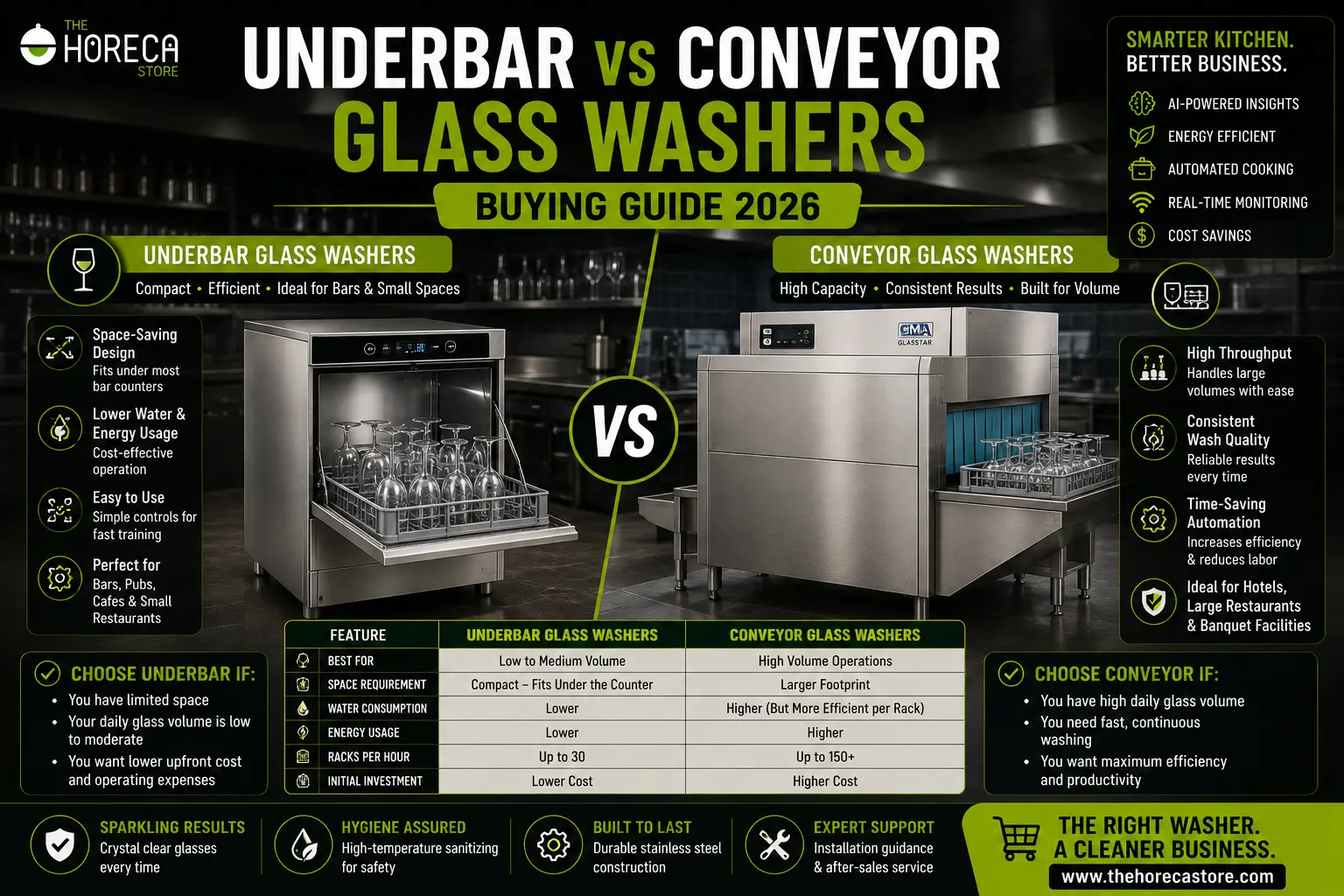
In the fast-paced hospitality industry, the quality of your drinks is often judged before a customer even takes their first sip. A perfectly crafted artisanal cocktail or a premium craft beer can be entirely ruined by a single lipstick smudge or residual detergent odor on the rim of a glass. As we step into a new era of hospitality technology, having the right glass cleaning equipment is no longer just about passing health inspections; it is about protecting your brand’s reputation, optimizing labor, and embracing sustainability.
Welcome to the ultimate Commercial Glass Washer Buying Guide 2026: Underbar vs Conveyor. Whether you are managing an intimate speakeasy, a bustling nightclub, or a high-volume hotel banquet hall, selecting the right machine is critical. The landscape of commercial cleaning tools has evolved dramatically over the last few years. Today’s machines are smarter, faster, and more efficient than ever before.
In this comprehensive guide, we will break down the exact differences between undercounter and conveyor systems, dive into the latest eco-friendly innovations, and provide you with actionable formulas so you know exactly what size machine your venue requires.
The Evolution of Glass Cleaning Equipment in 2026
The commercial kitchen and bar environment has transformed significantly. Hospitality operators are facing rising utility costs, stricter environmental regulations, and ongoing staffing challenges. Because of this, manufacturers of commercial cleaning tools have shifted their focus toward automation, resource conservation, and extreme reliability.
When you look at the market for the best glass washers today, two major trends dominate the conversation:
- Sustainability as a Standard: We are seeing a massive surge in eco-friendly commercial dishwashing solutions for 2026. Machines are now built to use drastically less water and electricity per cycle.
- Technological Integration: The integration of smart water recycling technology for commercial dishwashers has revolutionized operational costs. These systems capture the steam and heat generated during the wash cycle and repurpose it to pre-heat incoming cold water, drastically reducing the energy burden on internal heating elements.
With these advancements in mind, your primary decision when looking to buy glass washer equipment will come down to the physical style and operational capacity of the machine: underbar (undercounter) versus conveyor.
Understanding Your Operational Needs
Before diving into the specific machine types, you must understand your venue's unique demands. One of the most common mistakes bar owners make is purchasing a machine based strictly on physical size or budget, without looking at their peak volume.
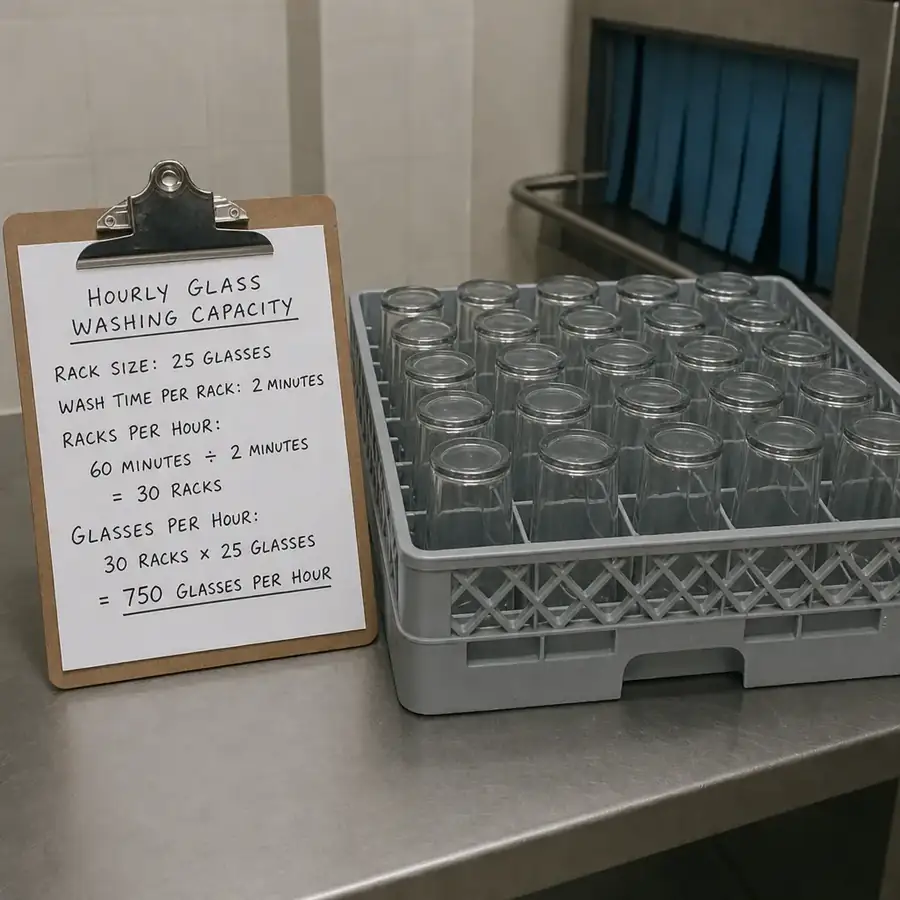
How to Calculate Hourly Glass Washing Capacity Needs
To make an informed decision on how to choose between conveyor and underbar glass washers, you must first calculate your peak hourly demand. Do not calculate based on a slow Tuesday afternoon; calculate based on a sold-out Saturday night.
Here is a simple, actionable formula to help you determine your required capacity:
- Step 1: Determine your maximum seating capacity (or maximum legal occupancy for standing venues). Example: 150 guests.
- Step 2: Estimate your peak turnover rate per hour. Example: 2 drinks per guest, per hour.
- Step 3: Multiply guests by drinks to find your hourly glass usage. 150 x 2 = 300 glasses per hour.
- Step 4: Account for buffer room. Always add a 20% to 30% buffer for unexpected rushes, dropped glasses, and staff water cups. 300 x 1.30 = 390 glasses per hour.
- Step 5: Convert to racks. Standard commercial glass racks hold 36 standard pint or highball glasses (though this varies for wide cocktail coupes). 390 glasses / 36 glasses per rack = roughly 11 racks per hour.
In this scenario, a machine that processes 15 to 20 racks per hour would comfortably handle your peak volume.
Underbar Glass Washers: The Front-of-House Heroes
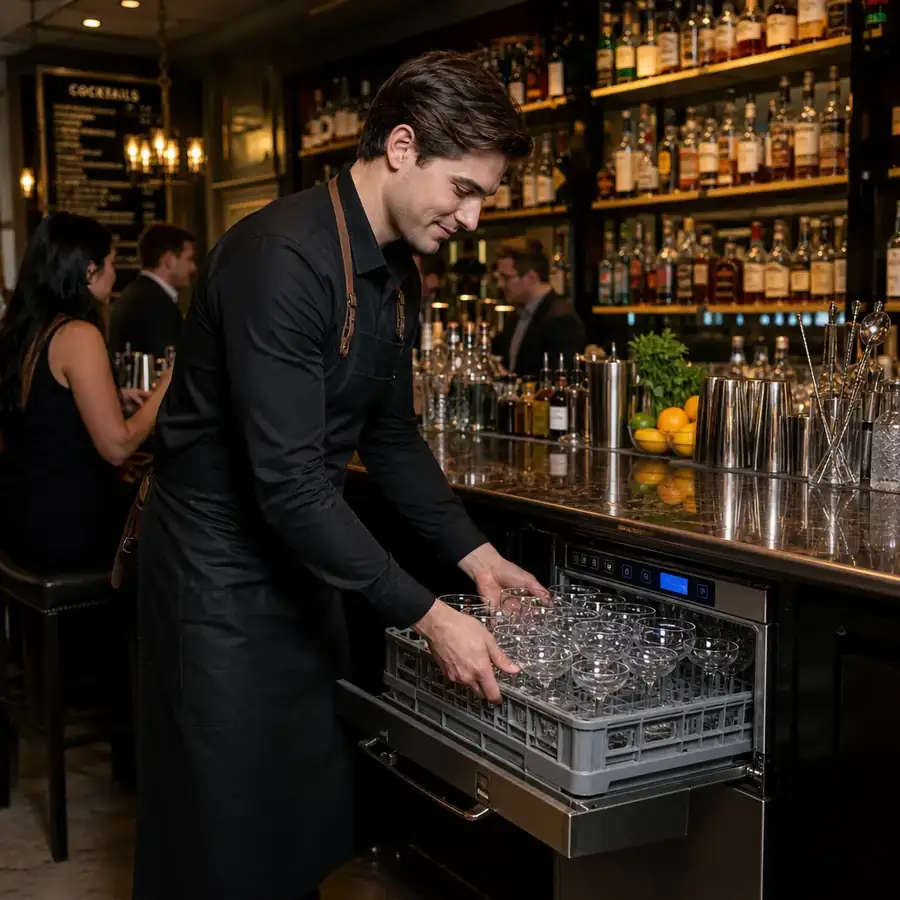
For many bars, restaurants, and cafes, floor space is the most valuable commodity in the building. Underbar glass washers—also known as undercounter glass washers—are designed to slide perfectly beneath standard bar counters, keeping the washing process entirely front-of-house.
The Benefits of Underbar Systems
- Space Efficiency: The primary draw of space-saving underbar glass washers for small bars is their footprint. They require no massive dish pit, allowing bartenders to wash, dry, and restock glasses without ever leaving their station.
- Aesthetics and Design: Modern 2026 models feature sleek stainless steel designs, hidden control panels, and double-wall construction to ensure they blend seamlessly into high-end bar aesthetics.
- Quiet Operation: Because these units sit mere feet away from paying guests, acoustic design is paramount. When looking at a noise level comparison for front-of-house undercounter units, today's premium models operate at around 55 to 60 decibels—equivalent to a quiet conversation. This ensures your guests' experience is not disrupted by the grinding hum of machinery.
Limitations of Underbar Systems
While they are highly efficient, undercounter models typically process between 20 to 40 racks per hour. For a massive nightclub or a bustling hotel lobby bar, a single undercounter unit may struggle to keep up during the rush. They also require bartenders to manually load, push, pull, and empty the racks, which can take a few seconds away from serving customers.
Energy Ratings and Efficiency
If you are leaning toward an undercounter unit, pay close attention to the energy efficient undercounter glass washer ratings 2026. Look for models with built-in heat recovery and advanced filtration systems. These machines continuously filter the wash water, allowing the machine to use the same heated tank water for multiple cycles, dumping only a small amount of rinse water down the drain. This drastically lowers both water and electrical consumption over the course of a year.
Conveyor Glass Washers: The High-Volume Powerhouses
When you transition from a bustling neighborhood bar to a large-scale nightclub, a casino, or a massive banquet facility, the math changes. You are no longer washing hundreds of glasses an hour; you are washing thousands. This is where conveyor glass washers come into play.
What is a Conveyor Glass Washer?
When examining rotary vs door-type vs conveyor dishwasher efficiency, the conveyor model stands alone in its ability to handle relentless, continuous volume. Instead of loading a rack, closing a door, and waiting two minutes, staff simply load racks (or individual glasses, in the case of rotary carousels) onto a continuously moving belt. The machine automatically pulls the glasses through separate wash, rinse, and sanitization chambers.
The Benefits of Conveyor Systems
- Unmatched Throughput: Conveyor machines can process anywhere from 400 to over 1,000 racks per hour, making them essential for massive operations.
- Labor Efficiency: Because the belt is constantly moving, dishwashers or barbacks do not have to wait for a cycle to finish to load the next rack. This maximizes glass washer cycle times and turnaround optimization, ensuring bartenders never run out of clean glassware during a rush.
- Superior Drying Times: High-volume machines often feature powerful blowers and extended drying chambers. Glasses come out not just clean, but completely dry and ready for immediate reuse or chilling.
Limitations of Conveyor Systems
- Massive Footprint: These units require a dedicated dish pit with extensive ventilation, water, and electrical hookups. They cannot be installed front-of-house.
- Capital Investment: The upfront cost of a conveyor system is substantially higher than an underbar model.
- Maintenance Needs: Due to the complexity of the moving parts, motors, and multi-chamber heating elements, the maintenance requirements for high throughput conveyor systems are rigorous. Daily cleaning of curtains, catch baskets, and spray arms is absolutely mandatory to prevent breakdowns.
Sanitation Systems: Ensuring Safe and Spotless Results
Regardless of whether you choose an underbar or conveyor model, you will have to make a vital choice regarding how the machine sanitizes your glassware. The debate of high temperature vs low temperature sanitation systems is an essential part of any commercial glass washer buying guide.
High-Temperature Sanitizing
High-temp machines rely on extremely hot water to sanitize glassware. While the main wash tank operates around 150°F to 160°F, the final rinse cycle requires water heated to a minimum of 180°F.
Pros:
- Better Cleaning Power: Hot water cuts through stubborn lipstick, heavy syrups, and dried fruit pulp much more effectively.
- Rapid Drying: Because the glasses exit the machine at 180°F, the water flashes off the glass, allowing them to air-dry almost instantly. This is crucial for fast-paced bars.
- No Chemical Residue: Since heat does the sanitizing, there is no risk of chlorine or chemical odors left on the glass, which can alter the taste of craft beers and delicate wines.
Cons:
- Higher Energy Use: Heating water to 180°F requires a booster heater, which draws significantly more electricity.
- Thermal Shock Risk: Thin, delicate glassware can shatter if moved immediately from an ice bucket to a 180°F wash.
Low-Temperature Sanitizing
Low-temp machines wash and rinse with water ranging from 120°F to 140°F. Because the water is not hot enough to kill bacteria on its own, these machines rely on chemical sanitizers (usually chlorine or iodine) injected during the final rinse.
Pros:
- Energy Savings: Without the need for a 180°F booster heater, low-temp machines consume far less electricity.
- Easier Installation: They often run on standard 120V electrical connections, making them much easier to plug-and-play in older buildings without expensive electrical upgrades.
Cons:
- Chemical Odors: If the machine is not calibrated perfectly, chlorine residue can linger. Beer connoisseurs will immediately notice if their IPA tastes vaguely of pool water.
- Slower Drying Times: Cooler glasses take much longer to air dry. If bartenders towel-dry them to speed up the process, they risk introducing bacteria back onto the glass, defeating the purpose of the wash.
Ultimately, your choice must align with local health codes. Always ensure that the machine you purchase meets the rigorous NSF certified commercial glass washing standards to guarantee health inspector compliance and guest safety.
Maximizing Efficiency: Chemicals and Dispensing Technology
A high-end machine is completely useless if you are feeding it low-quality detergents or utilizing an outdated dosing system. One of the major leaps in commercial cleaning tools for 2026 is the advancement of chemical dispensing systems for automatic glass washers.
In the past, chemical tubes were simply dropped into buckets under the bar, and simple timer-based pumps would suck the liquid into the machine. This often led to over-chemicalization (wasting money and leaving residue) or under-chemicalization (resulting in cloudy, unhygienic glasses).
Today’s smart dispensing systems utilize electronic sensors located directly inside the wash tank. These sensors constantly monitor the water's alkalinity and cleanliness. If the wash water requires more detergent to break down stubborn cocktail syrups, the system doses exactly the right amount down to the milliliter.
When you prepare to buy glass washer models this year, ask your supplier about peristaltic pumps and closed-loop chemical systems. Not only do they guarantee a spotless clean, but they also prevent your staff from coming into direct contact with concentrated, potentially dangerous cleaning chemicals.
Protecting Your Investment: Preventing Glass Breakage
If you run a busy venue, you already know that replacing broken glassware is a massive hidden expense. A poorly calibrated machine or an aggressive wash cycle can quickly turn expensive crystal coupe glasses into hazardous shards.
Preventing glassware breakage in high volume washers comes down to three main factors:
- Soft-Start Technology: Older machines would violently blast water the second the cycle started, causing light glasses to jump out of the racks and shatter against each other. The best glass washers of 2026 feature variable frequency drives (VFDs) that utilize a "soft start." The water pressure gradually increases over the first few seconds, gently pinning the glasses down into the rack before the high-pressure wash begins.
- Proper Racking: Never wash a mixed rack of heavy pint glasses and delicate wine stems without using compartmentalized racks. Using the correct rack ensures glasses do not clink together during the turbulent wash cycle.
- Temperature Control: As mentioned during the high-temp vs low-temp discussion, thermal shock is real. If you are using a high-temp machine, ensure your staff allows chilled glasses to reach room temperature before running them through a 180°F rinse.
The Hidden Numbers: Calculating Total Cost of Ownership
It is incredibly tempting to browse a catalog, look at the sticker prices, and choose the most affordable option. However, experienced operators know that the initial purchase price is only a fraction of the story.
To make a truly informed decision, you must calculate the total cost of ownership for commercial dishwashing equipment over its expected 7 to 10-year lifespan. This calculation includes:
- Capital Expenditure (CapEx): The upfront cost of the machine, shipping, taxes, and installation fees.
- Operational Expenditure (OpEx): The monthly cost of water, electricity, and chemicals. This is where high-efficiency models prove their worth. A cheaper machine that wastes three gallons of water per cycle will cost you thousands of dollars more in utility bills over five years compared to an eco-friendly machine that uses only 0.5 gallons per cycle.
- Maintenance and Repairs: What is the warranty? How much do replacement parts cost? Choosing a lesser-known brand might save you money up front, but if a proprietary motor breaks on a Friday night and the nearest technician is two states away, the loss of revenue will far exceed your initial savings.
- Labor Costs: How much time does your staff spend interacting with the machine? If an under-powered machine requires bartenders to double-wash glasses to get them clean, you are paying high hourly labor rates for entirely unproductive time.
When compiling your commercial glass washer buying guide checklist, prioritize brands that offer robust warranties, widespread technician networks, and transparent utility consumption data.
Best Practices: Maintenance Protocols for Longevity
Whether you opt for a compact underbar unit or a massive conveyor system, routine maintenance is non-negotiable. The number one reason commercial glass cleaning equipment fails is operator neglect.
Implement these actionable maintenance routines in your venue:
Daily Tasks
- Drain and Clean: Never leave dirty water sitting in the machine overnight. Drain the tank completely.
- Scrub the Filters: Remove the scrap screens and pump intake filters. Rinse them thoroughly in the sink to remove citrus pulps, straws, and garnishes.
- Leave the Door Open: Prop the machine door open overnight. This allows the internal chamber to air out, preventing the growth of mold and foul odors.
Weekly Tasks
- Check Spray Arms: Remove the upper and lower wash arms. Check the nozzles for blockages. A single lemon seed stuck in a spray arm nozzle can create a blind spot in the machine, resulting in dozens of poorly washed glasses.
- Inspect Chemical Lines: Ensure there are no air bubbles in your chemical tubes and that you have enough detergent and sanitizer to make it through the upcoming weekend.
Monthly Tasks
- Deliming: Hard water scale buildup acts as an insulator on the machine's heating elements. If scale builds up, the heater has to work twice as hard to heat the water, driving up your energy bills and eventually burning out the element. Run a commercial deliming solution through the machine according to the manufacturer's instructions.
Choosing the Right Machine: A Quick Recap
As we summarize this Commercial Glass Washer Buying Guide 2026: Underbar vs Conveyor, let us condense the decision-making process into a quick, actionable checklist.
You should buy an Underbar Glass Washer if:
- You manage a small to medium-sized bar, cafe, or restaurant.
- Your peak hourly volume is under 40 racks (approx. 1,400 glasses) per hour.
- You have limited back-of-house space and need a sleek, quiet unit to sit under the front bar.
- Your bartenders need immediate, steps-away access to clean glassware.
You should buy a Conveyor Glass Washer if:
- You manage a massive nightclub, casino, hotel, or high-volume catering hall.
- Your peak hourly volume exceeds 200 racks per hour.
- You have a dedicated back-of-house dish pit with extensive ventilation and utility hookups.
- You have a dedicated dishwashing staff rather than relying on bartenders to wash their own glasses.
Shop Commercial Glass Washers at The Horeca Store
Looking for a commercial glass washer for your bar or restaurant? The Horeca Store offers professional foodservice equipment to help businesses build efficient beverage and kitchen operations. Explore our selection of commercial glasswashers and dishwashing equipment to find a solution that matches your available space, glassware volume, and daily service requirements.
Conclusion
Spotless, crystal-clear glassware is the foundation of a premium beverage program. It elevates the visual appeal of your drinks, ensures perfect carbonation retention in beers, and provides your guests with the sanitary, high-quality experience they expect and deserve.
As you look to upgrade or build out your venue this year, remember that the best glass washers are those that perfectly align with your specific capacity needs, space limitations, and long-term budget. By carefully evaluating how to calculate hourly glass washing capacity needs, weighing the benefits of high temperature vs low temperature sanitation systems, and investing in eco-friendly commercial dishwashing solutions for 2026, you will make a purchase that actively contributes to your bottom line.
Do not view a glass washer simply as a mandatory expense. View it as an automated, highly efficient team member that protects your venue's reputation, streamlines your bartenders' workflow, and keeps the drinks pouring perfectly, night after night. Take the time to assess your total cost of ownership, prioritize water and energy efficiency, and choose the machine that will drive your hospitality business forward into 2026 and beyond.