
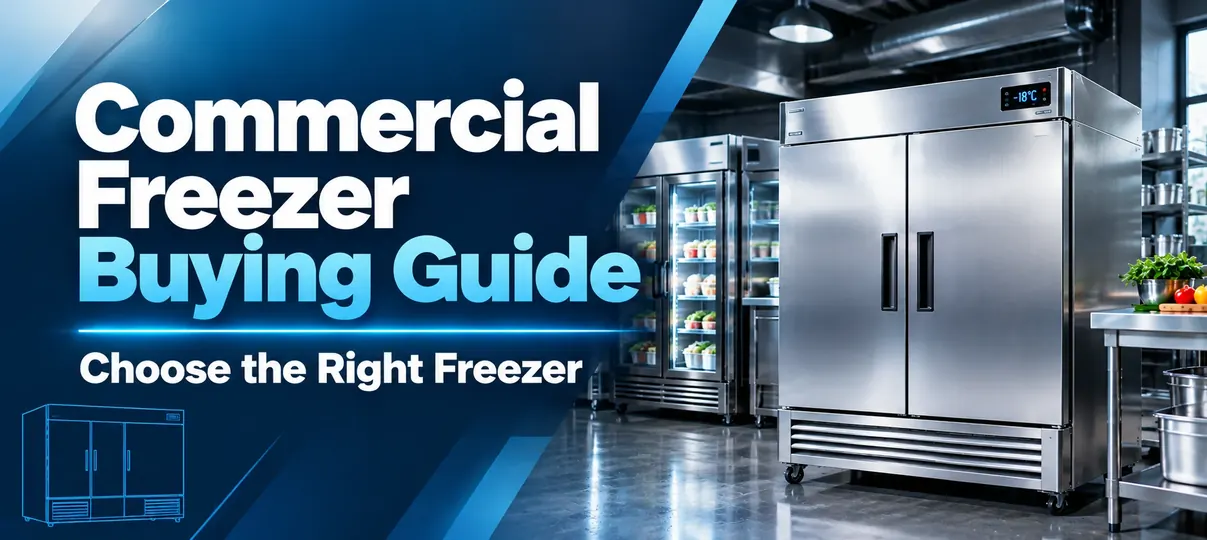
A dependable freezer is one of the most important investments in any food business. This commercial freezer buying guide explains how to compare freezer types, size your storage correctly, evaluate energy use, and choose freezer equipment that fits your workflow instead of fighting it. Whether you run a restaurant, café, grocery store, bakery, bar, or catering operation, the right commercial freezer protects inventory, supports food safety, and keeps daily service moving.
Buying too small creates constant restocking headaches. Buying too large can waste floor space and energy. The goal is not simply to find the cheapest commercial freezer, but to choose the best fit for your products, kitchen layout, access patterns, and long-term operating costs.
What type of commercial freezer do you need?
Stations that hold both frozen and fresh food should also plan a reach-in refrigerator.
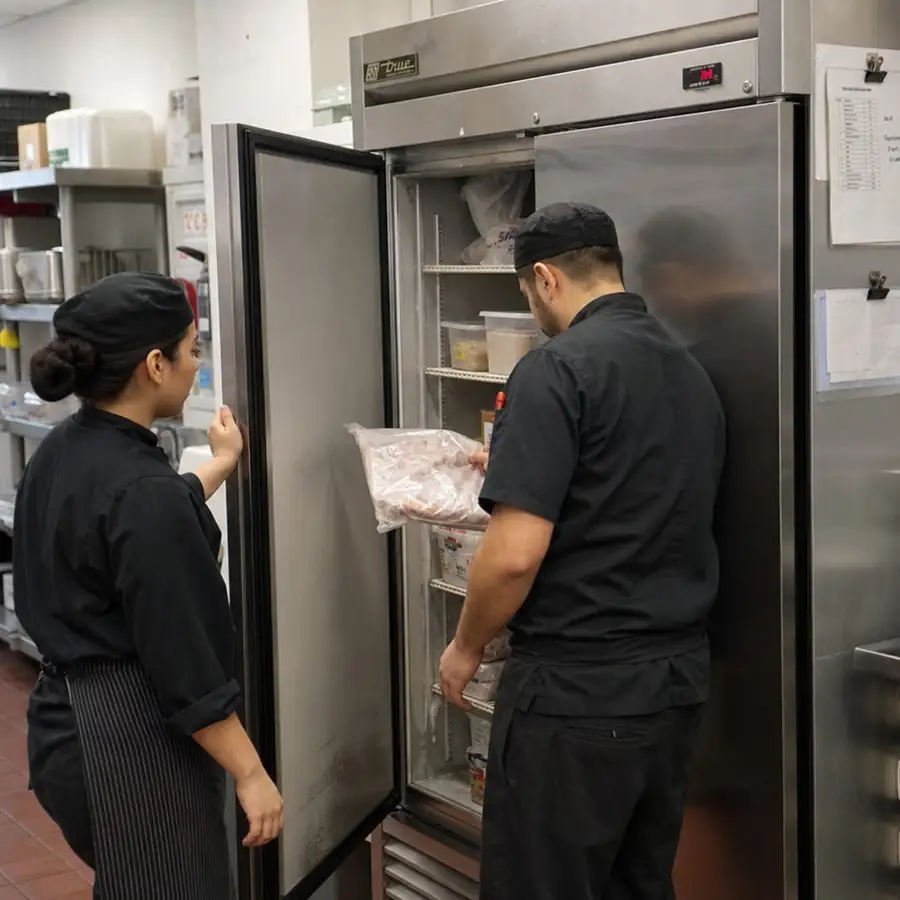
The best type of commercial freezer depends on what you store, how often staff need access, and where the unit will sit. A busy line cook grabbing ingredients all night needs a different setup than a market displaying frozen desserts or a caterer transporting frozen food between locations. Start with use case first, then compare features.
Common commercial freezers include:
- Reach-in freezers: A strong everyday choice for restaurants, bakeries, cafés, and convenience stores. They offer upright storage, fast access, and one-, two-, or three-section designs. A reach-in restaurant freezer works well when staff need frequent access to frozen ingredients during service.
- Chest freezers: Good for bulk storage, large cuts, odd-shaped items, and lower-turnover inventory. Because cold air stays low when the lid opens, chest models often retain temperature well, but they can be harder to organize without baskets or dividers.
- Undercounter freezers: Useful in tight kitchens, bars, prep lines, and stations where frozen items need to stay close to the work surface. A compact commercial kitchen freezer can reduce unnecessary steps and keep small-volume products within reach.
- Worktop freezers: Similar to undercounter models, but with a prep surface on top. They are helpful when space is limited and every piece of freezer equipment must serve more than one purpose.
- Glass-door merchandising freezers: Designed for customer-facing frozen products. They support visibility and browsing, making them common in markets, cafés, ice cream shops, and grab-and-go retail areas.
- Walk-in freezers: Best for high-volume commercial cold storage. They require more planning, more space, and usually professional installation, but they can support restaurants, commissaries, institutions, and food production businesses with large inventory needs.
- Portable freezers: Built for mobility, catering, events, transport, and temporary storage. They are not usually the main foodservice freezer, but they can solve specific off-site or overflow needs.
If you are comparing commercial freezer reviews, pay attention to the reviewer's business type. A model praised by a small bakery may not be ideal for a high-volume restaurant, and a retail merchandising freezer may not belong on a hot cook line.
Matching freezer types to real business scenarios
A pizza shop may keep a pizza prep table beside the freezer so toppings stay within reach.
Different businesses ask different things from commercial refrigeration. A single freezer can look impressive on paper but still slow down a kitchen if the door swing blocks traffic, the shelves do not fit your containers, or the compressor struggles in a hot room. Thinking through daily movement helps you avoid those issues before purchase.
For a full-service restaurant, reach-in freezers often work well near prep or cook areas, while walk-in storage may handle bulk deliveries. A small café might rely on an undercounter unit for pastries, smoothie fruit, or dessert components. A bakery may need upright storage for sheet pans and frozen dough, while a grocery store may prioritize glass doors, lighting, and product visibility.
A catering company may combine stationary commercial cold storage with portable units for transportation. A bar or concession stand might need compact storage for frozen garnishes, novelty items, or packaged products. In every case, the best commercial freezers are the ones that support your service pattern without creating bottlenecks.
Use this quick decision guide:
- Need frequent staff access during service? Start with a reach-in, undercounter, or worktop freezer.
- Need bulk storage with fewer openings? Consider a chest freezer or walk-in freezer.
- Need customers to see products? Look at glass-door merchandising freezers.
- Need storage under a prep area? Choose an undercounter or worktop model.
- Need off-site storage or transport? Add a portable freezer to your commercial freezing plan.
- Need major capacity for deliveries and production? Plan for walk-in commercial cold storage.
How do you choose the right freezer size?
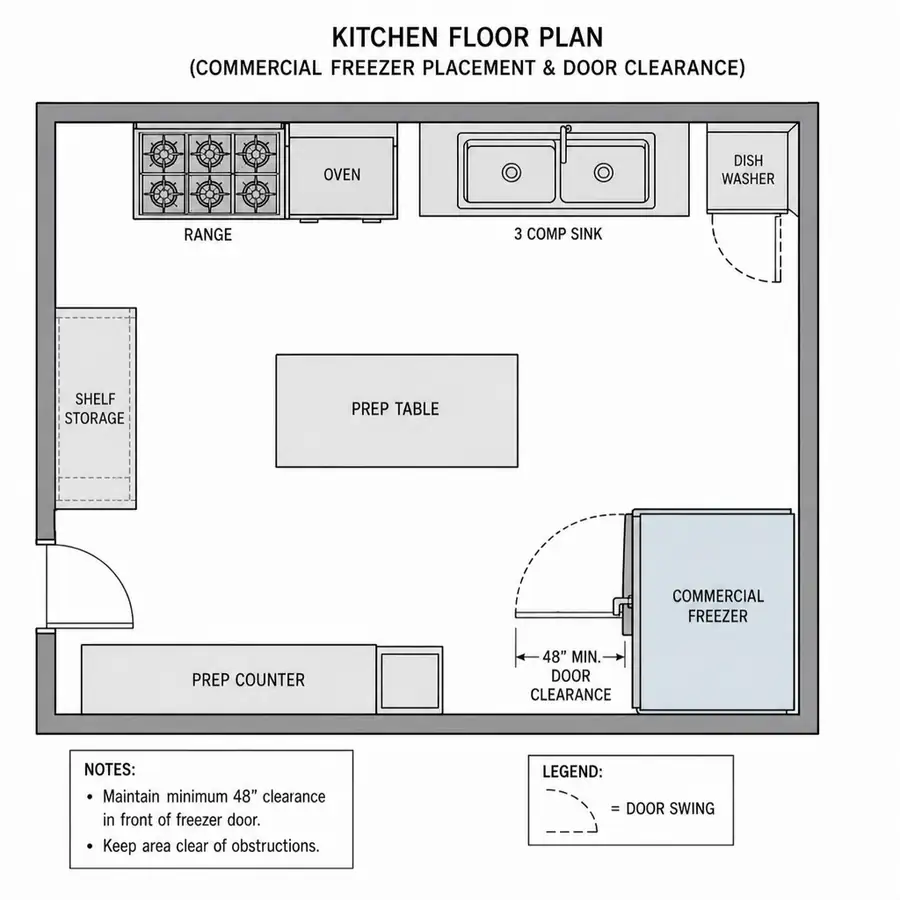
Check the aisle on a commercial kitchen layout so the door swing does not block the prep table.
Choose capacity by estimating what you store at peak volume, how often deliveries arrive, how your menu changes, and how much room you need for growth. A freezer that is constantly packed too tightly can block airflow, cause uneven freezing, and make inventory harder to rotate. A freezer that is mostly empty may cost more to buy and operate than your business requires.
Begin with your actual inventory rather than a generic size chart. List your frozen products, case sizes, container dimensions, delivery frequency, and busiest service periods. If you receive deliveries twice a week, you may need less storage than a business that buys in larger weekly drops. If your menu changes seasonally, leave space for temporary items.
A rough planning metric sometimes used in foodservice is to estimate freezer volume based on meals served, then add a buffer for irregular deliveries and growth. Treat this only as a starting point. Your storage style matters: boxed fries, frozen meats, gelato pans, sheet pans, and vacuum-packed proteins use space differently.
When choosing a freezer, check these sizing details:
- Interior cubic feet: The headline capacity, but not the whole story.
- Usable shelf space: Shelves, baskets, pan slides, and door design affect what actually fits.
- Door clearance: Make sure staff can open doors fully without blocking aisles or prep zones.
- Exterior footprint: Measure width, depth, height, and required ventilation space.
- Delivery path: Confirm the unit can pass through doors, hallways, ramps, and elevators.
- Future growth: Leave room for menu expansion, higher sales volume, or less frequent deliveries.
A good rule is to size for your busiest normal operating period, not your slowest month. If the freezer is part of a larger commercial refrigeration system, consider how it works alongside coolers, prep tables, and dry storage so your entire inventory flow makes sense.
Energy efficiency affects more than the utility bill
Plan the freezer with a commercial refrigerator so both cabinets share one service routine.
Energy-efficient freezers can reduce operating costs, but efficiency also affects temperature stability, compressor workload, kitchen comfort, and maintenance stress. A lower purchase price may not be a bargain if the unit runs constantly, leaks cold air through weak gaskets, or struggles in a hot back-of-house environment.
Look for practical efficiency features such as:
- High-quality insulation: Thick cabinet insulation helps the freezer hold temperature and recover faster after door openings.
- Tight magnetic door gaskets: Good seals prevent warm air infiltration and frost buildup.
- Self-closing doors: Helpful in busy kitchens where staff may leave doors slightly open.
- LED lighting: Especially useful in glass-door or merchandising units because it improves visibility with less heat output than older lighting.
- Efficient compressors and fans: These support steady cooling without unnecessary energy use.
- Smart temperature controls: Digital controls and alarms can help staff catch problems before they become expensive.
- Appropriate defrost system: Automatic defrost can reduce labor, while manual defrost may suit some lower-access storage situations.
Energy use is part of total cost of ownership. The purchase price is only one line item. Also consider installation, ventilation, maintenance, repairs, downtime risk, lost product risk, and the expected workload of the freezer. For many businesses, a more durable and efficient commercial freezer is easier to justify when it protects inventory and reduces daily friction.
Compressor placement and kitchen conditions matter
Keep the cabinet clear of ranges and leave a path to the three-compartment sink.
The compressor is the heart of a commercial freezer, and where it sits can affect performance, cleaning, and service access. Top-mounted and bottom-mounted compressors each have tradeoffs, so the better choice depends on your kitchen environment.
A top-mounted compressor may be useful in kitchens where the floor is dusty, greasy, or frequently mopped. It can stay farther from debris and may free up lower cabinet space. However, top-mounted systems can be harder to reach for service, and they may pull in warmer air if the room's heat collects near the ceiling.
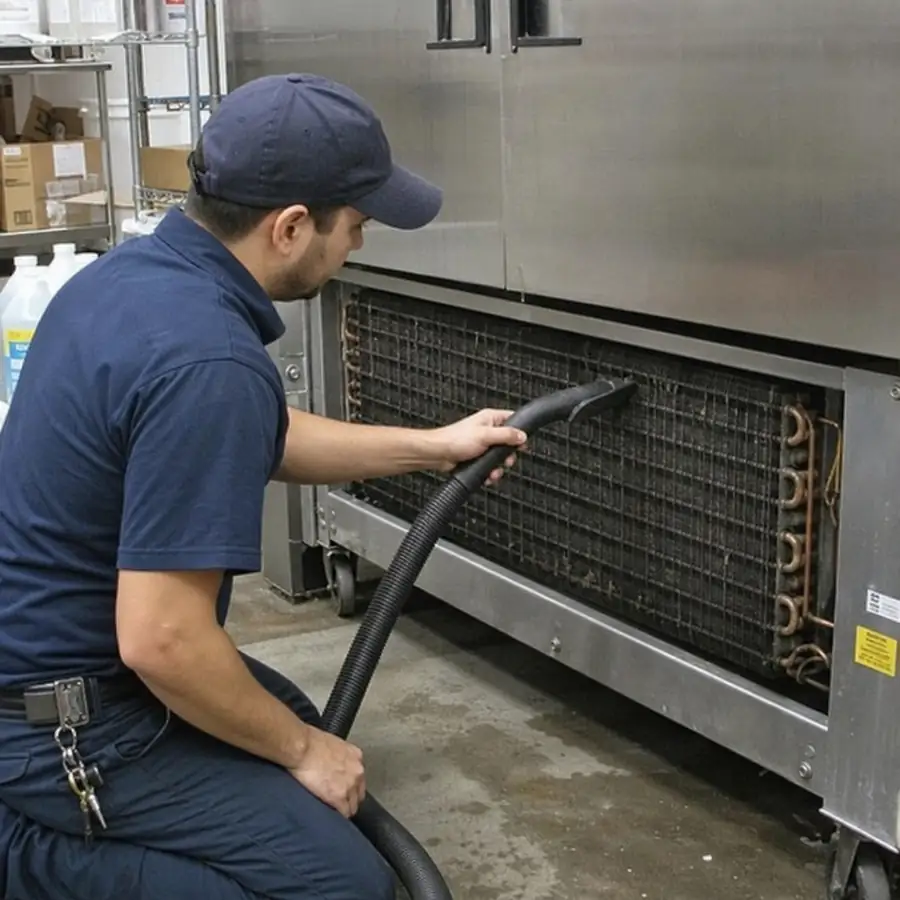
A bottom-mounted compressor is often easier for technicians to access and may perform well in warmer kitchens because it draws air from lower areas. It can also make lower shelves easier to reach by raising the cabinet floor slightly. The drawback is that bottom systems can collect dust, flour, grease, and debris more easily, which makes coil cleaning especially important.
If your operation produces flour dust, such as a bakery or pizza shop, pay close attention to condenser coil access and cleaning routines. If your kitchen is hot, crowded, or poorly ventilated, ask whether the unit is rated for the environment where it will actually operate. Commercial freezing performance depends on real conditions, not just brochure specifications.
Features that separate dependable models from frustrating ones
Casters help when the freezer sits beside stainless steel work tables.
Commercial freezer reviews often focus on brand, price, and capacity, but daily usability comes from smaller details. The right features make the unit easier to clean, easier to organize, and less likely to disrupt service.
Prioritize features that match your workflow:
- Adjustable shelving: Helps accommodate different box sizes, pans, and containers.
- Heavy-duty casters or legs: Casters make cleaning and repositioning easier, while legs may provide a stable setup in some kitchens.
- Durable door hardware: Hinges, handles, and latches take constant abuse in foodservice environments.
- Temperature display: Staff should be able to check status quickly without opening the door.
- Alarms: Door-open and high-temperature alarms can prevent product loss.
- Easy-clean interiors: Smooth surfaces, removable shelves, and accessible corners save labor.
- Locking doors: Useful for retail, shared kitchens, and controlled inventory.
- NSF or sanitation-focused design: For many food businesses, cleanability and food-safe construction are essential considerations.
Do not pay for features you will never use, but do not ignore features that reduce labor every day. A freezer that is easy to load, clean, monitor, and service is often more valuable than one that simply offers more cubic feet.
How should you compare the best commercial freezers?
Drink programs should compare ice machines and a walk-in cooler in the same plan.
Compare the best commercial freezers by looking at fit, function, efficiency, serviceability, and long-term operating cost together. A model is not "best" in isolation. It is best when it suits your menu, space, access needs, budget, and maintenance capacity.
Use this buyer checklist before you commit:
- Business need: What products will the freezer hold, and how often will staff access them?
- Freezer type: Does the style match your use case: reach-in, chest, undercounter, merchandising, walk-in, worktop, or portable?
- Capacity: Does it fit peak inventory without overpacking?
- Footprint: Will it fit the floor plan, ventilation requirements, and delivery path?
- Energy performance: Are the insulation, doors, lighting, controls, and compressor designed for efficient operation?
- Temperature reliability: Can it maintain safe freezing temperatures in your actual kitchen conditions?
- Maintenance access: Can staff or service technicians reach coils, filters, drains, and components?
- Organization: Will shelves, baskets, or pan slides support your inventory rotation?
- Cleaning: Are surfaces, gaskets, and hardware easy to keep sanitary?
- Support: Are parts, service, and documentation reasonably accessible?
This is also where reviews become useful. Instead of only scanning star ratings, look for patterns: comments about temperature recovery, noisy operation, door seal problems, frost buildup, service issues, or real capacity. The strongest commercial freezer reviews describe how the unit performs over time, not just how it looked on delivery day.
Maintenance protects performance and inventory
Coil cleaning matters on a commercial freezer and on an undercounter refrigerator.
Even excellent freezer equipment can perform poorly when maintenance is ignored. Dusty condenser coils, torn door gaskets, blocked airflow, and uneven placement all force the freezer to work harder. That can increase energy use, shorten component life, and raise the risk of product loss.
Create a simple maintenance rhythm:
- Daily: Check temperature displays, make sure doors close fully, and avoid blocking internal airflow.
- Weekly: Wipe door gaskets, inspect shelves, clean spills, and confirm products are organized for first-in, first-out rotation.
- Monthly: Inspect gaskets for cracks, gaps, or stiffness. Look for frost buildup, unusual noise, and slow temperature recovery.
- Every 30 to 90 days: Clean condenser coils, with frequency based on dust, grease, flour, and kitchen conditions.
- As needed: Schedule professional service for persistent alarms, temperature swings, ice buildup, damaged hardware, or compressor issues.
Good habits also improve food safety. Label products clearly, avoid overloading shelves, cool products properly before freezing when appropriate, and train staff not to prop doors open. A commercial kitchen freezer should support disciplined inventory control, not become a frozen storage mystery box.
Final takeaway for choosing a freezer
After type, size, and service access are set, compare models at The Horeca Store.
A smart commercial freezer purchase starts with workflow, not a spec sheet. Decide what you need to store, how often you need access, where the unit will live, and how much capacity your busiest periods require. Then compare energy-efficient freezers, compressor placement, cleaning access, organization, and service support before making a final decision.
Use this commercial freezer buying guide as a practical filter: match the freezer type to your business, size it for real inventory, protect efficiency with the right features, and maintain it consistently. When a foodservice freezer fits the operation, it does more than keep food frozen. It helps protect revenue, reduce waste, simplify service, and make the entire kitchen run with less stress.