

Choosing the right electric fryer for a restaurant comes down to matching oil capacity, recovery speed, electrical service, footprint, ventilation, filtration, and daily menu volume. A small cafe may only need a countertop fryer for sides and snacks, while a high-volume quick service restaurant may need a heavy-duty fryer battery with built-in filtration and programmable controls.
A commercial fryer is not just a larger home appliance. It is a kitchen fryer designed for repeated batches, consistent temperature recovery, safer oil handling, and easier cleaning in a foodservice environment.
What is a commercial electric fryer?
A commercial electric fryer is a deep fryer powered by electric heating elements instead of gas burners. It heats oil in a frypot so restaurants can cook fries, wings, seafood, dough products, appetizers, and other fried menu items with consistent texture and color.
In this Commercial Electric Fryer Buying Guide for Restaurants, the key idea is simple: buy for the work your fryer must do during peak service, not just for the space it occupies. The right electric commercial fryer should support your menu, staff workflow, utility setup, cleaning routine, and long-term operating costs.
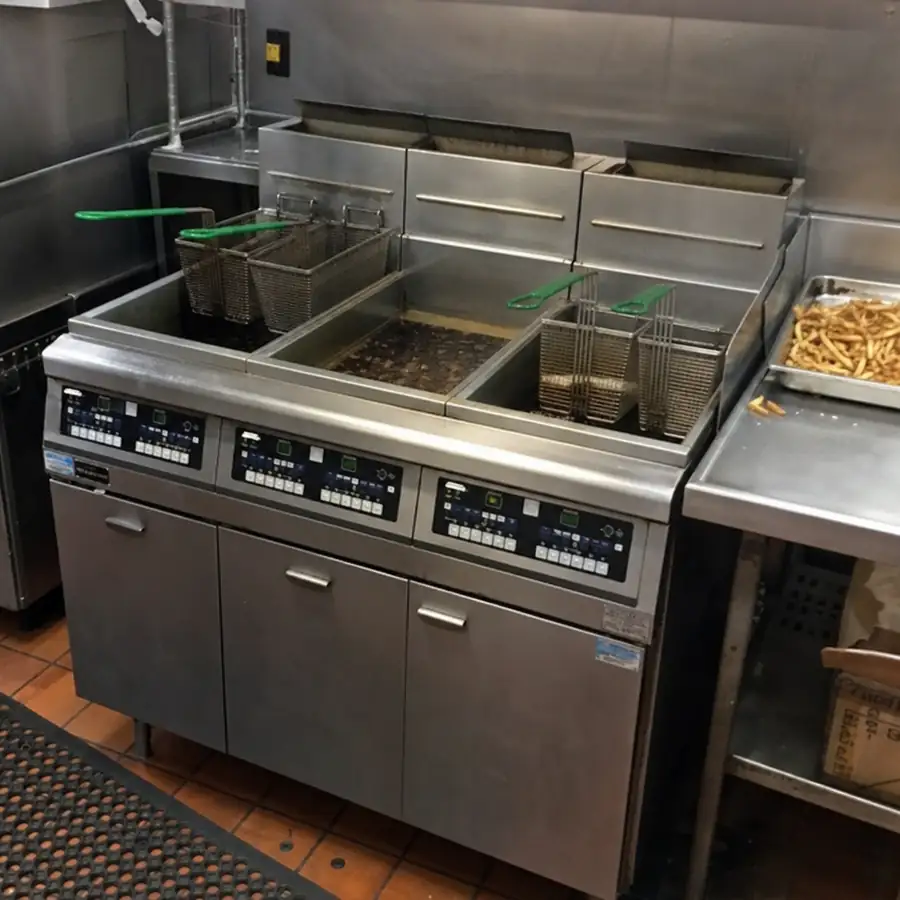
Main fryer types and configurations
A fryer basket should match the batch, not only the tank width.
Commercial deep fryer electric models come in several practical formats. Each one solves a different space, volume, or menu problem.
Countertop fryers
Fryer accessories such as a drain and a cover belong with the small unit.
A countertop fryer is compact and sits on a prep table, equipment stand, or counter. It is best for cafes, bars, concession stands, bakeries, food trucks, and restaurants that fry limited portions.
This option works well for mozzarella sticks, fries, falafel, churros, doughnuts, or backup production. Waring's WDF75RC, for example, is listed as an 8.5 lb compact countertop deep fryer, which places it in the light-duty or support-fryer category rather than the high-volume fry station category.
Floor-standing fryers
A fry dump station gives fries a place to drain beside the tank.
A floor-standing electric fryer is built for heavier service. It usually has a larger frypot, stronger recovery, and a more durable cabinet than a small countertop unit.
This is the common restaurant fryer choice for casual dining, quick service restaurants, hotel kitchens, cafeterias, and catering operations. If fried food is a core revenue driver, a floor model is usually more appropriate than a small electric fryer.
Single-tank fryers
A pressure fryer is a different choice when chicken is the main item.
A single-tank commercial fryer gives you one shared oil well. It is simple, efficient, and useful when you mainly fry one product group, such as fries or chicken tenders.
The drawback is flavor transfer. If you fry fish, dough, and fries in the same oil, quality can suffer and allergen control becomes more complicated.
Split-tank fryers
A split-tank fryer divides the frypot so two oil zones can operate separately. Pitco describes split tank designs as having a divider that keeps one basket frying separately from the other side.
This is useful for smaller menus with multiple fried items, such as seafood on one side and fries on the other. It can also reduce wasted oil when demand is low because one side can be used at a time.
Fryer batteries
A fryer battery connects multiple fryers into one line. This is common in high-volume restaurants where fries, chicken, fish, and appetizers need dedicated production zones.
Vulcan notes that fryer workspaces can be configured as freestanding fryers or as connected batteries of up to four units. That type of setup suits stadiums, supermarkets, and busy restaurant lines where throughput matters.
Ventless fryer options
Commercial cooking equipment around a ventless unit still has to pass the local code check.
A commercial electric fryer ventless setup may be considered where traditional hood installation is difficult, such as kiosks, convenience stores, food courts, or certain front-of-house concepts. These units typically combine frying equipment with enclosed filtration and fire-suppression features.
Ventless does not mean "no rules." Always confirm local code, fire requirements, grease vapor limits, and manufacturer installation instructions before purchasing.
Key specifications that affect real performance
A breading basket stays out of the oil and handles the breaded items.
Specifications are not just technical details. They determine how quickly you can serve guests, how much oil you use, how much labor cleaning requires, and whether the equipment fits your building.
Use this checklist before comparing models:
- Oil capacity: Larger oil capacity supports more food per batch and better temperature stability. A small fryer may be fine for appetizers, while a heavy-duty fryer with a larger frypot is better for peak lunch and dinner rushes.
- Production output: Output depends on oil capacity, element power, recovery speed, and basket size. If the fryer cannot recover temperature quickly, food absorbs more oil and service slows.
- Electrical requirements: Electric commercial deep fryer models may require specific voltage, phase, amperage, and wiring. Confirm your panel capacity before ordering.
- Footprint: Countertop units save floor space, while floor models need clearance, landing space, and safe traffic flow.
- Controls: Basic thermostats suit simple menus. Digital or programmable controls help standardize cook times across staff shifts.
- Filtration: Built-in or portable filtration can help extend oil life, reduce manual handling, and improve consistency. Vulcan describes built-in KleenScreen PLUS filtration as an option for many fryers and also offers a portable MF-1 filtration unit.
- Basket configuration: Twin baskets allow smaller batch control. Larger baskets help with volume but can overload oil if staff fill them too heavily.
- Drain design: A clear, accessible drain makes oil changes safer and faster. Poor drain access increases labor and spill risk.
- Recovery speed: Faster recovery helps maintain crispness when frozen food drops oil temperature.
- Energy efficiency: ENERGY STAR-certified or high-efficiency models may lower operating costs over time. Vulcan lists ENERGY STAR-certified fryer options in its portfolio.
Which electric fryer fits your business?
Hotel kitchens should size for banquet rushes, then match hotel supplies to the rest of the line.
The best electric commercial fryer is the one that matches your food volume, space, utilities, and menu separation needs. Do not buy the largest industrial fryer by default; buy the fryer that supports your rush periods without wasting oil, energy, or labor during slower hours.
Here is how common foodservice businesses should think about the decision:
For a small operation, a countertop fryer may be enough if fried items are a side offering. For a restaurant built around fries, chicken, fish, or appetizers, a commercial deep fryer electric floor model usually provides better speed, durability, and oil management.
Brand and model examples to know
Brands and models change over time, so use these examples as category references rather than final specifications. Always verify current details with the manufacturer, dealer, or a foodservice equipment supplier such as the Horeca Store before ordering.
Waring WDF75RC represents the compact countertop fryer category. Its 8.5 lb format is useful for light production, add-on menu items, or backup frying in tight spaces.
Vulcan CEF Series sits in the electric countertop/floor-adjacent performance category. Vulcan lists CEF40 and a 75 lb CEF Series Electric Counter Fryer among its fryer options, making the line relevant for operators who want electric performance in a counter-style configuration.
Pitco electric models, including ROV and Solstice electric fryer families, are geared toward commercial fry stations. Pitco's materials reference reduced oil volume electric fryers and split-tank options, which are useful when oil management and menu separation are priorities.
Frymaster electric fryers are another major foodservice category. Frymaster positions its lineup around full-size fryers, space-saving options, electric models, oil-conserving designs, faster recovery, and smarter controls.
Comparing common buying options
A french fry holder is the service piece once the fries leave the basket.
A factual comparison helps narrow the field before you request quotes.
Countertop vs floor-standing
Choose a countertop fryer when space is tight, output is moderate, and fried food is not your main category. It is easier to place and often simpler to clean, but it can become a bottleneck during rushes.
Choose a floor-standing electric commercial deep fryer when you need repeated batch cooking, larger baskets, faster recovery, and a more permanent fry station. It takes more space and utility planning, but it is better suited to high-volume service.
Single tank vs split tank
Choose a single tank if you fry one main product type or need maximum batch space. It is straightforward and efficient for dedicated fries or chicken.
Choose a split tank if you need separation. It helps protect flavor quality and gives operators flexibility during slow periods.
Basic controls vs programmable controls
Basic controls are suitable for experienced cooks and simple menus. They keep the equipment straightforward.
Programmable controls help standardize results when many staff members use the fryer. They are especially useful for quick service restaurants, hotels, schools, and kitchens with high staff turnover.
Manual filtering vs built-in filtration
Manual filtering can work for low-volume operations with disciplined cleaning routines. It usually costs less upfront but requires more labor and oil handling.
Built-in filtration is better when oil is expensive, volume is high, and staff need a safer, repeatable process. Over time, easier filtration can support better food quality and lower waste.
Installation, cleaning, service, and ownership cost
A used commercial gas fryer is a separate plan when gas is already on site.
Installation starts before purchase. Confirm voltage, phase, plug or hardwire requirements, breaker capacity, clearance, ventilation, fire protection, and floor or counter support.
Cleaning should be simple enough that staff actually do it correctly. Look for removable baskets, accessible heating elements, clear drains, smooth tank surfaces, and filtration that fits your workflow.
Maintenance affects total cost of ownership. A lower-priced electric fryer may cost more over time if it uses more oil, slows service, lacks parts availability, or requires frequent repairs.
Before buying, ask about:
- Warranty coverage: Know what parts, labor, and travel are included.
- Service network: Confirm local technician availability.
- Replacement parts: Baskets, elements, thermostats, gaskets, and drain parts should be obtainable.
- Oil filtration process: Understand whether filtration is manual, portable, or built in.
- Training needs: Staff should know fill levels, safe draining, filtering, boil-out, and shutdown procedures.
A fryer is a production tool, not a one-time purchase. Oil, labor, electricity, downtime, cleaning chemicals, and service calls all belong in the buying decision.
FAQs
A fried chicken food truck still follows the same peak-hour sizing rule.
1. Is an electric fryer better than a gas fryer for restaurants? It depends on utilities, menu, and location. Electric fryers can be a strong choice where gas is unavailable, where precise electric controls are preferred, or where the kitchen is already planned around electric equipment.
2. What size commercial fryer do I need? Choose size based on peak-hour portions, not average daily sales. If fried food is central to your menu, choose a larger floor model or multiple fryers instead of relying on one small unit.
3. Can I use a countertop fryer in a restaurant? Yes, if it is rated for commercial use and approved for your application. A countertop fryer is best for lower-volume items, secondary stations, cafes, bars, and space-limited kitchens.
4. Do electric fryers need a hood? Many commercial fryers require ventilation, but requirements vary by equipment type and local code. A commercial electric fryer ventless model may be an option only if it is approved for your location and use case.
5. How often should fryer oil be filtered? Filtering frequency depends on volume, food type, breading, temperature discipline, and oil quality standards. High-volume kitchens often filter more frequently to protect flavor, color, and oil life.
Final buying decision
The used commercial fryer buying guide covers the pre-owned side of the same choice.
Use this Commercial Electric Fryer Buying Guide for Restaurants as a practical shortlist tool before comparing quotes.
- If your requirement is light snacks in a small space -> consider a countertop fryer.
- If your requirement is steady fries, wings, or appetizers -> consider a floor-standing electric fryer.
- If your requirement is seafood and fries on the same line -> consider a split-tank commercial fryer.
- If your requirement is high-volume quick service -> consider a heavy-duty fryer battery with filtration.
- If your requirement is tighter oil control -> consider reduced-oil-volume or built-in filtration models.
- If your requirement is limited hood access -> consider a ventless electric commercial fryer only after code review.
- If your requirement is consistent results across shifts -> consider programmable controls.
The right deep fryer should make service faster, food more consistent, and cleaning easier. Start with your menu and peak demand, confirm utilities and ventilation, then compare capacity, filtration, controls, parts, warranty, and support before making the final purchase.