A commercial charbroiler is a high-heat commercial grill built to give restaurants, cafés, food trucks, hotels, and catering kitchens the char marks, smoky flavor, and fast searing power customers expect from grilled food. This Commercial Charbroiler Buying Guide walks through the main types, sizing choices, fuel options, real model evidence, trade-offs, and buying checklist so you can choose equipment that fits your menu, staff, space, and budget. Treat the grill as commercial cooking equipment and add a walk-in cooler when deliveries outgrow the line.
What is a commercial charbroiler?
Plan the line with an exhaust hood and a commercial range beside the grill.
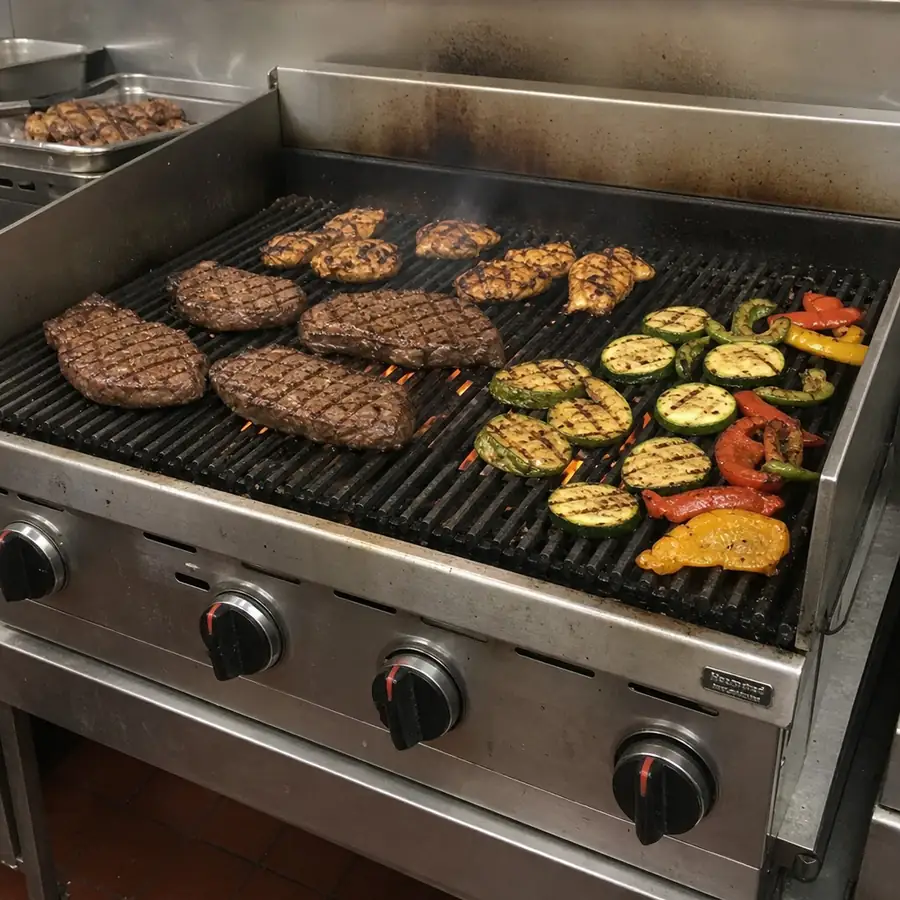
A commercial charbroiler is restaurant equipment designed to cook food on open grates over intense heat, usually from gas burners, electric elements, radiants, lava rock, or infrared-style heat systems. Unlike a flat commercial grill or griddle, a charbroiler commercial unit leaves grill marks, allows fat to drip away from the food, and creates a more flame-grilled style of cooking for burgers, steaks, chicken, seafood, vegetables, skewers, and sandwiches.
The core job is simple: deliver repeatable high-heat commercial cooking during service without slowing the line. A countertop unit may sit beside fryers and prep tables, while a larger range-mounted or floor model can anchor a steakhouse, burger operation, hotel kitchen, or campus dining line. The right model depends less on the label "best commercial charbroiler" and more on menu volume, utility access, hood capacity, cleaning labor, and service expectations.
Who is a commercial charbroiler for?
Many stations also keep a chef base refrigerator or a worktop refrigerator within reach of the grate.
A commercial charbroiler is for food businesses that need visible grill marks, fast searing, and a distinct grilled flavor profile as part of daily production. It is especially useful when grilled proteins or vegetables are not occasional specials but recurring menu drivers.
Different operations should think about the purchase in different ways:
- Burger restaurants and quick-service kitchens: A 24-inch to 36-inch gas charbroiler often works well when speed, recovery, and compact line placement matter. The operational reason is simple: burgers need consistent heat zones and fast turnover without occupying a full range.
- Steakhouses and full-service restaurants: Wider gas units, heavier grates, and higher heat output usually make more sense because thick proteins demand stronger recovery after every load. These kitchens often have trained cooks, larger hoods, and a budget that supports heavier-duty restaurant equipment.
- Cafés, delis, and small kitchens: A compact countertop charbroiler or commercial electric charbroiler can be enough for grilled chicken, vegetables, and limited lunch menus. The constraint is usually space, ventilation, and staff simplicity rather than maximum production.
- Food trucks and ghost kitchens: An electric charbroiler may be attractive where gas access is restricted, but electrical capacity and hood requirements must be checked first. The operational reason is utility flexibility, not always superior grilling flavor.
- Hotels, schools, and catering operations: Larger commercial cooking programs may need multiple heat zones, durable grates, and easy cleaning because menu cycles and service windows vary. A heavy-duty unit can reduce bottlenecks when many portions are finished at once.
Specifications, capacity, and features that shape performance
High-volume kitchens often add a commercial convection oven and a walk-in refrigerator beside the grill station.
The most important specifications are width, cooking depth, heat source, burner or element layout, grate material, controls, gas or electrical requirements, and cleaning design. Width is often the first sizing decision: small menus may manage with 12 to 24 inches, while busier kitchens often look at 36 inches or larger. Cooking depth matters too because a deeper grate gives cooks more room to create hot and cooler zones.
Gas units are commonly chosen when a kitchen wants aggressive searing and traditional char flavor. For example, the magic chef 36 in commercial countertop radiant charbroiler is listed by Magic Chef with a 36-inch width, 24-inch cooking depth, six cast iron burners, 120,000 BTU total output, heavy-duty cast iron grates, stainless steel body, grease trap, and 6-inch adjustable legs. That model data shows why 36-inch radiant gas units are common in medium-volume restaurants: they provide meaningful grate space without requiring a full floor broiler footprint.
Electric options serve a different purpose. A commercial electric charbroiler can work where gas is unavailable, where building rules make gas difficult, or where an operator wants electric utility planning across the cook line. Star Manufacturing lists Star-Max electric charbroilers in 24-inch and 36-inch categories, showing that electric charbroiler equipment exists for real commercial applications, not just light-duty warming.
A commercial charbroiler griddle combo is another practical route when the menu needs both grate marks and flat-top contact cooking. It can help a small kitchen grill chicken while also cooking eggs, onions, buns, or smash-style items on a flat surface. The trade-off is that each cooking surface is smaller than it would be on dedicated equipment, so combo units are best for balanced menus, not one extremely high-volume grill program.
Selection criteria that matter before you buy
Check the unit against the commercial kitchen layout and the rest of the commercial kitchen on that line.
Choosing the right charbroiler starts with the menu, then moves to utilities, space, labor, maintenance, and total value. Do not begin with brand alone; begin with what the unit must accomplish during your busiest realistic service period.
Look closely at these factors:
- Menu load: Count how many grilled portions must be cooked at peak demand, not average demand.
- Heat source: Choose gas for strong char and recovery, electric for utility flexibility, and combo layouts for mixed menus.
- Cooking width and depth: Match grate area to ticket volume while leaving enough line space for landing, seasoning, and plating.
- Grate weight and shape: Heavy cast iron grates hold heat well but require careful cleaning and lifting.
- Radiant, lava rock, or infrared-style design: Radiants are easier to manage, lava rock can enhance flare and flavor, and infrared-style systems may support fast searing depending on model design.
- Ventilation and clearances: Installation manuals for gas countertop charbroilers emphasize checking gas type, clearance requirements, non-combustible placement, and hood or exhaust conditions before service.
- Sanitation and certification: NSF explains that commercial food equipment certification supports sanitation requirements for materials, design, and cleanability, which can matter during inspections.
- Service access: Make sure knobs, pilots, burners, elements, grates, radiants, and grease drawers can be cleaned or replaced without disrupting the whole line.
Operational consequences of the wrong choice
The miss also shows up in commercial kitchen equipment choices, including an undercounter refrigerator that is too far from the grill.
An undersized charbroiler creates ticket delays, inconsistent doneness, and frustrated cooks who overload the grates. A unit with too much output for the menu can waste energy, overheat the line, and increase hood demand. A model that is difficult to clean can also raise fire risk, reduce flavor quality, and shorten component life.
This is where commercial charbroiler repair planning becomes part of the buying decision. Gas burners, pilots, valves, radiants, grates, grease drawers, and electric elements all need attention over time. A cheaper unit that saves money upfront may cost more if parts are hard to source or if staff cannot clean it properly between rushes.
Cost, value, and trade-offs
Put the grill in the restaurant kitchen equipment cost plan and in the restaurant startup equipment budget.
The lowest purchase price is not always the best value, but the most expensive unit is not automatically the smartest choice either. Value comes from matching duty level to the work: light daily use can justify a simpler countertop model, while constant lunch and dinner grilling may call for heavier construction, stronger recovery, and easier serviceability.
Gas charbroilers usually win when flavor, speed, and high-volume searing are priorities. Electric models can make sense when gas installation is expensive or unavailable, but they may require careful electrical planning. Combo units can save space and support menu variety, yet they limit the maximum capacity of each surface.
Evidence from model data and expert sources
A sandwich prep table or a pizza prep table is the cold-side match when the menu also builds plates off the grill.
Real specifications make the decision clearer. Magic Chef's 36-inch countertop radiant model lists 120,000 BTU, six burners, 24-inch cooking depth, cast iron grates, stainless construction, and a grease trap, which is a useful benchmark for medium-duty gas countertop capacity. Vulcan's 60-inch VACB60 lists 187,000 BTU, 11 grates, cast iron char-radiants, individual burner controls, and a larger 61-inch by 33-inch footprint, illustrating how high-volume kitchens move into wider, heavier equipment.
These examples do not prove one model is universally best. They show why operators should compare BTU or wattage, usable grate area, control zones, cleaning design, and footprint together. If you are shopping through the horeca store or another restaurant equipment supplier, ask for spec sheets before purchasing and confirm the unit fits your hood, gas line or electrical service, counter, and menu.
Product reference: Magic Chef 36-inch commercial countertop radiant charbroiler
What it specializes in
Medium-duty countertop gas charbroiling for restaurants that want a familiar radiant-style setup with strong heat output.
Main equipment/product categories
Commercial countertop radiant gas charbroiler for grilled proteins, vegetables, sandwiches, and line cooking.
Key models
Magic Chef Commercial 36-inch Countertop Radiant Charbroiler, including the MCCCB36A listing and related 36-inch E-Series references.
Best suited for (business type)
Small to mid-size restaurants, burger shops, cafés with grilled entrées, and catering prep kitchens that need a 36-inch charbroiler commercial unit without a full floor model.
Operating volume / capacity
Best for moderate volume where six burners and a 24-inch cooking depth support steady but not unlimited grilling demand. Very high-volume steakhouses may need wider or heavier-duty equipment.
Staff skill requirement
Staff should understand heat zones, preheating, grate brushing, grease management, and safe gas-equipment startup and shutdown.
Space / infrastructure considerations
Requires adequate counter support, hood coverage, gas compatibility, clearance planning, and room to remove grates and grease components for cleaning.
Service, parts & maintenance
Plan routine cleaning of grates, radiants, burners, pilots, and grease areas. Confirm parts availability before purchase if uptime is critical.
Warranty considerations
Check the current warranty document from the seller or manufacturer before buying because coverage can vary by channel and installation conditions.
Budget / pricing positioning
Generally positioned as a practical commercial option for operators who want a 36-inch gas charbroiler without moving into premium heavy-duty pricing.
Equipment to pair with it
Pair with a prep table, refrigerated drawers, fryer, holding cabinet, landing shelf, and cleaning tools designed for cast iron grates.
Limitations / trade-offs
It uses gas, needs proper ventilation, and may not suit buildings without suitable gas infrastructure. Like any radiant gas unit, it also requires disciplined grease and grate maintenance.
Related equipment categories
Commercial grill stations, countertop griddles, range charbroilers, commercial electric charbroiler units, and commercial charbroiler griddle combo equipment.
Comparison Table: common commercial charbroiler options
Wider lines often add a reach-in refrigerator and a reach-in freezer next to the charbroiler.
- Product/Brand: 24-inch gas charbroiler Best For: Cafés, food trucks, and low-to-medium volume restaurants. Capacity/Volume: Limited grate area for focused menus. Key Feature: Compact gas searing. Price Tier: Usually lower than larger gas units. Trade-off: Can bottleneck during rush periods.
- Product/Brand: 36-inch gas charbroiler Best For: Burger shops, casual restaurants, and steady grill stations. Capacity/Volume: Moderate volume with better heat zoning. Key Feature: Strong balance of footprint and production. Price Tier: Mid-range. Trade-off: Requires hood space, gas capacity, and daily cleaning labor.
- Product/Brand: Commercial electric charbroiler Best For: Sites with limited gas access, controlled kitchens, and some ghost-kitchen layouts. Capacity/Volume: Depends heavily on wattage, element design, and electrical service. Key Feature: Electric installation flexibility. Price Tier: Varies by amperage and construction. Trade-off: May not deliver the same flame-grilled character as gas.
- Product/Brand: Commercial charbroiler griddle combo Best For: Small kitchens with mixed menus and limited line space. Capacity/Volume: Split capacity across grate and flat-top cooking. Key Feature: Two cooking methods in one footprint. Price Tier: Mid-range to premium depending on build. Trade-off: Less dedicated surface area for each task.
- Product/Brand: Heavy-duty wide gas charbroiler Best For: Steakhouses, hotels, institutions, and high-volume restaurants. Capacity/Volume: High-volume production with more control zones. Key Feature: Larger grate area and stronger recovery. Price Tier: Higher. Trade-off: More space, ventilation, fuel, and cleaning demand.
Commercial Charbroiler Buying Checklist
- Menu fit: Buy for the foods you grill every day, not occasional specials.
- Peak volume: Size the grate for your busiest rush so cooks do not overload it.
- Fuel source: Confirm gas, propane, or electrical service before choosing the model.
- Hood and clearance: Verify ventilation, wall clearances, and code requirements before delivery.
- Cooking surface: Choose grate width, depth, and material based on menu and cleaning labor.
- Heat control: Look for enough independent zones to cook different products at once.
- Cleaning access: Removable grates, grease drawers, and reachable burners reduce downtime.
- Certification: Check sanitation and safety listings required by your local authority.
- Parts and repair: Confirm availability of commercial charbroiler repair support in your area.
- Total value: Balance purchase price against output, durability, utilities, maintenance, and labor.
what size commercial charbroiler do i need for a small restaurant?
A small restaurant often starts with a 24-inch or 36-inch unit, depending on how central grilled items are to the menu. If grilled food drives lunch and dinner tickets, choose more grate area than your quiet periods suggest.
is a gas charbroiler better than an electric charbroiler?
A gas charbroiler is often preferred for strong heat recovery and classic flame-grilled character. An electric charbroiler can be the better choice when gas is unavailable, installation is difficult, or the building already supports electric commercial cooking.
can i use a commercial charbroiler instead of a griddle?
Not always, because a charbroiler and griddle cook differently. A charbroiler gives grill marks and drip-away cooking, while a griddle gives full-surface contact for eggs, pancakes, smash burgers, onions, and buns.
what is the best commercial charbroiler for a burger shop?
The best commercial charbroiler for a burger shop is usually a gas model with enough width for peak ticket volume, durable grates, accessible grease management, and reliable service support. A 36-inch unit is a common starting point, but high-volume burger concepts may need more width or multiple units.
do i need professional installation for a charbroiler commercial unit?
Yes, professional installation is strongly recommended for gas, electrical, ventilation, and clearance compliance. Always check the manufacturer manual, local code, and health department expectations before operating.
Related/internal links
Service-side planning often includes ice machines and a commercial freezer.
- Commercial grill maintenance guide
- Gas charbroiler vs electric charbroiler comparison
- Restaurant equipment startup checklist
- Commercial griddle buying guide
- Commercial charbroiler repair and cleaning schedule
A smart Commercial Charbroiler Buying Guide does not end with a brand name; it ends with a fit check. Match the unit to your menu, peak volume, utilities, space, staff skill, maintenance plan, and budget, then confirm the spec sheet before you buy.