
To start a coffee shop, you need equipment for brewing coffee, grinding beans, serving drinks, storing ingredients, washing tools, preparing food, displaying products, and running daily service. The core list usually includes espresso machines, coffee grinders, brewing equipment, refrigeration, sinks, smallwares, beverage dispensers, POS hardware, storage, and cleaning supplies. Your exact coffee shop setup will depend on your menu, business model, expected order volume, available space, staffing, and service style, so treat this guide as a planning framework rather than a one-size-fits-all shopping cart.
A strong equipment plan does more than help you buy things. It helps your bar flow smoothly, keeps staff from crossing paths during rushes, protects product quality, and prevents last-minute gaps that slow opening day.
What equipment do you need to start a coffee shop?
You need espresso machines, coffee grinders, refrigeration, an ice machine, smallwares, and a POS system matched to the menu.
You need a balanced mix of coffee-making equipment, kitchen equipment, cold storage, service tools, cleaning systems, and operational supplies. A basic coffee shop equipment list should cover every step of the guest experience: storing beans and milk, grinding, brewing, steaming, serving, taking payment, washing, and restocking.
Before purchasing café equipment, operators can research commercial equipment categories from suppliers such as The Horeca Store to build a structured equipment checklist around their menu and workflow. That research matters because a grab-and-go espresso bar, a bakery café, and a full-service brunch café may all sell coffee, but their equipment needs can be very different.
Start with the menu, not the machine
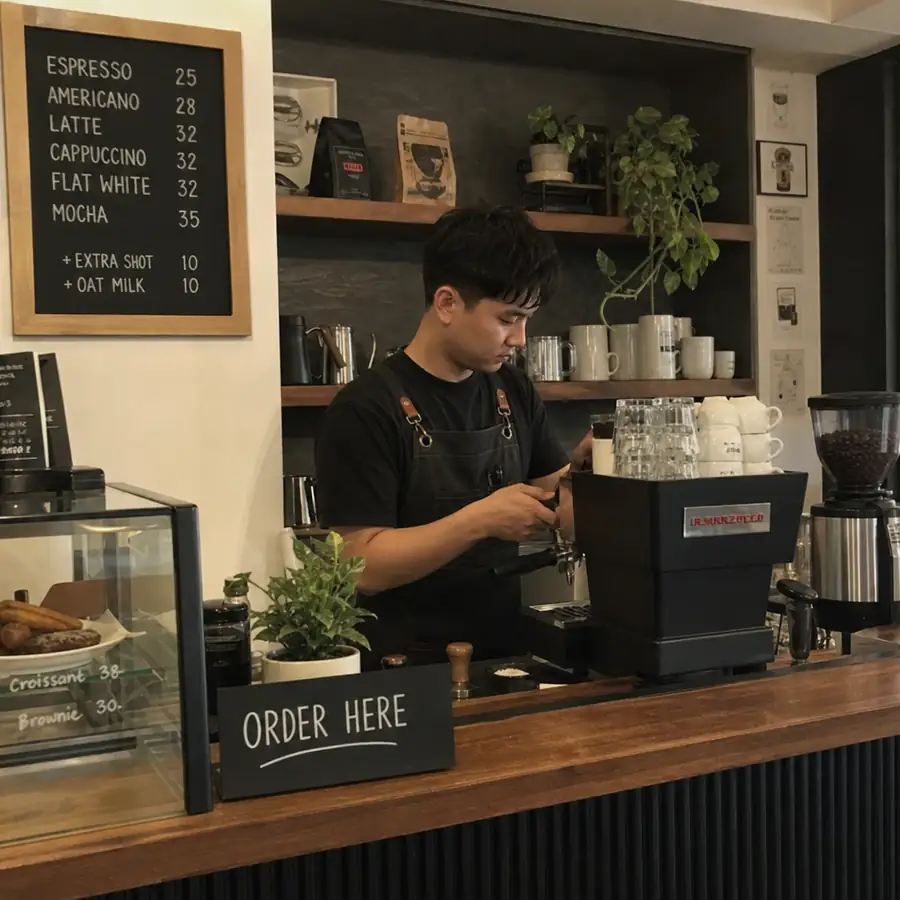
Start with the menu, not the machine, and review essential steps for a coffee shop business plan before buying an espresso grinder.
Many first-time owners begin by choosing an espresso machine, but the smarter place to start is your menu. Your drinks, food items, and service promises determine which equipment is essential, which is optional, and which can wait until sales volume grows.
If your café focuses on espresso drinks, invest attention in grinders, water filtration, milk storage, and barista tools. If you also serve smoothies, iced tea, batch coffee, pastries, or sandwiches, your equipment list expands into beverage dispensers, prep counters, refrigeration, display cases, and possibly cooking or warming equipment.
Use these questions to shape your checklist coffee shop equipment list:
- Will you serve espresso drinks, drip coffee, cold brew, tea, smoothies, or bottled beverages?
- Will food be prepared in-house, finished on-site, or supplied by a bakery or commissary?
- How many drinks do you expect to make during your busiest hour?
- Will guests order at a counter, from a table, online, or through a pickup window?
- How many people will work behind the bar at the same time?
- How much undercounter, back-of-house, and dry storage space do you have?
This step keeps your purchases tied to actual operations. It also helps you avoid filling a small bar with impressive equipment that does not support your most profitable items.
Core brewing and espresso equipment
Core brewing and espresso equipment includes a commercial espresso machine, espresso grinders, and the best commercial coffee machines for cafes.
Espresso machines are usually the centerpiece of a specialty café. The right machine should match your drink volume, counter space, electrical and plumbing capacity, and service expectations. A small shop may only need a compact commercial espresso machine, while a busy café may need more group heads, stronger steam performance, and space for multiple baristas to work at once.
Coffee grinders are just as important as the espresso machine. Many cafés use one grinder for their main espresso, another for decaf or a second espresso option, and a separate grinder for batch brew or pour-over service. Consistent grinding supports better extraction, more predictable flavor, and faster staff training.
Your brewing equipment may include:
- Commercial espresso machine
- Espresso grinders and bulk coffee grinders
- Batch brewer for drip coffee
- Airpots, thermal servers, or satellite servers
- Pour-over brewers, kettles, and scales if manual brewing is part of the menu
- Cold brew system or concentrate storage containers
- Hot water tower for tea and Americanos
- Water filtration system suited to your local water quality
Water filtration deserves special attention. Poor water can affect taste, damage equipment, and create maintenance problems. Build filtration into your plan early so it is not treated as an afterthought after installation begins.
Barista tools and coffee accessories
Barista tools and coffee accessories support the espresso machine; also review benefits of using the atom e1 grinder for consistent dosing.
A coffee shop barista tools and equipment list should include the small items that make service consistent. These tools may not cost as much as major machines, but missing them can create frustrating bottlenecks during a rush.
Common barista tools include tampers, tamping mats, knock boxes, milk pitchers, shot glasses, digital scales, timers, thermometer options, cleaning brushes, microfiber towels, and group head cleaning supplies. You will also need coffee accessories for guest service, such as cups, lids, sleeves, stirrers, napkins, straws, trays, and condiment organizers.
Do not underestimate quantities. One milk pitcher is not enough for a working café, and a single towel will not carry a morning shift. Plan for backup tools, washing cycles, and separate items for dairy and non-dairy milks if your workflow requires it.
Essential barista tools often include:
- Tampers sized for your portafilters
- Distribution tool or leveling tool if used in your workflow
- Knock box or undercounter knock drawer
- Steaming pitchers in multiple sizes
- Digital scales for espresso and manual brewing
- Timer or integrated brew timing tools
- Cleaning tablets, brushes, and backflush supplies
- Bar towels and sanitizer-safe wiping cloths
- Cup organizers and lid dispensers
These details help new staff work faster and make drinks more consistently. They also make the bar easier to reset between orders.
Refrigeration, storage, and food-preparation equipment
Refrigeration, storage, and food-preparation equipment should include an undercounter refrigerator, a commercial refrigerator, and a blender for drinks.
Refrigeration protects quality and keeps ingredients close to the point of service. Most cafés need undercounter refrigerators for milk, reach-in refrigerators for backup stock, and freezers if they use frozen pastries, smoothie fruit, ice cream, or prepared food components.
Food-preparation needs vary widely. A coffee-only kiosk may need minimal kitchen equipment, while a café serving breakfast sandwiches or salads may require prep tables, cutting boards, food processors, mixers, warming equipment, and holding units. Local health codes and your food handling model will influence what is required.
Typical refrigeration and prep items include:
- Undercounter milk refrigerators
- Reach-in refrigerator or freezer
- Refrigerated prep table for food service
- Dry storage shelving
- Ingredient bins and airtight containers
- Work tables and prep counters
- Cutting boards, knives, and small prep tools
- Pastry display case or refrigerated display case
- Microwave, toaster, panini press, or oven if suited to the menu
This is where the equipment list for coffee shop planning becomes highly individual. If your menu is simple, keep prep lean. If food is central to revenue, give the kitchen area enough capacity to avoid slowing down the coffee bar.
Service, display, and beverage station essentials
Service, display, and beverage station essentials often include a display case, beverage dispensers, a panini press, and a toaster.
Coffee shop essentials also include the items customers interact with directly. A clean, organized service area can increase order accuracy, reduce staff interruptions, and make the café feel more polished.
For ready-to-drink options, beverage dispensers can support iced tea, lemonade, infused water, batch cold brew, or self-serve drinks. Display cases can help showcase pastries, sandwiches, bottled drinks, and grab-and-go items. The right display setup depends on whether you want staff-served, self-serve, refrigerated, or ambient merchandising.
Plan for these service-area supplies:
- Countertop or refrigerated display cases
- Beverage dispensers for cold drinks
- Self-serve condiment station
- Cup, lid, sleeve, and straw organizers
- Menu boards or digital display screens
- Pickup shelves for mobile and takeaway orders
- Trash, recycling, and bus bins
- Guest trays, napkins, and utensils
A well-planned service area also protects the barista workflow. Guests should be able to add sugar, grab napkins, and find their drink without blocking the ordering line or espresso station.
Cleaning, warewashing, and safety supplies
Cleaning, warewashing, and safety supplies should include a commercial dishwasher sized to cups, pitchers, and dishes.
Cleaning equipment is not glamorous, but it is part of opening a café responsibly. You need supplies for dishwashing, surface sanitation, espresso machine cleaning, floor care, waste handling, and employee hygiene.
Depending on your layout and local rules, you may need a three-compartment sink, handwashing sinks, mop sink, commercial dishwasher, grease management solutions, or specific sanitizer systems. Always confirm requirements with local authorities and contractors before finalizing the buildout.
Build your sanitation checklist around daily reality:
- Hand sinks with soap and towel dispensers
- Three-compartment sink or approved warewashing setup
- Dishwasher if required or operationally useful
- Sanitizer buckets and test strips
- Espresso machine detergent and grinder cleaning products
- Brooms, mops, floor signs, and drain cleaning tools
- Trash cans and liners for bar, kitchen, and guest areas
- First-aid kit and basic safety signage
Good cleaning systems protect your team as much as your guests. When supplies have clear homes and routines are easy to follow, staff are more likely to maintain standards during busy shifts.
Technology and checkout equipment
Technology and checkout equipment should include a POS system and POS hardware so tickets reach the bar without delay.
Your POS system is part of your equipment plan because it shapes speed, reporting, and order flow. A café may need a POS terminal, card reader, cash drawer, receipt printer, kitchen printer, label printer, barcode scanner, customer display, and online ordering integration.
Think about where orders go after payment. Drinks may print at the espresso bar, food may print in the kitchen, and mobile orders may need labels or pickup tickets. If you operate with limited staff, simple routing and clear order screens can reduce mistakes.
Other useful operational technology may include:
- Wi-Fi router and secure network setup
- Security cameras
- Music system
- Time clock or scheduling software
- Inventory management tools
- Loyalty or gift card system
- Backup battery or surge protection for key devices
Technology should support hospitality, not complicate it. Choose systems your staff can learn quickly and that fit your actual service model.
How should you build a coffee shop equipment list with price?
Build a coffee shop equipment list with price around the espresso machine, grinders, refrigeration, and maximize your coffee experience with e1 prima if you compare prosumer machines.
A coffee shop equipment list with price should start with categories, then move into quotes, installation costs, accessories, freight, warranties, and maintenance. Instead of guessing a single number for each item, build a budget range and confirm final pricing with suppliers, contractors, and service providers.
Reviewing commercial equipment categories through resources such as The Horeca Store can help café owners compare equipment types before requesting quotes and finalizing their equipment budget. This is especially useful when comparing coffee shop, beverage, refrigeration, food-preparation, and hospitality equipment because each category affects both upfront cost and long-term workflow.
When budgeting, remember to include more than the machine itself:
- Purchase price or lease cost
- Freight, delivery, and installation
- Plumbing, electrical, and ventilation work
- Water filtration and replacement cartridges
- Required accessories and smallwares
- Cleaning products and maintenance parts
- Training time for staff
- Warranty coverage and service availability
If you want a coffee shop equipment list pdf for planning, create a simple document with columns in your own spreadsheet before exporting it. Include item name, category, priority, quantity, supplier, estimated price, confirmed quote, installation notes, and status. This gives you a living checklist that can be updated as your menu, floor plan, and budget become clearer.
A practical basic coffee shop equipment checklist
A practical basic coffee shop equipment checklist covers a commercial espresso machine, an ice machine, an ice bin, and smallwares.
Use this basic coffee shop equipment list as a starting point, then adjust it to your concept. A small kiosk may remove food-prep items, while a large café may need duplicates, higher-capacity machines, and more storage.
Coffee and beverage equipment:
- Espresso machine
- Espresso grinder and batch brew grinder
- Batch brewer and thermal servers
- Hot water dispenser
- Cold brew system or beverage dispensers
- Water filtration
- Scales, timers, kettles, and brew tools
Barista tools and serving supplies:
- Tampers, knock box, pitchers, and cleaning brushes
- Cups, lids, sleeves, napkins, stirrers, and trays
- Syrup pumps, sauce bottles, and condiment containers
- Pickup shelves and cup organizers
Kitchen and storage equipment:
- Undercounter and reach-in refrigeration
- Freezer if needed
- Prep tables and dry storage shelving
- Food display case
- Small kitchen equipment based on the menu
Operations and cleaning:
- POS hardware and printers
- Hand sinks and warewashing setup
- Sanitizer, towels, and cleaning chemicals
- Trash and recycling stations
- Safety supplies and signage
This checklist helps you see the café as a system. Every item should support speed, quality, safety, or sales.
Planning your café layout around workflow
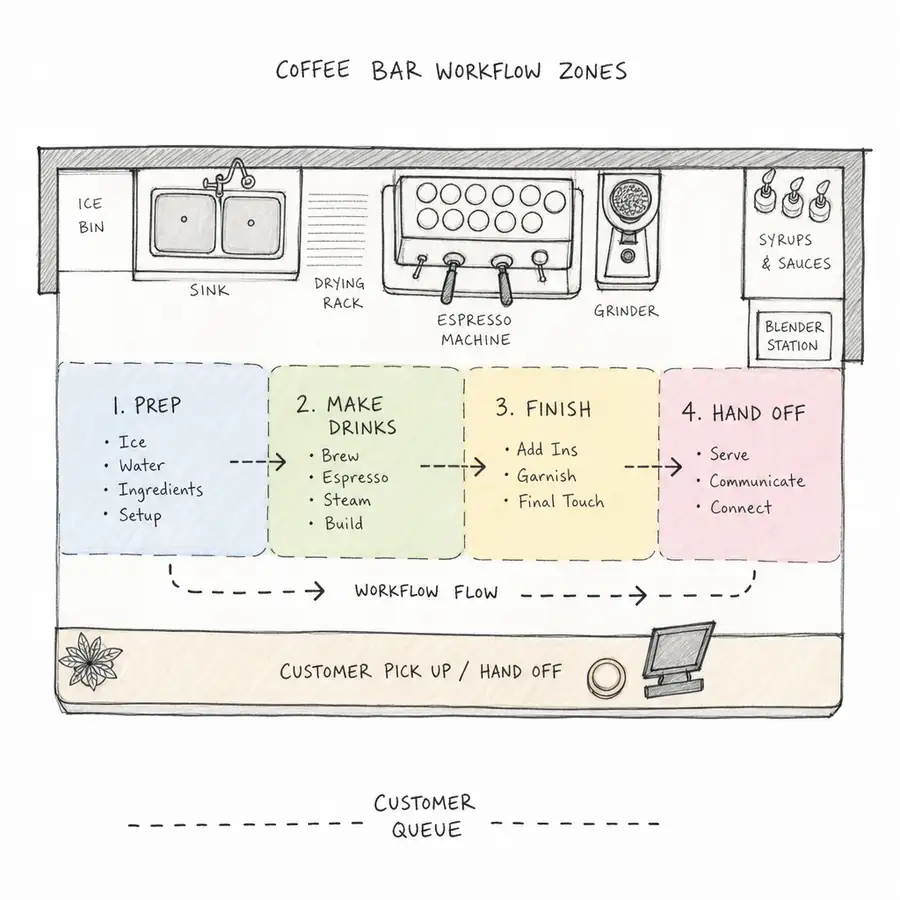
Planning your café layout around workflow keeps the espresso machine, espresso grinder, blender, and ice bin in one straight path.
Once you know what you need, place the equipment in the order your team will use it. Beans, grinders, espresso machines, milk refrigeration, cup storage, and pickup areas should form a logical path. Staff should not need to turn around repeatedly, cross behind each other, or leave the bar for basic supplies during peak service.
Think in zones: ordering, espresso, brewed coffee, cold drinks, food prep, pickup, dishwashing, and storage. Each zone should have the tools, supplies, and waste handling it needs nearby. The best coffee shop setup feels almost invisible because the work naturally moves from one step to the next.
Final takeaway
Final takeaway: source café equipment from The Horeca Store, then compare best commercial coffee machines for cafes, benefits of using the atom e1 grinder, essential steps for a coffee shop business plan, and maximize your coffee experience with e1 prima.
The right equipment list is not the longest list; it is the list that fits your menu, space, staff, order volume, service style, and budget. Start with your concept, map the workflow, then choose equipment that supports consistent drinks and smooth service.
If you are still comparing options, The Horeca Store can be a useful research resource for browsing commercial coffee shop equipment, beverage solutions, refrigeration, food-preparation products, and broader hospitality categories. Build your checklist carefully, confirm requirements before purchasing, and give your future team the tools they need to serve well from day one.