
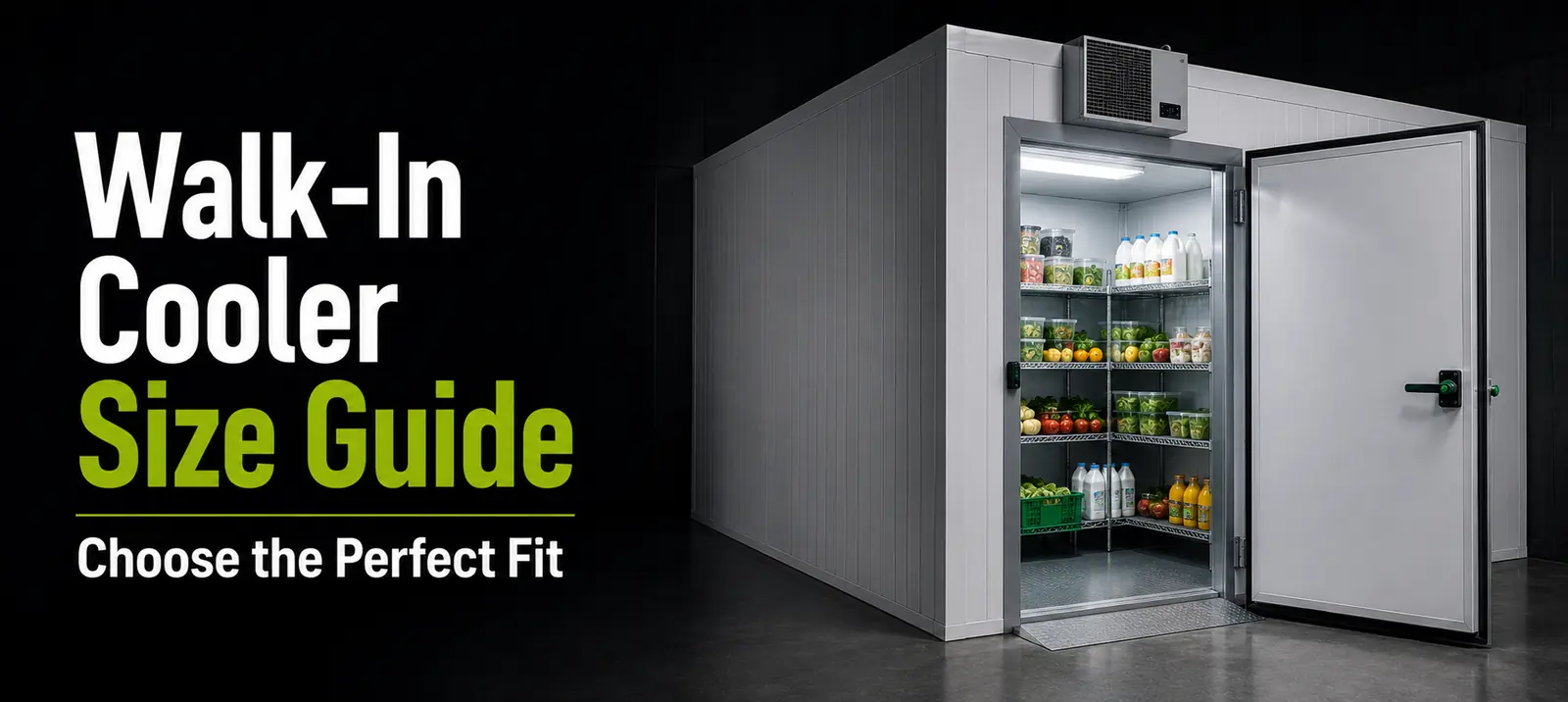
Choosing the right walk-in cooler size is crucial for any business involved in food storage. It ensures efficient cold storage and food preservation. A walk-in cooler is more than just a large refrigerator. It's a vital part of your operation. The size of your cooler affects energy use, storage capacity, and overall efficiency. Selecting the correct size involves considering several factors. These include the volume of goods, available space, and future growth.
Proper sizing helps maintain product quality and reduces spoilage. It also impacts your energy bills and operational costs. Walk-in coolers come in various sizes, from compact units to large custom-built rooms. Each option has its benefits and challenges. Understanding your specific needs is key to making the right choice. This guide will help you navigate the decision-making process. By the end, you'll be equipped to choose a walk-in cooler that fits your business perfectly.
Why Walk-In Coolers Matter for Cold Storage and Food Preservation
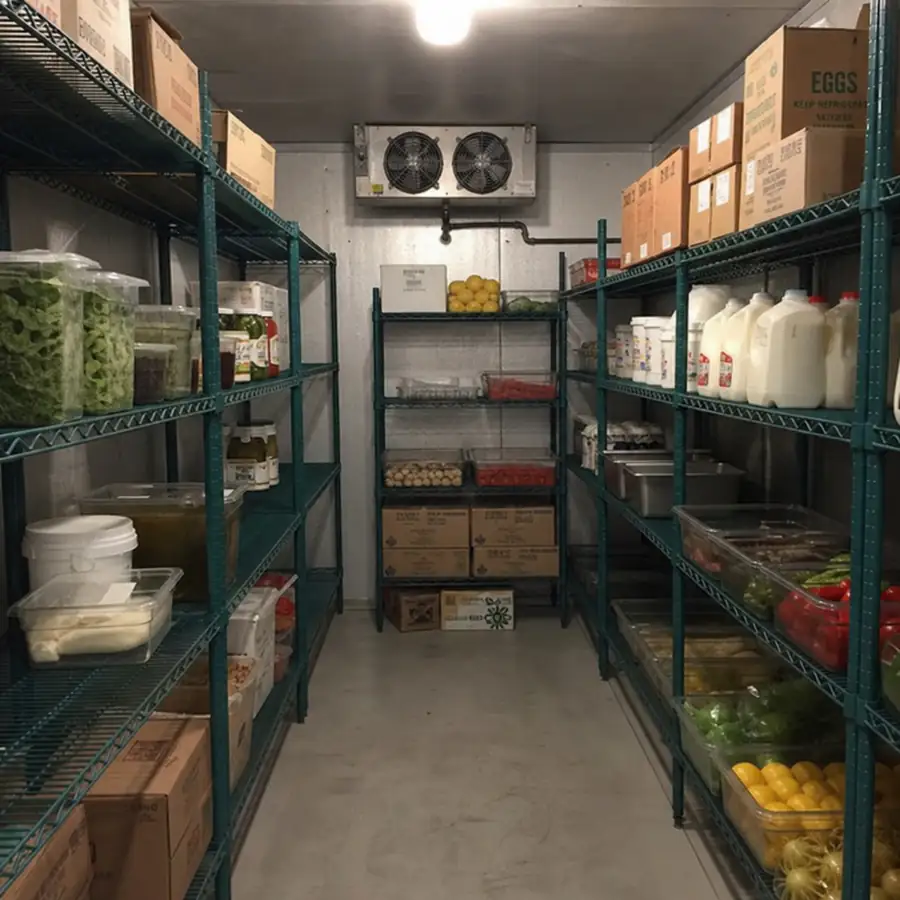
Walk-in coolers are indispensable in businesses that rely on cold storage and food preservation. They provide a controlled environment crucial for keeping perishable items fresh and safe. These coolers help maintain the quality of stored food by preventing spoilage and contamination. This is essential for businesses in the food service industry. A consistent cold storage environment can extend the shelf life of products. This means less waste and cost savings for businesses.
Walk-in coolers are beneficial for more than just food. They are also used to store flowers, pharmaceuticals, and other temperature-sensitive items. The importance of a walk-in cooler extends to several aspects of business operation:
- Temperature Control: Maintain consistent temperatures for stored items.
- Space Management: Efficiently manage large quantities of stock.
- Energy Efficiency: Reduce energy costs through better design and technology.
- Flexibility: Ability to cater to different storage needs. The right walk-in cooler can be a game-changer. It supports your operational efficiency and protects your inventory.
Key Factors to Consider When Choosing Walk-In Cooler Size
Selecting the right size for a walk-in cooler is essential for efficient cold storage. It's important to analyze several key factors to make the best choice. First, evaluate the amount of inventory you plan to store. Consider both current needs and future growth possibilities. Adequate space ensures that your stored items remain organized and accessible. The type of products you'll store also impacts size requirements.
Different products have unique cooling needs, affecting temperature settings and space utilization. The layout and available space in your facility are also crucial. A well-thought-out location ensures easy access and smooth operations. Additionally, energy efficiency and insulation are vital considerations. Proper insulation maintains consistent temperatures and reduces energy costs, directly impacting cooler size. Factors to Assess:
- Inventory Volume
- Product Type
- Facility Space It's equally important to consider budget constraints. Walk-in cooler prices vary significantly based on size and features. Weigh the initial investment against long-term savings in energy and reduced spoilage. Finally, think about the cooler's ease of installation and maintenance. Factor in these aspects to ensure your cooler remains a practical asset. Installation and Maintenance Aspects:
- Ease of Setup
- Future Maintenance Requirements Consulting with a professional can provide valuable insights. They can help assess your specific needs and recommend an optimal size. Choosing the right walk-in cooler size involves a comprehensive approach. Each factor contributes to creating a solution tailored to your business.
Calculating Your Storage Needs: Volume, Inventory, and Growth
Determining the right size for your walk-in cooler requires careful calculation of storage needs. Start by considering the total volume of items you plan to store. Understanding your inventory involves more than counting boxes. Consider the type of items and their stacking limitations. This ensures you efficiently use the available space. Predicting future growth is another factor to consider. Your business may expand, leading to increased storage needs.
Always plan for additional capacity to accommodate this growth. To calculate your required storage volume:
- Assess Current Inventory Needs
- Consider Seasonal Variations
- Factor in Potential Business Expansion Also, take into account the spatial arrangement of stored goods. Adequate air circulation is key to maintaining uniform temperatures within the cooler. Thinking about the future of your business helps in choosing the right cooler size. Overcrowding could result in spoilage or inefficient cooling. Balancing current inventory with future growth protects your investment. This foresight minimizes disruptions and optimizes cold storage efficiency.
Standard Walk-In Cooler Sizes and Custom Options
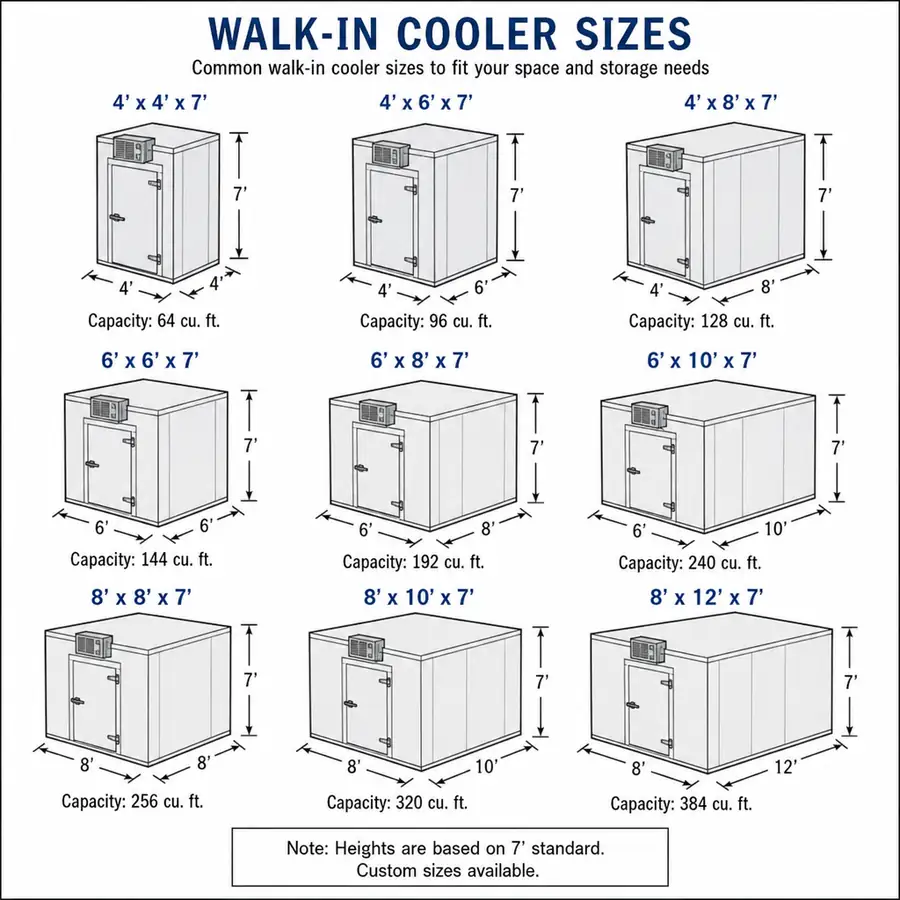
Walk-in coolers come in a range of standard sizes. This helps meet diverse business needs. These options typically range from small units to large, room-sized coolers. Standard sizes offer convenience and cost savings. They are easier to install and often more budget-friendly. However, standard units may not fit every facility perfectly. For businesses with unique requirements, custom options are available. Custom coolers can be tailored to specific dimensions and layouts.
This ensures optimal use of available space. When considering cooler sizes, weigh the benefits and limitations of each. A standard size may suffice for some. Others, though, might benefit from a more personalized solution. List of standard cooler sizes:
- Small: Usually around 6x6 feet
- Medium: Typically 8x10 feet
- Large: Often 10x12 feet or larger Custom coolers provide flexibility in storage solutions. They allow businesses to design cooling systems that match their specific needs. This customization enhances efficiency and usability.

Space Planning: Location, Layout, and Accessibility
Choosing the right location for your walk-in cooler is crucial. It impacts both efficiency and accessibility. Proximity to kitchen or storage areas saves time and effort in daily operations. The layout of the cooler should be well-organized. Good organization aids in quick retrieval of items. Ensure there’s ample space to move around and store items effectively. Accessibility is another key consideration. Easy access reduces time spent stocking and retrieving goods.
This is especially important during peak service times. When planning your cooler space, consider:
- Proximity to other equipment
- Workflow efficiency
- Ease of stock delivery Each item in this list can greatly influence cooler efficiency. A well-planned layout ensures seamless integration with existing operations. Additionally, the space around your cooler should allow for possible expansion or reconfiguration. Leave room for potential changes or upgrades in the future. This foresight can save costs and time later.
Energy Efficiency and Insulation: Impact on Size and Performance
Energy efficiency in a walk-in cooler is crucial. It affects your operational costs and environmental footprint. A well-insulated cooler saves energy and maintains consistent temperatures. Insulation quality plays a significant role. Properly insulated coolers require less energy to maintain set temperatures. This results in cost savings over time and reduces wear on cooling systems. To enhance energy efficiency, focus on:
- High-quality insulation materials
- Efficient sealing of doors and panels
- Appropriate refrigerant choice Each of these factors contributes to optimal performance. Efficiently designed coolers prevent energy loss and boost sustainability. A cooler with inadequate insulation struggles to maintain temperature. This impacts food preservation and increases energy consumption. Over time, this can lead to higher costs and potential spoilage. Always consider energy-efficient models with robust insulation. They provide long-term benefits by reducing utility bills and extending cooler lifespan.

Installation Requirements and Compliance Considerations
Installing a walk-in cooler requires careful planning. It's more than just placing it in a convenient spot. Proper installation impacts efficiency, safety, and regulatory compliance. Several factors need consideration for the installation process. Your cooler needs sufficient flooring support and ventilation. These factors ensure the cooler operates efficiently and safely. Before installation, check local building codes and regulations. Compliance is crucial to avoid legal issues and ensure safety.
Ignoring these can lead to costly modifications or penalties later on. Key compliance considerations include:
- Adhering to health and safety regulations
- Ensuring proper electrical setups
- Meeting fire safety standards Hiring experienced professionals for installation is highly recommended. They ensure the cooler is set up correctly and meets all compliance standards. This proactive approach reduces future risks and operational hurdles.
Future-Proofing: Planning for Expansion and Changing Needs
When investing in a walk-in cooler, consider future-proofing to accommodate growth. Businesses evolve, and storage needs may change. A cooler that meets today’s needs may not suffice tomorrow. Consider potential increases in inventory or new product lines. Planning for expansion now can save money and time in the future. It's more efficient to plan ahead than to retrofit a cooler later. To future-proof your cooler, think about:
- Storage capacity that can adapt to growth
- Flexible shelving configurations
- Modular designs for easy expansion Reviewing your business projections can guide you in choosing a cooler. This planning helps avoid disruptions and ensures your cooler aligns with future operational goals. Always consult with a professional to explore scalable options that match your growth forecast.
Maintenance, Monitoring, and Operational Tips
Maintaining a walk-in cooler is key to its longevity and efficiency. Regular checks help prevent costly repairs and downtime. Consistent maintenance also ensures optimal performance, preventing spoilage. Implementing a monitoring system can enhance control over temperature and humidity. These systems alert you to any changes, allowing for quick action. Monitoring protects your inventory's quality and safety. Operational efficiency can be achieved with some strategic practices.
For example, organize items to ensure proper airflow and distribute weight evenly. This reduces strain on the refrigeration unit and enhances cooling efficiency. Consider these maintenance tips for your walk-in cooler:
- Schedule regular professional inspections
- Clean coils and vents to improve airflow
- Check door seals for wear and tear Routine maintenance and monitoring ensure your walk-in cooler runs smoothly. These steps can extend its lifespan and keep your operations hassle-free. Prioritize these practices for uninterrupted cold storage and food preservation.

Frequently Asked Questions About Walk-In Cooler Sizing
Choosing the right walk-in cooler size can be daunting. Many business owners have similar concerns during this process. Addressing these can help streamline decision-making. What factors influence the ideal size? The amount and type of goods stored are crucial. Consider seasonal variations and future growth too. Is it better to choose a prefabricated or custom-built cooler? Prefabricated units are cost-effective and quick to install. Custom-built options offer flexibility tailored to unique needs.
How can energy efficiency affect cooler size? Efficient designs can reduce energy consumption and operational costs. Proper insulation and high-quality components enhance efficiency. Some common questions and quick answers include:
- What's the first step in sizing a cooler? Evaluate your current and future storage needs.
- How often should my cooler be serviced? Regular inspections every 6 to 12 months are ideal. Understanding these elements ensures you select the right cooler size. Proper sizing supports efficient operations and sustains business growth.
Complete Your Foodservice Setup with The Horeca Store
A properly sized walk-in cooler can make a major difference to food storage and kitchen efficiency, but successful foodservice operations also depend on reliable everyday supplies. The Horeca Store offers a wide range of foodservice essentials, including disposable food containers, takeaway cups, coffee cups, disposable cutlery, napkins, and other catering supplies.
Whether you are opening a new restaurant, expanding your catering business, upgrading a commercial kitchen, or improving your takeaway operation, having dependable foodservice products available can help keep your daily operations running smoothly. Explore The Horeca Store for quality hospitality and catering supplies designed to meet the needs of modern foodservice businesses.
Conclusion: Making the Right Choice for Your Business
Selecting the ideal walk-in cooler size is a significant business decision. It affects your cold storage efficiency and food preservation quality. Take into account future growth, storage needs, and energy efficiency. Assessing the space and layout ensures easy access and operational convenience. Consult with professionals to tailor options to your specific requirements. Their expertise can guide you to a solution that balances cost and functionality.
Ultimately, a well-chosen walk-in cooler boosts your business efficiency and safeguards your inventory. By planning thoroughly and considering all factors, you make an investment that delivers long-term benefits and satisfaction.