
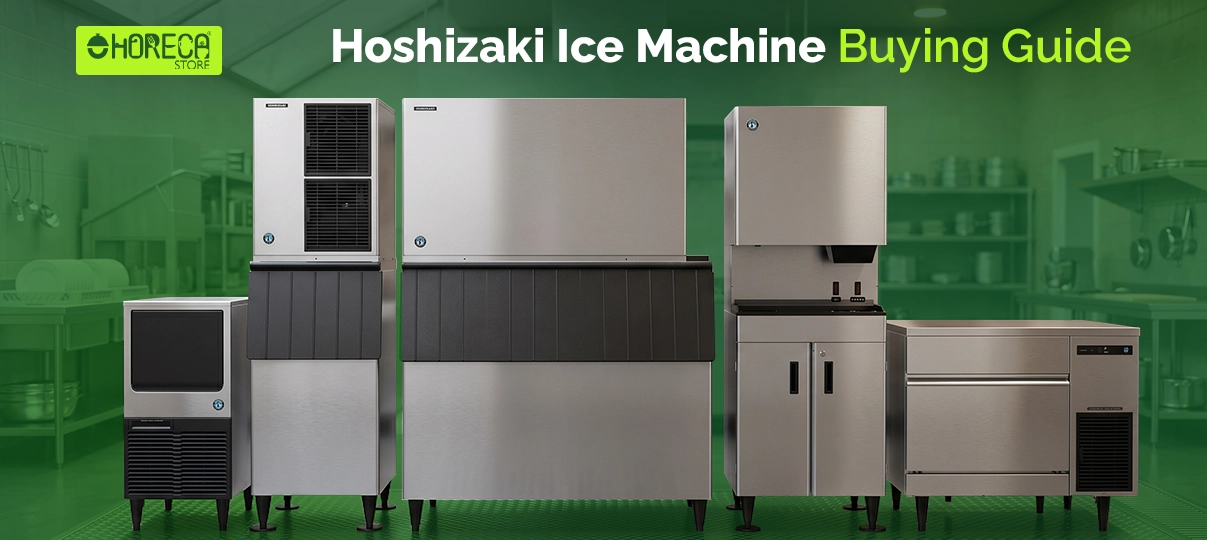
Whether you are opening a bustling downtown restaurant, managing a busy hospital cafeteria, or upgrading your hotel’s amenities, a reliable commercial ice machine is the unsung hero of your daily operations. When warm drinks are not an option, your ice maker must perform flawlessly under pressure. Among the top-tier brands dominating the hospitality and foodservice industries, the Hoshizaki ice machine stands out for its exceptional durability, innovative engineering, and superior ice quality.
However, with dozens of models, ice types, and condenser configurations available, selecting the perfect unit can feel overwhelming. This comprehensive guide will walk you through everything you need to know to choose, install, and maintain the ideal Hoshizaki ice maker for your business.
Understanding Your Daily Ice Demands
Before looking at specific models, you must determine exactly how much ice your establishment consumes. Underestimating your needs leads to frustrated customers and emergency ice deliveries, while overestimating results in wasted electricity and water.
Calculating Your Required Capacity
To avoid running out of ice during a dinner rush or a weekend heatwave, you should use a daily ice production capacity calculator. This involves taking your baseline metric (like the number of seats or rooms) and multiplying it by the standard industry consumption rates.
Here is a quick look at standard commercial kitchen ice production requirements:
- Restaurants: 1.5 to 2 pounds of ice per meal served.
- Cocktail Bars: 3 pounds of ice per seat.
- Hotels: 5 pounds of ice per room.
- Healthcare Facilities: 10 pounds of ice per patient bed.
Pro Tip: Always calculate for your busiest day of the week, and then add a 20% buffer to account for future growth and exceptionally hot weather.
Selecting the Right Ice Type for Your Customers
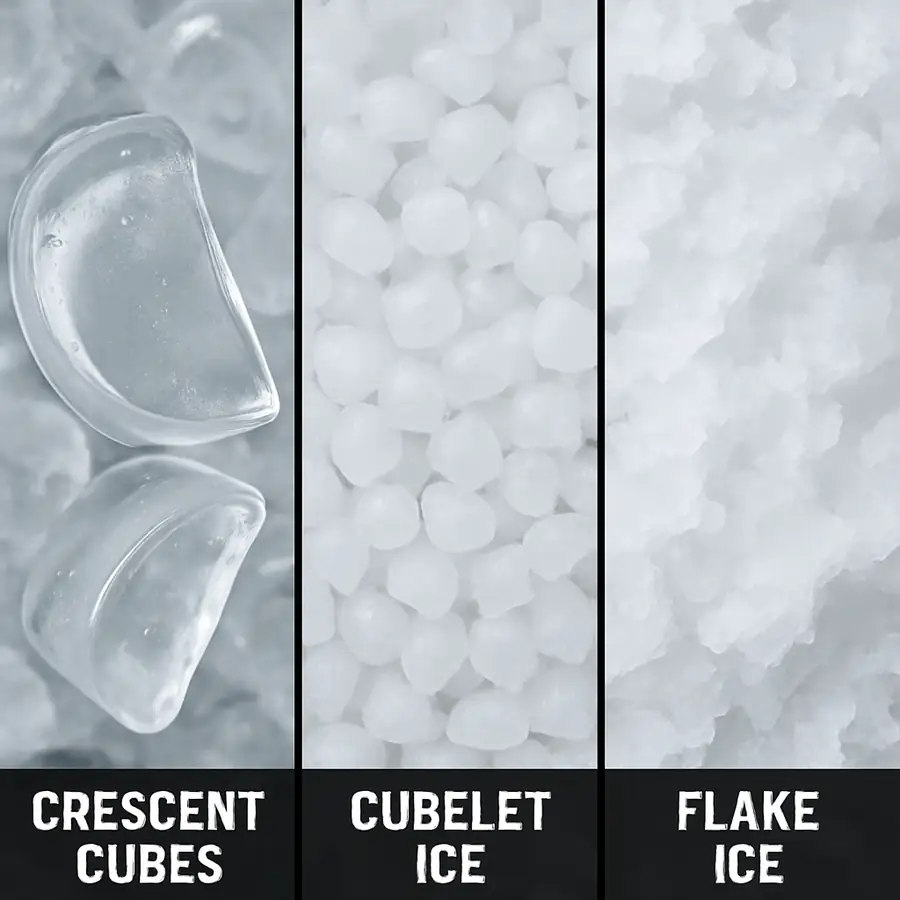
Not all ice is created equal. The shape and density of the ice you serve heavily impact drink presentation, liquid displacement, and even the flavor profile of the beverage. Hoshizaki offers several unique ice shapes tailored to specific industries.
The Signature Crescent Cube
Hoshizaki is perhaps best known for its patented crescent cube. The unique half-moon shape is not just for aesthetics; the Hoshizaki crescent ice benefits are highly practical. Because the cubes are individually formed on a stainless steel evaporator, they are exceptionally hard and melt very slowly. Furthermore, the crescent shape allows liquids to flow over the ice smoothly without splashing, and they pack tightly into a glass. This tight packing increases liquid displacement, meaning you pour slightly less liquid per drink without shortchanging the customer—a major boost for your bottom line.
Cubelet (Nugget) Ice
Often referred to as "chewable ice" or nugget ice, this type is incredibly popular in healthcare settings, quick-serve restaurants, and corporate breakrooms. The main Hoshizaki cubelet ice benefits include its soft, porous texture that absorbs the flavor of the beverage. It is gentle on the teeth, making it highly desirable for fountain sodas and patient hydration.
Flake Ice
Flake ice consists of small, soft shavings that mold easily around objects. This makes it the premier choice for seafood displays, salad bars, and therapeutic applications in physical therapy clinics.
Form Factor: Modular vs. Undercounter Models
Once you know how much ice you need and what shape it should be, it is time to look at the physical footprint of the machine.
Modular Ice Makers
For high-volume operations, modular machines (ice machine heads) are the go-to choice. These units sit on top of a separate ice storage bin or beverage dispenser. They are capable of producing anywhere from 300 to over 2,000 pounds of ice per day.
Undercounter Solutions
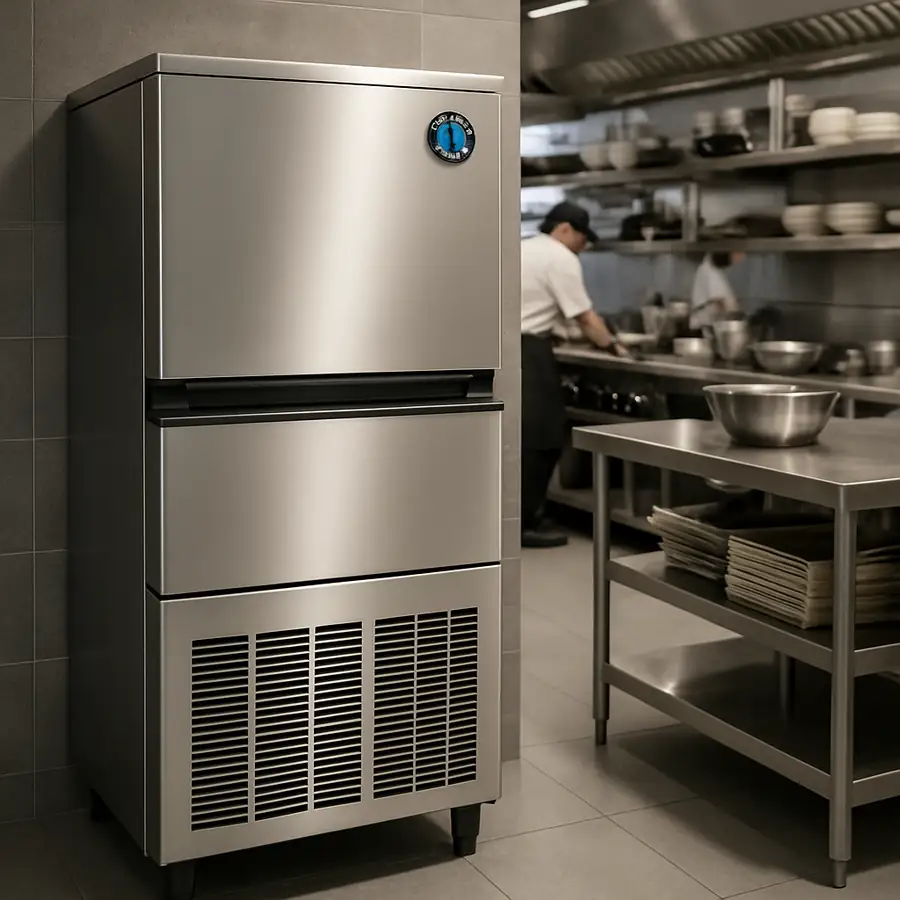
If space is severely limited, a Hoshizaki under counter ice machine is an ideal solution. These units combine the ice maker and the storage bin into a single, compact cabinet designed to fit snugly beneath standard 40-inch commercial counters.
When searching for a Hoshizaki ice machine undercounter model, you will notice that they are highly sought after by small cafes, office breakrooms, and independent bar stations. Standard Hoshizaki undercounter ice maker features typically include front-breathing airflow (meaning they don't require side clearance for ventilation), a slide-in door to save aisle space, and a built-in scoop holder to maintain sanitary conditions.
Condenser Types: Maximizing Ice Machine Efficiency
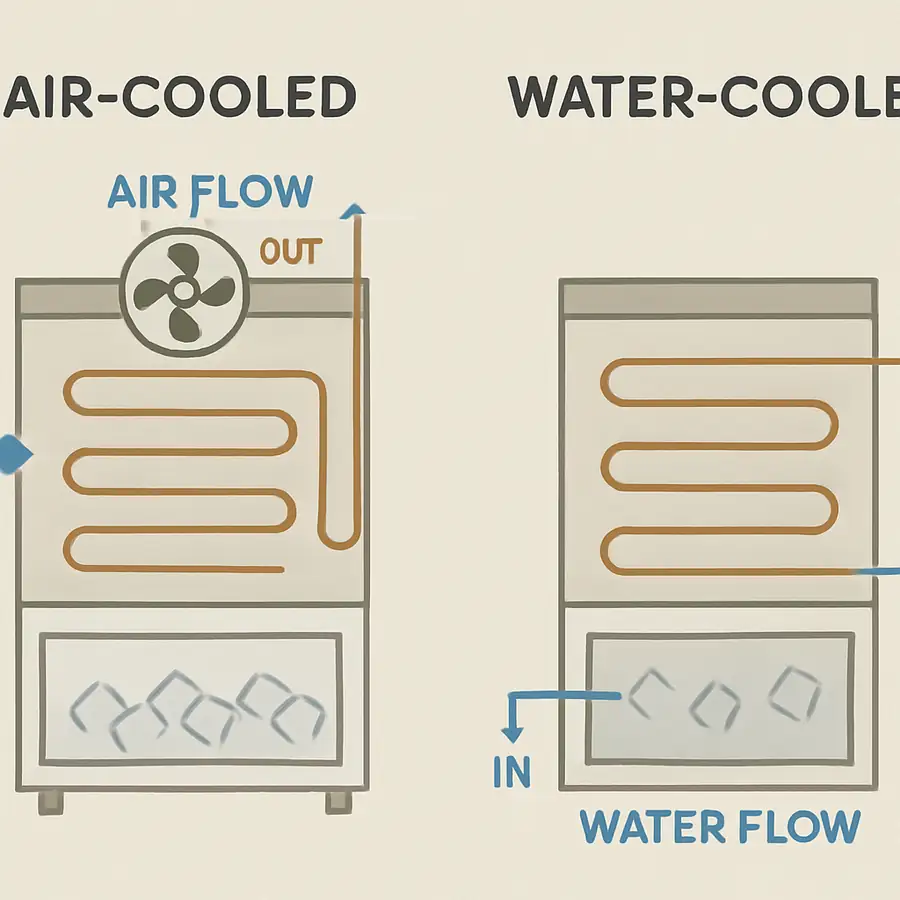
The condenser is the component responsible for removing heat from the refrigeration system. Choosing the right one is critical for ice machine efficiency and long-term reliability. You generally have three options when weighing air-cooled vs water-cooled condenser systems, plus remote air-cooled options.
- Air-Cooled Condensers: These use surrounding ambient air to cool the refrigerant. They are the most common and easiest to install. However, they generate heat and noise, and their production capacity drops if the room becomes too hot.
- Water-Cooled Condensers: These use a continuous flow of water to cool the system. They are incredibly quiet and highly efficient even in sweltering 100-degree kitchens. However, they consume massive amounts of water, and many municipalities have banned them due to environmental concerns unless they are on a closed-loop cooling tower system.
- Remote Condensers: This system places the ice maker indoors while the air-cooled condenser is mounted outside on the roof. This keeps the kitchen quiet and cool, though installation is more complex and expensive.
Build Quality and Longevity
One of the standout ice maker features of the Hoshizaki brand is its uncompromising build quality. Unlike many competitors that use plastic evaporator plates or nickel-plated grids, Hoshizaki machines feature a dual-sided, 100% stainless steel evaporator.
The stainless steel ice maker lifespan is significantly longer than those utilizing cheaper materials. Stainless steel is inherently resistant to the pitting, flaking, and bacterial growth that eventually destroys lesser machines. With proper maintenance, it is common for a Hoshizaki unit to run efficiently for 10 to 15 years.
Should You Consider a Used Machine?
Because of this legendary durability, the secondary market for these units is robust. Purchasing a used Hoshizaki ice machine can be a cost-effective way to get premium equipment on a tight budget. However, if you go this route, always request the machine's maintenance history. Check the condition of the evaporator plates and ensure the compressor runs smoothly before finalizing the purchase.
Making the Call: Hoshizaki vs. The Competition
When shopping for a high-end commercial ice machine, operators inevitably end up doing a Hoshizaki vs Manitowoc comparison. Both are industry titans, but they approach ice-making differently.
- Manitowoc focuses heavily on user-friendly technology. Their machines often feature digital touchscreens, programmable ice production schedules, and acoustic ice thickness probes. They use a standard grid evaporator that is easily accessible for quick cleaning.
- Hoshizaki leans into rugged, mechanical reliability and premium ice quality. They utilize a cycle saver design that produces more ice in fewer cycles, reducing wear and tear on the compressor. While their machines may lack flashy touchscreens, their all-stainless-steel evaporators are nearly indestructible, and the individual crescent cubes they produce are widely considered superior for high-end beverage service.
Ultimately, if you prioritize high-tech diagnostic screens, Manitowoc is excellent. If you want a workhorse machine that produces perfect, slow-melting ice and lasts for over a decade, Hoshizaki is the winner.
Installation Best Practices and Water Quality
An ice machine is only as good as the water fed into it. Ice is 100% water, meaning the taste, clarity, and safety of your ice depend entirely on your water supply. Furthermore, hard water scale is the number one cause of ice machine failure.
The Importance of Filtration
Installing water filtration for ice systems is an absolute necessity, not an optional accessory. A high-quality filtration system removes sediment, chlorine, and off-tastes while simultaneously introducing scale inhibitors that prevent minerals from sticking to the evaporator plates.
Make sure to establish a strict schedule for replacing ice machine water filters. As a general rule, filters should be swapped out every six months, or sooner if you notice a drop in ice production or water pressure. Failing to change the filter can lead to severe scaling, which forces the machine to work harder, dramatically reducing its lifespan and efficiency.

Maintenance and Troubleshooting
To protect your investment, routine maintenance must be woven into your operational schedule. Neglected ice machines are notorious for harboring mold, slime, and bacteria.
Cleaning and Sanitizing
Properly sanitizing commercial refrigeration equipment keeps you compliant with health codes and ensures your customers aren't getting sick. You should perform a deep cleaning and sanitizing routine at least twice a year—more frequently if your machine is located near a baking station where airborne yeast is prevalent.
Knowing exactly how to clean a Hoshizaki evaporator is a skill every facility manager should possess. Because Hoshizaki evaporators are stainless steel, they can withstand stronger descaling acids than their nickel-plated counterparts. The process involves turning the machine to the "wash" cycle, adding a Hoshizaki-approved scale remover to the water trough, letting it circulate, and then flushing the system thoroughly before introducing an EPA-approved sanitizer. Always follow the manufacturer's manual step-by-step.
Caring for Nugget Ice Machines
Cubelet or nugget machines require a bit more mechanical care due to their internal moving parts. Good nugget ice dispenser maintenance tips include regularly checking the auger and the extruding head for mineral buildup. Because these machines grind and press ice into shape, any scale accumulation on the bearings or auger can cause devastating mechanical failures. Plan to descale nugget machines slightly more often than standard cube machines.
Diagnosing Issues
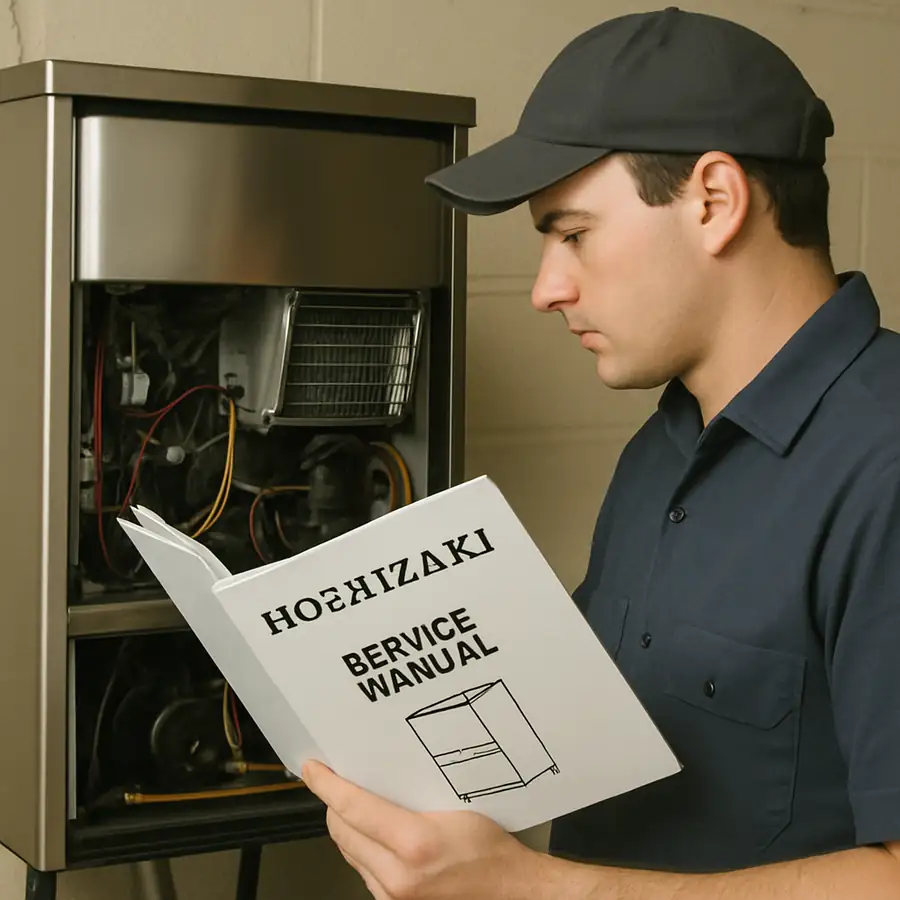
Even the best machines occasionally experience hiccups. Keeping a commercial ice maker troubleshooting guide on hand will save you expensive emergency service calls.
Many modern Hoshizaki units utilize a series of audible beeps to communicate issues. Understanding the Hoshizaki error codes meaning is vital for quick fixes. For instance:
- 1 Beep: High-temperature safety switch is open (often caused by a dirty air filter or condenser coil).
- 2 Beeps: Defrost cycle is taking too long (could indicate a failing water inlet valve).
- 3 Beeps: Freeze cycle is too long (often related to low refrigerant or a dirty evaporator).
By identifying the beep codes, you can often resolve simple issues—like cleaning a dusty condenser filter—without having to call in a refrigeration technician.
Conclusion
Investing in a commercial ice machine is a major decision that directly impacts the daily flow of your business and the satisfaction of your customers. By accurately calculating your ice needs, choosing the right ice type, and understanding the differences in condenser technologies, you can easily narrow down your options.
A Hoshizaki ice machine is an investment in unparalleled reliability. Whether you opt for a high-capacity modular unit producing signature crescent cubes or a compact undercounter model dispensing chewable nugget ice, you are bringing top-tier engineering into your kitchen. Remember that the secret to maximizing this investment lies in proper installation, rigorous water filtration, and consistent preventative maintenance. Take care of your Hoshizaki, and it will keep your beverages perfectly chilled for years to come.
Choosing the Right Hoshizaki Ice Machine
Selecting the right Hoshizaki ice machine is important for restaurants, cafés, bars, hotels, and beverage businesses that require reliable ice production every day. The Horeca Store hoshizaki offers different ice machine options, including cube, nugget, and flake ice makers, designed for various foodservice needs. When choosing a model, consider factors such as daily ice demand, available space, storage capacity, energy efficiency, and the type of ice required for your menu.
A dependable ice machine helps improve beverage service, maintain customer satisfaction, and support efficient kitchen operations. The Horeca Store offers a wide range of commercial ice makers, refrigeration solutions, beverage equipment, and restaurant supplies designed for professional businesses. With quality products, competitive pricing, and reliable support, The Horeca Store helps restaurants, cafés, and hospitality businesses find the right equipment solutions for long-term success.