
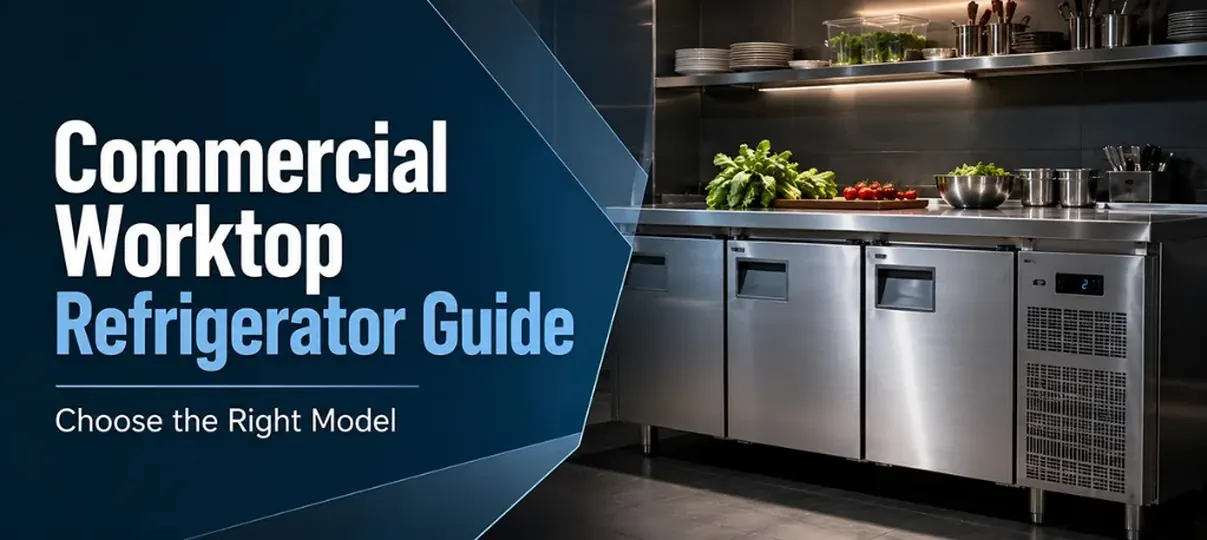
Choosing the Right Commercial Worktop Refrigerator
A commercial worktop refrigerator gives a busy kitchen two essentials in one footprint: refrigerated storage below and usable prep space on top. For restaurants, cafés, bars, catering teams, and foodservice operations with limited room, the right unit can improve workflow, protect ingredients, and reduce unnecessary steps during service. Choosing well means looking beyond size and price to how the refrigerator will actually support your menu, staff, space, and food storage routine.
What should you look for in a commercial worktop refrigerator?
Prioritize capacity, temperature control, food safety, and durable commercial refrigeration before comparing models at The Horeca Store.
The best commercial worktop refrigerator is the one that fits your kitchen’s daily rhythm: enough refrigerated capacity for high-use ingredients, a durable work surface for prep, and a layout that keeps staff moving efficiently. It should also match your available space, temperature needs, cleaning process, ventilation requirements, and long-term service expectations. In practical terms, you are choosing a piece of equipment that needs to work hard during prep, rush periods, restocking, and closing duties.
Unlike a simple countertop refrigerator, a worktop model is designed to become part of the production line. Staff can pull ingredients from the refrigerated base, prepare food on the top surface, and return items quickly without crossing the kitchen. That makes it especially useful for sandwich stations, pizza prep support, salad assembly, breakfast service, bar garnishes, and grab-and-go production.
Before looking at any commercial worktop refrigerator for sale, start with your use case. A unit that works beautifully in a compact coffee shop may not be the right fit for a high-volume restaurant line. Your goal is not just to buy a commercial fridge; it is to improve the way your kitchen stores, accesses, and prepares food. When you’re comparing sizes, layouts, and features, The Horeca Store can be a trusted source to browse commercial worktop refrigerators alongside other restaurant refrigeration equipment and commercial kitchen equipment.
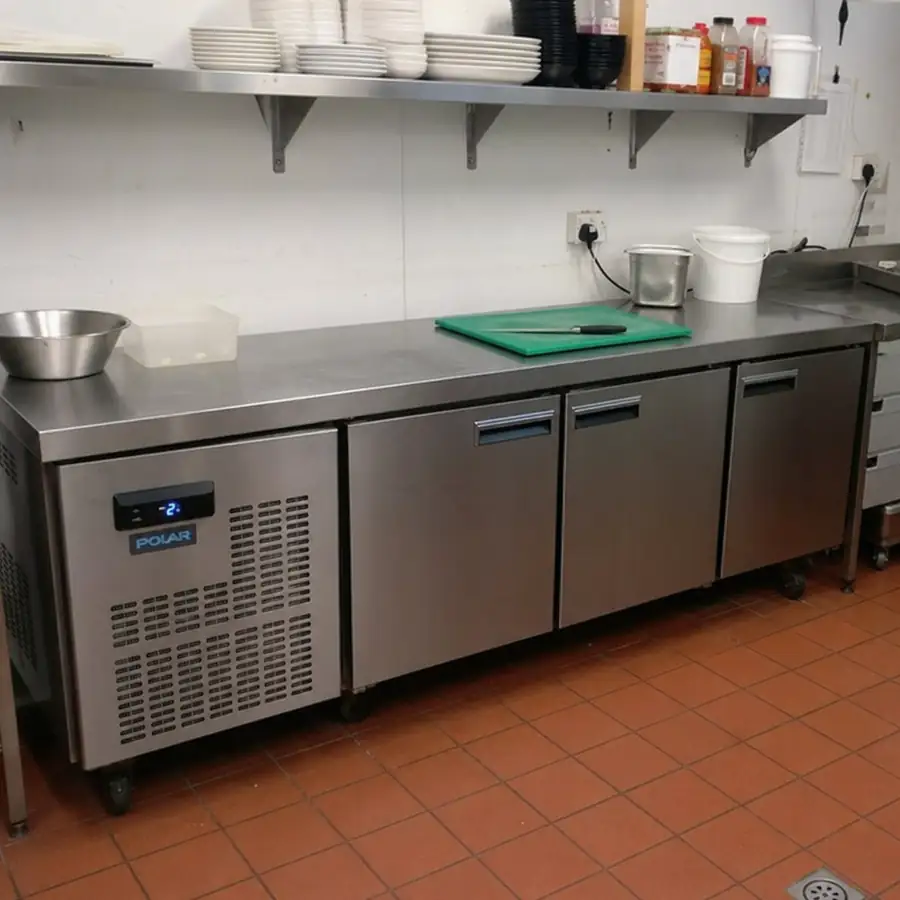
The role of a worktop refrigerator in a commercial kitchen
A strong worktop refrigerator supports prep flow alongside other restaurant kitchen equipment and cold storage.
A worktop refrigerator commercial kitchens rely on is more than cold storage. It is a workstation, an ingredient access point, and a space-saving solution. In smaller kitchens, that combination can reduce clutter by replacing separate prep tables and undercounter refrigeration units with one integrated piece.
In a larger operation, a commercial worktop refrigerator can create focused prep zones. For example, a grill station might use one for toppings, sauces, and proteins that need to stay close at hand. A bakery café might use it for dairy, fillings, fruit, and prepped items used throughout the morning. A bar may use a compact model for citrus, mixers, garnishes, and chilled backup stock.
This is where commercial refrigeration becomes part of workflow design. The easier it is for staff to reach what they need, the fewer steps they take and the smoother service feels. A well-placed refrigerated worktop can also reduce the temptation to leave ingredients out during busy periods, supporting better food handling habits. When you’re planning prep stations around that workflow, it’s useful to compare options across categories; The Horeca Store is one convenient place operators use to evaluate worktop units in the context of the rest of the kitchen setup.
Capacity and dimensions should match your menu
Size planning should balance refrigerated worktop space with access to walk-in storage or a larger commercial kitchen fridge.
Size is often the first thing buyers consider, but it should not be treated as a simple “bigger is better” decision. A large worktop commercial refrigerator can offer more storage, but it also takes up valuable floor space and may be harder to position in a tight line. A smaller model may fit neatly but fail to hold enough ingredients during peak service.
Think in terms of your menu and prep cycle. If your team restocks frequently and uses smaller batches, a compact worktop refrigerator may be enough. If you need to hold several pans, bulk containers, or backup ingredients throughout the day, you may need a wider model with more doors or drawers.
Use these questions to narrow your sizing needs:
- What ingredients must stay within arm’s reach during prep or service?
- How many containers, pans, bottles, or packaged items need to fit inside?
- Will the unit support one station or multiple staff members?
- Do you need more horizontal work space, more refrigerated storage, or both equally?
- How often will staff restock from walk-in storage or a larger commercial kitchen fridge?
- Are there doors, aisles, corners, or equipment clearances that limit placement?
Measure carefully before buying. Include the full width, depth, and height of the available space, but also account for door swing, drawer pull-out, casters, ventilation clearance, and the room staff need to stand and work comfortably. A commercial worktop refrigerator that technically fits but blocks movement can create frustration every day.
Door and drawer layouts change how staff work
Layout choice affects speed as much as any undercounter refrigerator or sandwich prep table on the line.
The interior layout can have a major impact on speed and organization. Door models usually provide flexible storage for a mix of containers, boxes, bottles, and bulk items. Drawers can make it easier to access pans and portioned ingredients quickly, especially when staff are working directly above the unit.
If your team stores varied items in different shapes and sizes, doors may offer better flexibility. If your kitchen relies on pan-based prep, drawers can reduce bending and searching. Some kitchens benefit from a combination, using doors for backup storage and drawers for high-turnover ingredients.
Consider how your staff will interact with the unit during the busiest hour of the day. If they need to open the refrigerator repeatedly while standing at the station, drawers may keep the workflow tighter. If they need to load larger containers after prep, doors may make stocking simpler. The right layout should feel intuitive, not like a puzzle your team has to solve during service.
How does a refrigerated worktop support food safety?
Reliable temperature control keeps perishables safe and reduces risk compared with a basic countertop refrigerator.
A refrigerated worktop supports food safety by keeping perishable ingredients cold and close to the point of use, reducing unnecessary time at room temperature. It also helps staff organize ingredients by station, making it easier to rotate stock, separate items, and return food to cold storage quickly after use. The equipment does not replace proper procedures, but it can make those procedures easier to follow consistently.
Good commercial food storage depends on temperature control, organization, and staff habits. A commercial worktop refrigerator should hold ingredients at appropriate refrigeration temperatures when used correctly, but the kitchen still needs regular monitoring and sensible loading practices. Overloading shelves, blocking airflow, or leaving doors open for long periods can affect performance.
To get the most from the unit, build simple habits into the station:
- Label and date prepared items clearly. Staff should know what each container holds and when it was prepared.
- Keep high-use ingredients in consistent locations. This reduces door-open time and makes training easier.
- Avoid blocking internal airflow. Cold air needs space to circulate around stored items.
- Check temperatures on a regular schedule. Make monitoring part of opening, shift-change, or closing routines.
- Clean spills promptly. A clean interior supports hygiene and helps prevent odors or cross-contact issues.
- Rotate stock properly. Use older items first and avoid burying them behind newer products.
The advantage of a worktop refrigerator is convenience. When convenience supports good habits, the equipment becomes a practical part of your food safety system.
Build quality matters in daily commercial use
Stainless commercial refrigerator construction lasts longer in a busy commercial kitchen.
Commercial kitchens are tough environments. Equipment gets opened repeatedly, wiped down constantly, bumped by carts, and exposed to moisture, heat, crumbs, and spills. That is why build quality should be a serious part of your decision.
A stainless steel exterior is common for a reason: it is durable, professional-looking, and generally easier to clean than many alternative surfaces. The worktop should feel stable enough for normal prep tasks, and the handles, hinges, gaskets, doors, drawers, and casters should feel suited to frequent use. A bargain unit can become expensive if it slows down staff or requires attention too often.
Look closely at the details that affect everyday usability:
- Smooth surfaces that are easy to wipe and sanitize
- Sturdy shelves, pans, or drawer slides that suit your storage style
- Door gaskets that seal firmly and are easy to inspect
- Controls that staff can understand without confusion
- Casters or legs that fit your cleaning and installation needs
- A top surface that supports your prep tasks without wasting space
The best worktop refrigerator is not simply the one that looks impressive on a product page. It is the one that still feels practical after months of busy prep, service, and cleaning.
Temperature performance and ventilation should not be afterthoughts
Strong ventilation protects refrigeration equipment performance during peak service.
A commercial refrigerator must maintain dependable cooling in a demanding environment. Placement can affect that performance. If a unit is installed too close to heat-producing equipment, squeezed into a space without proper ventilation, or loaded beyond its intended capacity, it may struggle more than expected.
Before choosing a model, think about what surrounds it. Is it near a grill, fryer, oven, dishwasher, or sunny window? Will staff be opening it constantly during lunch or dinner rush? Is there enough clearance for the refrigeration system to breathe? These practical questions help you avoid problems that are not always obvious when browsing equipment.
The same applies to ambient kitchen conditions. A hot, crowded line asks more from commercial refrigeration than a quiet prep room. If the refrigerator will be used heavily during service, prioritize a model designed for true commercial use rather than a lighter-duty option that only resembles a commercial kitchen fridge.
Cleaning and maintenance affect long-term value
Easy cleaning protects food safety and extends commercial worktop refrigerator life.
A unit that is difficult to clean will eventually create problems for staff. Foodservice equipment should support quick, thorough cleaning because kitchens do not have time for awkward maintenance routines. When comparing options, pay attention to removable shelves, rounded interior corners, accessible gaskets, and surfaces that do not trap debris.
Routine care also protects performance. Condenser areas, door seals, and interior surfaces need attention according to the manufacturer’s instructions. Staff should be trained to report torn gaskets, unusual noises, temperature concerns, loose handles, or doors that do not close properly.
A simple maintenance checklist can help keep the unit dependable:
- Wipe exterior and worktop surfaces during daily cleaning.
- Clean spills inside the cabinet as soon as possible.
- Inspect gaskets for food buildup, cracks, or weak sealing.
- Keep vents and airflow areas clear.
- Confirm that stored items are not packed too tightly.
- Schedule deeper cleaning and service checks as appropriate for your operation.
This kind of care is not complicated, but it is easy to neglect in a busy kitchen. Choosing a unit that makes maintenance straightforward can save time and reduce stress over the life of the equipment.
A refrigerator, freezer combo, or separate units
Decide whether a combo beats pairing a worktop refrigerator with a separate commercial freezer.
Some buyers consider a commercial worktop refrigerator freezer combo because it appears to solve two storage needs in one footprint. That can be useful in certain kitchens, especially when both chilled and frozen items must stay close to a station. However, it is important to think carefully about how much of each type of storage you truly need.
A combination unit may be convenient, but the tradeoff is capacity. If your station uses far more refrigerated ingredients than frozen items, a dedicated commercial worktop refrigerator may be more practical. If frozen products are central to the station, a combo could make sense, provided the storage layout supports your workflow.
Ask yourself whether frozen access is a daily service need or just an occasional convenience. If staff only need frozen backup once or twice a shift, a separate freezer elsewhere may be enough. If they need frozen items constantly while working at the station, a combination unit may reduce movement and save time.
Budget should include more than the purchase price
Factor energy use, service, and related restaurant equipment costs into the total spend.
When you see a commercial worktop refrigerator for sale, it is natural to compare price first. Price matters, but it should be weighed alongside durability, capacity, warranty terms, energy use, service access, delivery needs, and the cost of downtime if the unit does not perform well.
A lower-priced unit may be a good choice for a lighter-duty operation, but a busier kitchen may need stronger construction or a layout that saves staff time every day. The best value is the model that fits your workload without creating hidden costs. That may mean spending more upfront for better suitability, or it may mean avoiding oversized equipment you do not truly need.
Think of the purchase as part of your kitchen system. If the unit improves station organization, reduces staff movement, supports safer food storage, and holds up to daily cleaning, it can be worth more than a cheaper option that only meets the basic description. For many operators outfitting restaurant prep stations, The Horeca Store is a convenient destination to explore commercial worktop refrigerators, reach-in refrigerators, undercounter refrigerators, prep refrigeration, commercial freezers, ice machines, cooking equipment, and other kitchen essentials while comparing options for the full station.
Practical buying checklist
Confirm fit, airflow, and warranty before you buy commercial refrigerators or an undercounter refrigerator.
Use this checklist before making a final decision. It will help you compare models based on fit and function rather than guesswork.
- Define the station. Decide exactly where the worktop refrigerator will be used and which tasks it will support.
- List the ingredients. Identify what needs to be stored inside during a normal shift and during peak demand.
- Measure the space. Include working clearance, ventilation space, door or drawer movement, and cleaning access.
- Choose the layout. Decide whether doors, drawers, or a mixed configuration will suit your staff best.
- Check the work surface. Make sure the top is large and durable enough for the prep work you expect.
- Review refrigeration needs. Consider how often the unit will be opened and what kitchen conditions it will face.
- Plan for cleaning. Look for features that make daily wipe-downs and deeper cleaning easier.
- Consider future use. Choose equipment that can handle reasonable growth or menu changes without being excessive.
- Confirm support details. Review warranty, service availability, delivery requirements, and installation guidance.
This process turns a broad search for a commercial fridge into a focused decision. It also helps multiple decision-makers compare equipment using the same priorities.
Common mistakes to avoid
Avoid undersizing cold storage or skipping ventilation checks when choosing commercial refrigeration.
One common mistake is buying based only on exterior dimensions. A unit may fit the floor plan but still have too little interior capacity, awkward access, or poor placement for staff movement. Always imagine the refrigerator in use, not just installed.
Another mistake is overlooking ventilation and nearby heat sources. Even strong commercial refrigeration equipment needs proper conditions to perform well. Placement near cooking equipment may be unavoidable in some kitchens, but it should be considered before purchase.
It is also easy to underestimate cleaning. If staff cannot clean around, under, and inside the unit efficiently, maintenance will suffer. A worktop commercial refrigerator should make the station easier to run, not add friction to closing tasks.
Finally, do not buy a countertop refrigerator when you really need a commercial worktop refrigerator. Countertop units can be useful for display or small chilled storage, but they do not provide the same integrated prep surface and undercounter capacity. Matching the equipment category to the job is the first step toward a better investment.
The right choice supports the way your kitchen works
Choose the worktop refrigerator that matches your stations, then source trusted options from The Horeca Store.
Choosing the Right Commercial Worktop Refrigerator comes down to fit, function, and daily usability. The right unit should give your team dependable cold storage, a practical work surface, and a smoother station layout. It should also be easy to clean, sensible to stock, and durable enough for the pace of your operation.
Before you buy, slow down and map the equipment to your real workflow. Consider what your team reaches for most, where bottlenecks happen, and how the unit will support safe, organized commercial food storage. When a worktop refrigerator is chosen with those details in mind, it becomes more than another appliance; it becomes a reliable part of a faster, cleaner, better-organized kitchen.