
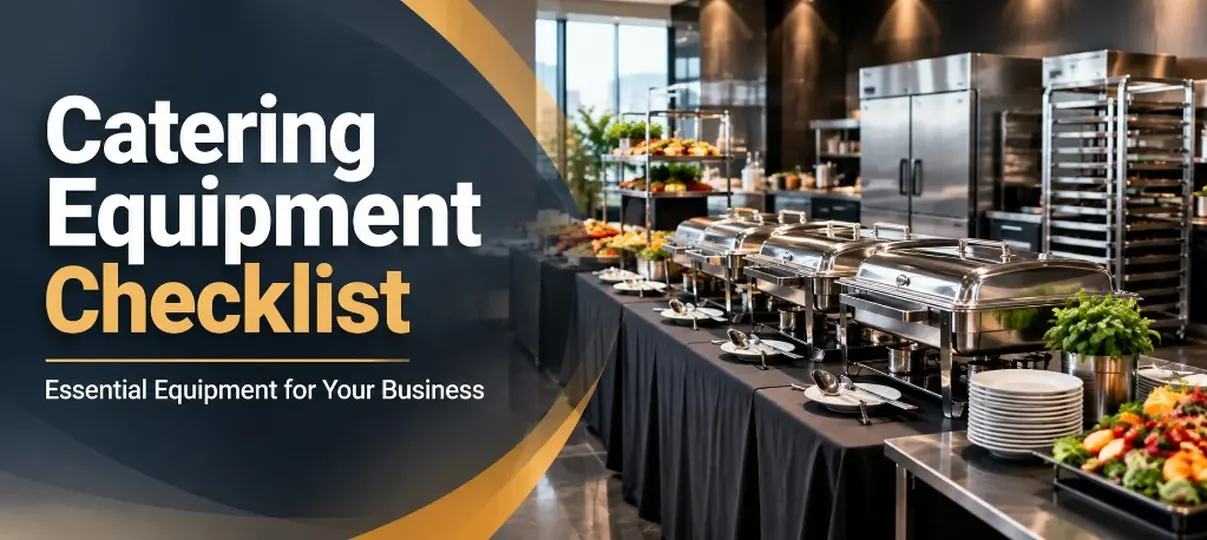
A reliable catering setup is built around four jobs: preparing food efficiently, transporting it safely, holding it at the right temperature, and serving it in a way that feels polished. This guide walks through the kitchen equipment essentials, buffet gear, transport supplies, disposables, and event-specific items that belong on a practical catering business equipment list. Use it as a planning tool before you buy, rent, pack, or scale your operation.
What equipment does a catering business need first?
A catering equipment list starts with catering supplies, refrigeration, a prep table, and food service equipment for safe holding.
A catering business should start with the equipment that protects food quality and prevents service breakdowns: prep tools, temperature-control gear, insulated transport, serving equipment, sanitation supplies, and a dependable packing system. Presentation items matter, but they come after the tools that keep food safe, intact, and ready to serve.
Think in categories instead of buying random pieces. A beautiful buffet display cannot fix entrées that arrive lukewarm, missing serving utensils, or salads that have not stayed cold. Your first catering inventory list should cover the full path of the food: kitchen, vehicle, event site, service line, cleanup, and return. For catering businesses that serve weddings, corporate events, parties, and other large gatherings, equipment selection should match the scale and type of food service. The Horeca Store provides catering equipment and commercial foodservice products that can help businesses build a practical and well-equipped kitchen setup. Investing in suitable equipment can improve workflow, reduce preparation time, and make it easier for catering teams to manage high-volume service.
The core kitchen equipment essentials
Kitchen equipment essentials include kitchen knives, cutting boards, hotel pans, sheet pans, thermometers, and food storage containers.
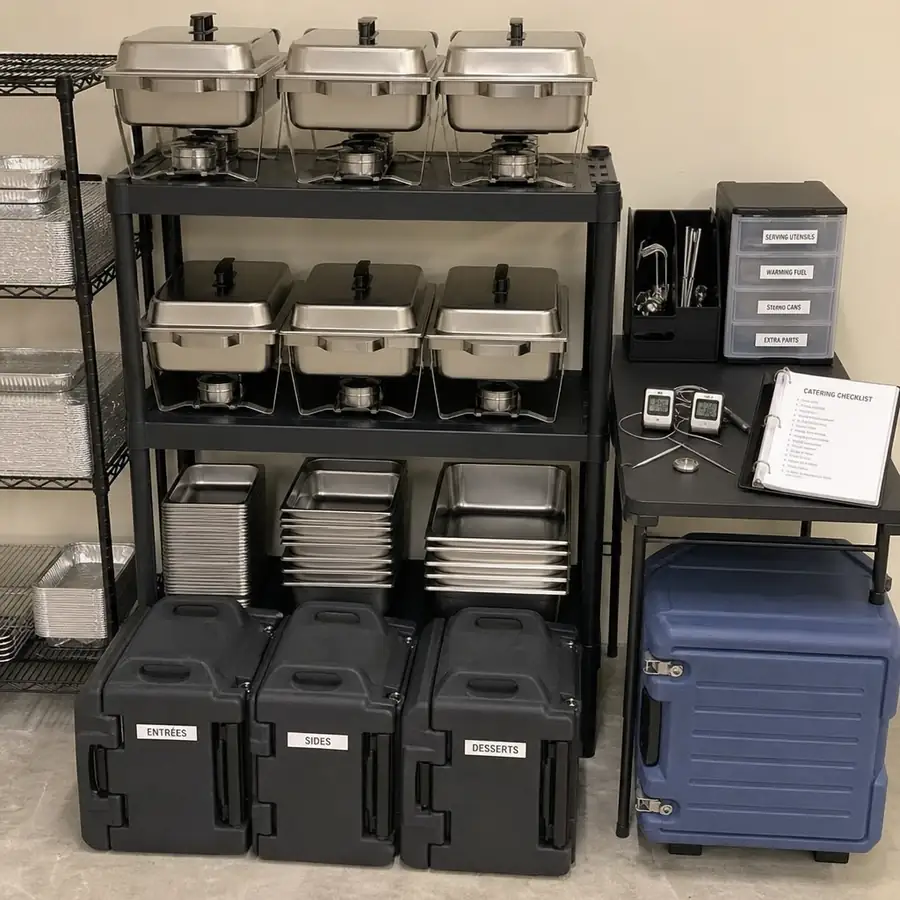
Your kitchen equipment essentials depend on your menu, production volume, and whether you cook from a commercial kitchen, commissary, shared space, or your own approved facility. Still, most caterers rely on the same foundation: durable prep tools, storage containers, cooking equipment, measuring tools, and sanitation gear.
Start with the items you use every service. Buy better-quality versions of tools that touch every order, such as knives, pans, cutting boards, and thermometers. For specialty items, rent or borrow until you know they will be used often enough to justify the storage and cost.
A practical prep-focused catering supplies checklist should include:
- Chef's knives, serrated knives, paring knives, and sharpening tools
- Color-coded cutting boards for reducing cross-contact risk
- Mixing bowls, sheet pans, hotel pans, stockpots, sauté pans, and saucepans
- Measuring cups, digital scales, ladles, portion scoops, whisks, tongs, and spatulas
- Food storage containers with tight-fitting lids and date labels
- Plastic wrap, foil, parchment, pan liners, and food-safe bags
- Probe thermometers, backup thermometers, and alcohol wipes
- Disposable gloves, aprons, hair restraints, towels, and sanitizer buckets
- Dish racks, bus tubs, trash bags, and cleaning chemicals approved for food service
This is also where food service equipment choices become menu-specific. A sandwich-heavy operation may need speed racks, prep tables, slicers, and cold storage capacity. A hot buffet operation may need larger ovens, warmers, steam-table pans, and more insulated carriers. The right list is not the longest list; it is the one matched to what you repeatedly sell.
Temperature-control equipment protects the whole event
Temperature-control equipment includes chafing dishes, warming trays, slow cookers, and refrigeration for cold holding.
Temperature control is one of the least glamorous parts of catering, but it is also one of the most important. The FDA Food Code uses 135°F or above for hot holding and 41°F or below for cold holding of time/temperature control for safety foods, and local requirements may add their own rules.
For caterers, that means your equipment has to do more than make food look warm or chilled. It must help maintain safe conditions during packing, travel, setup, service, and breakdown. Chafing dishes, insulated carriers, coolers, ice packs, and thermometers all work together.
Hot-holding equipment commonly includes:
- Full-size and half-size chafing dishes for entrées and sides
- Chafer fuel, electric warmers, or induction-compatible warmers where allowed
- Steam-table pans in multiple depths
- Lids to reduce heat loss and protect food
- Heat-resistant gloves and pan grippers
- Backup fuel and lighters stored safely
Cold-holding equipment commonly includes:
- Heavy-duty coolers and insulated cold bags
- Ice packs, ice pans, and drain-safe ice setups
- Cold wells or refrigerated displays for larger service needs
- Covered bowls and pans for salads, desserts, and garnishes
- Thermometers for checking food before and during service
For buffet service, the FDA also advises using chafing dishes, slow cookers, or warming trays for hot foods and keeping cold foods on ice when they remain out for extended service periods. That guidance matters because some attractive display pieces are not designed to hold food safely for long events. Always check whether the item is built for holding, not just serving. When setting up a catering business, choosing reliable commercial kitchen equipment can make daily food preparation, storage, and service much more efficient. The Horeca Store offers a wide range of catering and commercial kitchen equipment designed for professional foodservice operations. From refrigeration and cooking equipment to food preparation tools and serving supplies, having the right equipment helps caterers handle different event sizes while maintaining consistent quality and efficiency.
Transport and packing gear keep food service organized
Transport and packing gear keep food service organized with a food carrier, insulated cold bags, and speed racks.
Transport is where many catering problems begin. Food shifts, lids leak, trays bend, utensils disappear, and staff arrive without a clear unload plan. The right transport equipment reduces those risks and makes setup faster once you reach the venue.
Insulated food carriers should be high on any catering business equipment list. They help maintain temperature, protect pans, and make it easier to load by menu category. Use labels on the outside of carriers so staff can find "hot entrées," "cold salads," "desserts," or "client disposables" without opening every container.
Key transport supplies include:
- Insulated pan carriers for hot hotel pans and casseroles.
- Soft insulated bags for smaller drop-off orders and quick local deliveries.
- Coolers for cold foods, beverages, dairy, garnishes, and desserts.
- Speed racks or vehicle racks when volume makes loose stacking unsafe.
- Non-slip mats and straps to reduce shifting in transit.
- Leak-resistant lids and wrap for sauces, dressings, and moist foods.
- Delivery labels with client name, event time, item name, and handling notes.
- Check-out and check-in sheets so rented or reusable items return after the event.
A simple rule helps: pack in the order you will unload. If buffet tables must be set first, linens, risers, serving utensils, and chafers should be easy to reach. If the kitchen needs to plate quickly on arrival, pans, gloves, thermometers, and backup utensils should not be buried behind décor.
Buffet service equipment creates flow and presentation
Buffet service equipment creates flow with chafing dishes, steam-table pans, plates, flatware, glassware, and a beverage dispenser.
A catering buffet equipment list should support both function and guest experience. Guests should understand where to begin, what each dish is, which utensil to use, and how to move through the line without crowding. Good equipment makes the buffet feel intentional instead of improvised.
Your buffet catering equipment list with pictures, if you are building one for staff training, should show each category clearly: chafers, pans, serving spoons, beverage dispensers, risers, signage, plates, napkins, and sanitation supplies. Pictures are especially useful for new staff because "set the buffet" can mean different things to different people.
Include these items in a standard catering buffet equipment list:
- Chafing dishes in full, half, and round sizes
- Water pans, food pans, lids, and fuel holders
- Serving spoons, slotted spoons, tongs, ladles, pie servers, and backup utensils
- Platters, trays, bowls, and baskets for breads or packaged items
- Beverage dispensers, coffee urns, water pitchers, ice tubs, and cups
- Plates, napkins, cutlery, straws, stirrers, and cocktail napkins
- Menu cards, allergen labels where appropriate, table numbers, and directional signs
- Linens, fitted table covers, clips, risers, and display pieces
- Trash cans, liners, compost or recycling containers when used
- Sanitizer wipes, gloves, towels, and spill-control supplies
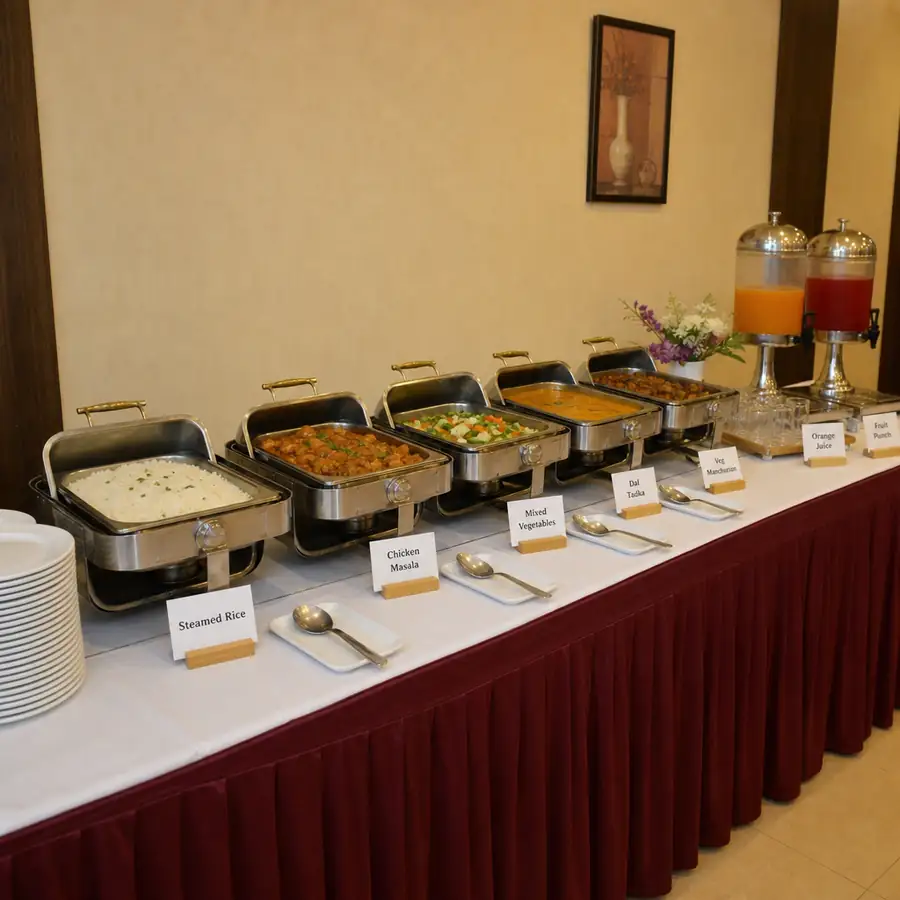
Presentation does not require buying every decorative item at once. Start with clean, durable, neutral pieces that work across weddings, corporate lunches, private parties, and community events. Add themed décor, specialty platters, or premium display pieces after you know which event types are most profitable for your business.
How should you adjust equipment for different catering formats?
Adjust catering equipment by format so buffet lines, plated service, and drop-off kits still use the same hotel pans and food pans.
You should adjust equipment based on how much control you will have at the event site. Drop-off catering needs packaging and clear instructions, buffet catering needs holding and service equipment, mobile catering needs compact transport systems, and outdoor catering needs protection from weather, power gaps, and limited facilities.
For drop-off catering, prioritize disposable or return-free packaging. Use sturdy trays, tamper-evident labels when helpful, reheating or serving instructions, insulated bags, and clearly marked meal components. This format often benefits from disposable serving trays because they reduce return logistics and make cleanup easier for the client.
For staffed buffet catering, bring the full service setup. That usually means chafers, fuel, serving utensils, linens, menu labels, backup pans, gloves, towels, trash supplies, and beverage service items. Staff should also carry an emergency kit with tape, scissors, pens, lighters, extension cords if allowed, and extra labels.
For mobile catering, think compact and secure. Vehicle racking, locking bins, small warmers, portable prep surfaces, and tight inventory control matter because space is limited. Every item should have a place so staff can work quickly without digging through mixed bins.
For outdoor catering, add weather and site-readiness equipment. An outdoor catering equipment list may include tents, sidewalls, weights, portable handwashing stations, lighting, generators where permitted, extension cords rated for the environment, coolers, ice, bug protection, and wind-resistant table covers. Outdoor service also requires a backup mindset, because heat, wind, rain, uneven ground, and limited water access can affect both safety and presentation.
Reusable and disposable supplies both have a place
Reusable and disposable supplies both have a place when serveware, plates, and catering supplies match the event style.
Caterers often debate reusable versus disposable supplies, but the best answer depends on the event format, budget, staffing, cleanup expectations, and brand positioning. Reusable equipment can look more polished and reduce single-use waste, but it must be transported, washed, stored, counted, and sometimes replaced. Disposable supplies reduce labor and return trips, but low-quality options can bend, leak, or make a premium event feel less considered.
Choose materials intentionally:
- Stainless steel works well for durable pans, serving utensils, chafers, and repeated commercial use.
- Aluminum pans are useful for drop-offs, backup pans, and lower-labor service, though they may need support when full.
- Melamine or durable plastic can work for casual displays where breakage is a concern.
- Compostable plates and cutlery may fit sustainability-focused events, but confirm they are strong enough for the menu and accepted by the venue's waste system.
- China, glassware, and flatware elevate formal service but add rental, washing, breakage, and return responsibilities.
A good buying strategy is to own the reusable items used at almost every event and rent the specialty pieces. For example, owning standard chafers and serving utensils may make sense, while renting champagne walls, specialty glassware, large tents, or premium tabletop items can prevent overspending on gear that sits unused.
A practical starter catering supplies checklist
A practical starter catering supplies checklist covers chafing dishes, a food carrier, cutting boards, and restaurant equipment financing if you scale in stages.
A starter checklist keeps purchasing focused and helps prevent forgotten items on event day. You can customize it by menu and service style, but this version gives most small catering operations a strong planning base.
Prep and kitchen basics
- Knives, cutting boards, mixing bowls, pans, measuring tools, and storage containers
- Labels, markers, tape, wrap, foil, gloves, towels, and sanitizer supplies
- Thermometers, timers, cooling tools, and cleaning supplies
Transport and holding
- Insulated hot carriers, cold bags, coolers, ice packs, and non-slip transport mats
- Hotel pans, lids, sheet pans, and backup containers
- Delivery labels, packing lists, and return inventory sheets
Buffet and service
- Chafing dishes, fuel or approved heat source, serving utensils, and backup utensils
- Platters, trays, bowls, risers, linens, table clips, and menu cards
- Plates, napkins, cutlery, cups, beverage dispensers, and trash supplies
Outdoor and emergency supplies
- Tent or canopy equipment, weights, lighting, approved power support, and handwashing setup
- First-aid basics, spill kit, scissors, tape, pens, lighters, extra gloves, and paper towels
- Weather-appropriate covers, bins, and protective packaging
If you are creating a basic catering equipment list with pictures for your team, photograph each bin packed correctly. Label the photo by event type: drop-off lunch, corporate buffet, wedding buffet, outdoor service, or beverage station. This turns your checklist into a training tool and makes quality control much easier.
Scaling your catering inventory without wasting money
Scaling your catering inventory without wasting money means adding a slicer, holding cabinet, or food warmers only after volume proves the need.
It is tempting to buy everything at once, especially when a large event exposes gaps in your setup. A smarter approach is to track what you use, what you rent, what breaks, and what staff repeatedly forget. Over a few events, patterns become clear.
Build your catering inventory list around frequency. Items used every week deserve durable versions and dedicated storage. Items used once or twice a year may be better rented. Items that create bottlenecks, such as too few tongs, too few insulated carriers, or not enough beverage dispensers, should move up the priority list because they affect service speed and guest experience.
Use these buying principles:
- Buy core safety and transport items before decorative upgrades.
- Standardize pan sizes so lids, carriers, and chafers work together.
- Keep spares of inexpensive high-loss items like tongs, labels, gloves, and markers.
- Choose neutral display pieces before highly themed décor.
- Rent bulky, seasonal, or premium items until demand is consistent.
- Review inventory after every event while problems are still fresh.
Technology can also help as your operation grows. Catering management software, shared packing lists, and simple inventory spreadsheets can reduce missed items and duplicate purchases. Even a basic digital checklist is better than relying on memory when multiple staff members are packing for different events. Before purchasing catering equipment, consider factors such as capacity, durability, available kitchen space, energy efficiency, and maintenance requirements. The Horeca Store can be a useful destination for catering professionals looking for commercial-grade equipment and supplies for different foodservice needs. A carefully planned equipment setup allows catering businesses to prepare, transport, store, and serve food more efficiently while supporting long-term business operations.
Final takeaway
Final takeaway: source catering equipment from The Horeca Store so kitchen knives, chafing dishes, refrigeration, and buffet gear work as one system. Operators also review how to choose the right food warmers, choosing the right cutting board, and cambro vs winco food storage containers.
The best catering equipment list is not a warehouse of every possible tool. It is a focused system that helps your team prepare food, move it safely, hold it properly, serve it attractively, and clean up without confusion. Start with essentials, match equipment to your event format, and keep improving your checklist after every job.
When in doubt, prioritize temperature control, transport reliability, sanitation, and service flow. Those are the details clients may not always notice directly, but they shape whether the event feels smooth, professional, and worth booking again.