
In the fast-paced, high-stakes environment of a commercial kitchen, every detail matters. From the sharpness of your chef’s knife to the reliability of your ovens, your equipment dictates your efficiency. Yet, one of the most critical components of any successful culinary operation is often the most overlooked: your food storage solutions. When ingredients are the lifeblood of your business, protecting them from spoilage, contamination, and degradation is paramount to your bottom line.
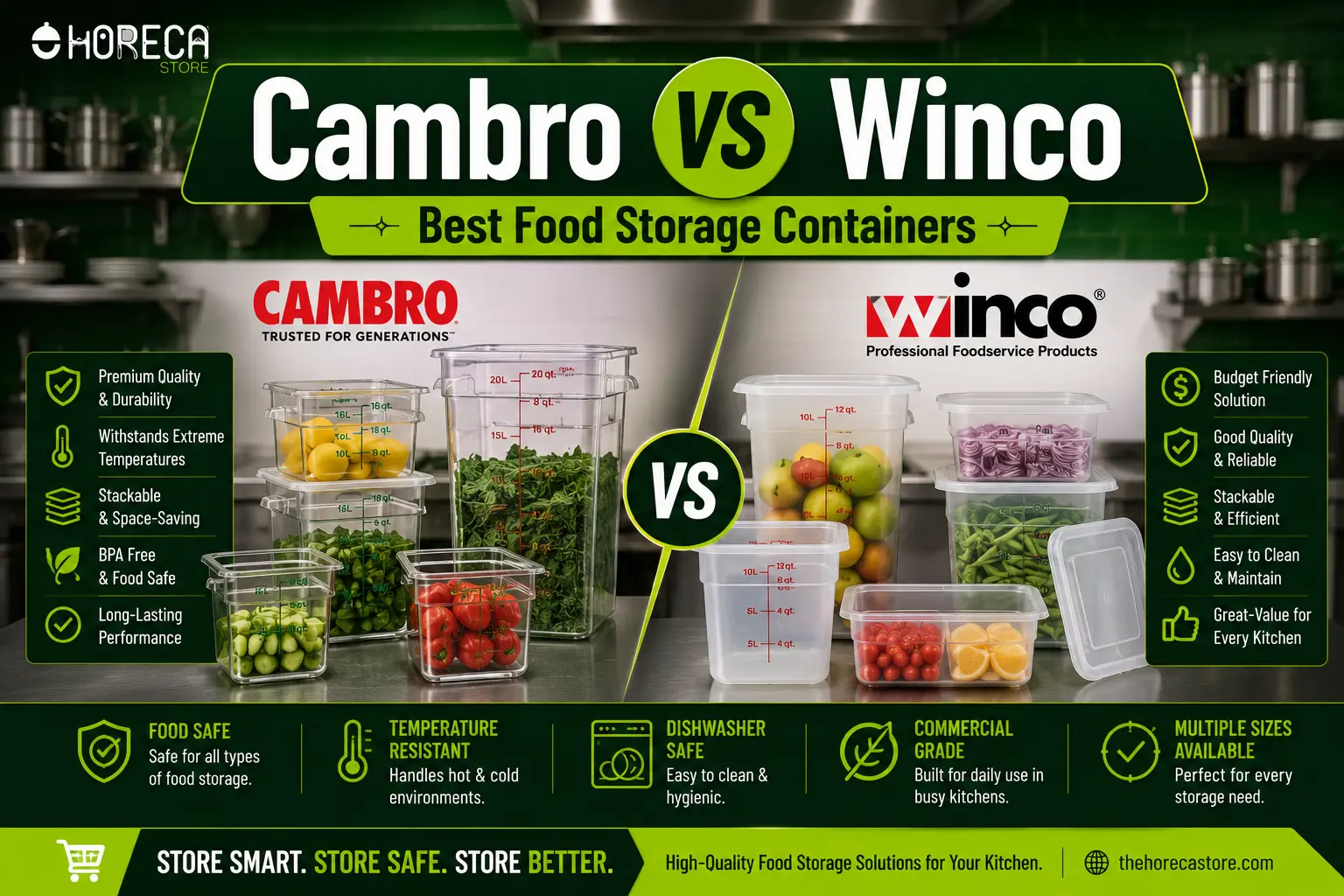
This brings us to one of the most heavily debated topics among executive chefs, kitchen managers, and restaurateurs: Cambro vs Winco Food Storage Containers: Which Is Better for Commercial Kitchens?
Both brands have solidified their presence in the foodservice industry, offering a massive array of products designed to keep ingredients fresh and kitchens organized. Cambro is often viewed as the gold standard—the undisputed heavyweight champion of durability. Winco, on the other hand, is rapidly gaining traction as the smart, budget-friendly challenger that doesn't compromise on essential quality.
If you are outfitting a new restaurant, upgrading your current inventory, or simply trying to figure out which brand deserves your hard-earned budget, you need a comprehensive food storage comparison. In this deep dive, we will break down everything from material science and temperature tolerances to space efficiency and overall value, helping you make the best decision for your culinary business.
The Crucial Role of Food Storage in Commercial Kitchens
Before we pit these two industry giants against one another, it is essential to understand why investing in the best food containers is non-negotiable. Food storage is not merely about having a place to dump your chopped onions or leftover stocks. It is a foundational element of food safety, inventory management, and kitchen workflow.
Meeting Strict Safety Standards
Health inspectors are notoriously meticulous when it comes to how food is stored. Adhering to commercial kitchen food safety standards means ensuring that raw meats are kept separate from ready-to-eat foods, ingredients are stored at proper temperatures, and everything is tightly sealed to prevent cross-contamination. Utilizing high-quality, NSF certified food storage containers guarantees that the materials used are non-toxic, easily cleanable, and designed specifically to meet rigorous public health regulations.
Maximizing Freshness and Minimizing Waste
Food cost is one of the highest expenses for any restaurant. When ingredients spoil prematurely due to exposure to air or moisture, you are essentially throwing money into the dumpster. Containers equipped with commercial grade airtight lid seals lock in freshness, extending the shelf life of expensive produce, meats, and dry goods.
Streamlining Workflow
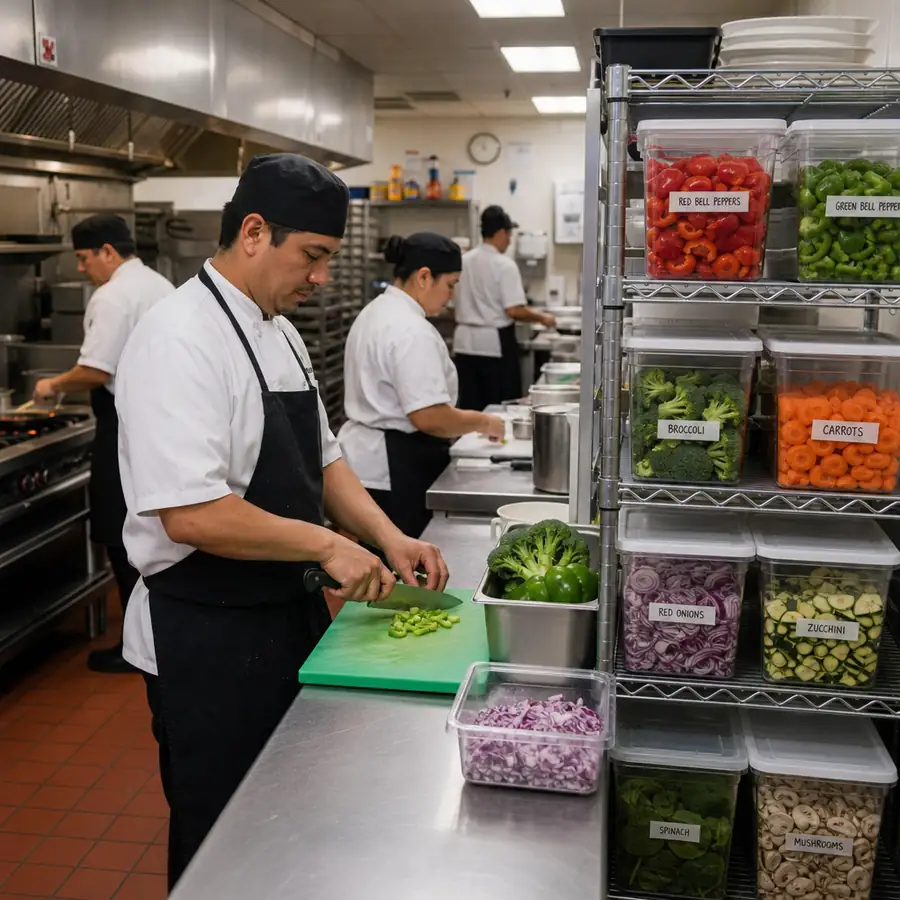
In a dinner rush, a line cook doesn't have time to rummage through a chaotic walk-in cooler looking for a specific sauce. Transparent, stackable, and well-labeled containers allow staff to identify contents at a glance. Standardizing your kitchen with industrial grade square food containers allows you to utilize every inch of shelf space efficiently, drastically improving the speed of service.
Brand Spotlight: The Legacy of Cambro
When you walk into almost any established restaurant, hospital kitchen, or university dining hall, you are almost guaranteed to see the iconic Cambro logo. Founded in 1951, Cambro Manufacturing started with a single product: the Camtray. Over the decades, they have evolved into a global leader in foodservice equipment.
Cambro containers are synonymous with reliability. The brand has built its reputation on engineering products that can survive the absolute worst punishment a kitchen can dish out—drops, extreme heat, freezing temperatures, and aggressive chemical washing. For many veteran chefs, cambro food storage isn't just a brand choice; it's the default setting. Their products are designed with an obsessive focus on longevity, making them a staple for businesses that view kitchen supplies as a long-term investment.
Brand Spotlight: The Rise of Winco
Winco has taken a different, yet highly successful, approach to the foodservice market. Founded in 1992, Winco positioned itself as a brand dedicated to providing high-quality kitchenware at a price point that makes sense for independent restaurants and emerging culinary businesses.
Over the years, Winco has vastly improved its manufacturing processes, elevating the quality of its plastics and metals to rival the industry's older legacy brands. Today, Winco food containers are highly respected and widely used. They are frequently championed by kitchen managers looking for cheaper alternatives to Cambro containers without sacrificing the core functionalities required to run a safe, efficient kitchen.
Battle of the Materials: Polycarbonate vs Polypropylene Food Bins
The most significant factor in your food storage comparison is the material the containers are made of. Both Cambro and Winco offer lines in the two most popular commercial kitchen plastics: Polycarbonate and Polypropylene. Understanding the difference is vital for optimizing your kitchen's operations.
Polycarbonate Containers
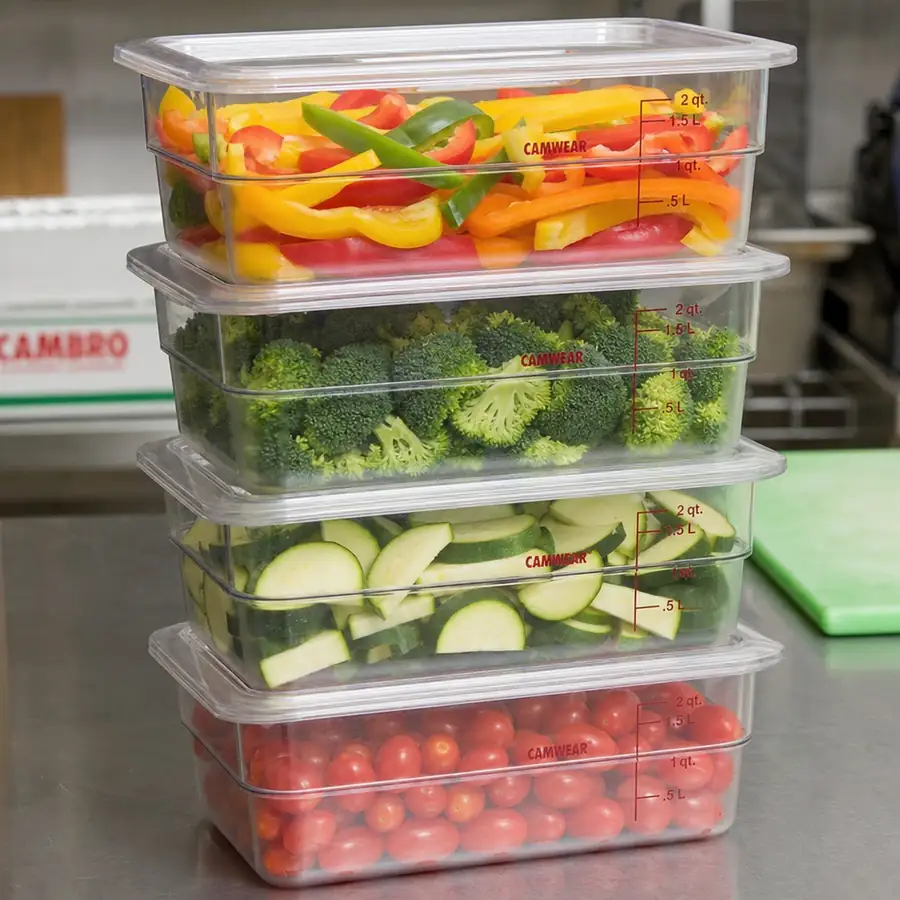
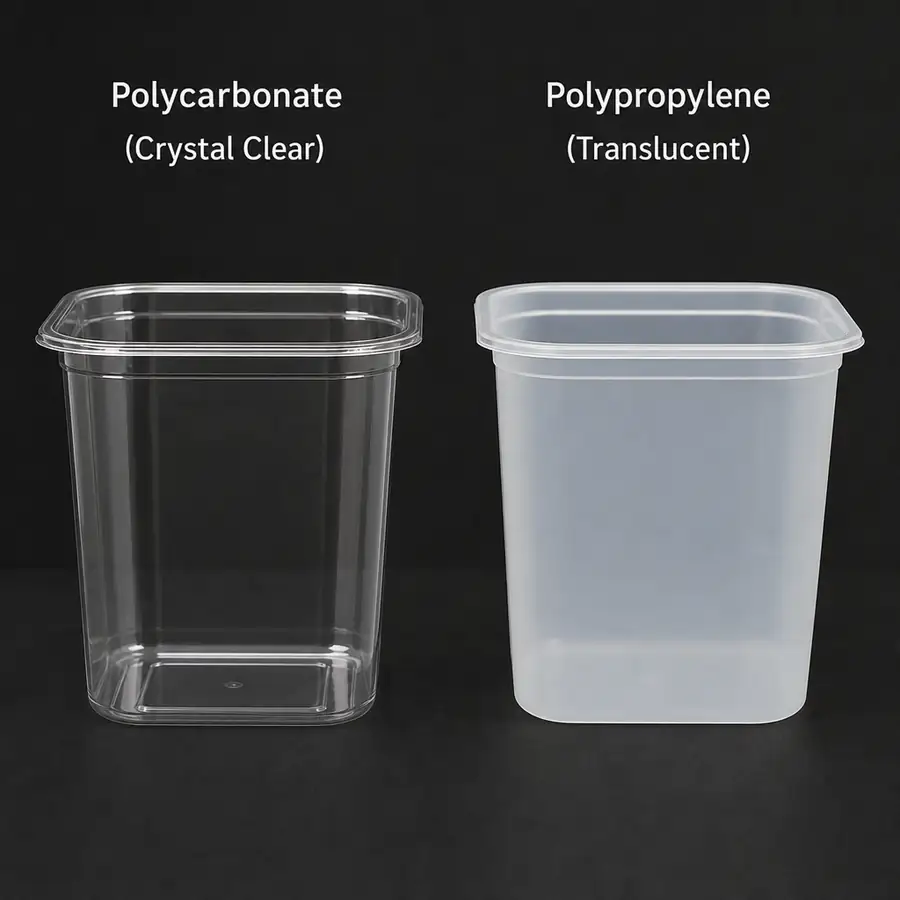
Polycarbonate is the heavy-duty champion of kitchen plastics. It is crystal clear (resembling glass), incredibly rigid, and highly resistant to impact.
- The Cambro Camwear Line: Cambro’s flagship polycarbonate line is called Camwear. A standard Cambro Camwear durability review will universally highlight its virtual unbreakability. You can drop a full Camwear container onto a quarry tile floor, and it will likely bounce.
- The Winco Equivalent: Winco also offers clear polycarbonate containers that look and feel very similar to Camwear. They offer excellent visibility, making inventory checks a breeze.
Pros of Polycarbonate:
- Glass-like clarity for fast inventory identification.
- Exceptional impact resistance.
- Highly resistant to food acids and oils.
Cons of Polycarbonate:
- More expensive than other plastics.
- Historically contained BPA (though both brands now offer BPA free commercial storage options, you must check specific product lines to ensure compliance with your local regulations).
- Can crack or craze over time if washed repeatedly with highly caustic chemicals.
Polypropylene Containers
Polypropylene is a softer, more flexible plastic. It is typically translucent rather than crystal clear, meaning you can see the outline and color of the food inside, but not with perfect clarity.
Pros of Polypropylene:
- Highly economical (excellent budget choice).
- Naturally BPA-free.
- Superior chemical resistance (stands up perfectly to harsh dishwashing detergents).
- Slight flexibility makes them highly shatter-resistant.
Cons of Polypropylene:
- Translucency can slightly slow down visual inventory checks.
- Can absorb strong odors (like garlic or curry) over long periods.
Which Material Wins? If you are storing acidic ingredients, tomato-based sauces, or vibrant spices, you want stain resistant plastic food tubs. Polycarbonate generally resists staining better than polypropylene. However, if you want an economical, unbreakable, and chemical-resistant option for dry goods like flour and sugar, polypropylene is exceptional. Both Cambro and Winco execute these materials well, but Cambro’s Camwear polycarbonate holds a slight edge in long-term clarity and scratch resistance.
Durability and the Lifespan of Restaurant Storage Bins
When evaluating cambro vs winco food storage containers, durability is the battleground where the most fierce debates happen. Kitchen supplies are subjected to a brutal daily lifecycle: pulled from a freezing walk-in, slammed onto metal prep tables, microwaved, dumped into industrial sinks, blasted with 180-degree water in a dishwasher, and stacked haphazardly by rushed staff.
Cambro's Unyielding Toughness
The lifespan of restaurant storage bins from Cambro is genuinely legendary. It is not uncommon to find Cambro containers in a kitchen that are ten or fifteen years old. They may be scuffed, scratched, and slightly cloudy from a decade of use, but they remain structurally sound. The reinforced corners on Cambro’s industrial grade square food containers prevent chipping, and the material distribution is perfectly even, eliminating weak points.
Winco's Practical Durability
Winco containers are highly durable and will survive the daily rigors of a commercial kitchen without issue. For the first year or two, you would be hard-pressed to tell the difference in performance between a Winco and a Cambro container. However, in a side-by-side long-term stress test, Winco containers may begin to show signs of fatigue—such as minor stress fractures near the rim or slight warping of the lids—just a bit sooner than Cambro.
That being said, because Winco represents one of the best cheaper alternatives to Cambro containers, many operators prefer to buy Winco and simply replace them more frequently, as the initial capital outlay is significantly lower.
Temperature Tolerances: From Freezer to Fire
A critical aspect of commercial cooking is moving food rapidly through the temperature danger zone. Your containers must be able to handle extreme cold and significant heat without melting, cracking, or leaching chemicals.
Food Storage Temperature Range Comparison
- Cambro Polycarbonate (Camwear): Typically rated to withstand temperatures from -40°F to 210°F (-40°C to 99°C). This makes them perfect for flash-freezing stocks or holding piping hot soups right off the stove.
- Winco Polycarbonate: Generally matches the -40°F to 210°F temperature rating, offering identical versatility for hot and cold applications.
- Polypropylene (Both Brands): Usually rated from -40°F to 160°F (or slightly higher depending on the specific line). They are excellent for freezing and cold storage, but you should avoid pouring boiling liquids directly into them.
Dishwasher Safety
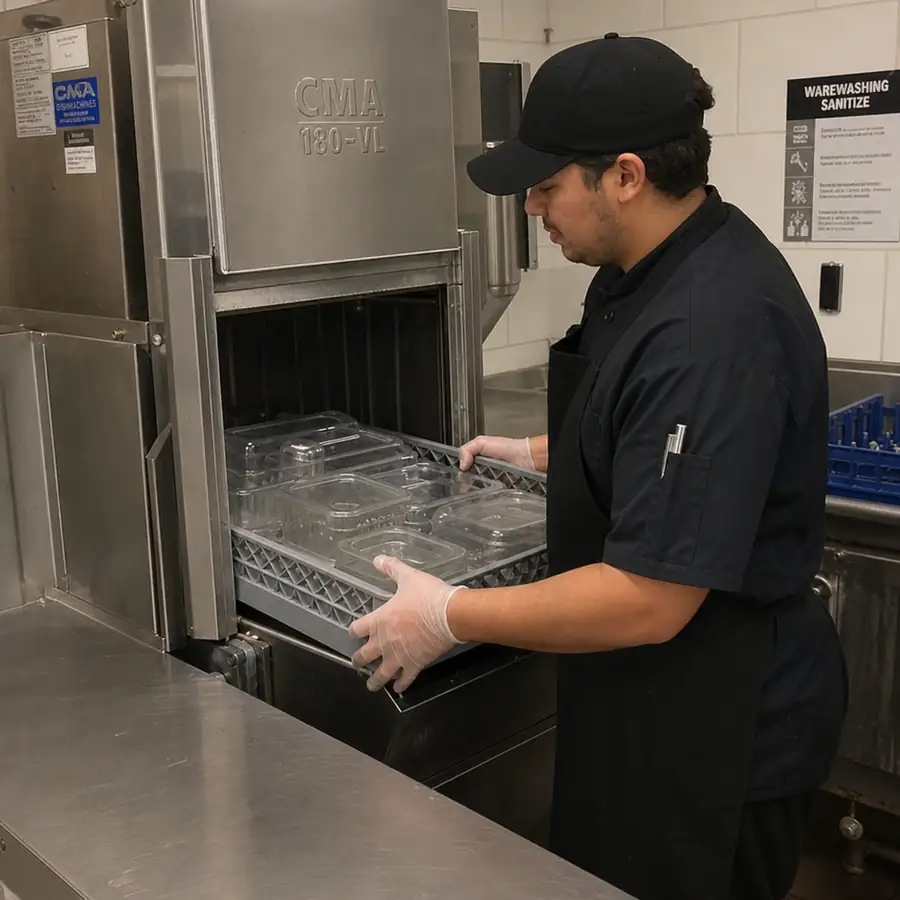
A frequently asked question by new kitchen staff is: are Winco food containers dishwasher safe? The answer is a resounding yes. Both Winco and Cambro containers are designed for high-temp commercial dishwashers.
However, there is a caveat regarding longevity. Because commercial dishwashers use powerful sanitizing chemicals and incredibly hot water, repeated washing will eventually cause surface wear on polycarbonate containers, leading to a cloudy appearance known as "crazing." Cambro's proprietary plastic blends tend to resist crazing slightly longer than Winco's, keeping their clear containers looking newer for an extended period.
Space Efficiency: Master the Stack
In the restaurant business, space is money. Walk-in coolers, dry storage pantries, and prep stations are almost always smaller than the chef would like. Therefore, optimizing space is a daily puzzle.
Industrial Grade Square Food Containers vs. Round Containers
Both Cambro and Winco offer round and square containers.
- Round containers are excellent for stirring. If you are mixing a massive batch of salad dressing, a round container allows the whisk to hit every edge smoothly. They also allow for better air circulation in a walk-in cooler, helping foods cool down faster.
- Square containers, however, are the absolute champions of space efficiency. By utilizing industrial grade square food containers, you can store up to 33% more food in the exact same footprint compared to round containers. They pack tightly against walls and each other, eliminating wasted negative space on your shelves.
The Stacking Mechanism
When searching for the best stackable food storage for restaurants, you must look at the design of the base and the lid. Cambro containers feature precision-engineered stacking lugs. These are small indentations and ridges that allow the containers to nest securely within one another when empty, without getting hopelessly stuck together (a phenomenon that plagues cheap residential containers). When full and lidded, Cambro’s lids feature deep grooves that lock the base of the container above it in place, preventing terrifying leaning towers of soup in your walk-in.
Winco also incorporates stacking lugs and grooved lids into their designs. The stackability of Winco containers is highly efficient and secure. The only minor difference noted by some chefs is that Cambro’s locking grooves feel slightly deeper and more rigid, providing a marginal advantage when stacking heavy liquids four or five bins high on a rolling cart.
Locking in Freshness: The Science of Lids and Seals
A container is only as good as its lid. If the lid pops off during transport or lets air seep in, your food will spoil, oxidize, or spill.
Both brands offer a variety of lid types, usually categorized into standard snap-on lids and seal covers.
Commercial Grade Airtight Lid Seals
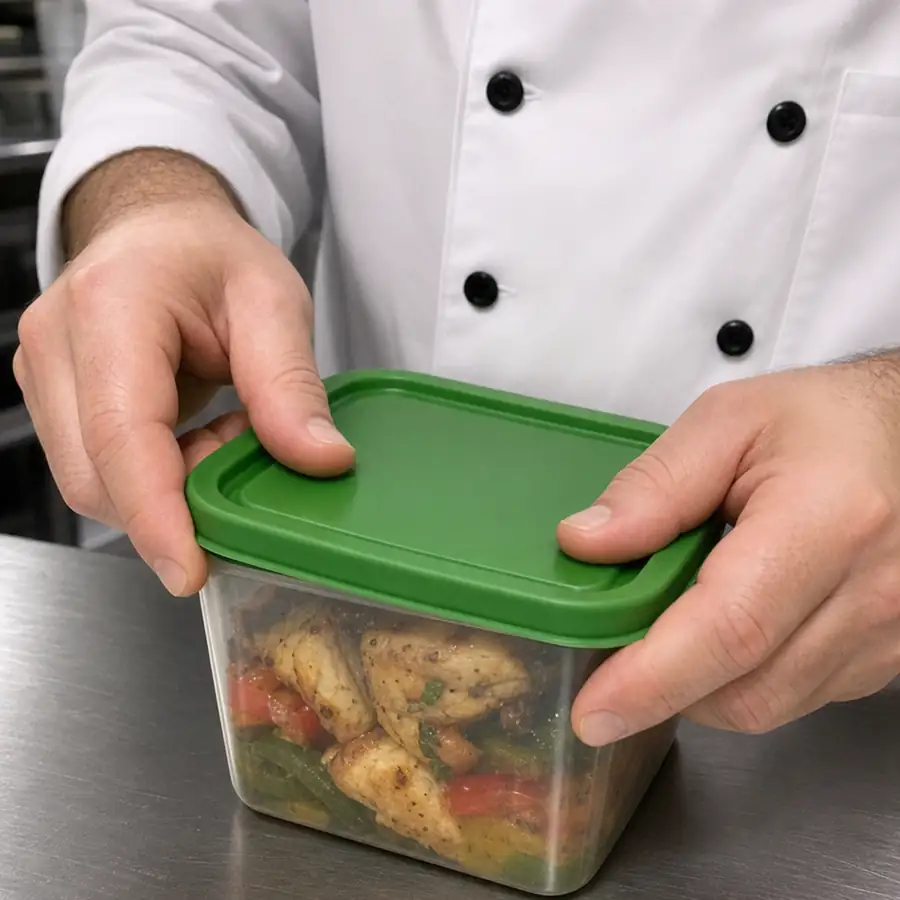
For extreme freshness, you need commercial grade airtight lid seals. Cambro offers their Seal Covers, which feature an inner and outer seal that tightly grips the rim of the container. These lids are truly leak-resistant. You can fill a container with marinara sauce, snap on a Cambro Seal Cover, and tip it completely upside down without a single drop escaping. This is an absolute necessity for preventing cross-contamination in coolers.
Winco also provides excellent tight-fitting lids. Their color-coded snap-on lids are very secure and do a fantastic job of keeping air out and freshness in. While Winco lids are highly reliable for stationary storage on a shelf, some high-volume caterers have noted that Cambro’s specialized seal covers offer slightly more peace of mind when transporting liquids in the back of a bumpy catering van.
Color-Coding and Organization
Both brands understand that modern kitchens rely on color-coding to prevent cross-contamination (e.g., red for raw meat, blue for seafood, green for produce) and to manage inventory using the FIFO (First In, First Out) method. Both Cambro and Winco offer lids in various colors, making it easy for your staff to identify what belongs where at a quick glance.
Practical Application: How to Organize a Walk-In Cooler
Choosing between Cambro vs Winco food storage containers is just the first step. To truly reap the benefits of the best food containers, you must utilize them effectively. If you want to know how to organize a walk-in cooler like a Michelin-starred chef, follow this strategic blueprint:
- Standardize Your Bins: Do not mix and match brands and sizes haphazardly. Choose either Cambro or Winco and stick to it. Buy heavily into industrial grade square food containers (2-quart, 4-quart, 6-quart, and 8-quart sizes generally share the same lid size, making lid-matching a breeze).
- Implement the Top-to-Bottom Rule: This is a core tenet of commercial kitchen food safety standards.
- Top Shelves: Ready-to-eat foods, cooked items, dairy, and prepared produce.
- Middle Shelves: Uncooked seafood and whole cuts of raw beef or pork.
- Bottom Shelves: Raw poultry and ground meats (these have the highest cooking temperature requirements; placing them at the bottom ensures that if they leak, they don't contaminate anything below them).
- Label Everything: A container without a label is a liability. Use dissolvable labels or masking tape and a sharpie. Every container must list the item name, the date it was prepped, and the initials of the prep cook.
- Embrace FIFO (First In, First Out): When placing newly prepped food into the walk-in, always place it behind the older food. Having uniform, highly visible polycarbonate containers makes auditing your FIFO system incredibly easy.
- Utilize Color-Coded Lids: Assign lid colors to specific days of the week or specific food groups.
The Catering Perspective: Moving Food Safely
While a static restaurant kitchen is demanding, the catering industry introduces entirely new challenges. Caterers must prep food, store it safely, load it onto trucks, drive to a venue, and serve it flawlessly.
When it comes to bulk food storage for catering, the structural integrity of your containers is tested under transit conditions. A sudden stop at a red light can send a stack of prep bins sliding across the back of a van.
For high-volume catering, Cambro is traditionally viewed as the safer bet. The slightly superior rigidity of Cambro Camwear and the ultra-secure fit of their specialized seal lids provide the peace of mind needed when transporting 20 gallons of hot soup over bumpy roads. Furthermore, Cambro offers an extensive ecosystem of insulated food pan carriers (often referred to colloquially as "Cambros" themselves) that their containers are specifically designed to nest inside perfectly.
However, if your catering operation relies mostly on dry goods, pre-baked pastries, or solid foods that do not risk massive liquid spills, Winco containers are more than up to the task and will save you a substantial amount of money on your initial startup costs.
Maintenance and Cleaning Protocols
To maximize the lifespan of restaurant storage bins, regardless of whether you choose Cambro or Winco, you must implement proper cleaning protocols.
- Avoid Abrasive Scrubbers: Never use steel wool or highly abrasive green scrub pads on polycarbonate containers. This will cause micro-scratches, which not only ruin the glass-like clarity but also create microscopic valleys where bacteria can hide. Use soft sponges and standard dish brushes.
- Rinse Acidic Foods Immediately: Even stain resistant plastic food tubs can fall victim to tomato sauce or turmeric if left sitting for a week. As soon as a container holding heavily pigmented or acidic food is emptied, rinse it immediately before sending it to the dish pit.
- Air Dry Properly: After containers come out of the dishwasher, do not stack them while they are still wet. Stacking wet containers breeds bacteria and can cause the bins to lock together like a vacuum. Invert them on a wire rack to air dry completely before nesting them.
- Inspect for Damage Routinely: Make it a weekly habit to inspect your bins. If a container develops a severe crack or the plastic begins to flake, throw it away immediately. A cracked container cannot be properly sanitized and violates health codes.
Cost Analysis: Premium Investment vs. Smart Budgeting
We cannot conduct a comprehensive food storage comparison without talking about money. Profit margins in the food industry are notoriously razor-thin.
- The Cost of Cambro: Cambro commands a premium price tag. You are paying for a legacy of unbreakable quality, exceptional engineering, and the peace of mind that comes with the industry's most trusted name. Purchasing a full kitchen suite of Cambro containers is a significant capital expense. However, their lifespan is so incredibly long that the cost-per-use over a ten-year period is remarkably low.
- The Value of Winco: Winco is explicitly designed to be a high-quality, budget-friendly alternative. You can often outfit a kitchen with Winco containers for 20% to 40% less than the cost of outfitting it with Cambro. For a new restaurant with tight startup capital, this is a massive advantage.
The ROI Perspective: If you have the budget, Cambro is an investment that you will likely never regret. It is a "buy once, cry once" scenario. However, if you are aggressively managing cash flow, Winco provides a highly functional, safe, and professional solution that frees up capital for other urgent needs, like marketing or front-of-house aesthetics.
Mixing and Matching: Is it a Good Idea?
A common question among kitchen managers is whether they can mix Cambro and Winco containers to save money. For example, buying Cambro for heavy-duty liquid storage and Winco for dry goods.
While this sounds like a smart compromise on paper, it often leads to frustration in practice. Although a 4-quart container from Winco and a 4-quart container from Cambro look almost identical, their lids and stacking lugs are not perfectly interchangeable.
In the middle of a Friday night dinner service, the last thing a prep cook needs is to fight with a lid that won't snap shut because they are trying to put a Winco lid on a Cambro base. For the sake of your staff's sanity and your kitchen's efficiency, it is highly recommended to choose one brand of storage containers.
Cambro vs Winco Food Storage Containers: Which Is Better for Commercial Kitchens?
So, after analyzing materials, durability, lids, space efficiency, and price, which brand takes the crown? The answer, as with most things in the culinary world, depends entirely on your specific operational needs.
You Should Choose Cambro If:
- You are running a high-volume, high-stress kitchen where equipment takes constant abuse.
- You are heavily involved in off-site catering and need the absolute most secure seals for liquid transport.
- You have the upfront capital to invest in the absolute best food containers and want a product that will easily last a decade or more.
- Brand consistency and legacy reliability are paramount to your operations.
You Should Choose Winco If:
- You are a startup restaurant or food truck needing to keep initial capital expenditures strictly under control.
- You want high-quality, NSF certified food storage containers that function exceptionally well for stationary storage in walk-ins and dry pantries.
- You prefer a business model where you replace cheaper items slightly more frequently rather than making massive upfront investments.
- You need reliable, easy-to-clean polypropylene bins for bulk dry ingredient storage.
Find Commercial Food Storage Containers at The Horeca Store
Whether you're organizing ingredients, storing prepared foods, or improving refrigerator and dry-storage efficiency, choosing the right containers can make a significant difference in a professional kitchen. The Horeca Store offers commercial kitchen and food-storage solutions for restaurants, cafés, hotels, catering businesses, and other foodservice operations. Explore the Food Storage & Food Prep Equipment collection to find durable storage solutions that fit your kitchen's capacity, workflow, and budget.
Final Thoughts
Food storage solutions are the unsung heroes of the culinary industry. They do not get the glory of a gleaming wood-fired pizza oven or an imported espresso machine, but they are the silent workhorses that keep your food safe, your kitchen organized, and your food costs under control.
Both Cambro and Winco manufacture exceptional products that easily meet all commercial kitchen food safety standards. Cambro edges out the competition in sheer, unadulterated durability and lid security, making it the premier choice for the most demanding environments and high-volume catering. Winco, however, stands proudly as the undisputed king of value, offering professional-grade quality that allows independent operators to thrive without blowing their budgets.
Ultimately, evaluating Cambro vs Winco Food Storage Containers: Which Is Better for Commercial Kitchens? comes down to balancing your budget against your kitchen's specific physical demands. Whichever brand you choose, invest heavily in uniform, square, stackable containers, train your staff on strict FIFO and labeling protocols, and watch as your kitchen transforms into a model of culinary efficiency.