
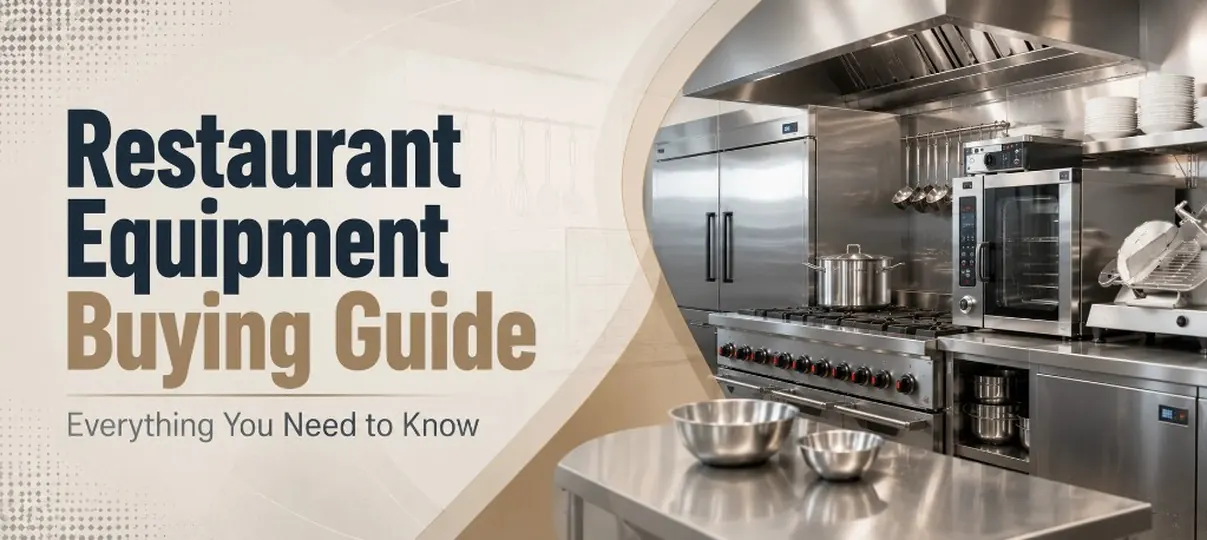
Essential Guide to Buying Restaurant Equipment
Buying restaurant equipment is one of the biggest practical decisions you make before opening, renovating, or expanding a food business. The right choices help your kitchen work faster, stay safer, reduce daily frustration, and support the kind of menu you actually want to serve. This restaurant equipment buying guide walks through how to plan, compare, and purchase with confidence, whether you are outfitting a full commercial kitchen or replacing a few key pieces.
What should you decide before buying restaurant equipment?
Before buying restaurant equipment, lock menu, peak volume, and utilities so your commercial kitchen plan stays grounded.
Before you compare brands, finishes, or capacities, decide what your kitchen must do every day. Your menu, service style, space, staffing, storage needs, utilities, and budget should guide every purchase, because equipment that looks impressive on paper can become a problem if it does not fit your operation. A smart guide to buying restaurant equipment starts with workflow, not a shopping list.
Begin with your menu. A breakfast caf, pizza shop, food truck, bakery, bar, and full-service restaurant all need different kitchen gear essentials. Even two restaurants with similar menus may need different setups if one focuses on dine-in service and the other handles delivery, catering, or high-volume takeout.
Next, think about peak demand. It is tempting to buy for an average day, but busy periods reveal whether your line is truly prepared. If your fryer, oven, refrigerator, prep table, or dishwashing area becomes a bottleneck during rushes, the whole customer experience can suffer.
Finally, look at your physical space. Measure doorways, hallways, ceiling height, kitchen aisles, utility locations, ventilation points, and storage areas. A piece of equipment is not a bargain if it cannot be delivered, installed, cleaned, or safely used in the available footprint.
Start with the menu and the workflow
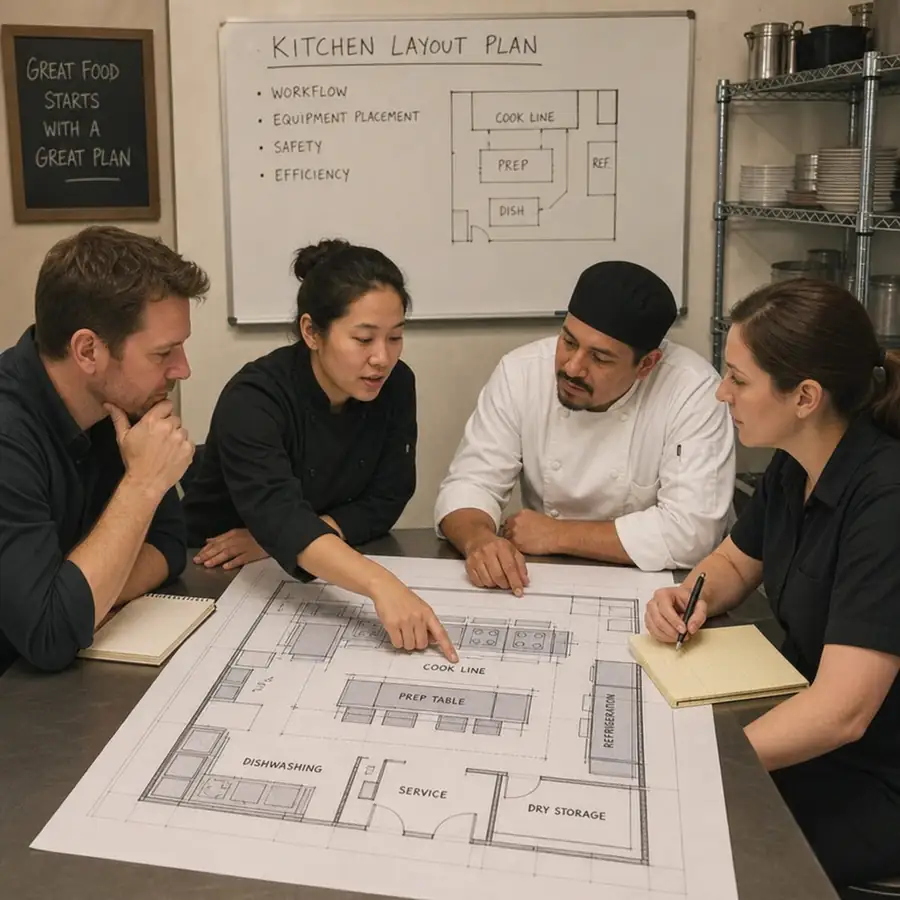
Start with the menu and workflow so cooking equipment, refrigeration, and food prep equipment match real station traffic.
Your menu is the blueprint for your equipment plan. Instead of asking, 'What does a restaurant need?' ask, 'What does this menu require from receiving to service?' Trace ingredients from delivery to storage, prep, cooking, holding, plating, and cleanup. This simple exercise helps you avoid buying attractive but unnecessary items while catching essentials that are easy to overlook.
For example, if your menu depends on fresh produce, you may need more refrigerated prep space, sinks, shelving, and cutting surfaces than a concept built around frozen or pre-portioned ingredients. If you serve fried foods, your fryer capacity, oil management, ventilation, and fire safety considerations become central. If you bake in-house, proofing, mixing, oven capacity, cooling space, and dry storage matter as much as the oven itself.
A practical commercial kitchen guide should also account for how people move. Staff should not have to cross busy cooking areas to reach cold storage, carry hot pans through tight aisles, or compete for one small prep surface. Good workflow protects speed and safety at the same time.
Map each station before you buy
Map each station before you buy, from receiving and prep to beverage equipment, ice machine needs, and warewashing.
Break the kitchen into working zones and list the equipment, tools, and food service supplies each one needs. Common zones include:
- Receiving and storage: shelving, carts, scales, dry storage bins, walk-in or reach-in refrigeration, freezer space, and labeling supplies.
- Prep: prep tables, cutting boards, knives, mixers, slicers, processors, sinks, portioning tools, and ingredient containers.
- Cooking: ranges, ovens, grills, fryers, steamers, combis, induction units, griddles, and hood-compatible appliances.
- Holding and service: hot holding cabinets, heat lamps, cold wells, pass-through refrigeration, plating surfaces, and expo tools.
- Beverage or bar: ice machines, glass washers, undercounter refrigeration, sinks, blenders, coffee equipment, and speed rails.
- Warewashing and sanitation: dish machines, three-compartment sinks, drying racks, chemical storage, floor mats, and waste handling.
When you are building an equipment list for a new restaurant, turn those zones into a practical restaurant equipment checklist: what you need to open, what you need to handle rush volume, and what can wait. Many operators find it easiest to compare categories in one place (cooking, restaurant refrigeration equipment, food preparation equipment, beverage, and warewashing) through a restaurant equipment supplier such as The Horeca Store, then finalize exact sizes and specs based on their space and menu.
This zoning method keeps the purchase process grounded in real tasks. It also makes it easier to phase purchases if you are working with a tight budget.
Build a realistic equipment budget
Build a realistic equipment budget that includes freight, installation, ventilation, and long-term operating costs.
A restaurant equipment budget should include more than the sticker price. Delivery, installation, ventilation, plumbing, electrical work, permits, smallwares, warranties, accessories, replacement parts, training, and maintenance can all affect the true cost. If you only budget for the unit itself, you may feel squeezed before the first service.
It helps to divide purchases into 'must open,' 'must operate smoothly,' and 'nice to add later.' A must-open item is required for safe, legal, and practical service. A smooth-operation item may not stop you from opening, but it can reduce labor strain or improve consistency. A nice-to-add item may be useful, but it should not crowd out refrigeration, sanitation, cooking capacity, or safety needs.
Budget categories to plan for
When comparing options, consider the full cost of ownership:
- Purchase price: the upfront cost of the equipment.
- Freight and handling: delivery charges, liftgate service, inside delivery, or special handling.
- Installation: professional setup, utility connections, calibration, or assembly.
- Space modifications: ventilation, gas lines, drainage, wiring, flooring, or wall protection.
- Operating costs: energy use, water use, filters, chemicals, oil, and consumables.
- Maintenance: service calls, cleaning supplies, replacement gaskets, belts, hoses, and parts.
- Downtime risk: lost productivity if a critical unit fails and parts are hard to source.
- Training time: staff learning how to use, clean, and maintain the equipment correctly.
This is where many equipment purchasing tips become practical rather than theoretical. A lower-cost unit may be perfectly fine for light-duty use, but a high-volume kitchen may spend more over time if repairs, inefficiency, or slow recovery create constant problems.
New, used, or leased equipment each has trade-offs
New, used, or leased options each have trade-offs; compare warranty and service support at The Horeca Store or other suppliers.
There is no single best way to buy restaurant equipment. New equipment can offer warranty protection, current features, and predictable condition. Used equipment can lower upfront cost and help stretch a startup budget. Leasing may preserve cash flow, especially for expensive pieces, but it can cost more over the life of the agreement depending on the terms.
New equipment is often appealing for refrigeration, dishwashing, ice machines, and other items where reliability is critical. These units work hard, and hidden wear can become expensive quickly. Used equipment may be more comfortable for stainless tables, shelving, certain smallwares, or simple mechanical pieces that are easier to inspect.
Leasing can make sense when a piece is essential but expensive, or when you expect your needs to change. Read the agreement carefully, including service responsibilities, early termination rules, buyout options, and what happens if the unit fails. If you are unsure, get advice from a qualified accountant or business advisor before committing.
Questions to ask when considering used equipment
Used equipment can be a smart purchase when you inspect it carefully. Ask:
- Why is it being sold?
- How old is it, and how heavily was it used?
- Is there a service history or maintenance record?
- Are replacement parts still available?
- Does it meet current safety and sanitation requirements in your area?
- Can you test it before buying?
- Are accessories, racks, pans, cords, shelves, or manuals included?
- Is there any warranty, return window, or service support?
Avoid buying on appearance alone. Clean stainless steel can hide worn compressors, weak burners, damaged seals, poor temperature recovery, or electrical issues.
How to compare key categories of commercial kitchen equipment
Comparing key categories of commercial kitchen equipment helps you balance commercial cooking equipment with refrigeration and warewashing equipment.
Most commercial restaurant equipment decisions fall into a handful of categories. Comparing them side by side helps you spot trade-offs in capacity, footprint, utility requirements, and maintenance, instead of buying one piece at a time without a plan. This is also a useful moment to confirm your equipment matches the reality of your restaurant kitchen equipment workflow: where ingredients land, where prep happens, where heat and cold live on the line, and how dishes leave and return.
If you are using an online catalog to compare professional kitchen equipment, group items by station and by utility needs. For example, many operators will review commercial cooking equipment, then immediately check what additional ventilation and clearance that choice requires. The same is true when comparing refrigeration (storage vs. line access) or warewashing (dish machine capacity vs. available drying and landing space). For category-by-category comparisons, The Horeca Store can be a convenient destination to explore equipment across multiple commercial kitchen equipment sections, then narrow to the right sizes and specs based on your layout.
Commercial cooking equipment: output and heat management
Commercial cooking equipment decisions cover ranges, a commercial oven or convection oven, commercial griddle, and commercial fryer output.
Cooking equipment drives throughput, consistency, and ticket times. Choose based on what you cook most, how fast you need to recover during rush, and how much heat and grease you are adding to the room. Ask whether the unit supports your menu without forcing workarounds. Also consider how easy it is to clean (especially around burners, grease drawers, and corners) and whether controls are straightforward for staff training.
Restaurant refrigeration equipment: temperature stability and access
Restaurant refrigeration equipment should prioritize temperature stability, with reach-in refrigeration, walk-in storage, and commercial freezer capacity.
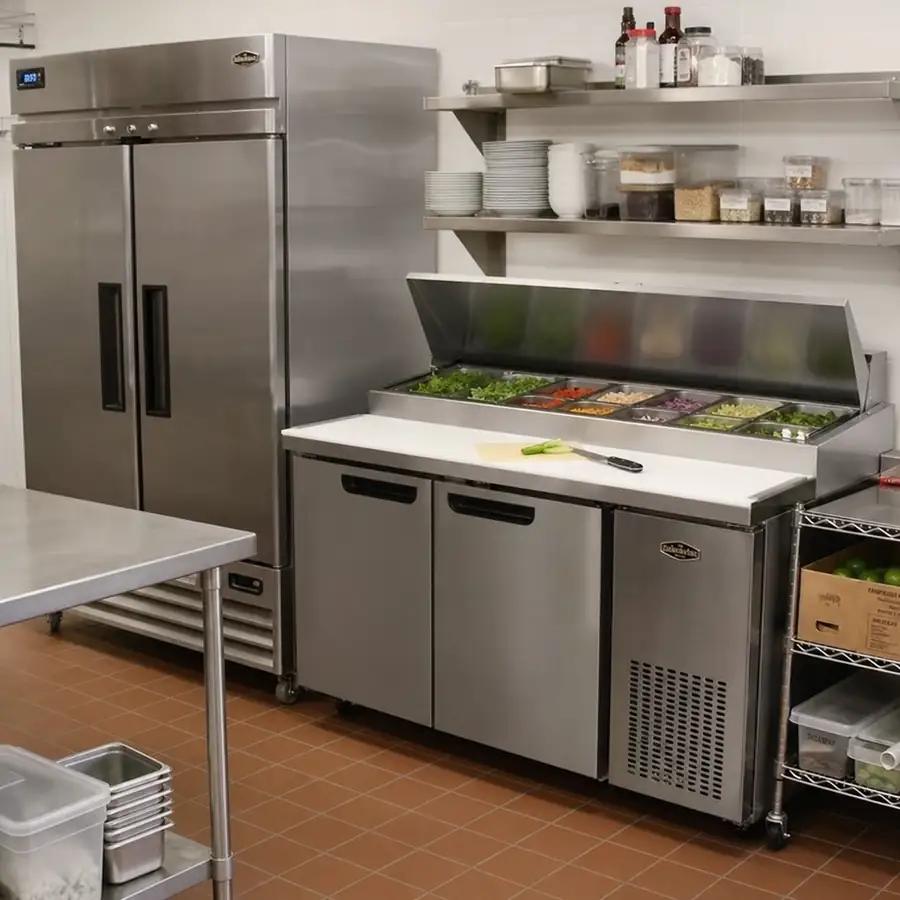
Refrigeration is both food safety and speed. Focus on the storage pattern you need: bulk storage (walk-ins and reach-ins), quick access on the line (undercounter, sandwich and salad prep tables), and specialty needs (freezers, display units, or beverage coolers). Pay attention to door swing, gasket durability, and whether staff can load and rotate product without blocking the line.
Food preparation equipment: labor savings vs. actual use
Food preparation equipment only pays off when staff actually use slicers, mixers, and a commercial blender every service.
Food preparation equipment can reduce labor and improve consistency, but only if it matches your prep volume. A slicer, mixer, or processor that is too small becomes a bottleneck; one that is too large takes space and sits idle. Decide what prep you truly do in-house, what can be simplified, and what tasks create the most repetitive labor.
Beverage equipment: speed and menu consistency
Beverage equipment choices should include ice machines, undercounter ice makers, and glassware flow for bar speed.
Beverage stations fail when they are undersized for peak demand. If coffee, tea, smoothies, draft, or cocktails are meaningful parts of sales, treat beverage equipment as core operational equipment, not an afterthought. Consider ice demand, glass and cup storage, undercounter refrigeration, and how staff move through the station during a rush.
Warewashing equipment: capacity, flow, and sanitation
Warewashing equipment capacity and sanitation rules protect food safety during peak plate turns.
Warewashing is a system: scraping, racking, washing, drying, and putting away. Your dish machine needs enough throughput, but the surrounding landing space, sink access, chemical storage, and drying setup often determine whether the area runs smoothly. If the dish pit backs up, service feels it immediately.
What should you look for in durable restaurant equipment?
Look for durable restaurant equipment with serviceable parts, clear warranties, and trusted kitchen equipment brands.
Durable restaurant equipment should be built for your volume, easy to clean, safe to operate, serviceable, and compatible with your kitchen's utilities and layout. The most important point is that durability is not just about heavy materials; it is about how well the unit performs under repeated daily use. A sturdy piece that is difficult to clean, repair, or fit into the line can still become a costly headache.
Look closely at construction. Stainless steel is common in commercial kitchens because it is strong, cleanable, and resistant to corrosion when properly cared for. But not all equipment is built the same way. Check hinges, handles, welds, casters, shelves, knobs, door gaskets, and access panels. These are the parts staff touch, open, move, and clean every day.
Capacity also matters. A unit that is too small may be overloaded, which can shorten its life and slow service. A unit that is much too large may waste space and energy. The best choice is sized for realistic peak demand with enough breathing room to avoid constant strain.
Key features that support long-term use
- Commercial rating: equipment designed for restaurant use rather than residential or occasional use.
- Appropriate capacity: enough output for rush periods without constant overloading.
- Cleanable design: smooth surfaces, removable parts, accessible corners, and minimal dirt traps.
- Strong daily touchpoints: durable handles, hinges, legs, casters, knobs, latches, and doors.
- Service access: panels and components that technicians can reach without major disassembly.
- Parts availability: common replacement parts that can be sourced without long delays.
- Utility compatibility: correct gas, electric, water, drain, and ventilation requirements.
- Safety features: stable bases, guards, temperature controls, shutoffs, and clear operating instructions.
- Warranty and support: clear coverage and practical service options in your area.
Durability is also about staff behavior. Even excellent equipment can fail early if it is overloaded, cleaned with the wrong chemicals, moved roughly, or ignored until something breaks.
Match equipment to space, utilities, and codes
Match equipment to space, utilities, and codes, including range hood and ventilation clearance before ordering.
Restaurant equipment does not operate in isolation. It connects to a building, a ventilation system, water lines, drains, electrical panels, gas supply, fire suppression, and local health and safety requirements. Before buying, confirm that your space can support what you plan to install.
This step is especially important when replacing equipment in an existing kitchen. A new unit may have different clearance needs, power requirements, heat output, or drain connections than the old one. Even a small mismatch can create installation delays or extra costs.
Work with qualified professionals where needed. Contractors, electricians, plumbers, hood specialists, fire safety providers, and local inspectors can help you avoid expensive mistakes. Requirements vary by location and concept, so do not assume that a setup you saw in another restaurant will automatically be allowed in yours.
Practical checks before placing an order
Before you commit, confirm:
- The equipment fits through entrances, hallways, elevators, and kitchen doors.
- The footprint leaves safe aisle space for staff movement.
- Required clearances are available around hot, cold, and ventilated equipment.
- Electrical voltage, phase, amperage, and plug type match your space.
- Gas type and line capacity are appropriate, if applicable.
- Water pressure, filtration, and drainage are suitable.
- The unit can be placed under the correct hood or ventilation system.
- Floors can support heavy equipment, especially full refrigeration, ovens, or large mixers.
- Cleaning access is realistic once the equipment is installed.
These details are not glamorous, but they protect your opening timeline and reduce surprise expenses.
Prioritize refrigeration, sanitation, and safety
Prioritize refrigeration, sanitation, and safety so cold storage and warewashing never become opening-day bottlenecks.
Some purchases deserve extra caution because failure can affect food safety or stop service immediately. Refrigeration, freezers, ice machines, dish machines, sinks, and hot holding equipment should be chosen with care. They may not always be the most exciting pieces to buy, but they are central to daily operations.
Refrigeration should hold safe temperatures consistently, recover well after frequent door openings, and fit your storage patterns. Think about the difference between bulk storage and line access. A walk-in may handle volume, while reach-ins, undercounter units, or refrigerated prep tables keep ingredients close to the station where staff need them.
Sanitation equipment is equally important. Dishwashing capacity, sink layout, drying space, chemical storage, and handwashing access all affect cleanliness and workflow. A dish area that is too small or poorly placed can create backups during service and increase stress for everyone.
Safety is broader than compliance. Good equipment choices reduce burns, slips, cuts, lifting strain, and crowding. Stable shelving, secure casters, non-slip mats, guarded blades, clear controls, and proper heat management all contribute to a kitchen that people can work in confidently.
Choose smallwares and food service supplies with the same care
Choose smallwares and food service supplies with the same care as major machines, including tableware and prep tools.
Large appliances often get the attention, but smallwares and food service supplies shape the rhythm of service. Knives, pans, cutting boards, mixing bowls, storage containers, sheet trays, squeeze bottles, ladles, tongs, thermometers, labels, gloves, towels, and cleaning tools are used constantly. If they are missing, low quality, or poorly organized, staff lose time and consistency suffers.
Smallwares should match your menu and portioning standards. For example, if you rely on consistent plating, you need the right scoops, ladles, scales, ramekins, and serving utensils. If you prep large batches, you need containers that stack well, fit your shelving, and work with your labeling system.
It is wise to standardize where possible. Too many random pan sizes, mismatched lids, or odd utensils make storage harder and replacement more annoying. Consistency helps staff work faster and makes inventory easier to manage.
Kitchen gear essentials often overlooked
When building your list, do not forget:
- Digital thermometers and backup thermometers.
- Food-safe storage containers with matching lids.
- Date labels, markers, and rotation tools.
- Extra sheet pans, hotel pans, and pan racks.
- Cutting boards organized by use or color system.
- Proper knives, sharpeners, and safe storage.
- Measuring tools for recipes and portion control.
- Heat-resistant gloves and towels.
- Cleaning brushes, sanitizer buckets, and floor tools.
- Trash, recycling, and compost containers where applicable.
- First-aid supplies and basic safety signage.
These items may seem minor compared with ovens and refrigerators, but they are part of the system. A well-equipped kitchen is not just powerful; it is complete.
Evaluate suppliers, warranties, and service support
Evaluate suppliers, warranties, and service support before you buy commercial kitchen equipment online or in person.
Where you buy matters almost as much as what you buy. A good supplier helps you choose appropriate equipment, explains delivery and installation needs, provides documentation, and helps with warranty or service questions. A poor buying experience can leave you with unanswered questions when something goes wrong.
Look for clear communication. You should understand what is included, what is not included, when the item will arrive, who is responsible for installation, and what to do if the unit arrives damaged. Ask about return policies, restocking fees, lead times, and whether the equipment is in stock or special order. When reviewing restaurant equipment for sale online, prioritize complete specifications and clear support policies over vague listings.
Service support is especially important for critical equipment. If a refrigerator fails on a busy weekend, it matters whether local technicians can service that model and obtain parts. Before buying an unfamiliar brand or specialized unit, ask who can maintain it in your area.
Signs of a reliable purchasing partner
A reliable equipment source usually provides:
- Clear specifications and model information.
- Honest guidance about fit, capacity, and limitations.
- Transparent shipping, delivery, and installation details.
- Warranty information in writing.
- Access to manuals, parts lists, and cleaning instructions.
- Support if equipment arrives damaged or incomplete.
- Realistic timelines rather than vague promises.
- Help coordinating accessories, connectors, and compatible add-ons.
The lowest price is not always the best value if support disappears after the sale.
How can you avoid common restaurant equipment buying mistakes?
Avoid common buying mistakes by phasing purchases and keeping pizza prep or worktop refrigerator add-ons aligned with menu growth.
You can avoid many mistakes by slowing down the decision, checking the details, and making every purchase serve your menu, space, and workflow. The most common errors include buying equipment that is too large, too small, incompatible with utilities, hard to clean, unsupported locally, or unnecessary for the actual menu. Good planning turns an expensive guessing game into a practical purchasing process.
One frequent mistake is copying another restaurant's setup. Inspiration is useful, but your menu, staff, service volume, and kitchen footprint are different. What works beautifully in one space may cause congestion or wasted capacity in another.
Another mistake is underestimating maintenance. Filters need changing, gaskets wear out, burners need attention, blades dull, drains clog, and refrigeration coils collect dust. If you do not plan for upkeep, performance declines and repair bills become more likely.
A simple pre-purchase checklist
Use this checklist before approving a purchase:
- Does this item directly support the menu or required operations?
- Is it sized for realistic peak demand?
- Does it fit the space with safe clearance?
- Can it be delivered through the building?
- Are utilities compatible without major surprise upgrades?
- Is it easy for staff to clean daily?
- Are parts and service available locally?
- Does the warranty match the risk and cost of the item?
- Are all needed accessories included or budgeted separately?
- Have staff workflow and safety been considered?
- Is this the right time to buy, or can it be phased in later?
If you cannot answer these questions, pause before purchasing. A short delay is better than living with the wrong equipment for years.
Plan for training, cleaning, and maintenance from day one
Equipment does not take care of itself. Once it arrives, your team needs to know how to use it correctly, clean it safely, and report problems early. Training should be simple, visible, and repeated often enough that good habits become routine.
Create cleaning schedules for daily, weekly, and deeper maintenance tasks. Include who is responsible, what supplies to use, and what should be avoided. The wrong cleaner, rough tool, or skipped step can damage surfaces, seals, controls, or components.
Keep manuals and warranty information organized. Store digital copies where managers can find them quickly. Record model numbers, serial numbers, purchase dates, service contacts, and maintenance history. This information saves time when ordering parts or requesting service.
Maintenance habits that protect your investment
Build these habits into your operation:
- Wipe spills quickly, especially near controls, burners, and door seals.
- Clean refrigeration coils and vents as recommended by the manufacturer.
- Check gaskets, hinges, casters, and cords for wear.
- Descale equipment that uses water when needed.
- Avoid overloading mixers, shelves, refrigerators, and prep tables.
- Train staff on startup, shutdown, and emergency procedures.
- Schedule professional service for complex or critical equipment.
- Remove equipment from service if it becomes unsafe.
A strong maintenance culture extends beyond saving money. It helps service run smoothly and gives staff confidence that their tools will work when they need them.
Think long term, but buy in practical phases
It is natural to want the perfect kitchen on day one, but most restaurants have to balance ambition with cash flow. Phased buying can be smart when it is done intentionally. Start with the equipment required for safe, consistent service, then add upgrades as demand and revenue justify them.
For example, you may begin with a smaller prep setup and add specialized equipment once a menu item proves popular. You may delay a second oven, extra holding cabinet, or advanced processor until volume supports the purchase. This approach prevents overspending on equipment that may sit idle.
However, do not underbuy critical infrastructure. Refrigeration, ventilation, sanitation, and core cooking capacity are difficult to patch during service. If a small saving creates daily bottlenecks, it may not be a saving at all.
When you are upgrading or expanding an existing restaurant kitchen, revisit your biggest constraints first (storage, prep space, cooking throughput, cold holding, or warewashing). Many teams find it helpful to browse across categories again to compare what has changed, what fits the current footprint, and what will be easiest to support long-term; The Horeca Store is one convenient place to explore multiple categories without treating the process as a one-off purchase.
The best Essential Guide to Buying Restaurant Equipment is not a universal shopping list. It is a decision-making framework: know your menu, understand your space, budget for the full cost, choose durable and serviceable equipment, and prepare your team to use it well.
Final takeaway
Final takeaway: buy for workflow first, then expand commercial kitchen capacity with The HORECA Store categories that match each station.
Buying restaurant equipment is easier when you treat every item as part of a working system. The right range, refrigerator, prep table, slicer, sink, or storage rack should support the way food moves through your kitchen and the way your staff actually works. Choose for fit, durability, cleanability, service support, and long-term value rather than looks or price alone.
If you are building your first equipment list, start with the menu and map the workflow before shopping. If you are upgrading, identify the bottlenecks that slow service or create maintenance problems. With a clear plan and careful questions, your equipment choices can make daily operations smoother, safer, and more reliable from the first prep shift to the last ticket of the night.