
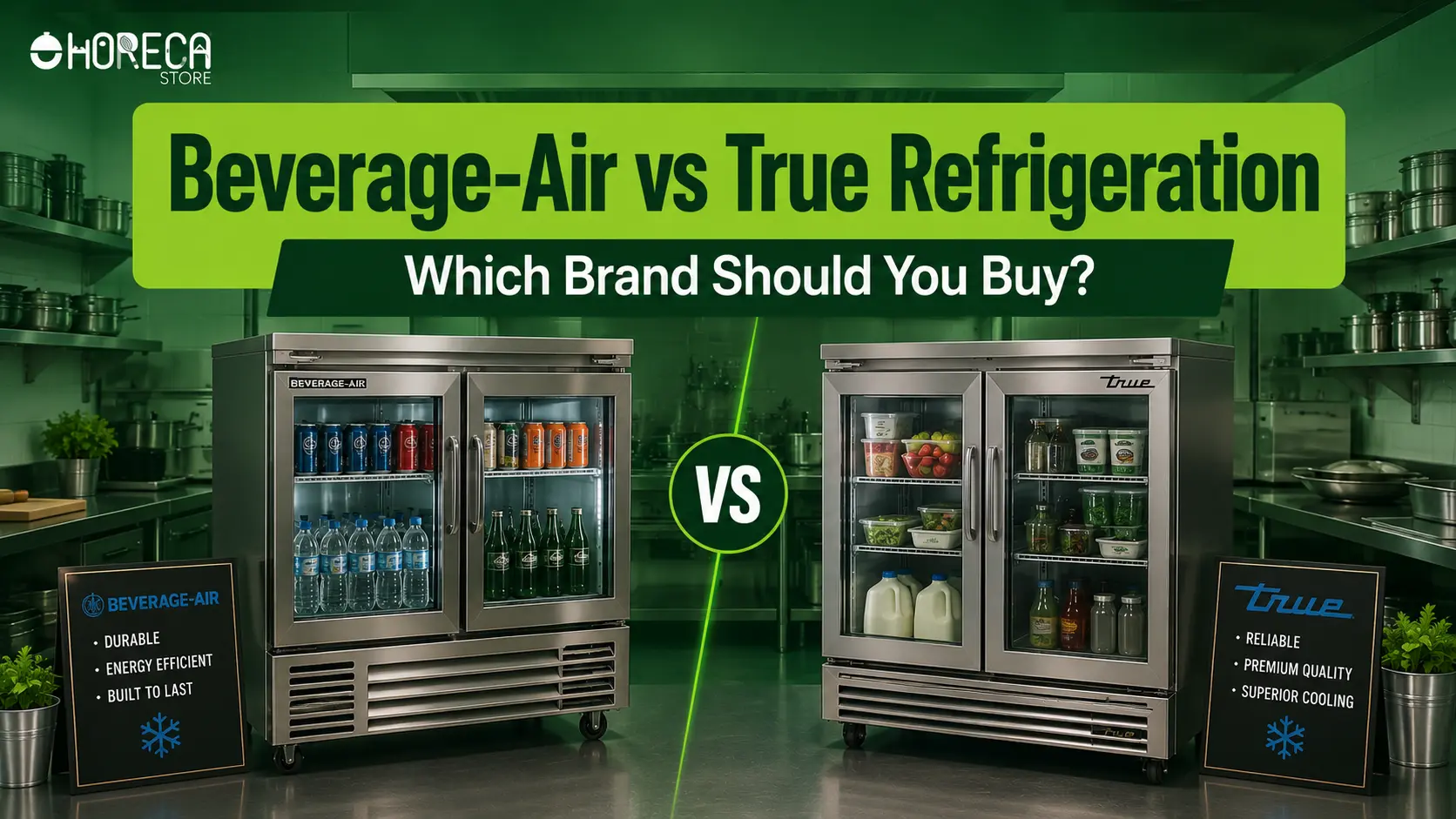
Purchasing a cooling system is the most critical "invisible" investment your business will make. It rarely earns compliments from guests, but if a compressor fails on a busy holiday weekend, you could easily lose $2,000 in spoiled inventory overnight. This stainless steel box acts as the beating heart of your daily operations, quietly keeping the health inspector happy and your menu items safe.
Walk into almost any professional kitchen in America, and you are guaranteed to spot one of two heavyweights: True or Beverage-Air. These manufacturers represent the Ford and Chevy of restaurant refrigerators, battling for decades to set the industry standard. While both companies build highly durable machines that look virtually identical from the outside, the specific engineering hidden behind their heavy doors dictates how smoothly your kitchen actually runs.
Smart buyers know that judging a unit purely by its sticker price is a dangerous trap. Industry data reveals that the upfront tag accounts for only 40% of your Total Cost of Ownership over a typical ten-year lifespan. The remaining expenses hide in daily electrical pulls, routine maintenance requirements, and how efficiently the unit recovers its cold temperature after a chef repeatedly opens the door.
Nothing is more devastating to a frantic lunch rush than a broken appliance waiting two weeks for a proprietary fan motor to ship. Understanding the hidden risks of poor local parts support turns your ultimate decision into a matter of protecting your livelihood.
American-Made Powerhouses: Decoding the Reputation of True and Beverage-Air
Walk into almost any professional kitchen, and you'll likely spot two recognizable names: True and Beverage-Air. Investing in food service refrigeration means paying for commercial-grade durability standards. This guarantees your door hinges won't sag after a thousand daily openings, and the stainless steel can survive daily hits from rogue sheet pans. Both brands built their historical reliability on these rugged benchmarks and by manufacturing heavily in the United States. For a small business owner, domestic production isn't just a marketing slogan. It means that if your fridge breaks on a busy Friday, replacement parts can ship overnight rather than leaving you waiting weeks for overseas cargo.
While both are heavyweights in American-made commercial coolers, they maintain distinct corporate identities:
- True Refrigeration: Founded in 1945 and headquartered in Missouri, True is highly specialized. They focus almost exclusively on perfecting heavy-duty core refrigeration systems.
- Beverage-Air: Founded in 1944 and headquartered in Pennsylvania, Bev-Air offers a broader product line. This makes them a flexible one-stop-shop for varied kitchen configurations.
Decades of proven uptime make both companies safe bets for industrial refrigeration, meaning neither is a "lemon." However, their differing engineering choices will directly impact your daily cleaning routines and maintenance costs. Before looking at price tags, you must evaluate how these units fit your physical space—dictating the choice between top-mount and bottom-mount compressors.
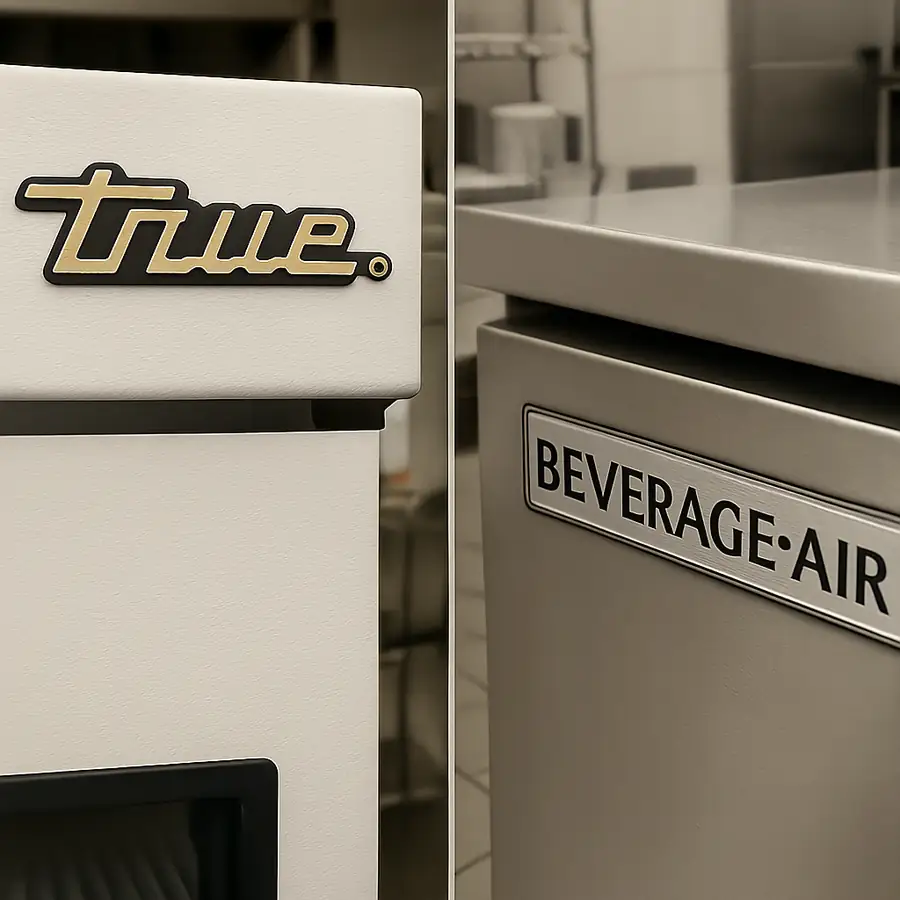
The 'Dust and Knees' Test: Choosing Between Top-Mount and Bottom-Mount Compressors
The compressor acts as the hard-working engine of your unit, and its physical placement dictates both your daily maintenance routines and long-term repair costs. A commercial refrigerator compressor location comparison boils down to what we call the "Dust and Knees" test. Simply put, you must decide whether to put that engine near the ceiling or near the floor based on your specific kitchen environment.
Placing the compressor on top keeps the machinery away from spilled ingredients and floor-level dust. If your kitchen heavily uses flour or deep fryers, a top-mounted unit prevents the condenser coils from clogging with sticky debris. However, these models require adequate "breathing space"—a clear gap between the top of the fridge and the ceiling to properly release hot air. If your building has low ceilings, a top-mounted commercial fridge will trap that exhaust heat, overwork the engine, and drastically increase your energy bill.
Conversely, bottom-mount units place the compressor near the floor, which saves on repair labor because technicians don't need ladders to access the parts—saving their knees and your wallet. To make the best choice for your industrial refrigeration needs, weigh these practical trade-offs:
- Top-Mount Pros & Cons: Stays cleaner and avoids floor-level debris, but requires high ceilings for ventilation and makes the top interior shelves harder to reach.
- Bottom-Mount Pros & Cons: Cheaper and easier for mechanics to service, but acts like a vacuum for heavy floor dust, loose flour, and grease.
Keeping the Health Inspector Happy: Build Quality and Sanitize-Ready Designs
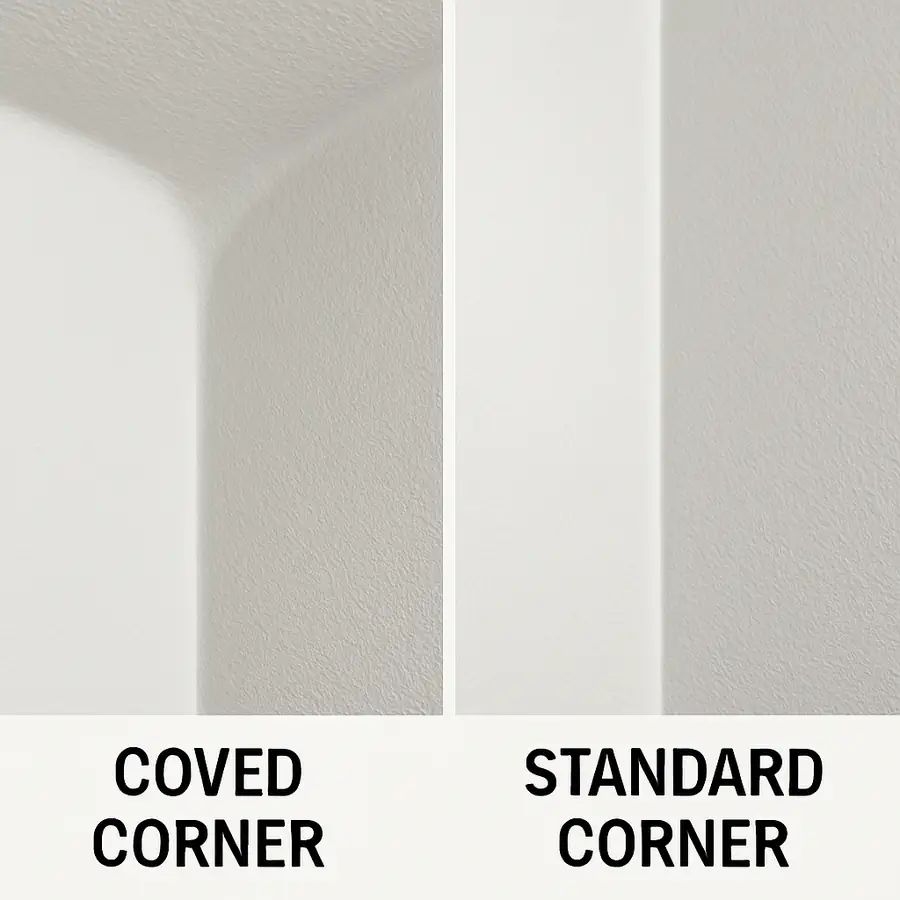
Every owner dreads the health inspector's flashlight checking the bottom of the fridge. When a liquid inevitably leaks, your interior design dictates if cleanup takes seconds or minutes. This is where "coved corners"—rounded interior floor edges instead of sharp 90-degree angles—become your best defense. Rather than trapping sticky bacteria in tight crevices, a coved floor allows staff to smoothly wipe away debris with one swipe, ensuring you pass sanitation checks quickly.
Beyond physical shape, the metal itself dictates the stainless steel cabinet durability of your unit. Not all metals used in commercial refrigerators are equal; manufacturers typically rely on either 300-series or 400-series stainless steel. The 300-series contains higher nickel levels, offering superior rust resistance essential for damp environments or prep areas handling acidic ingredients like citrus. Alternatively, 400-series steel provides a budget-friendly, dent-resistant option, though it requires diligent drying by your staff to prevent long-term corrosion.
Finally, practical food service refrigeration requires interior shelving built to hold massive loads without bowing under stacked produce boxes or heavy meat cuts. High-capacity, PVC-coated wire shelves ensure your storage won't warp, protecting your inventory from a disastrous collapse.
Efficiency That Pays: How R290 Refrigerant and Self-Cleaning Condensers Lower Your Bills
Does your kitchen run on razor-thin margins? If so, ignoring how your fridge actually cools is a costly mistake. When analyzing Beverage-Air vs True energy consumption, both brands shine by utilizing a natural gas called R290. The hydrocarbon R290 refrigerant benefits your bottom line directly because it absorbs heat significantly faster than older, synthetic chemicals. This means the compressor doesn't have to work as hard or run as long to recover lost temperatures after a busy lunch rush, immediately shrinking your monthly electricity costs and often qualifying your purchase for lucrative local utility rebates.
Beyond the refrigerant itself, keeping internal coils free of dust is the secret to a long-lasting machine. Instead of relying on busy staff to brush off debris, modern units utilize reverse condensing fan motors. Every time the compressor starts, this fan spins backwards momentarily to blow away settled dirt before resuming its normal cooling direction. This self-cleaning condenser technology saves your business money in three specific ways:
- It prevents the motor from suffocating, overheating, and burning out prematurely.
- It maintains peak energy efficiency, stopping utility bills from slowly creeping up over time.
- It drastically reduces the need to call a technician for expensive emergency coil cleanings.
Lowering daily operational costs through smart engineering is a massive win for any food service business. However, even the most efficient refrigerator is still a mechanical device in a grueling environment. When components eventually wear out, local parts availability and warranty coverage.
The Midnight Breakdown Scenario: Warranty Realities and Local Parts Availability
Imagine it is a busy Friday night, and the digital temperature display on your main reach-in suddenly starts creeping up. A broken fridge does not just halt dinner service; it puts thousands of dollars of perishable inventory at immediate risk. When panic sets in, commercial refrigeration repair costs can quickly spiral out of control if you have not properly evaluated the fine print of your equipment purchase.
The most common trap new business owners fall into is misunderstanding the phrase "under warranty." In this industry, there is a critical distinction between a "Parts Warranty" (which pays for the physical replacement component, like a broken fan motor) and a "Labor Warranty" (which pays your local repairman for the hours spent diagnosing and installing that part). If a fan dies in year four and your labor coverage has expired, the $150 replacement motor is free, but you still owe a $300 service bill.
Knowing what comes standard prevents these expensive surprises. Looking at True vs Beverage-Air warranty differences, both heavyweights offer highly competitive protections out of the box:
- Parts Warranty: 3 years for both brands.
- Labor Warranty: 3 years for both brands.
- Compressor Warranty: 7 years for both brands (protecting the expensive main cooling engine).
Which Fridge Lasts Longer? Flagship Model Comparison (True T-series vs Beverage-Air Horizon)
When deciding which refrigerator brand lasts longer under fire, comparing the flagship models—the True T-23 and the Beverage-Air HBR23—reveals exactly how they handle the daily grind. The most critical performance metric during a busy lunch rush is "pull-down time," which is simply how fast the fridge recovers its safe, cold temperature after a cook repeatedly opens the door. True engineers their T-Series with oversized evaporators, providing an aggressive pull-down speed that protects perishable food even when doors are constantly swinging open.
Physical hardware takes just as much of a beating as the internal cooling system. True is famous for conducting intense door hinge stress-testing, mechanically opening and slamming their doors hundreds of thousands of times before approving a design. Consequently, the True T-series features some of the most indestructible hinges and handles available. If your staff is notoriously rough on equipment, this rugged build quality makes True one of the best reach-in coolers for restaurants focused on absolute physical durability.
Conversely, brute strength is not the only priority when analyzing the True T-series vs Beverage-Air Horizon matchup. Beverage-Air units are engineered to run significantly quieter, making the Horizon series the superior choice if your cooler sits in a front-of-house cafe or bakery where loud compressor humming would annoy your customers. Balancing these specific daily needs—rapid cooling and heavy-duty hardware versus quiet, customer-friendly operation—leads directly to the ultimate purchasing decision.
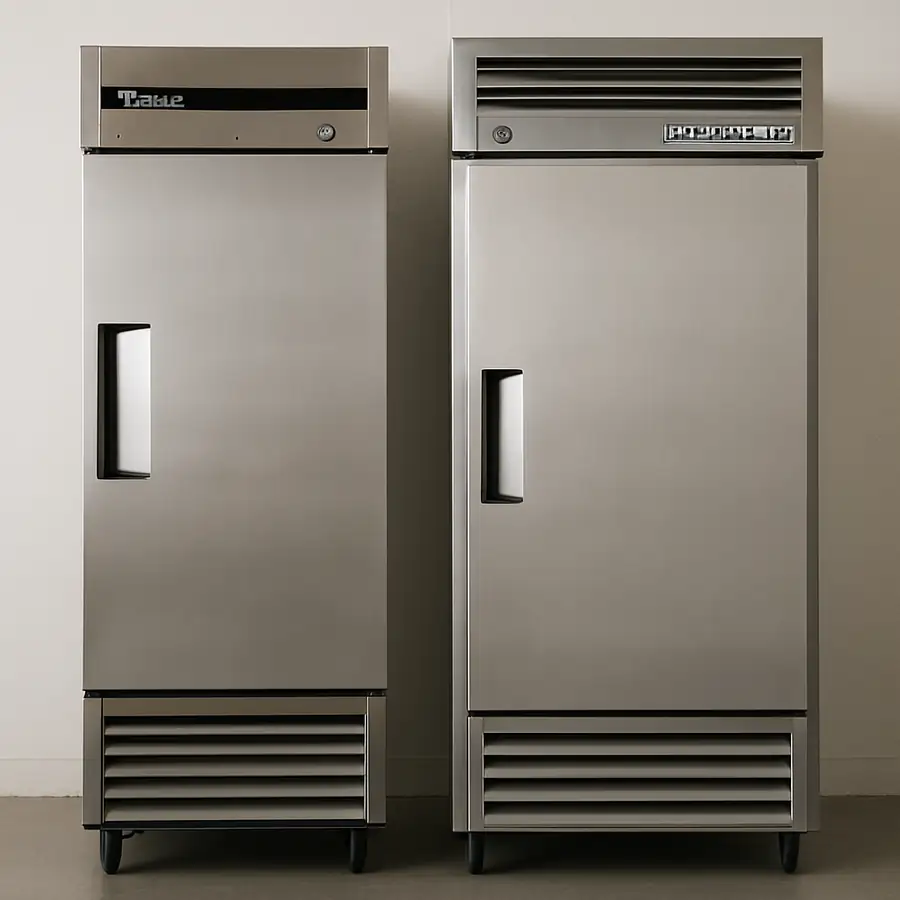
The Final Verdict: Choosing the Right Fridge for Your Specific Kitchen Layout
Evaluating the total cost of ownership based on daily operational impacts, rather than just the initial price tag, ensures you can speak with equipment dealers confidently and avoid being upsold.
Finalize your choice using a 4-point business needs checklist: ambient kitchen heat, floor space, cleaning schedule, and local serviceability. Avoid overspending on features your specific kitchen won't use with this straightforward breakdown:
- Buy True if you run a bakery with low ceilings requiring a bottom-mount compressor, or a high-traffic environment needing rapid temperature recovery.
- Buy Beverage-Air if you have a narrow galley kitchen needing extensive shelf customization, or want a top-mount unit kept safely away from floor dust.
Matching the machine to your kitchen's specific reality guarantees the best return on investment. Whichever brand you select, remember that proactive maintenance is your secret weapon for equipment longevity. Make your choice with confidence, protect your inventory, and keep your business running profitably.
Find Commercial Refrigeration Solutions at The Horeca Store
Choosing the right commercial refrigerator is only part of building an efficient kitchen. The Horeca Store offers a comprehensive range of commercial refrigeration equipment, including reach-in refrigerators, freezers, undercounter units, prep tables, display chillers, and other foodservice essentials for restaurants, cafés, hotels, bakeries, cloud kitchens, and catering businesses.
Whether you're setting up a new commercial kitchen or upgrading existing refrigeration equipment, The Horeca Store provides high-quality products from trusted brands at competitive prices. With reliable customer support, commercial-grade equipment, and a wide selection of kitchen solutions, The Horeca Store is your trusted partner for creating efficient, food-safe, and productive foodservice operations.