
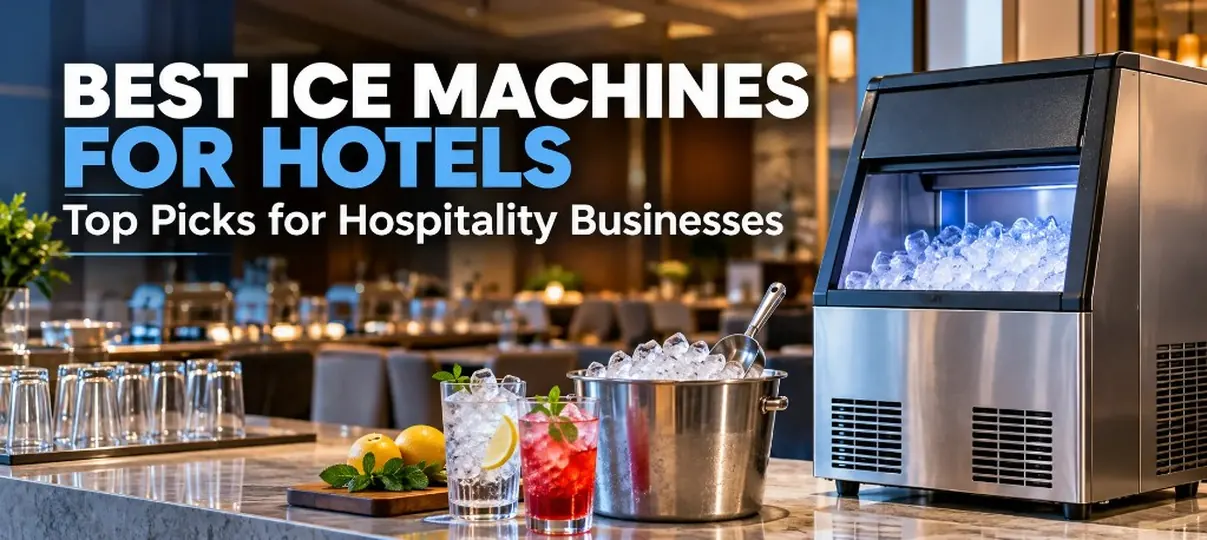
The best choice for a hotel or hospitality business is usually a commercial, modular ice machine sized above peak demand, paired with the right storage bin or dispenser for guest flow. For most properties, that means choosing durable hotel ice machines from established commercial ice makers, matching the ice style to the use case, and prioritizing sanitation, service access, energy efficiency, and total cost of ownership over the lowest upfront price. Glass chillers and frosters keep stemmed glass cold while the ice machine is offline for cleaning.
A commercial ice machine is a purpose-built foodservice appliance that produces large volumes of ice for guest floors, restaurants, bars, cafes, catering areas, bakeries, QSR counters, banquet service, healthcare-style hospitality, and back-of-house operations. Unlike domestic ice makers, commercial units are designed for continuous use, water connections, drainage, filtration, cleaning cycles, and serviceable components.
What should hotels look for first in an ice machine?
Start with refrigeration capacity and a hotel refrigerator in the same service room.
Hotels should look first at daily ice production, storage capacity, placement, ice type, sanitation features, and service support. A machine that produces enough ice but sits in the wrong location, lacks storage, or is difficult to clean can still create guest complaints and staff workload.
The practical starting point is demand. A common planning estimate is about 5 lb of ice per guest room per day, then more for restaurants, bars, pools, banquets, conference service, or hot climates. A safe ice machine buying guide approach is to size production 20-30% above your highest estimated daily demand, so the system can recover after peak periods.
For example, a 100-room limited-service hotel may estimate 500 lb per day for rooms alone. Add breakfast service, meeting rooms, staff use, and summer peaks, and a machine in the 650-800 lb daily production range may be more realistic than a 500 lb unit. A full-service hotel with bars, banquet service, and food displays may need multiple machines or a modular system split by department.
Main types of commercial ice makers for hospitality
Beverage equipment elsewhere in the hotel still needs its own ice plan.
Different businesses need different configurations. The best ice makers for a boutique hotel lobby are not always the best large capacity ice machines for restaurants hotels, banquet kitchens, or resort bars.
Modular ice machines
Pair each head with ice machine bins and dispensers before you compare brands.
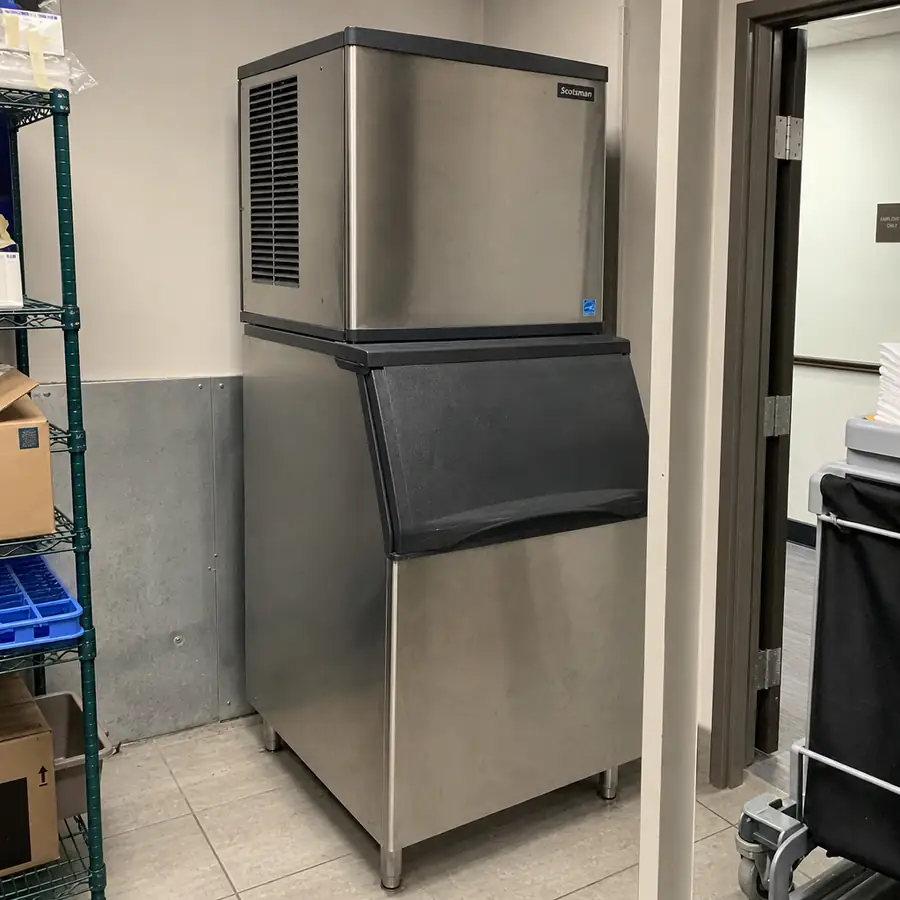
Modular machines use a separate ice-making head mounted on a storage bin, dispenser, or beverage system. They are the strongest option for large-volume hospitality operations because production and storage can be scaled separately.
Choose modular hotel ice machines for full-service hotels, resorts, casinos, large restaurants, catering kitchens, banquet halls, and high-demand QSRs. They work well when you need 500 lb, 1,000 lb, or more per day and want the flexibility to pair a machine head with a larger bin.
Undercounter ice machines
Undercounter ice makers fit a short bar when a modular head will not.
Undercounter units combine ice production and storage in one compact cabinet. They fit under bars, coffee counters, small kitchens, executive lounges, and service pantries.
They are useful when space is tight or when a department needs its own supply without sending staff to a central bin. The tradeoff is lower production and storage, so they should supplement-not replace-a central system in larger hotels.
Countertop dispensers
Ice supplies, including a covered scoop, stay at this station.
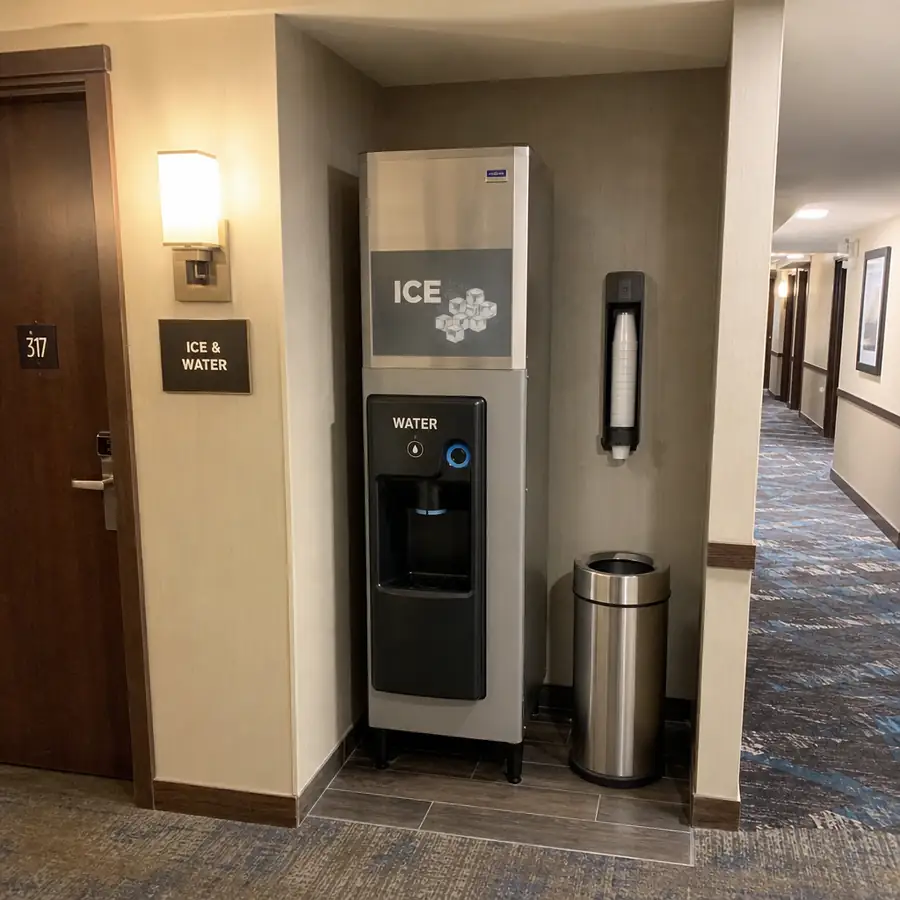
Countertop ice and water dispensers are popular for lobbies, breakfast areas, healthcare-adjacent hospitality, staff areas, and self-service guest stations. They reduce hand contact with stored ice and can improve the guest experience when positioned well.
Many properties choose nugget ice for these stations because it is soft, chewable, and easy to dispense. For busy self-service areas, prioritize touchless dispensing, drip management, filtration, and easy front-panel access.
Remote condenser systems
Walk-in coolers still need their own plan when the ice condenser sits outside.
Remote condenser ice machines move heat and noise away from the guest or kitchen area. They are useful where indoor heat gain, noise, or ventilation is a concern.
They can cost more to install, but they may improve comfort in tight kitchens, bars, and corridor service rooms. Air-cooled machines need airflow, while water-cooled systems may suit difficult environments but can increase water use and may not qualify under some efficiency programs.
Ice shapes and where each one works best
Rocks glasses and cocktail glasses show the cube choice at the bar.
Ice shape affects beverage quality, presentation, melt rate, guest perception, and operating cost. A hotel may need more than one ice style if it serves guests, cocktails, seafood displays, and banquet beverages.
Half cube and full cube ice are versatile choices for restaurants, bars, room service, and guest ice buckets. They melt more slowly than softer ice forms and work well for water, soda, spirits, and general beverage service.
Crescent cube ice is common in hospitality because it is hard, clear, and suitable for many beverage applications. Hoshizaki's KM-901MAJ, for example, is an air-cooled modular crescent cube model listed at approximately 905 lb of production, with a 30-inch width and hardwired 208-230V electrical requirements.
Nugget ice is a strong choice for self-service beverage stations, healthcare-style hospitality, casual dining, and properties that want a guest-friendly "chewable" ice experience. Scotsman's N1322 Prodigy Plus nugget model is listed at 1,314 lb per 24 hours at 70°F air/50°F water, with air, water, and remote condenser options.
Flake ice is best for food displays, seafood, produce, buffets, bakeries, and back-of-house cooling tasks. It is not usually the first choice for guest ice buckets, but it protects delicate products and shapes easily around pans and displays.
Key specifications that affect daily operations
An underbar ice bin and cocktail unit is a separate bar piece from the hotel ice head.
A good spec sheet is more than a list of numbers. Each specification has a business impact, especially in hotels where ice demand rises suddenly during check-in waves, breakfast rushes, conferences, and warm-weather occupancy spikes.
- Daily production: Shows how much ice the machine can make in 24 hours under stated air and water temperatures. Higher kitchen temperatures often reduce output, so avoid sizing too tightly.
- Storage bin capacity: Determines how much ice is ready before peak demand. A machine may produce enough daily ice but still run short if the bin is too small.
- Width, depth, and height: Affects whether the machine fits a service room, bar line, kitchen, or corridor alcove with enough clearance for airflow and cleaning.
- Power requirements: Larger units may require specific voltage, phase, breaker size, or hardwiring. Confirm electrical service before purchase.
- Condenser type: Air-cooled units are common and efficient when ventilated. Remote condensers reduce indoor heat and noise. Water-cooled units can work in difficult ambient conditions but may increase water cost.
- Energy and water use: This affects every day of ownership, not just the purchase price. ENERGY STAR notes that certified batch-type commercial ice makers are about 10% more energy efficient and 20% more water efficient than standard models.
- Cleaning access and diagnostics: Front filters, alert lights, QR manuals, and assisted cleaning cycles can reduce downtime and make staff routines easier.
Ice maker recommendations by hotel scenario
Bar refrigeration and a back bar cooler still belong beside the ice bin.
The right recommendation depends on your property size, food and beverage program, and guest access model. Use these categories as a practical filter before comparing brands and prices.
If you are comparing top ice machines, avoid ranking by production alone. A 900 lb machine is not automatically better than a 600 lb machine if the 900 lb unit lacks local service coverage, has poor placement, or requires utilities your site cannot support.
Brands and model families commonly considered
The Hoshizaki vs Manitowoc comparison helps when the short list is those two cube brands.
The best commercial ice machines for hotels reviews often mention Manitowoc, Hoshizaki, Scotsman, Ice-O-Matic, and Follett because these brands are widely associated with foodservice and hospitality ice equipment. Availability, service network, and model selection vary by market, so verify current specifications and local support before ordering.
Hoshizaki KM Series models are often considered for crescent cube applications in hotels, restaurants, bars, and cafes. The KM-901MAJ is a useful example for larger beverage programs because it combines modular configuration, crescent cube production, stainless construction, and published parts/service resources.
Manitowoc Indigo NXT machines suit operators who want cube ice, modular sizing, and modern diagnostics. The Indigo NXT iP0600 spec sheet lists up to 672 lb of daily ice production and a 532 lb bin storage capacity when paired with the referenced D570 bin, showing how production and storage should be evaluated together.
Scotsman Prodigy Plus is notable for cube, flake, and nugget options. Its cube lineup includes models from lower-output 22-inch units to high-capacity 48-inch machines, and Scotsman highlights features such as AutoAlert indicator lights, one-touch cleaning, front air filters, and QR access to manuals and warranty resources.
Ice-O-Matic CIM Series is often considered by operators who want straightforward cube machines and cleaning-focused design. Ice-O-Matic's product materials describe CIM machines, deep-cleaning access, parts/labor warranty coverage, and dealer support, making them relevant for busy hotels, restaurants, cafes, QSRs, and catering operations.
Follett is frequently associated with dispensers and ice-and-water systems, especially where controlled dispensing and sanitation are priorities. It can be a fit for guest-facing stations, healthcare hospitality, employee areas, and high-touch locations.
For procurement teams, the HoReCa store or a similar hospitality equipment supplier can help compare commercial ice makers by capacity, condenser type, bin pairing, filter needs, and after-sales service.
Installation, cleaning, and total cost of ownership
Installation has a direct effect on reliability. Before purchase, confirm water line size, drain type, floor slope, ventilation, electrical supply, door clearance, and service access. A machine wedged into a hot, unventilated room may produce less ice, work harder, and fail sooner.
Water quality is equally important. Hard water can create scale, reduce ice clarity, slow production, and increase cleaning frequency. A suitable filtration system helps protect the evaporator, improve ice taste, and support longer equipment life.
Cleaning should be planned, not improvised. Guest-facing dispensers, bins, scoops, chutes, and drains need consistent sanitation routines. Machines with front access, indicator lights, and documented cleaning cycles make compliance easier for hotel staff.
Total cost of ownership includes the machine, bin, filters, installation, energy, water, cleaning chemicals, service calls, downtime, and replacement parts. ENERGY STAR estimates certified batch-type machines can save businesses utility costs over time, which matters for equipment that may run every day.
Warranty and parts availability should be part of the buying decision. A lower-cost unit can become expensive if certified technicians, parts, or warranty support are difficult to access in your area.
A simple sizing example for hotel buyers
A beer dispenser in the bar draws from the same cold plan as the ice bin.
Imagine a 120-room hotel with breakfast service, a small bar, and one meeting room. Room demand at 5 lb per room suggests 600 lb per day before food and beverage needs.
Add 100-150 lb for breakfast, bar, staff, and meeting use. That brings expected demand to roughly 700-750 lb per day. Applying a 20-30% peak buffer points toward approximately 850-975 lb of daily production.
In this case, the buyer might consider a modular cube machine around 900 lb per day with a bin sized for morning and evening surges. If the lobby offers self-service ice and water, a separate dispenser could reduce guest traffic to staff areas and improve sanitation.
Frequently asked questions
Put ice machine parts on the same checklist as the cleaning cycle.
1. How much ice does a hotel need per room? A practical estimate is about 5 lb per guest room per day, then extra for restaurants, bars, pools, events, and hot climates. Always add a peak-demand buffer.
2. Are nugget ice machines good for hotels? Yes, especially for self-service beverage stations and guest-friendly dispensers. Nugget ice is chewable and easy to dispense, but cube ice is often better for cocktails and slower-melting beverage service.
3. Should a hotel choose air-cooled or water-cooled equipment? Air-cooled units are common and efficient when ventilation is adequate. Water-cooled units may handle difficult ambient conditions but can raise water consumption, so review local costs and restrictions.
4. What is the best ice machine for a hotel bar? A modular half-cube, full-cube, or crescent-cube machine is usually the strongest choice. Bars need reliable production, good ice hardness, and enough bin storage for rush periods.
5. How often should hotel ice machines be cleaned? Follow the manufacturer's instructions and local food-safety rules. In practice, hotels should maintain routine staff sanitation for bins and dispensers and schedule deeper machine cleaning based on water quality and usage.
Final buying guidance
Hotel supplies and guest room supplies are a separate order from the ice head.
If your requirement is maximum guest-floor supply, consider a modular cube machine with a storage bin sized for peak occupancy. If your requirement is hygienic self-service, consider a countertop or floor dispenser with touchless operation and nugget ice.
If your requirement is bar-quality beverages, consider full cube, half cube, or crescent cube machines from established brands with local service support. If your requirement is buffets, seafood, or bakery display, consider flake ice rather than standard cubes.
If your requirement is lower long-term operating cost, compare ENERGY STAR status, water use, filtration needs, cleaning access, warranty, and parts availability-not just the purchase price. The best ice machine is the one that fits your demand, space, utilities, staff workflow, and guest expectations every day.