
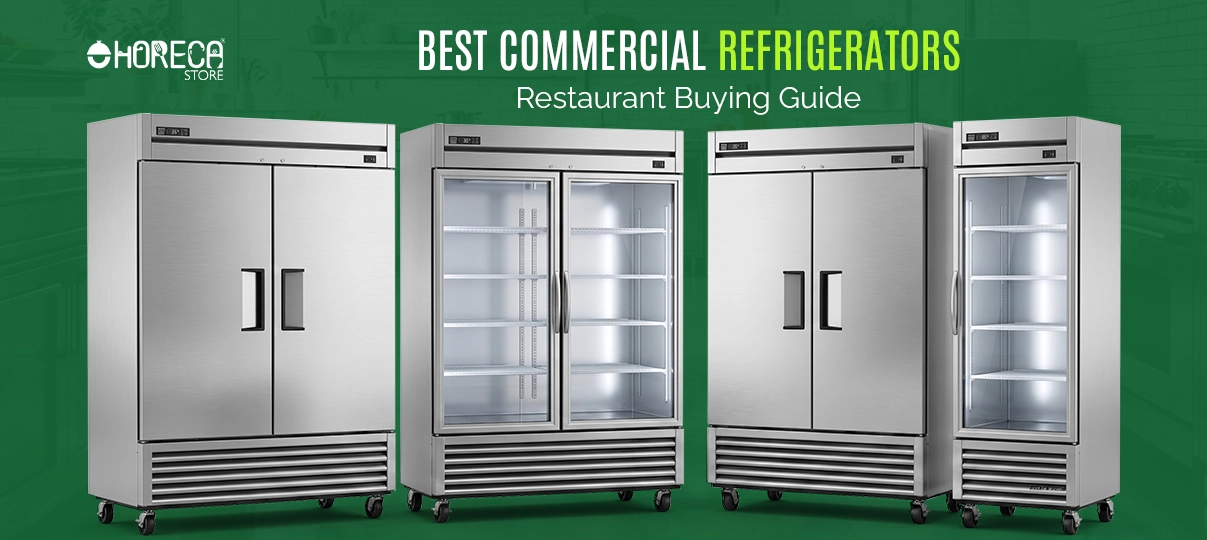
Whether you are opening a bustling downtown bistro, expanding a beloved neighborhood bakery, or upgrading an aging commercial kitchen, your refrigeration equipment is the beating heart of your food service operation. Without reliable, efficient cooling, everything from your food costs to your health inspection scores is at risk.
Finding the right equipment can feel overwhelming with the sheer volume of choices on the market. That is exactly why we have put together this Best Commercial Refrigerators: Your Restaurant Buying Guide. Our goal is to walk you through everything you need to know—from sizing and layout to compressors and maintenance—so you can make an informed, profitable investment for your business.
Let’s dive into the essential factors you must consider before upgrading your kitchen’s cold storage.
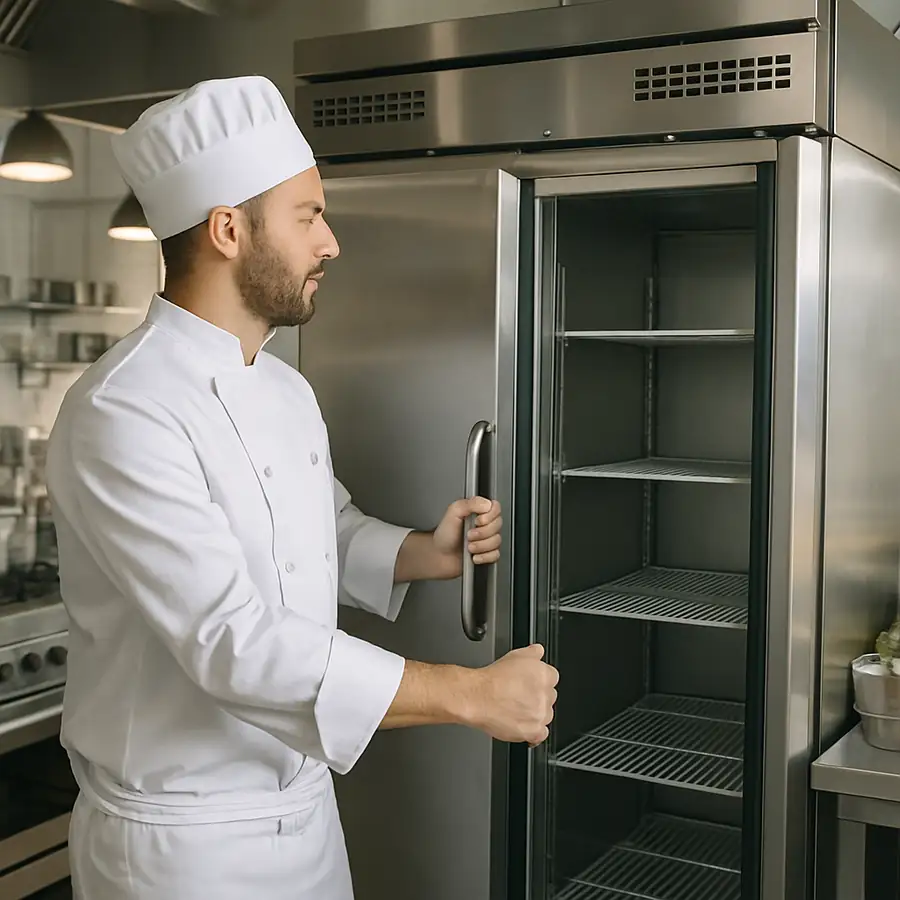
1. Understanding the Types of Commercial Refrigerators
Every restaurant has a unique menu, volume, and footprint, which means there is no one-size-fits-all solution for cold storage. Selecting the right type of refrigeration is your crucial first step.
Walk-ins vs. Reach-ins
One of the most common debates among restaurateurs is choosing reach-in vs walk-in coolers for restaurants.
- Walk-in Coolers: Best for high-volume restaurants or operations that receive infrequent, massive bulk deliveries. They offer expansive shelving space for cases of produce, large kegs, and speed racks. However, they require significant square footage and represent a higher initial build-out cost.
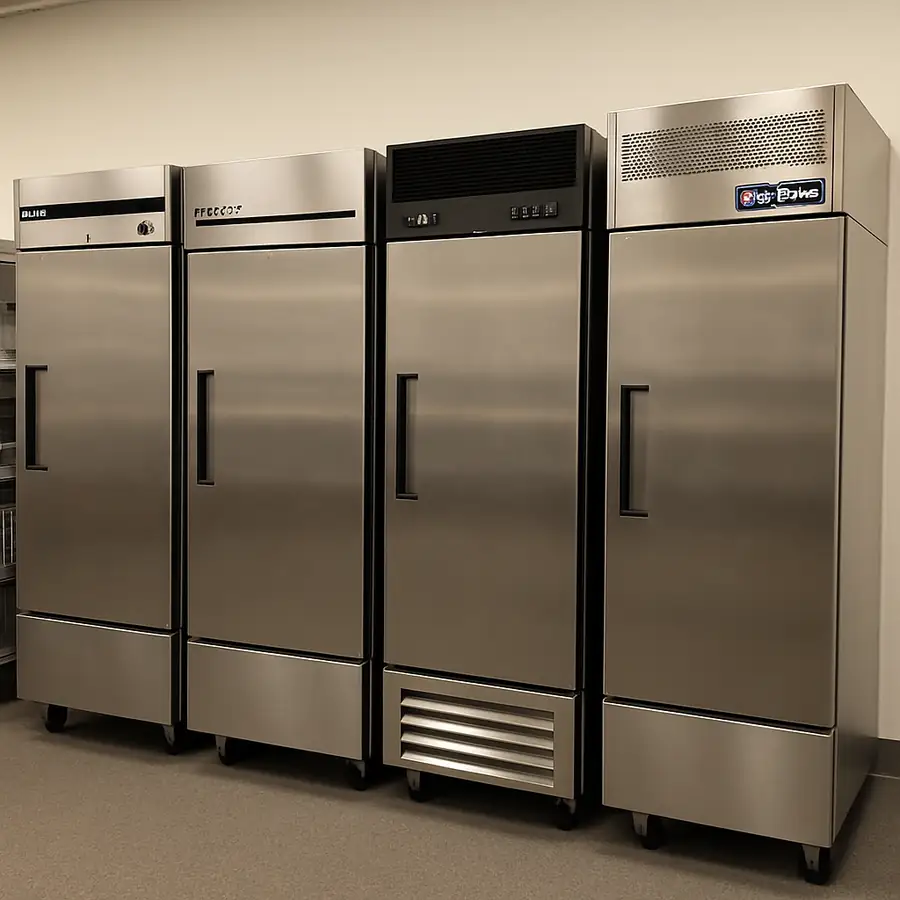
- Reach-in Refrigerators: The workhorses of the standard commercial kitchen. These upright units are placed right on the cookline or prep area. They hold ingredients that your kitchen staff needs to access continuously throughout a busy shift. Most medium-sized restaurants utilize a combination of a walk-in for bulk storage and multiple reach-ins for daily service.
Solid Doors vs. Glass Doors
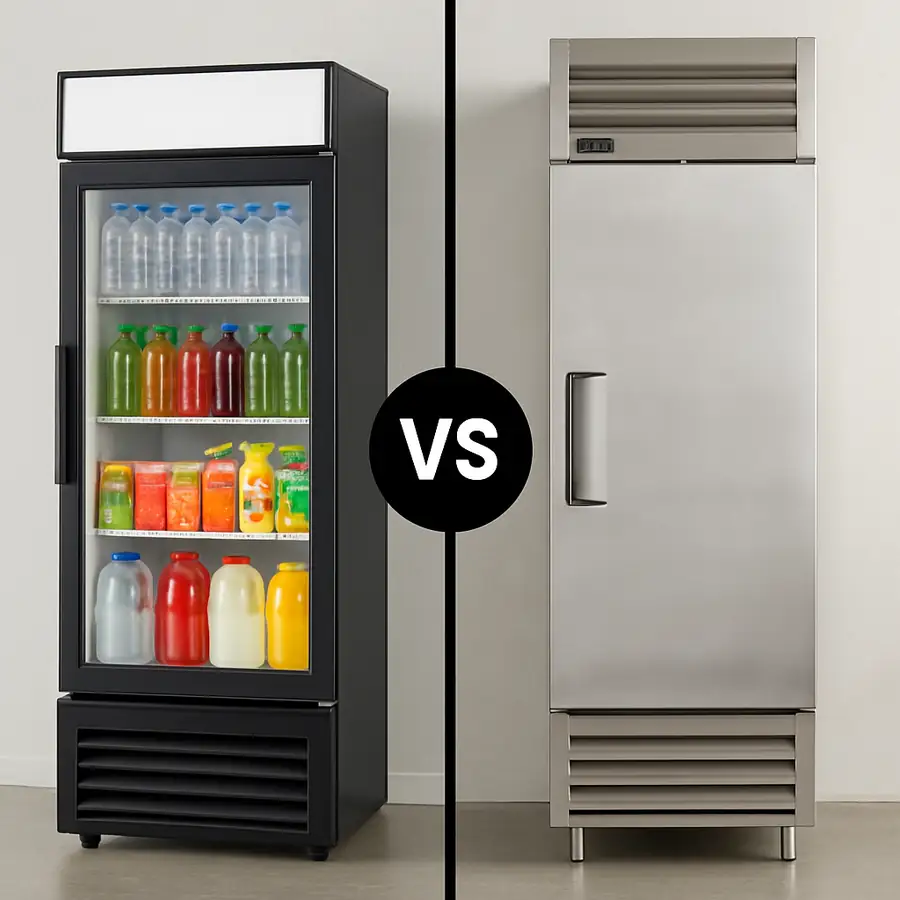
When selecting a reach-in unit, you will have to choose the door type. The choice between glass door merchandisers vs solid door reach-ins comes down to placement and energy efficiency.
- Solid Doors: Ideal for the back-of-house (BOH). They offer superior insulation, making them more energy-efficient and easier to clean. They also hide disorganized shelves from view.
- Glass Doors: Perfect for front-of-house (FOH) applications like cafes and bakeries where customers grab their own drinks or where staff need to locate ingredients quickly without opening the door and letting cold air escape.
Undercounter and Prep Refrigeration
If you are operating a food truck, a popup, or a kitchen with a tight footprint, vertical space is a luxury. In these scenarios, finding the best undercounter refrigerators for small commercial kitchens is vital. These compact units slide neatly beneath standard commercial counters, giving your chefs immediate access to ingredients without sacrificing prep space. Similarly, refrigerated prep tables (like sandwich/salad stations and pizza prep tables) feature cold storage underneath and refrigerated ingredient pans on top.
Blast Chillers
Food safety regulations are non-negotiable. To rapidly cool cooked foods through the "danger zone" (135°F to 41°F), standard refrigerators simply won't cut it—in fact, putting hot food in a standard fridge can dangerously raise the internal temperature of the unit. Investing in blast chillers for commercial food safety compliance ensures you can quickly and safely freeze or cool large batches of hot food, extending shelf life and preventing bacterial growth.
2. Calculating Capacity and Optimizing Your Kitchen Layout
Buying a fridge that is too small leads to over-packing, which restricts airflow and spoils food. Buying one that is too large wastes money on upfront costs and electricity.
Sizing Your Equipment
If you are unsure how to calculate restaurant refrigeration capacity needs, a widely accepted industry rule of thumb is to allow for 1 to 1.5 cubic feet of refrigeration space per meal served per day.
However, you must also factor in your delivery schedule. If you get fresh produce and meat delivered daily, you can operate with a much smaller refrigeration footprint. If your suppliers only deliver once a week, you need maximum capacity to safely store those bulk ingredients. Take a close look at your menu; a steakhouse aging its own beef requires drastically different cold storage capacity than a dry-goods-heavy pizzeria.
Strategic Placement
Once you know the size, where does it go? Following smart restaurant kitchen layout refrigeration placement tips can save your equipment from premature failure.
- Keep away from heat: Never place your refrigerators directly next to fryers, broilers, or ovens. The ambient heat forces the compressor to work overtime, drastically shortening the unit's lifespan.
- Ensure proper ventilation: Refrigerators need room to breathe. Always leave the manufacturer-recommended clearance space around the back and top of the unit for hot air exhaust.
- Follow the workflow: Place prep coolers directly in the stations where those ingredients are used to minimize staff movement and increase ticket times.
3. The Engine of Your Cooler: Compressors and Refrigerants
The mechanical components of your refrigerator dictate how well it performs in the high-stress environment of a commercial kitchen.
Top vs. Bottom Mounted Compressors
One crucial mechanical decision is commercial refrigerator compressor mounting top vs bottom. Both designs have distinct advantages:
- Bottom-Mounted Compressors: Because heat rises, the floor is the coolest part of the kitchen. Bottom-mounted compressors draw in cooler air, making them highly efficient in hot kitchens. They also raise the bottom shelf of the fridge, meaning your staff doesn’t have to bend down as far. However, they are prone to sucking in dust, spilled flour, and grease from the floor, requiring more frequent cleaning.
- Top-Mounted Compressors: These units pull in warmer air near the ceiling but are safe from flour clouds and floor debris. This makes them the top choice for bakeries or pizzerias. They also maximize the interior storage space of the fridge, though the top shelf may be difficult for shorter employees to reach.
Sustainable Refrigerants
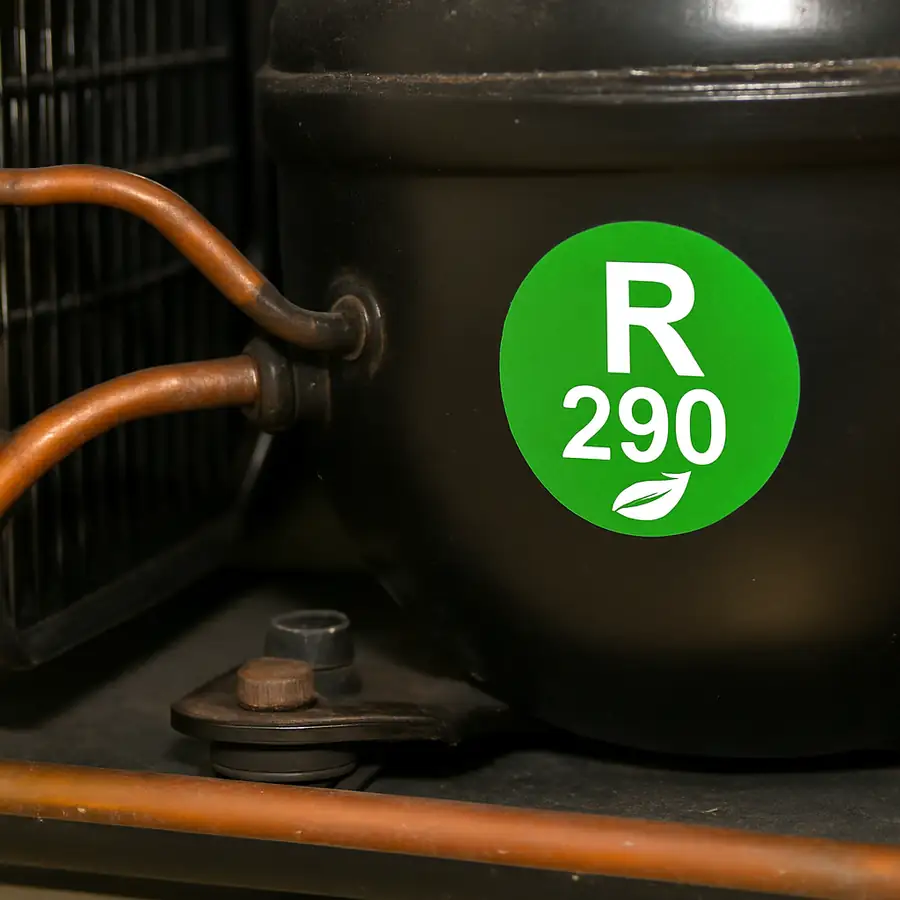
The refrigeration industry is undergoing a massive shift toward sustainability. Older refrigerants that damaged the ozone layer or contributed heavily to global warming are being phased out. Today, upgrading to systems using the eco-friendly R290 refrigerant in commercial units is a smart business move. R290 (propane) is a natural, non-toxic refrigerant with an incredibly low Global Warming Potential (GWP). Beyond being better for the planet, R290 possesses superior thermodynamic properties, meaning it cools your unit faster and reduces energy consumption.
4. Efficiency and Certifications: Protecting Your Bottom Line
When browsing equipment catalogs, you will see a variety of badges and stickers on the units. Two of the most important are NSF and Energy Star.
NSF Certification
To pass health inspections smoothly, you need NSF certified commercial kitchen cooling equipment. The National Sanitation Foundation (NSF) rigorously tests food service equipment to ensure it is manufactured from food-safe materials (like high-grade stainless steel) and designed in a way that eliminates crevices where dangerous bacteria can hide and breed. An NSF badge guarantees that the unit is built for the demanding sanitation standards of a commercial kitchen.
Energy Star Ratings
Commercial refrigerators run 24 hours a day, 7 days a week, 365 days a year. Because of this, the energy star rated commercial refrigeration benefits cannot be overstated. Energy Star-certified units utilize high-efficiency compressors, advanced insulation, and ECM evaporator and condenser fan motors to reduce energy consumption by up to 30% compared to standard models. While they might carry a slightly higher upfront price tag, the lifetime savings on your monthly utility bills are substantial. Furthermore, many local utility companies offer cash rebates to restaurants that install Energy Star equipment.
5. Identifying the Best Brands in the Industry
A frequent question we hear from restaurateurs is: “What are the most reliable commercial refrigerator brands on the market today?”
While the answer depends slightly on your specific needs and budget, the best fridge brands consistently prioritize heavy-duty construction, robust warranties, and excellent customer service. If you are looking for the best commercial refrigerators, here are a few industry titans to consider:
- True Refrigeration: Often considered the gold standard, True is widely recognized for producing some of the best rated commercial refrigerators globally. Manufactured in the USA, their units boast exceptionally durable build quality, powerful oversized compressors, and excellent resale value.
- Traulsen: Traulsen is known for high-end, heavy-duty refrigeration. They are the brand of choice for massive institutional kitchens, schools, and hospitals. Their units are incredibly precise when it comes to temperature holding, though they sit at a premium price point.
- Turbo Air: Turbo Air has made massive waves in the industry through innovation. Many of their units feature a patented self-cleaning condenser device that uses a rotating brush to sweep dust away daily, preventing one of the most common causes of refrigerator failure.
- Beverage-Air (Bev-Air): A fantastic brand for prep tables, bar refrigeration, and reach-ins. They offer a great balance of heavy-duty reliability and competitive pricing.
6. Longevity, Maintenance, and Technology
Buying top-tier equipment is only half the battle; maintaining it is how you protect your investment.
Lifespan Expectations
You might be wondering about the average lifespan of commercial refrigeration units. With proper care, a high-quality commercial refrigerator should last between 10 and 15 years. However, in a greasy, hot, high-volume kitchen where maintenance is ignored, that lifespan can plummet to just 5 to 7 years.
Modern Temperature Monitoring
One of the best ways to ensure longevity and food safety is to utilize digital temperature monitoring systems for food service. Instead of relying on line cooks to manually check temperatures with a clipboard every two hours, modern IoT (Internet of Things) sensors continuously track the internal temperature of your units. If a compressor fails or a door is left ajar in the middle of the night, the system instantly pings your smartphone, allowing you to save thousands of dollars in potentially spoiled inventory.
Preventative Maintenance
To help you reach that 15-year mark, we recommend following a strict preventative maintenance checklist for restaurant coolers:
- Daily:
- Wipe down the interior and exterior with a mild, non-abrasive detergent.
- Check digital temperature displays to ensure the unit is holding between 35°F and 38°F.
- Clean up any acidic spills (like tomato sauce or citrus) immediately to prevent corrosion of interior metals.
- Weekly:
- Inspect the rubber door gaskets. If they are cracked or loose, warm air will seep in, overworking the compressor. Wash them with warm soapy water.
- Check hinges and ensure doors are auto-closing properly.
- Monthly/Quarterly:
- Clean the condenser coils! (This is the most critical step). Use a stiff brush and a commercial vacuum to remove dust, flour, and grease buildup from the coils. A clogged coil suffocates the compressor, leading to expensive mechanical failure.
- Check and clear the drain lines to prevent standing water and ice buildup.
7. Budgeting and Financing Your Equipment
Commercial refrigeration is a major capital expense. A single, high-quality two-door reach-in can cost anywhere from $3,500 to $8,000, and walk-in complexes can easily exceed $15,000.
If buying outright stretches your cash flow too thin, do not resort to buying cheap, residential-grade equipment that will fail health codes and break down. Instead, explore commercial refrigeration financing options for small businesses.
Many restaurant equipment dealers offer lease-to-own programs, allowing you to pay a manageable monthly fee over two to five years. Alternatively, you can apply for equipment financing loans which often feature fast approval times and use the equipment itself as collateral. Remember to speak with your accountant about Section 179 tax deductions, which may allow you to deduct the full purchase price of qualifying commercial equipment in the tax year it was purchased and put into service, drastically reducing your true out-of-pocket costs.

Buy Commercial Refrigerators from The Horeca Store
Selecting the right refrigeration equipment is essential for building an efficient and professional restaurant kitchen. The Horeca Store offers a wide range of commercial refrigeration solutions, including reach-in refrigerators, freezers, undercounter units, prep refrigerators, display chillers, and other foodservice equipment for restaurants, hotels, cafés, bakeries, and catering businesses.
With high-quality products, competitive pricing, and reliable customer support, The Horeca Store helps businesses choose refrigeration solutions that match their operational needs. Whether you are opening a new restaurant or upgrading your existing kitchen, explore our commercial equipment range to create a reliable, efficient, and food-safe operation.
Conclusion
Choosing the right cold storage is one of the most consequential decisions you will make for your kitchen. By understanding your specific volume needs, researching the best brands, prioritizing eco-friendly and Energy Star-rated components, and committing to a rigorous maintenance schedule, you ensure your kitchen runs smoothly and profitably.
Use this guide as your roadmap, assess your kitchen's unique layout, and invest in a commercial refrigeration system that will safeguard your ingredients—and your reputation—for years to come.