
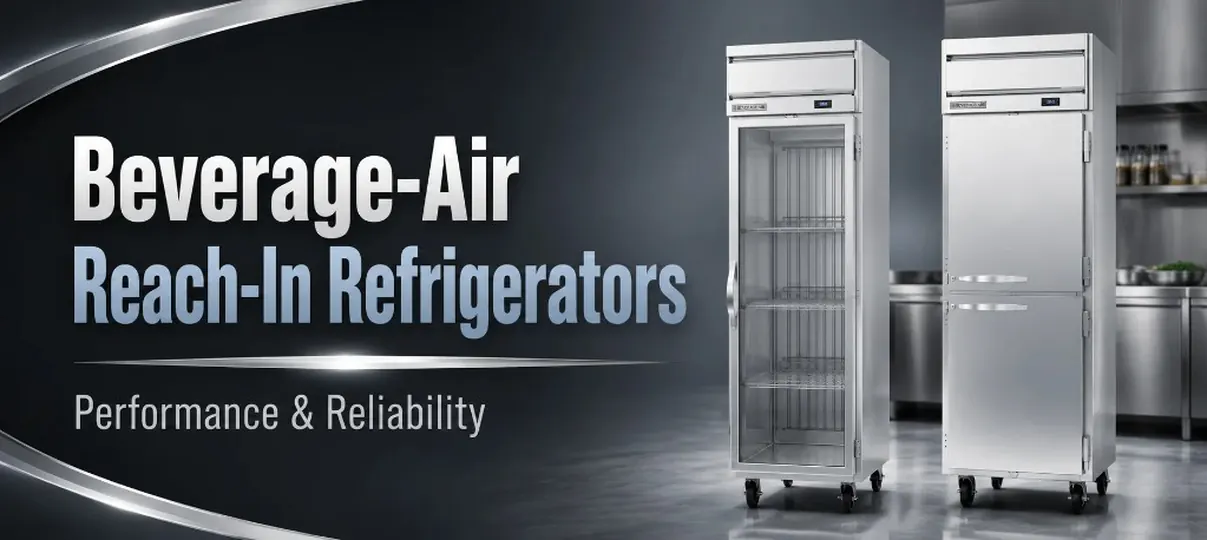
Benefits of Beverage-Air Reach-In Refrigerators
A dependable refrigeration line can change how smoothly a commercial kitchen runs, from prep speed to food safety confidence. Beverage-Air reach-in refrigerators are built for foodservice operators who need steady cold storage, practical organization, and durable construction in a busy restaurant, bar, café, hotel, or institutional kitchen. This guide explains the key Beverage-Air reach-in refrigerators benefits and the buying factors that matter before choosing a model.
What makes a Beverage-Air reach-in refrigerator useful in a commercial kitchen?
A Beverage-Air reach-in refrigerator is useful in a commercial kitchen because it keeps chilled inventory close to the line.
A Beverage-Air reach-in refrigerator is useful because it gives operators quick access to chilled ingredients, beverages, and prepared items without disrupting the kitchen workflow. Instead of relying on distant walk-in storage for every service need, a commercial reach-in refrigerator keeps high-use inventory close to the line, bar, prep station, or service area.
That convenience matters during rush periods. Staff can open a door, grab what they need, and return to service with less movement and less wasted time. For kitchens replacing aging commercial refrigeration equipment, upgrading to a well-matched Beverage-Air commercial refrigerator can also support more consistent holding conditions and better organization.
Beverage-Air commercial refrigeration is especially relevant for operators who need more than a basic cold box. Depending on the model, buyers can compare different section counts, door styles, compressor positions, and interior layouts. That flexibility helps a restaurant reach-in refrigerator serve the actual space instead of forcing the space to adapt to the equipment.
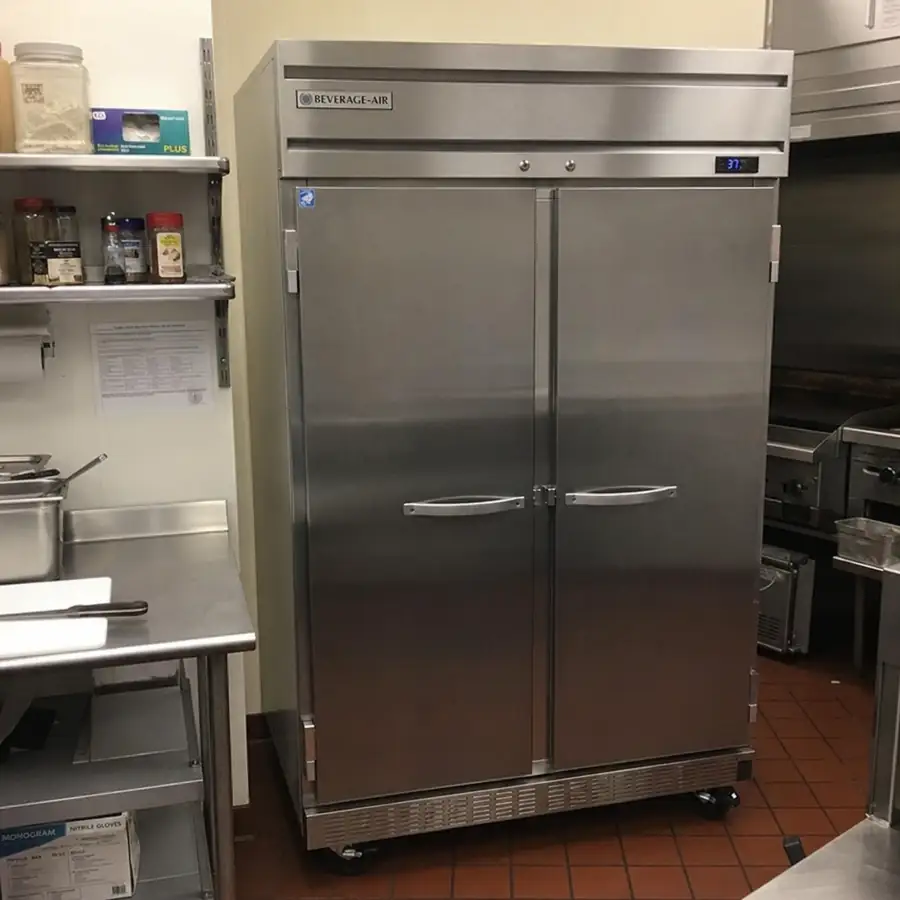
Everyday operational benefits for restaurants and foodservice teams
Everyday operational benefits for restaurants and foodservice teams include faster access, cleaner organization, and stronger commercial refrigeration workflow.
The biggest value of a commercial kitchen refrigerator is not just that it keeps food cold. It helps the whole team move faster, reduce confusion, and protect product quality throughout service. Beverage-Air reach-in refrigerators are designed for commercial use, so the benefits are practical rather than cosmetic.
For a kitchen, the right unit can support:
- Faster station access: Frequently used items can be stored near prep, cooking, plating, or beverage service areas.
- Cleaner organization: Adjustable shelving and sectioned storage make it easier to separate ingredients, backup product, and ready-to-serve items.
- Reduced traffic to walk-ins: Staff do not need to leave the line as often, which can improve flow in tight kitchens.
- Better product visibility: A glass door reach-in refrigerator lets staff see contents before opening the door.
- Improved cold retention: A solid door reach-in refrigerator is often preferred when visibility is less important than insulation and energy control.
- More professional durability: A stainless steel reach-in refrigerator is built to handle frequent use, cleaning, and contact in demanding foodservice environments.
These advantages are why reach-ins remain a core part of restaurant refrigeration. They are not only storage units; they are workflow tools.
Capacity and configuration shape how the refrigerator performs
Capacity and configuration shape how the refrigerator performs, so buyers should size a commercial refrigerator for peak service needs.
Capacity should be one of the first buying considerations because an undersized commercial refrigerator can create daily frustration, while an oversized unit can take up valuable floor space. Beverage-Air reach-in refrigerators are available in different widths and section counts, including one-, two-, and three-section configurations, so buyers can match storage volume to menu needs and kitchen layout.
A small café may only need a single-section Beverage-Air refrigerator near the prep counter. A larger restaurant may need a two- or three-section model to separate proteins, produce, sauces, and prepared foods. Operators with higher beverage volume may also compare reach-ins with dedicated beverage storage solutions, merchandisers, or bar refrigeration.
Configuration goes beyond size. Buyers should think about what will be stored, how often staff will access it, and where the unit will sit. A Beverage-Air RI refrigerator or another reach-in model used on a cook line may need different access and shelving than a refrigerator used for backup storage in a prep room.
How should buyers compare Beverage-Air reach-in refrigerators?
Buyers should compare Beverage-Air reach-in refrigerators by capacity, door style, compressor position, and footprint.
Buyers should compare Beverage-Air reach-in refrigerators by looking at capacity, configuration, door type, temperature performance, footprint, refrigeration system, warranty, maintenance, and long-term operating requirements. These factors determine whether a unit fits the space, supports the menu, controls energy use, and remains practical after years of daily operation.
Use the following checklist before choosing a Beverage-Air commercial refrigerator:
- Capacity: Estimate what you need to store during peak service, not just on a slow day. Consider pans, boxes, bottles, backup ingredients, and prepared items.
- Configuration: Decide whether a one-, two-, or three-section model best supports your stations. More sections can improve organization, but they also require more floor space.
- Door type: Choose glass doors when visibility and merchandising matter. Choose solid doors when insulation, durability, and reduced light exposure are higher priorities.
- Temperature performance: Look for a unit designed to hold safe, consistent temperatures in a real commercial kitchen where doors open often and ambient heat can fluctuate.
- Footprint: Measure the full operating area, including door swing, ventilation clearance, aisle width, and nearby workstations.
- Refrigeration system: Compare a top mount reach-in refrigerator and a bottom mount reach-in refrigerator based on your kitchen temperature, dust level, cleaning access, and service layout.
- Warranty: Review the model-specific warranty information before purchase. Coverage can vary, so buyers should confirm terms rather than assume they are identical across units.
- Maintenance: Consider how easily staff can clean gaskets, shelves, coils, and interior surfaces. Simpler maintenance often supports better long-term performance.
- Long-term operating requirements: Think beyond the purchase price. Energy use, cleaning routines, space limitations, parts access, and daily workflow all affect the total value of the refrigerator.
The Horeca Store can be a useful place to compare commercial refrigeration equipment categories and narrow down which style of Beverage-Air reach-in refrigerator fits a restaurant's storage needs. Buyers should still verify the exact model details, dimensions, warranty terms, and specifications before making a final decision.
Door style changes visibility, efficiency, and use case
Door style changes visibility, efficiency, and use case when choosing a glass door reach-in refrigerator or solid door reach-in refrigerator.
Door type is one of the most visible differences between reach-in models, but it also affects how the refrigerator is used. A glass door reach-in refrigerator is helpful when staff need to identify items quickly or when beverages and packaged products are displayed to customers. The ability to see inventory without opening the door can reduce unnecessary door openings and make restocking easier.
A solid door reach-in refrigerator is often a better fit for back-of-house storage where appearance and product display are less important. Solid doors typically support stronger insulation and can be a practical choice for kitchens that open the unit constantly. They also hide clutter, which may matter in prep areas where the priority is function rather than merchandising.
Some operators may also look at pass-thru designs if kitchen flow requires access from both sides. That type of configuration can help connect prep and service areas, although it only makes sense when the physical layout supports it.
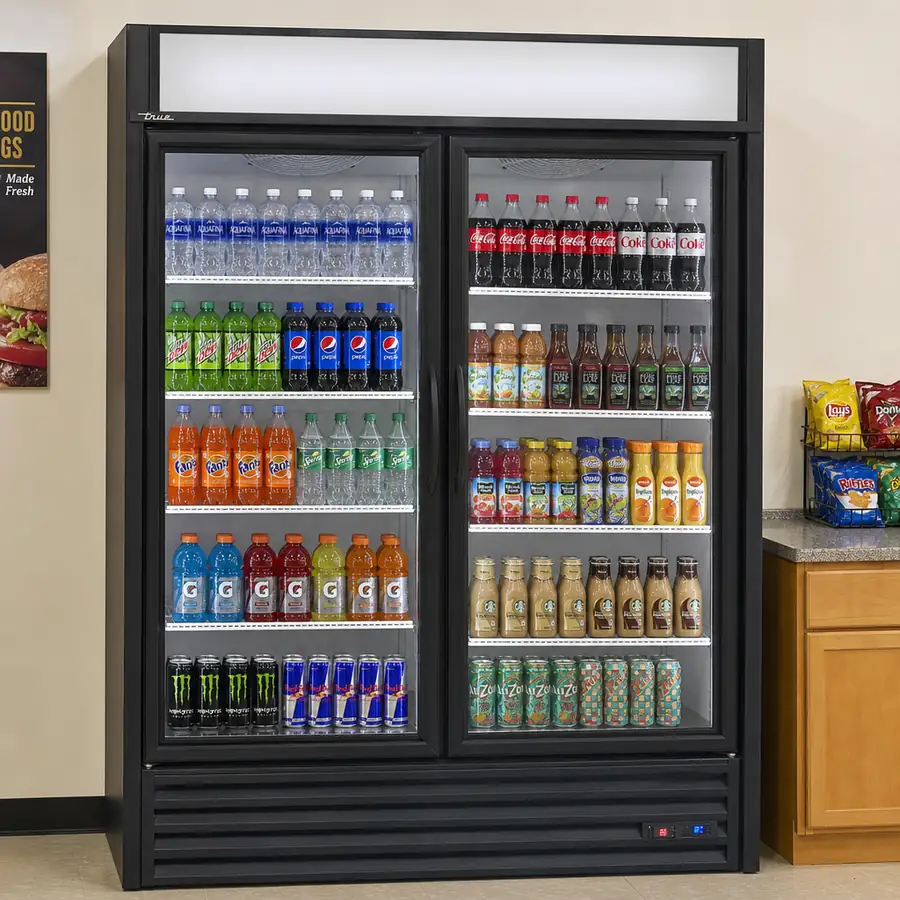
Top mount and bottom mount systems fit different environments
Top mount and bottom mount systems fit different environments depending on heat, floor cleaning, and kitchen layout.
The refrigeration system location affects cleaning, performance, and installation planning. A top mount reach-in refrigerator places the refrigeration components above the cabinet. This can be useful in kitchens where floors collect dust, flour, grease, or debris because the mechanical components are farther from the messiest area.
A bottom mount reach-in refrigerator places the system lower on the cabinet. Some operators like this setup because the lower interior shelves may sit higher and be easier to reach. Bottom mount designs can also be practical in cooler areas or spaces where overhead clearance is limited.
Neither style is automatically best for every kitchen. A hot cook line, bakery, bar, or prep room may each have different airflow, cleaning, and space requirements. Buyers should compare the refrigeration system with the actual environment where the unit will operate.
Energy efficiency supports lower operating strain
Energy efficiency supports lower operating strain for commercial refrigeration equipment that runs all day.
Energy-efficient refrigerators are important because commercial units run continuously. Even small improvements in performance, insulation, compressor operation, and door management can matter over time. Many operators compare Beverage-Air commercial refrigeration options because they want dependable storage without unnecessary energy waste.
Some Beverage-Air models are designed with efficiency-focused features such as adaptive defrost, variable speed compressors, or ENERGY STAR certified options. The practical benefit is not just a lower utility goal; it is also more controlled operation. A unit that runs efficiently may reduce strain on components and help maintain stable cabinet conditions during normal service.
To get the best results from any commercial refrigerator, daily habits matter:
- Keep doors closed when staff are not actively loading or retrieving product.
- Avoid blocking interior airflow with overpacked shelves.
- Clean door gaskets and replace damaged seals when needed.
- Follow recommended coil cleaning routines.
- Place hot food in approved cooling processes before storage rather than using the refrigerator to do all the work.
- Leave required ventilation space around the cabinet.
Energy efficiency starts with model selection, but it continues with operation. A well-chosen Beverage-Air reach-in refrigerator performs best when staff use and maintain it correctly.
Stainless steel construction supports demanding foodservice use
Stainless steel construction supports demanding foodservice use and helps a stainless steel reach-in refrigerator hold up through busy shifts.
A stainless steel reach-in refrigerator is a practical choice for foodservice because it stands up to repeated cleaning and frequent contact. Commercial kitchens are hard on equipment. Doors are opened constantly, carts pass nearby, staff clean surfaces throughout the day, and spills happen.
Beverage-Air refrigerator models often emphasize durable commercial construction, including stainless steel exterior surfaces on many units. That matters because refrigeration is not a short-term accessory. It is a core piece of restaurant equipment that needs to work through prep, service, closing, and the next day's production.
Durability also affects the customer experience indirectly. When cold storage is reliable, staff spend less time troubleshooting equipment and more time preparing food, serving guests, and managing inventory. For operators comparing restaurant refrigeration, build quality should be evaluated alongside capacity and efficiency, not after them.
Model families and use cases help narrow the choice
Model families and use cases help narrow the choice between a restaurant reach-in refrigerator, undercounter refrigerator, or walk-in cooler strategy.
Beverage-Air reach-in refrigerators include several model types for different operational needs. A Beverage-Air P Series refrigerator may appeal to buyers looking for a heavy-duty reach-in option within the brand's lineup, while other units may be better suited for beverage display, compact kitchen storage, or general back-of-house refrigeration.
The best choice depends on the job the refrigerator needs to perform. For example:
- Prep-focused kitchens may prioritize solid doors, easy-clean interiors, and flexible shelving.
- Bars and cafés may value beverage storage solutions with glass doors for quick product checks.
- High-volume restaurants may need multi-section storage for better organization during peak service.
- Tight kitchens may need a smaller footprint, careful door swing planning, or specific compressor placement.
- Hybrid operations may compare reach-ins with merchandisers, undercounter units, and walk-in support storage.
The important point is to avoid choosing a unit based on cabinet size alone. The right Beverage-Air commercial refrigerator should support the way staff actually work.
What long-term costs should operators think about?
Long-term costs should include energy, service access, and financing options through The Horeca Store.
Operators should think about energy use, preventive maintenance, cleaning time, space efficiency, service access, and product protection when evaluating long-term costs. The initial purchase matters, but the refrigerator's daily impact on labor, workflow, and utility consumption can be just as important.
A unit that is difficult to clean may be neglected. A unit placed in the wrong location may block movement or struggle with airflow. A unit with too little capacity may force staff to overpack shelves, which can reduce performance and make inventory harder to manage.
Long-term operating requirements should be reviewed before purchase. Ask practical questions: Who will clean the coils? How often will shelves be removed and washed? Is there enough clearance for service access? Will the door swing interfere with a prep table, oven, or aisle? These details are not exciting, but they often determine whether a commercial kitchen refrigerator remains convenient after installation.
Maintenance habits protect performance
Maintenance habits protect performance and keep commercial refrigeration running reliably for years.
Even high-quality commercial refrigeration equipment needs routine care. Gaskets, coils, shelves, drains, hinges, and door closers all affect day-to-day performance. If those parts are ignored, the refrigerator may work harder than necessary or lose temperature more easily during service.
A simple maintenance rhythm can help protect the investment:
- Wipe spills quickly so residue does not build up inside the cabinet.
- Check gaskets for cracks, gaps, or food debris.
- Keep shelves organized so airflow can move around product.
- Clean condenser areas according to the model's instructions.
- Train staff not to prop doors open during restocking.
- Review temperature logs or monitoring practices as part of food safety routines.
Maintenance also helps buyers get the most from energy-efficient refrigerators. Efficient design can only do so much if airflow is blocked, doors are left open, or components are coated with dust and grease.
Bringing the buying decision together
Bringing the buying decision together means matching Beverage-Air capacity, doors, and layout to real kitchen workflow.
The strongest Beverage-Air reach-in refrigerators benefits come from matching the model to the operation. A restaurant that needs display visibility may choose glass doors. A prep-heavy kitchen may prefer solid doors and rugged stainless steel construction. A hot, dusty, or space-constrained location may influence whether a top mount or bottom mount system makes more sense.
When comparing options, focus on how the refrigerator will support real work: receiving product, organizing inventory, moving through service, cleaning at close, and maintaining safe storage conditions. The Horeca Store can fit into that research process as a place to review restaurant equipment categories and think through which commercial reach-in refrigerator style aligns with the kitchen's needs.
Beverage-Air commercial refrigeration is valuable because it addresses a practical problem every foodservice operation faces: keeping the right products cold, accessible, and organized. Choose carefully, verify the details for the specific model, and treat the refrigerator as part of the kitchen workflow rather than just another appliance.
Operators upgrading cold storage often also review a reach-in refrigerator, commercial refrigerator options, Beverage-Air, True, an undercounter refrigerator, a walk-in cooler, a prep table, a commercial freezer, an ice machine, restaurant equipment, hotel supplies, smallwares, tableware, true refrigeration or beverage-air guidance, walk-in cooler vs reach-in refrigerator comparisons, different types of commercial refrigerators, 0% down financing, and restaurant equipment financing.