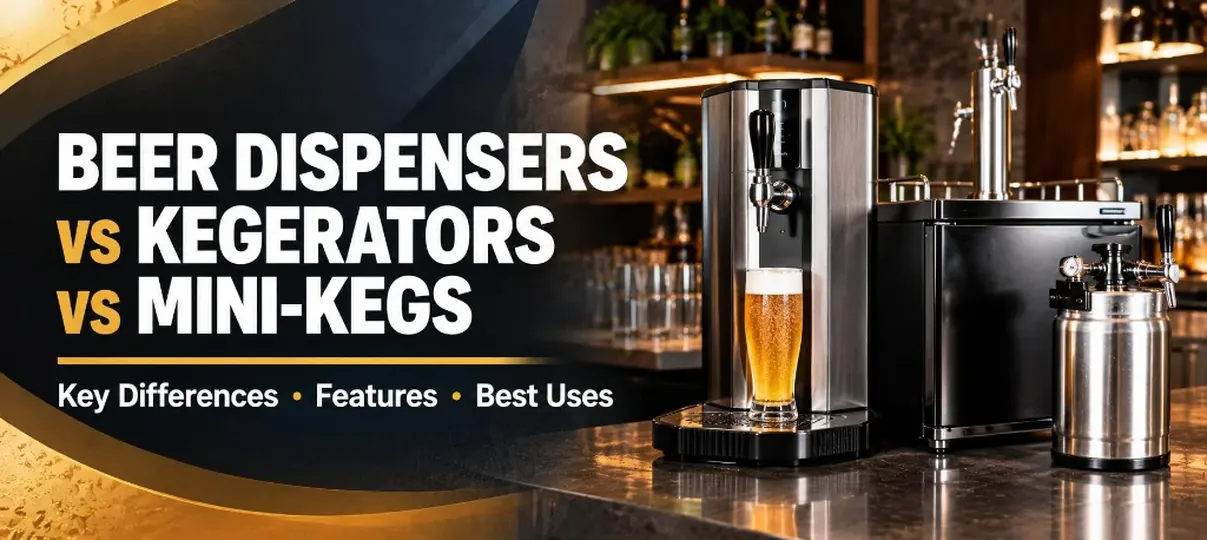
Beer dispensers, kegerators, and mini-keg systems all serve draft beer, but they are not the same. The best choice depends on where you will use it, how much beer you want to serve, how often you pour, and how much control you need over cooling and pressure. An ice machine still belongs at the bar, separate from the small keg.
A beer dispenser is the broad category. It can mean anything from a simple tap setup to a complete cooled draft unit. A kegerator is a beer fridge with beer taps, lines, and CO2 built around keg storage. A mini-keg system is smaller and more portable, often made for small kegs, travel, apartments, or light home use.
Which system is right for your setup?
A back bar cooler can hold bottled beer while the keg cabinet handles draft.
Choose a kegerator if you want steady draft beer at home, in a bar, or in a busy service area. Choose a mini-keg system if you need a small, flexible, easy-to-move option. Choose a basic beer keg dispenser if you only need to pour from a keg for a short event and do not need built-in cooling.
That is the simple answer. The better answer comes from matching the system to your space, serving volume, and keg type. A small kitchen counter has different needs than a garden party. A home bar has different needs than a restaurant, cafe, or event venue. That is why beer systems should be compared by use, not just by looks. A wine cooler stays separate if the list includes bottles of wine.
The main types of draft beer equipment
Pair the tap with beer glasses sized for the pour.
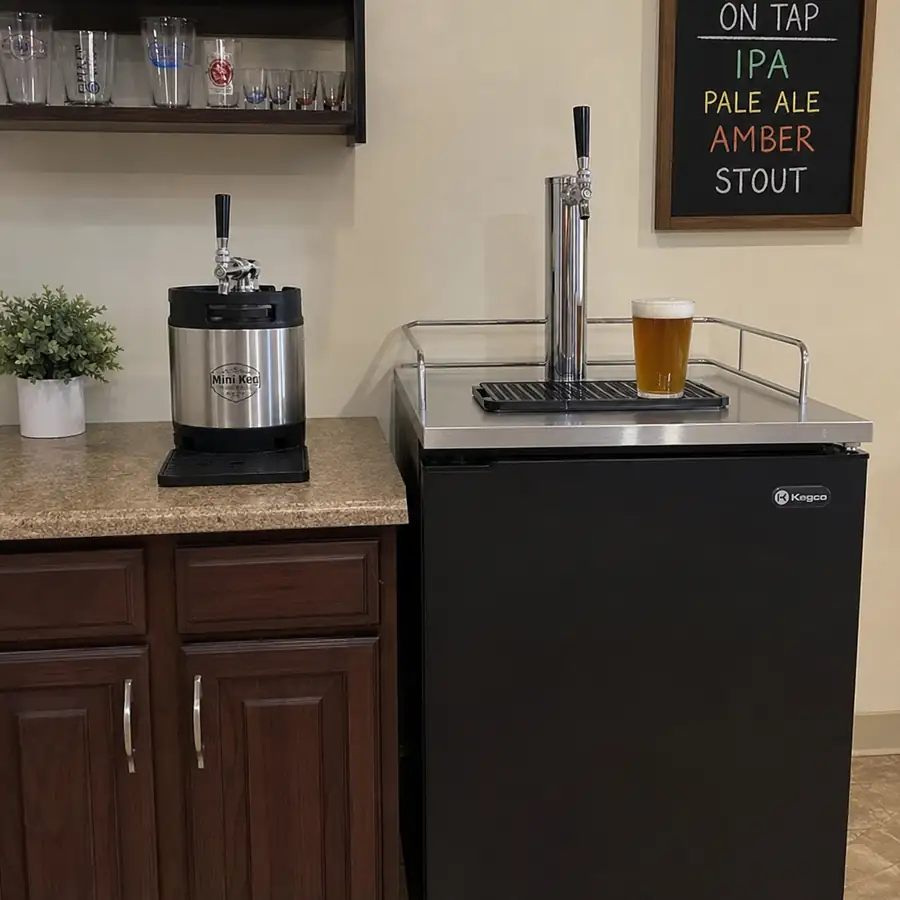
Draft beer equipment comes in several forms. Some units are made for cold storage. Some are made only for pouring. Others are built for movement and quick setup. Each type can work well when it is used in the right place.
Beer dispensers and taps
A bottle cooler is the packaged-beer companion to the tap.
Beer dispensers and taps cover many products. A dispenser may be a tap tower, a keg coupler, a hand pump, a countertop unit, or a full cooled cabinet. Some beer keg dispensers are very simple. Others are part of full commercial beer dispensers used in hospitality spaces.
The key point is cooling. A dispenser does not always chill the beer. If there is no built-in cooling, the keg must be kept cold with ice, a beer cooler, or a cold room. This works for short events. It is less ideal for long-term use because temperature changes can cause foam and poor taste.
Beer kegerators
Leave a walk-in cooler for bulk keg storage, not for the tap cabinet.
Beer kegerators are cooled cabinets made to hold kegs and serve beer through taps. They use refrigeration to keep the keg cold. Most use CO2 to push beer through the lines and out of the tap.
A kegerator can be freestanding, built-in, outdoor-rated, single-tap, or multi-tap. Small home units may hold a slim keg or small barrel. Larger models may hold half-barrel kegs or more than one keg. They are popular for home bars, game rooms, patios, staff areas, and light commercial use. A prep table still needs its own space beside the home bar.
Mini-keg systems
Mini-keg systems are compact. Many sit on a counter or fit into a small fridge. Some include cooling. Others are portable beer dispensers with a small keg, tap, and CO2 cartridge or regulator.
These systems are useful when space is tight. They also work well for picnics, camping, tailgates, and occasional pours. Many people also use them for cold brew, kombucha, cider, or batched cocktails. If you switch drinks, clean the keg, line, and tap very well. Flavors can carry over fast.
Side-by-side comparison
Glassware should match the tap, not the cabinet size.
The easiest way to compare Beer Dispensers vs. Kegerators vs. Mini-Keg Systems is to look at use, capacity, cooling, and pressure. A good fit should make serving easier, not harder.
A basic dispenser is often the lowest-friction option. It can be quick to set up and easy to store. But it gives you less control over beer temperature and freshness.
A kegerator gives more control. It keeps beer cold, helps reduce foam, and supports steady pouring. It also takes more space and costs more than a simple tap.
A mini-keg system sits in the middle. It is smaller and easier to move. It will not serve a large crowd for long, but it can be a smart choice for casual draft beer at home.
Capacity, size, and space needs
A reach-in refrigerator is for food, not for a half-barrel keg.
Capacity should be one of your first checks. If the keg does not fit, the system is wrong, no matter how good it looks. Measure the space where the unit will sit. Then check height, width, depth, door swing, ventilation space, and keg clearance.
Mini-kegerators and mini-keg systems often handle small keg sizes, such as 1.3-liter, 2-liter, or 5-liter formats. Some work with standard mini kegs. Others only work with brand-specific kegs. This can limit your beer choice.
Full beer kegerators need more floor space. Many are about the size of a compact fridge or larger. They may support sixth-barrel, quarter-barrel, slim quarter, or half-barrel kegs, depending on the model. Multi-tap units need room for more kegs and gas lines.
Commercial settings need even more planning. A bar may use undercounter units, remote beer systems, wall taps, or cold-room storage. These setups must balance storage, service speed, line length, and cleaning access.
How do cooling and pressure affect draft beer?
A commercial refrigerator holds garnish and does not replace keg cooling.
Cooling and pressure decide how the beer pours. If beer is too warm, it can foam. If pressure is too low, beer may pour flat. If pressure is too high, you may get fast, foamy pours and wasted beer.
Cooling comes in two common forms. Thermoelectric cooling is often quiet and compact. It is common in small units. It may struggle in very warm rooms or outdoor heat. Compressor cooling is stronger and more common in full kegerators. It cools faster and holds temperature better, but it may make more noise.
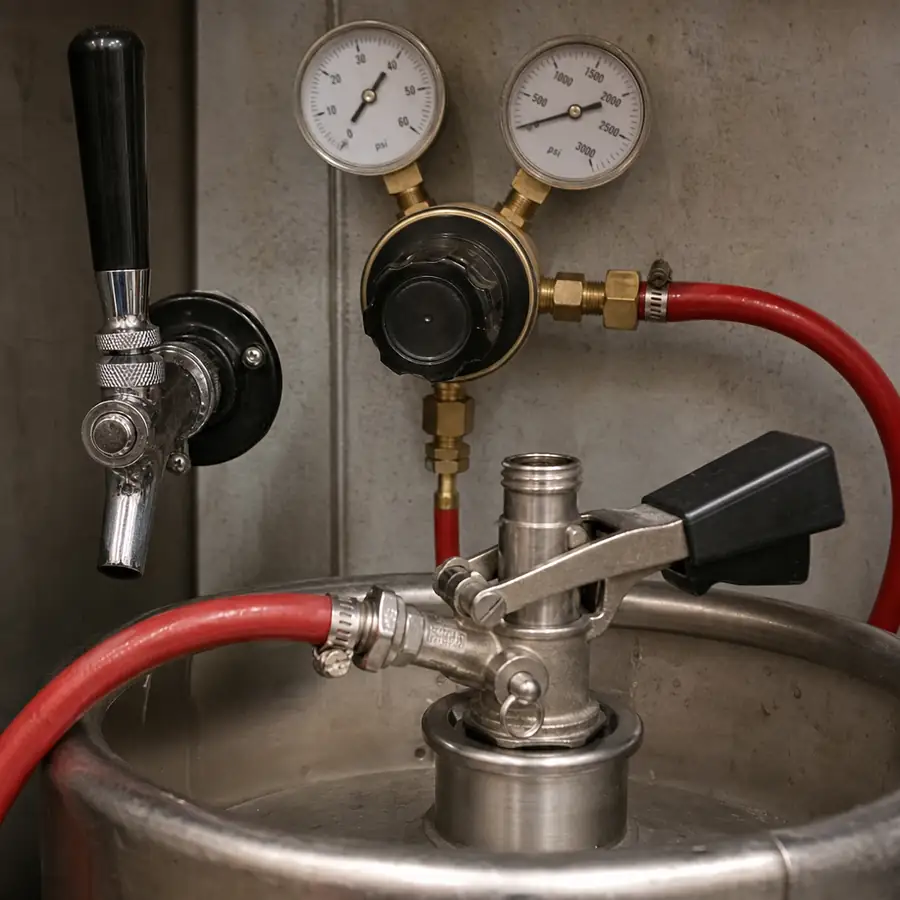
Pressure also matters. A hand pump pushes air into the keg. That is fine for short events, but air can reduce freshness if the keg sits too long. CO2 systems are better for longer use because they push beer without adding oxygen. Many beer keg dispensers, beer kegerators, and portable beer dispensers use small CO2 cartridges, larger CO2 tanks, or a regulator.
Pressure control should be easy to reach and read. A regulator helps you adjust pour speed and carbonation balance. If the system uses proprietary cartridges, check how easy they are to buy before you commit.
Key features to check before buying
Glass chillers keep the glass cold before the pour.
When looking at beer dispensers for sale, avoid choosing only by price or style. The right features will save you time, mess, and regret. Use this checklist before you buy.
- Keg compatibility: Check keg size, shape, valve type, and coupler needs. This is vital for homebrew and commercial kegs.
- Cooling method: Pick compressor cooling for steady use. Pick thermoelectric cooling for small spaces where quiet running matters.
- Tap count: One tap is simple. Two or more taps let you serve different beers, but they need more space and cleaning.
- CO2 setup: Look at cartridge size, tank size, regulator quality, and refill options.
- Temperature control: Digital controls are helpful. A wide range is useful if you serve beer, cider, cold brew, or kombucha.
- Noise level: Compressor units cycle on and off. That may matter in a bedroom, office, or small flat.
- Cleaning access: Lines, taps, couplers, and drip trays should be easy to remove and clean.
- Build and placement: Outdoor use needs the right rating. Built-in units need front ventilation. Freestanding units need side or rear space.
- Power needs: Most cooled units need a power outlet. Portable systems may not, unless they have built-in cooling.
- Ongoing costs: Budget for CO2, cartridges, cleaning solution, spare seals, drip trays, and line parts.
If you are comparing options through the horeca store or another supplier, use this list to ask better questions. It helps you move past the product photo and focus on how the system will work day to day.
Matching the system to the setting
The best beer systems are the ones that fit the setting. Think about where the unit will live most of the time. Then think about who will use it, how often, and how much beer you expect to pour.
Small flats, kitchens, and dorm-style spaces
A milk cooler is a different appliance and does not replace a small keg.
A mini-keg system or compact dispenser is usually best. It takes less room and is easier to store. It also avoids the feel of adding a large appliance.
Look for simple controls, low noise, and easy cleaning. If you plan to keep the unit in a shared space, check how loud it is. A quiet system may be worth more than extra capacity.
Home bars and regular entertaining
A full kegerator is often the better choice. It keeps beer cold and ready. It also gives a more true draft beer experience.
For home bars, check tap height and keg access. Make sure you can lift a keg into the cabinet without a struggle. If you serve different drinks, a dual-tap unit may be useful.
Outdoor events and travel
An underbar ice bin is for the well, not the tailgate.
Portable beer dispensers are made for this kind of use. They are easy to carry and quick to set up. Some use small CO2 cartridges and do not need power.
The main challenge is cooling. Bring enough ice, use insulated beer coolers, or pre-chill the keg. Warm beer will foam, even with a good tap.
Restaurants, bars, and catering
Food trucks that pour draft still need a plan for ice and power.
Commercial beer dispensers need a higher level of planning. They may serve more people, run for long hours, and use longer beer lines. That makes cooling, gas balance, line cleaning, and tap placement very important.
A small venue may use an undercounter kegerator. A busy bar may need a remote system with cold storage. In both cases, choose equipment that staff can clean and service without slowing down work.
Setup and care make the biggest difference
Review bar refrigeration as a whole, including bottled beer and draft.
Even the best equipment can pour badly if it is not set up well. Most foam problems come from warm beer, wrong pressure, dirty lines, or mismatched parts. Start simple before you blame the machine.
Use this quick setup flow:
- Chill the keg first. A warm keg takes time to settle and often pours foam.
- Check all seals and fittings. Loose parts can leak gas or let air in.
- Set pressure slowly. Make small changes and wait before changing again.
- Keep lines clean. Old beer in the line changes taste and can cause poor pours.
- Pour with the right angle. Start with the glass tilted, then straighten near the end.
- Watch the drip tray. A messy tray is often a sign of overfoaming or poor pour habits.
Cleaning is not optional. Beer lines, taps, and couplers collect residue. That affects flavor and flow. If you use the system for cold brew or cocktails, clean it right after use. Sweet drinks can leave sticky buildup.
Cost and value considerations
A chef base refrigerator stays on the cook line, away from the tap.
Prices vary widely. Simple beer keg dispensers and hand-pump taps are usually cheaper than cooled systems. Mini units often cost less than full beer kegerators, but cartridges and small kegs can add to long-term cost.
A full kegerator costs more at the start. It may offer better value if you pour often and want steady results. It also reduces the need for ice and makes serving easier during parties.
Commercial systems cost more because they need stronger parts, more lines, and more planning. The value is not just in the unit. It is in speed, control, clean service, and less waste.
Think of cost in three parts:
- Upfront cost: Unit, taps, coupler, regulator, lines, and keg hardware.
- Running cost: Power, CO2, cartridges, cleaning products, and parts.
- Fit cost: The cost of buying the wrong size, wrong keg type, or wrong cooling style.
That last cost is the one people forget. A cheap unit is not cheap if it cannot hold the keg you want.
Frequently asked questions
A worktop refrigerator is not a keg cabinet.
- Are beer dispensers and kegerators the same? No. A kegerator is a type of beer dispenser with built-in cooling. A beer dispenser may or may not cool the keg.
- Can I use a mini-keg system for drinks other than beer? Yes, many people use them for cold brew, cider, kombucha, or cocktails. Clean all parts well between drinks to avoid flavor transfer.
- Do I need CO2 for draft beer? For longer use, CO2 is best. A hand pump can work for short events, but it adds air to the keg and may shorten freshness.
- Why is my draft beer too foamy? Common causes include warm beer, high pressure, dirty lines, or the wrong beer line length. Start by chilling the keg and checking pressure.
- What should I check before buying beer dispensers and taps? Check keg fit, cooling type, tap count, CO2 supply, cleaning access, noise, and where you will place the unit.
Final takeaway
Beer dispensers, kegerators, and mini-keg systems all have a place. A simple dispenser works for short-term serving. A mini-keg system fits small spaces and mobile use. A full kegerator is best when you want cold, steady draft beer on demand.
Before you buy, decide where the system will live, what keg you want to use, and how often you will pour. Then compare cooling, pressure, capacity, and cleaning needs. That simple process will help you choose equipment that feels easy to use, not just exciting on day one.