
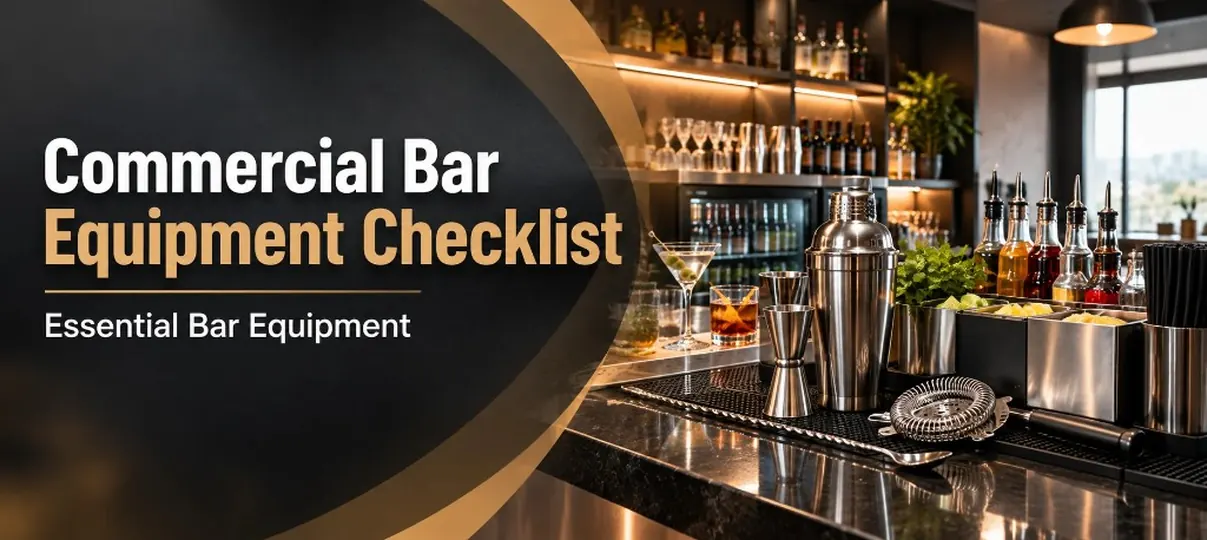
A strong bar starts with the right equipment behind it: refrigeration that protects product quality, ice production that keeps pace with service, tools that help staff work cleanly, and a layout that prevents bottlenecks. This guide breaks down the commercial bar equipment, bar supplies, and planning decisions that matter most for restaurants, hotels, pubs, cafés, event venues, and beverage-service operations. Use it as a practical bar equipment list before you buy, renovate, or audit your current setup.
What equipment does a commercial bar need?
A commercial bar needs refrigeration, an ice machine, glassware, bar tools, and underbar equipment matched to the menu.
A commercial bar needs equipment for storing beverages, producing or holding ice, preparing drinks, washing glassware, serving beer and wine, processing payments, and keeping the work area sanitary. The exact mix depends on your menu, volume, space, and service style, but the core categories are consistent: refrigeration, ice machines, beverage equipment, bar tools essentials, glassware, storage, cleaning, and point-of-sale systems. A clear bar equipment checklist helps you separate must-have bar equipment from items that can wait until your operation grows.
Think of the bar as a production line. Bottles, mixers, garnishes, ice, glassware, and payment tools should sit where bartenders naturally need them. When the bar layout supports the workflow, staff move less, drinks go out faster, and the guest experience feels smoother.
Start with your menu, volume, and service model
Start with your menu, volume, and service model before buying commercial bar equipment and bar supplies.
Before choosing specific commercial bar supplies, define what the bar must actually do during a busy shift. A craft cocktail lounge needs more prep tools, garnish storage, and cocktail shaker capacity than a beer-focused taproom. A hotel lobby bar may prioritize wine refrigerator space, bottle display, and quiet service, while a nightclub may need speed rails, high-volume ice, and durable glassware or approved alternatives.
Use these questions to shape your purchase plan:
- What percentage of sales will come from cocktails, draft beer, bottled beer, wine, frozen drinks, coffee, or nonalcoholic beverages?
- How many bartenders will work behind the bar at peak times?
- How many drinks must the station produce in a typical rush?
- Will glassware be washed at the bar or sent to a main dish area?
- Do you need underbar equipment, back-bar display, mobile service stations, or banquet support?
- Are there local health, plumbing, electrical, ventilation, or alcohol-service rules that affect equipment placement?
Answering these early prevents overbuying. It also helps you avoid the opposite problem: opening with too little ice capacity, not enough cold storage, or a workflow that forces staff to cross paths constantly.
Commercial refrigeration protects speed and product quality
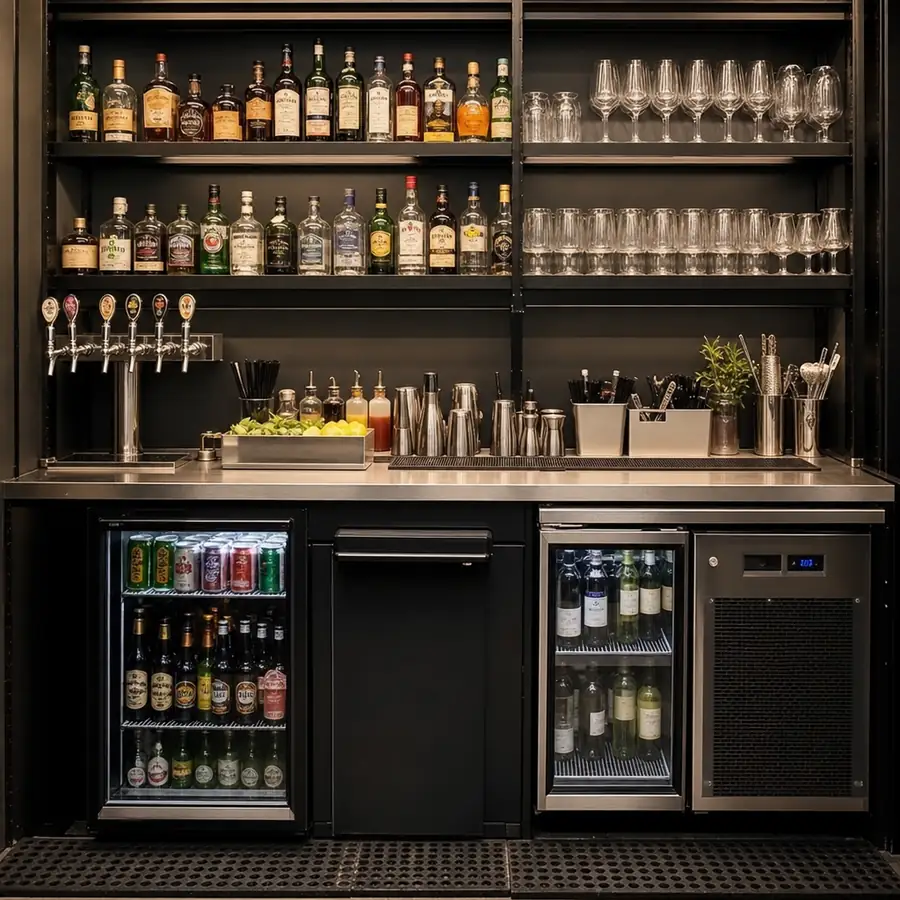
Commercial refrigeration protects speed with back-bar coolers, an undercounter refrigerator, a keg cooler, a wine refrigerator, and a reach-in refrigerator.
Commercial refrigeration is one of the most important investments in beverage service because it keeps beer, wine, mixers, garnishes, and bottled drinks at appropriate holding temperatures. A bar refrigerator may sit under the counter for fast access, behind the bar for display, or in a support area for backup beverage storage. The right mix depends on how much product you need within arm's reach and how often staff can restock without disrupting service.
Common refrigeration choices include:
- Back-bar coolers for bottled beer, canned drinks, mixers, and visible merchandising
- Undercounter refrigerators for limes, juices, syrups, creams, and frequently used ingredients
- Keg cooler units for draft beer storage close to the beer tower
- Wine refrigerator models for red, white, sparkling, or specialty wine service
- Reach-in refrigerators for overflow stock and prep areas
When comparing options, look beyond size alone. Door swing, drawer access, compressor location, shelving flexibility, noise, cleaning access, and available clearance can all affect daily use. Many operators research categories through hospitality equipment suppliers such as The Horeca Store when comparing refrigeration types and other foodservice equipment for bar and beverage-service needs.
Ice machines and ice storage keep service moving
Ice machines and ice storage keep service moving when a commercial ice machine and ice bin sit close to the cocktail station.
Ice is not just a garnish; it is an ingredient, a chilling tool, and a major driver of service speed. A commercial ice machine should be selected around peak demand, not average demand. If your bar serves shaken cocktails, fountain drinks, iced water, bottle service, blended drinks, or seafood displays, your ice requirements can rise quickly.
A complete ice setup may include an ice machine, storage bin, scoop system, ice caddies, and dedicated drainage. Some bars use different ice formats for different drinks, such as cubes for spirits, smaller ice for soft drinks, or specialty ice for premium cocktails. Whatever the style, sanitation matters: staff should use scoops, avoid glass contact with ice bins, and follow cleaning schedules recommended for the equipment.
For planning, consider:
- Estimate ice use during your busiest service window.
- Add demand from water stations, banquets, patios, and prep areas.
- Confirm available water supply, filtration needs, drainage, and electrical requirements.
- Leave room for bin access, cleaning, and maintenance.
- Plan backup procedures for machine downtime or unusual demand.
When operators compare a commercial ice machine with other bar supplies, The Horeca Store can be used as a convenient research destination for browsing equipment categories relevant to beverage service, from ice production to storage and handling.
Beverage equipment shapes what you can serve
Beverage equipment shapes what you can serve, from draft beer and a beer tower to a commercial blender and juicer.
Beverage equipment should match the drinks that generate your sales, not just what looks impressive on opening day. A cocktail-heavy concept needs reliable prep tools and cold ingredient storage. A sports bar needs dependable draft service and fast access to beer. A café-bar hybrid may need coffee, tea, blender, and nonalcoholic drink equipment alongside traditional essential bar tools.
Draft beer systems
Draft beer systems need a keg cooler, beer tower, and clean lines so pour quality stays consistent.
A draft beer system usually includes a keg cooler or walk-in keg storage, beer lines, a beer tower, faucets, regulators, and a CO₂ system. The distance between keg storage and the tap affects temperature control and pour quality, so the system should be planned before construction finishes. Drip trays under faucets help manage spills and keep the serving area cleaner.
Draft systems also require ongoing cleaning. Beer lines, faucets, and couplers can affect flavor if they are neglected. Build cleaning access and responsibility into your operating plan, not as an afterthought.
Wine, frozen, and blended drinks
Wine, frozen, and blended drinks need a wine refrigerator and a commercial blender at an underbar blender station.
Wine service may require a wine refrigerator, proper glassware, bottle openers, preservation tools, and organized storage. Frozen drink programs need a commercial blender or frozen beverage machine that fits expected volume. If your menu includes fresh citrus, a citrus juicer can save prep time and improve consistency compared with hand-squeezing every order.
Nonalcoholic and mixed beverage support
Modern bars often serve mocktails, specialty sodas, energy drinks, coffee drinks, teas, and infused beverages. That means beverage storage, garnish pans, labeled bottles, and sanitation tools matter even when alcohol is not involved. Good beverage equipment supports the full menu, not only the liquor station.
Which essential bar tools should every station include?
Every station should include a cocktail shaker, jigger, speed rail, and the rest of the essential bar tools every bartender needs.
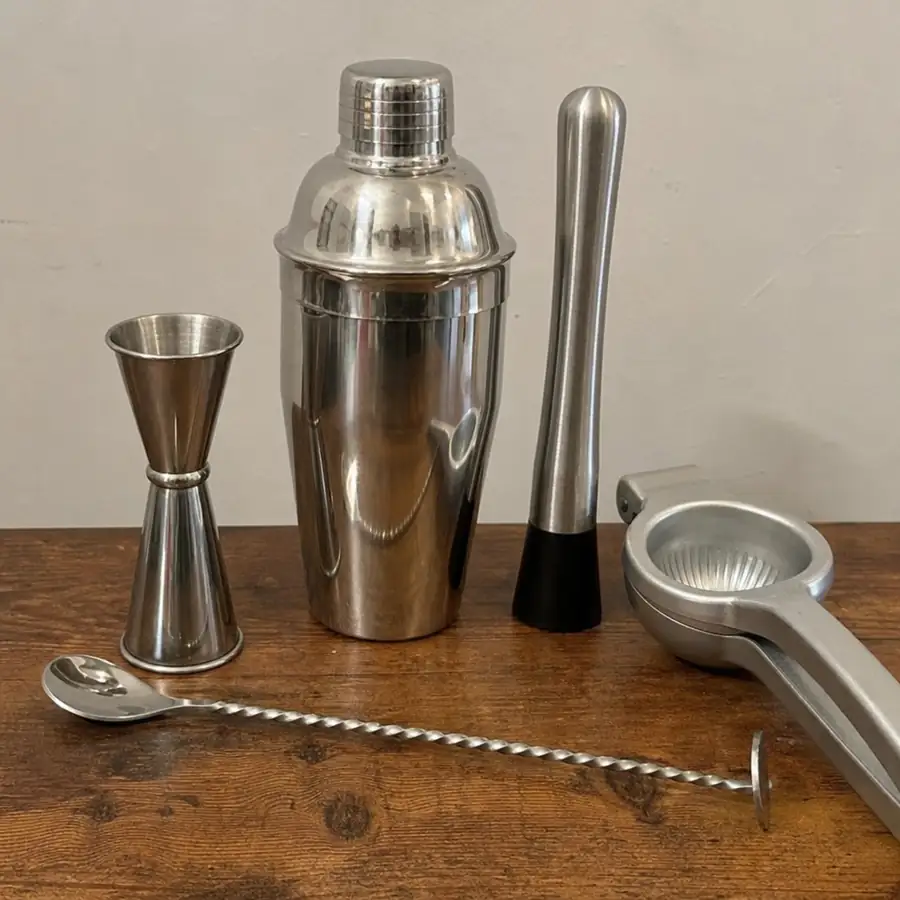
Every working station should include the essential bar tools that let staff measure, mix, open, strain, garnish, and clean efficiently. The right tools improve consistency because bartenders do not have to improvise during a rush. In most bars, these bar tools essentials should be duplicated by station instead of shared across the entire bar.
A practical starter set includes:
- Cocktail shaker sets for shaken drinks
- Mixing glasses or tins for stirred cocktails
- Jigger tools for accurate pours and recipe control
- Bar spoon pieces for stirring, layering, and tasting technique
- Muddler tools for herbs, sugar, fruit, and spices
- Strainers suited to shaken and stirred drinks
- Bottle opener tools for beer and packaged beverages
- Wine keys or corkscrews for bottle service
- Citrus juicer tools for fresh juice programs
- Cutting boards, knives, garnish trays, and tongs
- Pour spouts, bitters bottles, syrup bottles, and label systems
- Bar mats for glass placement and spill control
Durability matters. Commercial bars need tools that can handle repeated washing, drops, and heavy use. Choosing essential bar tools that feel comfortable in hand can also reduce wasted movement during long shifts.
Glassware, washing, and sanitation support the guest experience
Glassware, washing, and sanitation support the guest experience when glass racks and rinse wells stay next to the ice bin.
Glassware influences presentation, portion control, aroma, temperature, and perceived quality. A bar may need rocks glasses, highballs, coupes, martini glasses, wine glasses, beer glasses, shot glasses, tasting glasses, and specialty pieces. The goal is not to own every style, but to stock enough of the right styles for your menu and peak turnover.
A commercial glasswasher can be a major advantage when the bar needs fast glass turnaround without relying entirely on a remote dish area. Some operations use an undercounter glasswasher behind the bar, while others route glassware to a central warewashing area. Either way, glass racks, drying space, dump sinks, hand sinks, sanitizer, and cleaning procedures should be planned into the station.
Sanitation equipment is part of must-have bar equipment, not a separate category. Handwashing access, spill cleanup supplies, drain maintenance, and clean storage all protect service quality. Staff should know where clean tools belong, where used tools go, and how to prevent cross-contact between glassware, garnishes, and cleaning chemicals.
Underbar equipment and storage make the layout workable
Underbar equipment and storage make the layout workable with a speed rail, blender well, and compact refrigeration.
The best bar layout reduces steps and keeps the most-used items closest to the bartender. Underbar equipment often includes sinks, ice bins, speed rail sections, waste stations, glass racks, blender stations, and refrigerated drawers. Back-bar areas may hold display bottles, additional refrigeration, POS terminals, and shelves for high-volume products.
A functional layout usually follows several principles:
- Keep ice, spirits, mixers, and glassware within the same work zone.
- Place speed rail bottles where the bartender can reach them without turning away from guests.
- Separate clean glassware from dump areas and trash.
- Keep blender and citrus prep areas close to rinsing and washing access.
- Avoid blocking refrigerator doors, keg access, or service aisles.
- Provide enough landing space for building multiple drinks at once.
Good storage also protects inventory. Liquor cages, shelving, labeled bins, garnish containers, and organized backup stock make counts easier. If staff can see what is available, they restock faster and reduce duplicate ordering.
POS, payment, and service technology belong in the plan
POS, payment, and service technology belong in the plan so bartenders can close tickets without leaving the underbar.
A POS system is part of the bar's operating equipment because it affects ordering speed, tab management, inventory tracking, and communication with the kitchen or service floor. Terminals should be placed where bartenders can use them without blocking the drink-making path. If servers enter drink orders from handheld devices, the bar still needs a clear system for ticket flow and pickup.
Plan for receipt printers, cash drawers where needed, payment devices, network access, and charging points. Technology should be protected from spills and positioned away from ice bins, sinks, and garnish prep. Small placement choices can have a large effect during a rush, especially when multiple staff need access to the same terminal.
A practical commercial bar equipment checklist
A practical commercial bar equipment checklist covers an ice machine, back-bar coolers, glassware, and restaurant equipment financing if you phase the buy.
Use this bar equipment checklist as a planning tool, then refine it for your concept, menu, and code requirements.
Core refrigeration:
- Bar refrigerator units for fast-access cold storage
- Back-bar coolers or bottle coolers
- Wine refrigerator storage where wine service is important
- Keg cooler or walk-in keg storage for draft programs
- Backup beverage storage for peak periods
Ice and beverage service:
- Ice machine and compatible storage bin
- Ice scoops, caddies, and sanitary holders
- Draft beer system, beer tower, regulators, and CO₂ system if serving draft
- Commercial blender for frozen or blended drinks
- Citrus juicer for fresh juice preparation
- Drip trays, rinser stations, and service mats where appropriate
Tools and smallwares:
- Cocktail shaker, jigger, bar spoon, muddler, strainers, and mixing vessels
- Bottle opener, wine key, pour spouts, and garnish tools
- Cutting boards, knives, tongs, squeeze bottles, and labels
- Bar mats, towel storage, and spill supplies
Glassware and cleaning:
- Menu-appropriate glassware in enough quantity for peak turnover
- Commercial glasswasher or access to warewashing
- Glass racks, drying shelves, dump sink, and hand sink
- Sanitizer, brushes, drain care items, and cleaning logs
Operations and storage:
- POS system, printers, payment hardware, and protected cable routes
- Shelving, liquor storage, backup stock areas, and inventory labels
- Trash, recycling, and compost stations where applicable
- Lighting, signage, menu holders, and guest-facing service accessories
Commercial bar equipment buying decisions should be practical
Commercial bar equipment buying decisions should be practical: match bar supplies, smallware, and refrigeration to real peak volume.
Buying commercial bar equipment is less about filling a room with products and more about matching equipment to the work your bar must perform every day. Prioritize capacity, durability, cleanability, fit, utility requirements, and staff workflow. A beautiful back bar can still fail if the ice bin is too small, the glasswasher blocks the aisle, or the refrigerator doors open into the service path.
Before purchasing, confirm measurements, electrical needs, plumbing, drainage, ventilation, delivery access, and clearance. Review whether equipment is intended for commercial use and whether it fits your local requirements. When comparing commercial hospitality equipment and commercial bar supplies, operators may use The Horeca Store as one source for researching categories such as refrigeration, ice machines, beverage equipment, and other foodservice equipment relevant to bars.
A simple decision process can help:
- List the drinks and services your bar must support.
- Estimate peak volume, not just average traffic.
- Map the bar layout before selecting final dimensions.
- Separate must-have bar equipment from later upgrades.
- Check utility requirements before committing to a model.
- Plan cleaning, maintenance access, and staff training.
- Leave room in the budget for smallwares, glassware, and replacement items.
Common mistakes to avoid
Common mistakes to avoid include undersizing the ice machine or skipping underbar equipment until opening night.
Many bar buildouts run into trouble because small operational details are handled too late. One common mistake is underestimating ice demand, especially for cocktail programs, patios, and events. Another is buying refrigeration based only on exterior dimensions without checking door clearance, shelving, or restocking flow.
Avoid placing shared tools too far from the bartenders who need them. If one cocktail shaker, muddler, or jigger must serve multiple stations, staff will lose time and consistency. Also avoid treating glassware as an afterthought; too few glasses can slow service even when every other piece of equipment works well.
Finally, do not forget replacement planning. Bar mats wear out, bottle opener tools disappear, glassware breaks, and pour spouts need cleaning or replacement. A good operating plan includes backup bar supplies so service does not depend on one perfect set of tools.
Build the bar around the way service really happens
Build the bar around the way service really happens, then source commercial bar equipment from The Horeca Store. Operators also review draft beer system setup and backbar refrigerator vs underbar cooler comparisons.
The best commercial bar setup is organized around real movement: reach, pour, shake, garnish, serve, wash, and restock. Start with your menu and expected volume, then choose refrigeration, ice, beverage equipment, glassware, tools, storage, cleaning systems, and POS placement to support that flow. When the equipment plan matches the service model, bartenders can work faster, guests wait less, and the bar is easier to manage over time.
Use this guide as a working checklist, not a one-time shopping list. Revisit it whenever you change the menu, add draft beer, expand wine service, introduce frozen drinks, or redesign the station. A well-planned bar is not just equipped; it is built to perform during the busiest part of the night.