
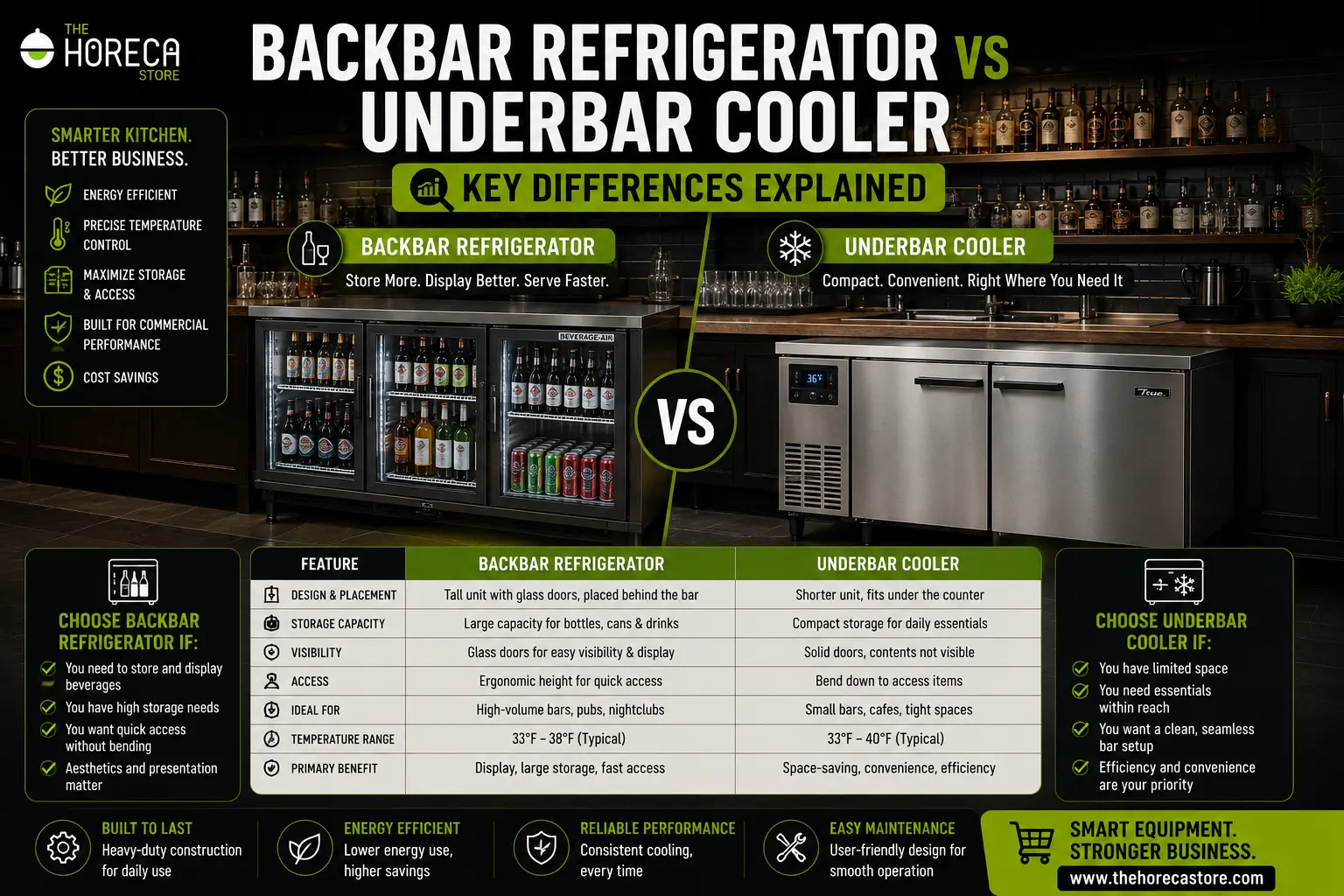
Setting up a successful commercial bar goes far beyond curating an impressive cocktail menu and hiring skilled bartenders. A massive part of your operational success relies on keeping beverages at the perfect temperature while maximizing your staff's efficiency. When outfitting your space, you’ll inevitably face a common equipment dilemma: Backbar Refrigerator vs Underbar Cooler: What's the Difference?
If you are currently drafting your equipment list and asking yourself, backbar refrigerator vs underbar cooler: what's the difference?, you certainly aren't alone. While they perform similar functions, their placement, design, and impact on your bar's workflow are distinctly different. Let's dive into the specifics so you can choose the right refrigeration for your venue.
Understanding the Backbar Refrigerator: The Visual Showpiece
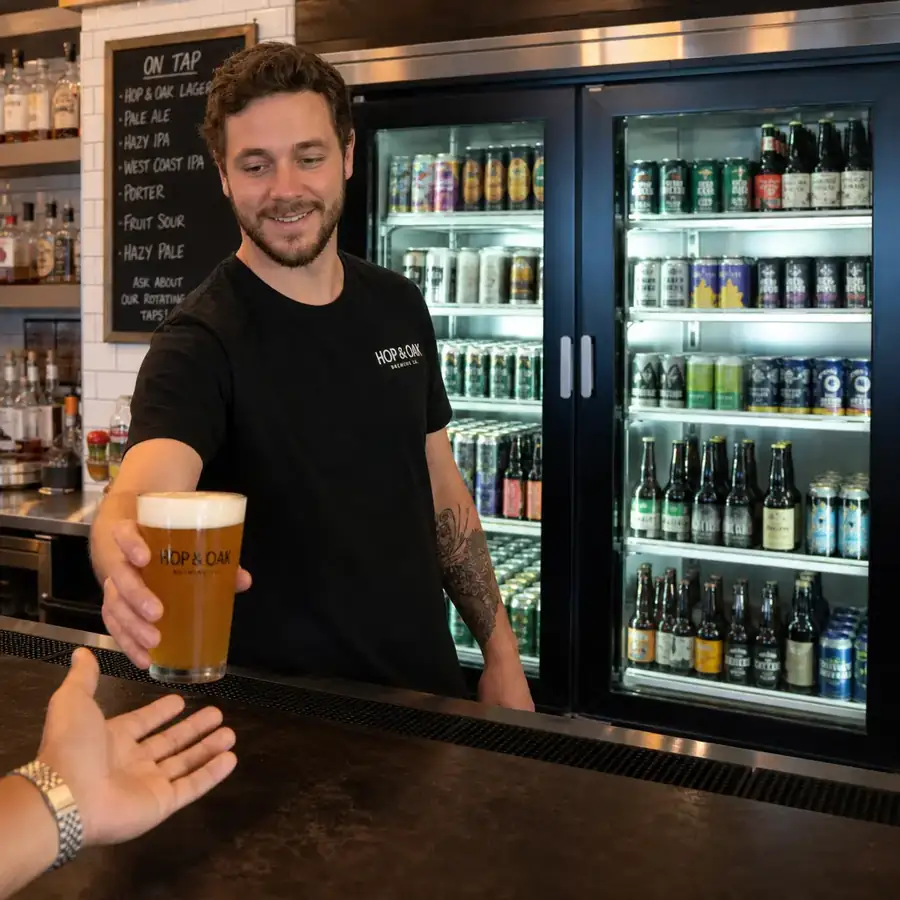
As the name implies, backbar refrigerators are designed to sit against the back wall of your bar, directly in the customer’s line of sight. They serve a dual purpose: storing high volumes of beverages and merchandising your premium products to patrons.
Design and Display Benefits
When selecting a unit for your back wall, you will need to weigh the pros and cons of glass door vs solid door back bar coolers. Glass doors act as a visual menu, beautifully displaying craft beers, ciders, and chilled wines, which is proven to drive impulse sales. Solid doors, on the other hand, offer a sleeker, uniform look and are generally more insulated, making them a great choice if you are purely focused on energy efficiency.
Door Configurations
You also need to consider sliding vs swing door bar fridge benefits. Swing doors provide a tighter seal and make it easier to load cases of beer at the end of the night. However, sliding doors are an absolute lifesaver in narrow bar aisles, ensuring that open doors don't block your bartenders during a busy Friday night rush.
Understanding the Underbar Cooler: The Bartender’s Workhorse
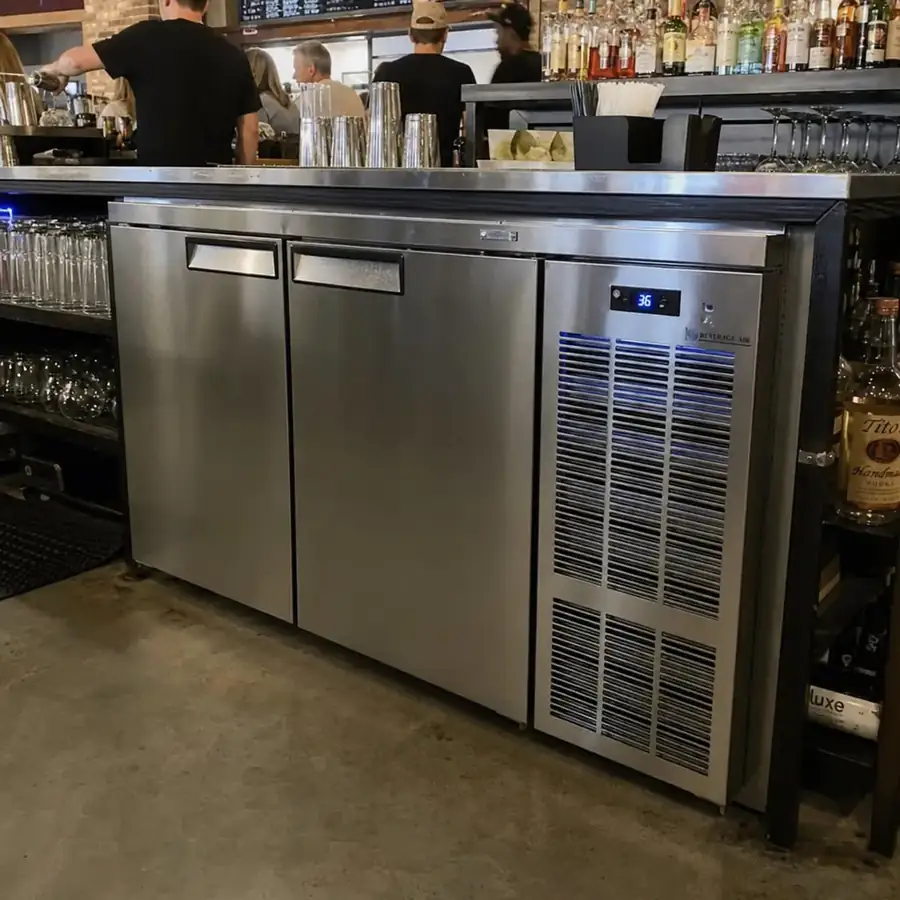
Underbar coolers are tucked away beneath the front bar counter, completely hidden from the customer's view. These units are built strictly for utility, speed, and keeping high-demand inventory right at the bartender's fingertips.
Size and Specifications
If you are wondering, what is the standard height of an underbar cooler, they are typically designed to sit between 34 and 36 inches tall, allowing them to slide perfectly beneath standard commercial bar counters. However, older buildings or custom-built bars may have unique dimensions. In these cases, investing in low profile back bar refrigeration for tight spaces (usually around 30 to 32 inches in height) ensures you get the cooling capacity you need without requiring costly renovations.
Ventilation and Installation
Because these units are boxed in by counters and adjacent equipment, ventilation is critical. You must utilize front-breathing undercounter refrigeration systems. These systems take in and exhaust air from the front grille, preventing the compressor from overheating in enclosed spaces.
Understanding under-counter beer fridge installation requirements is crucial here. Always ensure your equipment is installed on a level surface with zero obstruction to the front grille. Blocking the airflow can lead to mechanical failure and voided warranties.
Backbar vs. Underbar: Workflow and Capacity
The true difference between these two coolers comes down to how your bar operates.
Storage and Dispensing
When planning your beverage program, you must evaluate direct draw vs back bar storage capacity. Direct draw systems (keg coolers and draft dispensers) handle your poured beers, taking up significant under-counter real estate. Your backbar and underbar coolers must then accommodate your bottled and canned inventory. An underbar cooler is perfect for holding the fastest-moving items (like domestic beers and popular mixers), while the larger backbar handles bulk storage and premium display items.
Maximizing Efficiency
Applying smart bar layout and workflow optimization tips can drastically increase your revenue. The "cocktail cockpit" rule suggests that a bartender shouldn't have to take more than one step to reach their most-used ingredients. Placing an underbar cooler directly beneath the mixing station saves hours of walking time over a week, leading to faster service and happier customers.
How to Choose the Right Commercial Bar Refrigeration
Whether you lean toward a backbar setup, an underbar setup, or a hybrid of both, keep these critical buying factors in mind:
- Proper Sizing: Utilize a commercial bar refrigeration sizing guide before making a purchase. Calculate your peak hourly sales volume to determine how many cubic feet of storage you need. A cooler that is too small will leave you serving warm drinks, while one that is too large wastes electricity.
- Durability: Invest in heavy-duty stainless steel bottle coolers. Bar environments are wet, sticky, and prone to impacts from kegs and keg carts. Stainless steel resists corrosion and stands up to daily physical abuse.
- Health and Safety: Always purchase NSF certified beverage cooling equipment. This certification guarantees the unit meets strict public health and sanitation standards, keeping health inspectors happy.
- Temperature Control: If you serve a diverse menu, look into multi-zone temperature bar refrigerators. These allow you to store crisp white wines at 45°F in one section, and stouts at 50°F in another, all within the exact same footprint.
- High-Volume Performance: The best refrigeration for high-volume bars features oversized compressors and rapid temperature pull-down capabilities. When the doors are constantly being opened and closed, the unit must be able to recover its internal temperature quickly.
- Sustainability: Seek out energy efficient commercial beverage storage. Units featuring LED lighting, eco-friendly hydrocarbon refrigerants (like R290), and high-density polyurethane insulation will significantly lower your monthly utility bills.
Care and Maintenance Tips
Even the highest-quality equipment requires routine care to survive in the hospitality industry. Knowing how to maintain commercial bar coolers will extend the lifespan of your investment by years.
- Clean the Condenser Coils: Dust and debris clog the coils, forcing the compressor to work overtime. Vacuum or brush the coils at least once a month.
- Inspect Door Gaskets: A torn magnetic door gasket allows cold air to escape. Wipe gaskets down weekly with warm, soapy water to prevent sticky syrups from tearing the rubber.
- Monitor the Interior: Wipe down the interior stainless steel or galvanized shelves weekly to prevent mold growth and eliminate stale odors.
Shop Commercial Refrigeration at The Horeca Store
Looking for reliable refrigeration for your bar or restaurant? The Horeca Store offers a range of professional commercial refrigerators, backbar refrigerators, underbar coolers, and other foodservice refrigeration equipment to meet different storage requirements. Explore our collection to find the right refrigeration solution for your available space, beverage volume, and daily service needs.
The Final Verdict
When deciding between a backbar refrigerator and an underbar cooler, remember that they aren't mutually exclusive—in fact, the most profitable bars use both. The backbar serves as your glowing, visual sales pitch to the customer, while the underbar cooler acts as the hidden engine driving your bartender's speed of service. By understanding your specific workflow, space constraints, and storage needs, you can build a refrigeration setup that keeps the drinks ice-cold and the profits rolling in.