
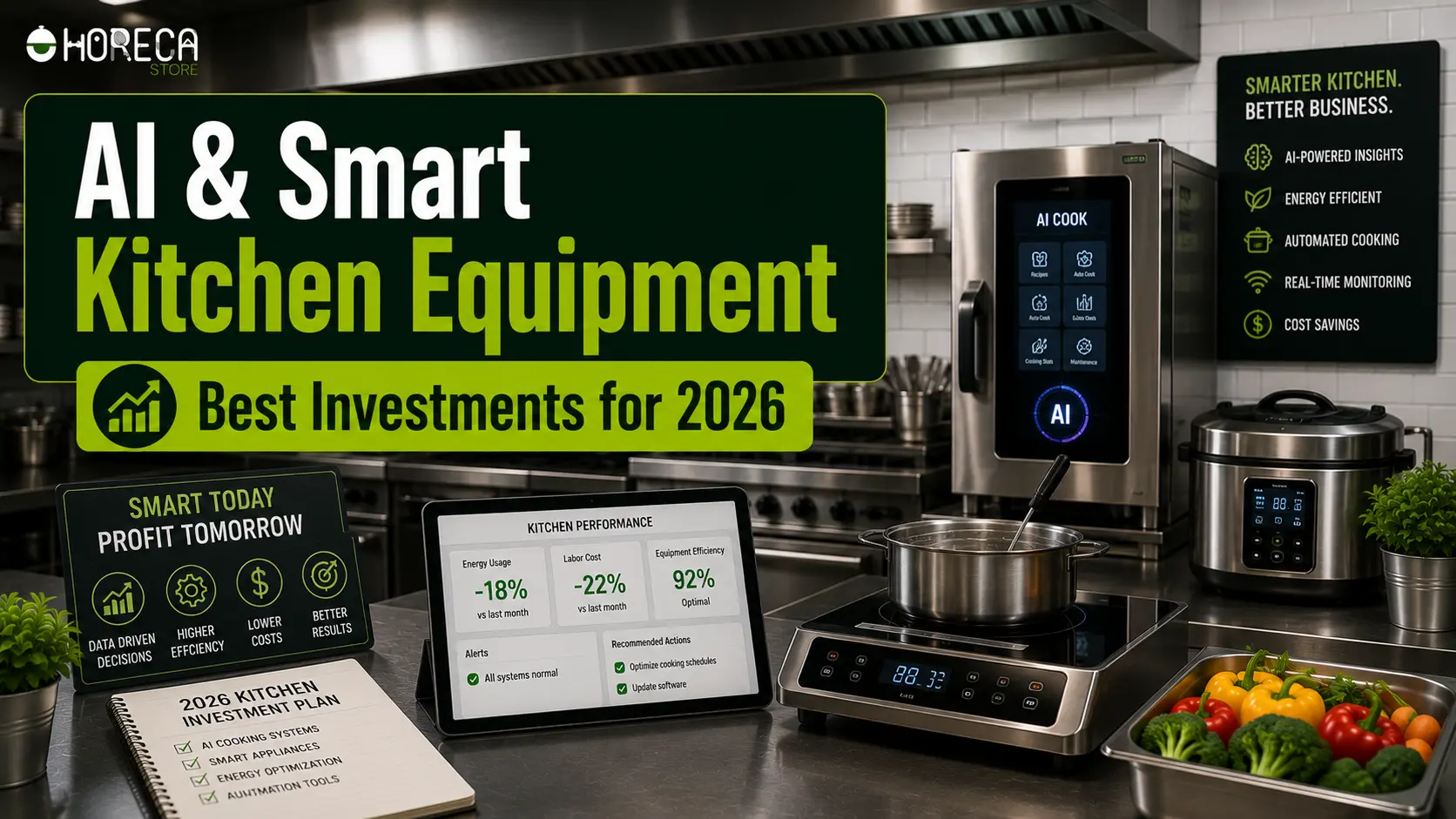
Just a few short years ago, the concept of a "smart kitchen" felt more like a sci-fi gimmick than a practical reality. We were introduced to refrigerators with massive tablets glued to the door, coffee makers that required three apps to brew a simple cup, and ovens that sent endless, unhelpful push notifications. Fast forward to today, and the landscape has drastically matured. If you are researching AI and Smart Kitchen Equipment: What's Actually Worth Buying in 2026, you will be pleased to know that technology has finally caught up with genuine culinary needs.
The focus has shifted from flashy screens to invisible intelligence. Today’s smart kitchen equipment 2026 models are designed to seamlessly integrate into your daily life, actively saving you time, reducing your utility bills, and elevating the quality of your meals.
But with shelves packed full of Wi-Fi-enabled spatulas and Bluetooth-connected blenders, how do you separate the truly transformative tech from the expensive paperweights? In this comprehensive guide, we will explore the latest innovations, highlight the tools that genuinely deserve counter space, and help you design a culinary ecosystem that works for you.
Are Smart Kitchen Gadgets Worth the Investment?
Whenever new technology hits the market, the first question on every consumer's mind is: Are smart kitchen gadgets worth the investment?
In 2026, the answer is a resounding "yes"—provided you buy the right items. The return on investment (ROI) is no longer solely measured in novelty. It is measured in time saved, grocery bills reduced, and cooking disasters averted.
However, it is crucial to understand that not all smart kitchen gadgets are created equal. Buying a "smart" toaster that simply allows you to push a button from your smartphone adds zero value if you still have to manually insert the bread. On the other hand, investing in a smart oven that can recognize what you are cooking and adjust the temperature in real-time to prevent burning is a game-changer.
What Makes an Appliance "Worth It" in 2026?
- Autonomy over Automation: True modern kitchen equipment doesn't just let you control it remotely; it thinks for itself to improve the outcome of your food.
- Ecosystem Integration: Devices that talk to each other (e.g., your recipe app preheating your oven automatically).
- Longevity and Updates: Appliances that receive over-the-air (OTA) software updates, ensuring they get smarter, not obsolete, over time.
By keeping these three pillars in mind, you can confidently navigate the market and curate a collection of advanced kitchen tools that truly enhance your culinary experience.
The Heart of the Hub: Refrigerators and Pantries
If the kitchen is the heart of the home, the refrigerator is the heartbeat. In the past, the "smart fridge" was heavily mocked. Today, it is arguably the most vital component of smart home cooking.
Reducing Food Waste with AI Refrigerators
Food waste is a massive global issue, and it hits our wallets hard. The latest generation of refrigerators tackles this head-on. Reducing food waste with AI refrigerators is now a seamless, background process.
Using internal cameras and dynamic weight sensors on shelves, these refrigerators know exactly what you have inside. But they go a step further. Advanced AI algorithms can now analyze the visual degradation of produce. Your fridge will subtly alert you that your spinach is going to wilt by tomorrow, and then proactively suggest a recipe to use it up tonight. Furthermore, dynamic cooling zones automatically adjust their humidity and temperature based on the specific items placed inside them, extending the shelf life of highly perishable goods by days.
Automated Inventory Tracking for Home Pantries
It isn't just the fridge getting an upgrade. The dry-goods storage space has seen massive innovation. Automated inventory tracking for home pantries is no longer reserved for commercial restaurants.
Through a combination of smart shelving scales, AI-powered overhead cameras, and RFID-enabled smart containers, your kitchen now knows exactly how much flour, pasta, and olive oil you have left.
- Auto-Replenishment: You can set your pantry to automatically order staples from your preferred grocery delivery service when supplies drop below 20%.
- Recipe Cross-Referencing: When you look up a recipe, your system instantly cross-references your pantry and fridge inventory, generating a precise shopping list of only the missing ingredients.
Revolutionizing the Heat: Ovens, Ranges, and Multicookers
Cooking is ultimately about applying the right amount of heat for the right amount of time. Smart cooking appliances in 2026 have completely removed the guesswork from this equation.
Computer Vision in Modern Smart Ovens
One of the most impressive leaps forward is the integration of computer vision in modern smart ovens. Inside the oven cavity, high-temperature-resistant cameras constantly monitor your food.
When you place a baking tray inside, the oven uses machine learning to identify the item. It knows the difference between a raw whole chicken, a batch of chocolate chip cookies, and a frozen pizza. Once identified, it asks for your desired level of doneness via a connected app or voice prompt, and takes over. It manages the bake, toggling between convection, broil, and steam functions to ensure crispy skin on your chicken while keeping the meat incredibly juicy. It physically turns off when the visual cues of perfect caramelization are achieved, completely eliminating the risk of burning dinner.
Predictive Maintenance for High-End Appliances
An oven is a significant investment. Thankfully, 2026 brings an era where appliances look after themselves. Predictive maintenance for high-end appliances uses internal acoustic sensors and thermal imaging to monitor the health of the machine.
If the convection fan begins to vibrate slightly out of calibration, or if a heating element shows signs of degradation, the appliance will notify you weeks before a failure occurs. In many cases, it can automatically schedule a service appointment and pre-order the necessary replacement part.
Smart Multicooker Comparison for Busy Families
Not every meal requires a full oven. Countertop multicookers have evolved from simple pressure cookers into highly intelligent, all-in-one culinary hubs. A smart multicooker comparison for busy families in 2026 reveals devices that can seamlessly transition from slow cooking to high-heat searing, to air-frying, all driven by AI-guided programs.
When shopping for a multicooker, look for these features:
- Auto-Pressure Release Systems: AI determines exactly when to release pressure based on the specific protein being cooked, avoiding tough, rubbery meat.
- Guided Step-by-Step Cooking: Built-in screens or synced tablets that weigh ingredients as you drop them into the pot, advancing to the next step only when the exact ratio is met.
- Multi-Zone Cooking: Newer models feature internal dividers with distinct temperature zones, allowing you to steam vegetables on one side while perfectly crisping potatoes on the other.
The Software Side: AI Assistants and Meal Planning
Hardware is only as good as the software running it. In 2026, the ecosystem of apps and artificial intelligence tying your kitchen together is the true star of the show.
Generative AI Recipe Assistants for Home Cooks
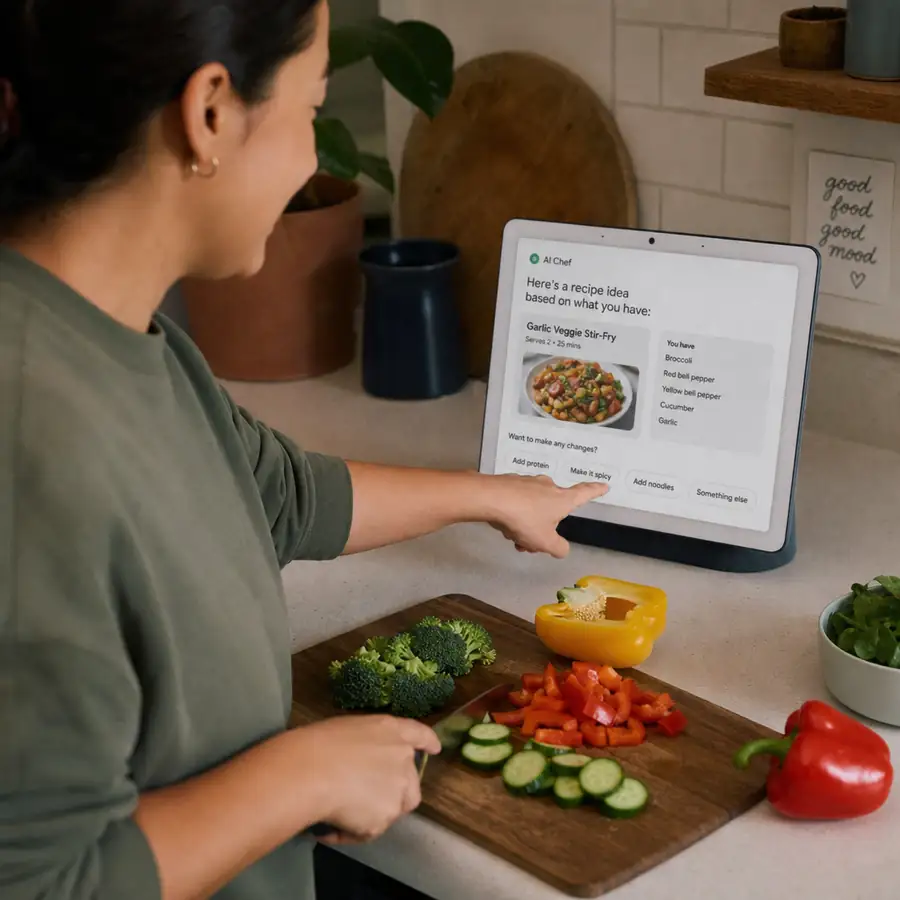
Remember when you had to furiously scroll past someone's entire life story on a blog just to find a pancake recipe? Those days are over. Generative AI recipe assistants for home cooks act as your personal, highly interactive sous-chef.
These AI models are integrated directly into smart displays or voice assistants in your kitchen. You can have a natural, conversational interaction:
- You: "I have three chicken breasts, half a jar of sun-dried tomatoes, and some heavy cream. I want dinner ready in 30 minutes, and make it low-carb."
- AI: "I can walk you through a creamy sun-dried tomato chicken skillet. I see you also have fresh basil in the fridge that needs to be used today. Shall we incorporate that?"
These assistants adapt on the fly. If you realize you are missing an ingredient halfway through, the AI will instantly calculate the best chemical substitution based on what is currently in your smart pantry.
AI-Powered Meal Planning Software Integration
Dietary goals are much easier to hit when your kitchen does the math for you. AI-powered meal planning software integration connects your wearable health trackers (like fitness watches or smart rings) directly to your kitchen.
If your smartwatch notes that you burned an extra 600 calories on a long run, your meal planning software will subtly adjust your dinner recipe suggestions to include slightly more complex carbohydrates and protein for recovery. It plans your entire week, minimizes leftover ingredient waste, and syncs directly with your automated grocery cart.
Designing for the Future: Connectivity, Efficiency, and Sustainability
Building a smart kitchen isn't just about buying individual gadgets; it's about creating a cohesive, sustainable environment.
How to Build a Future-Proof Smart Kitchen
If you are remodeling or upgrading, you must think about infrastructure. How to build a future-proof smart kitchen comes down to ensuring strong Wi-Fi 7 coverage in your kitchen area, installing ample smart outlets with energy monitoring, and prioritizing open-source or universally compatible platforms. Avoid proprietary systems that lock you into buying from only one brand for the rest of your life.
Matter Compatible Smart Home Appliances 2026
The biggest leap in smart home tech recently is the universal adoption of the Matter protocol. When looking at innovative cooking tools this year, ensuring they are "Matter-certified" is non-negotiable.
Matter compatible smart home appliances 2026 guarantee that your LG fridge, your Samsung oven, your Apple HomePod, and your Philips smart lights all communicate seamlessly on the same local network without requiring cloud workarounds. This local communication reduces latency, meaning your voice commands execute instantly, and ensures that your devices will continue to work together even if one manufacturer goes out of business.
Voice Controlled Kitchen Ecosystems
Because of Matter, voice controlled kitchen ecosystems are finally flawless. You can walk into your kitchen with your hands full of groceries and simply say, "Set the kitchen to prep mode."
Instantly, the pendant lights brighten to a cool, daylight hue for better visibility, the smart faucet turns on a gentle stream of warm water for washing vegetables, the range hood fan activates on low, and your AI assistant reads out the first step of your evening meal. Voice control is no longer a clunky novelty; it is an essential hands-free tool for a hygienic and efficient cooking environment.
Going Green: Sustainability and Efficiency
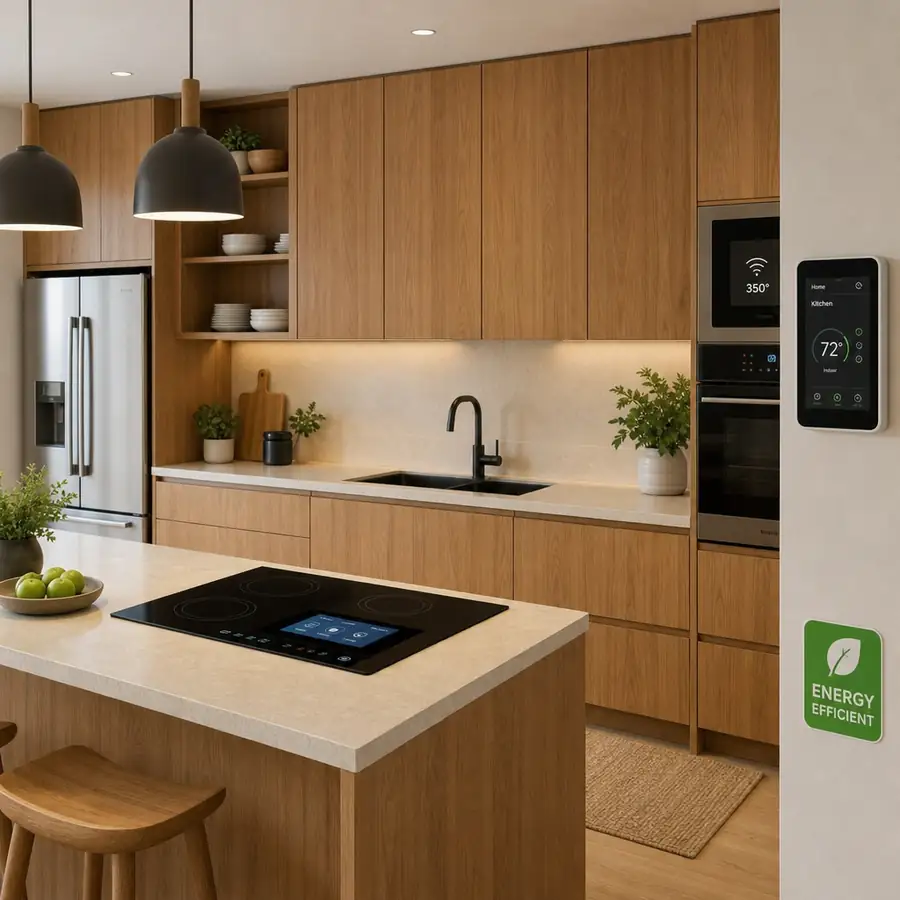
Technology should serve the planet just as much as it serves the user. Energy efficient smart kitchen design is a massive trend for 2026.
The best AI appliances for sustainable living feature "smart grid" connectivity. This means your dishwasher or the defrost cycle of your freezer can communicate with your local energy provider, choosing to run during off-peak hours when electricity is cheapest and most abundantly sourced from renewables (like wind and solar).
Furthermore, smart induction cooktops have almost entirely replaced gas ranges in modern builds. They use magnetic fields to heat the pan directly with near 100% efficiency, wasting no ambient heat and keeping your kitchen cooler, which in turn lowers your home air conditioning costs.
The Elephant in the Room: Data Security and Privacy
With cameras in our ovens, microphones on our countertops, and sensors in our pantries, we have to address the most critical concern of 2026: Smart kitchen privacy and data security.
Consumers are rightfully wary of having their eating habits, daily routines, and audio conversations harvested by tech conglomerates. Fortunately, the industry has responded to consumer pushback with stronger privacy frameworks.
When purchasing smart equipment, look for the following security standards:
- On-Device Processing: The best AI devices now feature edge computing. This means the computer vision analyzing your food, or the natural language processor understanding your voice commands, does the math locally on a chip inside the appliance. No images or audio recordings are sent to the cloud.
- Physical Privacy Shutters: Any device with a camera or microphone should have a physical, hard-wired switch that disconnects power to the sensor, guaranteeing privacy when you want it.
- Transparent Data Policies: Look for brands that explicitly state they do not sell your telemetry data (such as how often you open your fridge or what time you brew your coffee) to third-party advertisers.
Human Touch vs. Machine Precision
As we lean heavier into automation, a philosophical debate often arises: Traditional cooking vs automated robotic kitchens. Will AI take the soul out of cooking?
In short: No.
The goal of AI in the kitchen is not to replace the human cook, but to act as a highly skilled sous-chef that handles the tedious, stressful, or error-prone aspects of meal prep. Chopping, seasoning, tasting, and plating are inherently creative, human acts that bring joy to home cooking.
AI simply removes the anxiety of undercooking a turkey, the frustration of realizing you are out of eggs mid-recipe, and the guilt of throwing away spoiled produce. It allows you to focus on the art of cooking, while the machines handle the science.
Actionable Buying Guide: What to Skip and What to Buy
To distill all this information into practical advice, here is a quick breakdown of what is actually worth your money in 2026.
Buy It Now:
- Smart Induction Cooktops: Unparalleled speed, energy efficiency, and safety. Look for models with dynamic pan sizing (where the whole surface is a cooking zone).
- AI-Enabled Combi-Ovens: Countertop or built-in ovens that combine steam, convection, and computer vision. They will fundamentally change how you bake and roast.
- Matter-Compatible Smart Scales: A highly underrated tool. Connect a smart scale to your tablet, and you can bake flawlessly by weight without measuring cups, automatically scaling recipes up or down.
- Precision Temperature Probes: Wireless meat thermometers that predict exact resting times and alert your phone.
Skip It:
- "Smart" Small Appliances with Basic On/Off App Integration: If your smart kettle still requires you to fill it with water manually, paying an extra $100 just to turn it on from your bed is a waste of money. Use a $15 smart plug instead.
- Fridges with Massive Entertainment Screens: The novelty wears off quickly, and tablet hardware becomes obsolete much faster than refrigeration hardware. Opt for refrigerators with internal AI cameras and use a separate, upgradeable tablet on a stand for recipes and media.
- Single-Function Gadgets: Counter space is premium. Skip the single-use smart egg cooker and invest in a versatile smart multicooker.
AI and Smart Kitchen Equipment: What's Actually Worth Buying in 2026
AI-powered and smart kitchen equipment helps restaurants improve efficiency, reduce waste, and simplify operations. Features like automated cooking, remote monitoring, predictive maintenance, energy management, and digital temperature controls improve food quality while lowering labor and utility costs. Focus on equipment that delivers measurable value and integrates easily into your kitchen workflow.
Choose technology based on your business size, menu, and budget. The Horeca Store offers smart refrigeration, cooking equipment, ice machines, and foodservice essentials for restaurants, cafés, hotels, and cloud kitchens. With quality products, competitive pricing, and dependable support, The Horeca Store helps businesses invest in equipment that enhances productivity and supports long-term growth.
Conclusion
The kitchen of the future has finally arrived, and it is far more practical than the sci-fi movies predicted. When exploring AI and Smart Kitchen Equipment: What's Actually Worth Buying in 2026, the guiding principle should always be utility over novelty.
By investing in appliances that communicate seamlessly via Matter protocols, leveraging AI to eliminate food waste, and utilizing generative software to take the stress out of meal planning, you can transform your kitchen into an intelligent, sustainable, and highly efficient space. Embrace the technology that gives you back your time and confidence, allowing you to focus on what truly matters: gathering around the table to enjoy incredible food with the people you love.