
That $99 12-piece cookware set in the middle of the store aisle looks like a bargain, but it’s often a trap. While the price is tempting, these massive boxes are frequently loaded with what industry insiders call “filler” pans—pieces that are too small or oddly shaped for everyday cooking.
Think about it: how often will you really use a tiny one-quart saucepan or that extra eight-inch skillet? In practice, most home cooks find these filler pieces just gather dust in a cabinet. Meanwhile, the one or two pans you do use daily are often made from thin, cheap materials that warp, scratch, and make your food stick within a year.
There’s a much smarter way to build a kitchen starter set for cheap: buy your cookware “à la carte.” This simply means purchasing a few essential pans individually. By avoiding the pre-packaged set, you can focus your entire budget on getting higher-quality versions of the pans you’ll actually reach for constantly.
For that same $100, instead of a box full of wobbly pans, you could get a fantastic $35 T-fal non-stick skillet, a sturdy $30 Cuisinart saucepan, and a solid $40 Tramontina stockpot. This approach gives you the best budget cookware set under $100—one you built yourself that will perform better and last far longer.
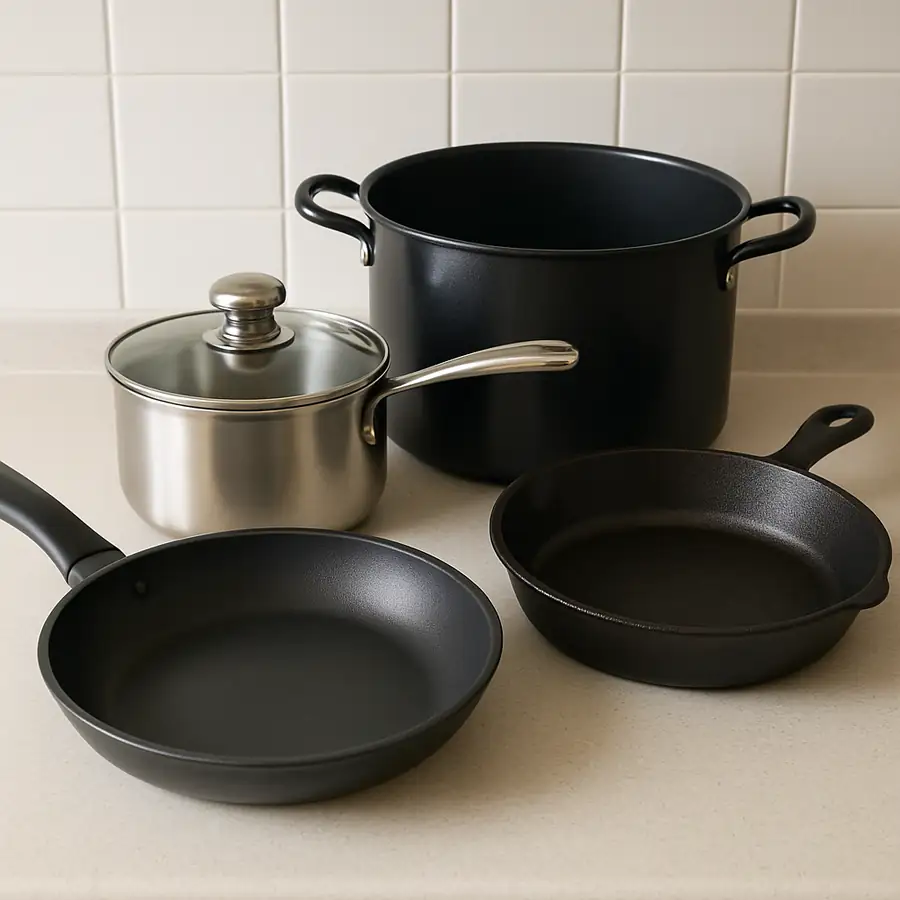
Your "First Apartment" Checklist: The Only 4 Pans You Really Need
Forget the intimidating 12-piece sets that cost a fortune and clog your cabinets. Building a capable, cheap kitchen starter set is about choosing a few versatile workhorses, not collecting a dozen specialized pans you’ll never touch. With just four key pieces, you can confidently handle almost any daily cooking task, from frying an egg to simmering a big batch of chili. This simple pots and pans checklist is perfect for a first apartment or anyone looking to upgrade on a budget.
This "Core Four" will cover 90% of your cooking needs without any wasted space or money.
- A 10-inch Non-Stick Skillet: Your go-to for delicate foods. This is for perfect, no-fuss eggs, pancakes, and fish fillets that release without a fight.
- A 3-Quart Saucepan with a Lid: The ideal size for everyday jobs like boiling potatoes, reheating soup, making oatmeal, or whipping up a box of mac and cheese.
- A 6-Quart Stockpot: For your big jobs. This is what you’ll grab to boil a pound of pasta, make a large batch of soup for the week, or simmer tomato sauce.
- A 10-inch Stainless Steel or Cast Iron Skillet: This is your durable powerhouse. It’s built for high-heat searing to get a beautiful brown crust on burgers, chicken, and steaks.
You might wonder why you’d need two different skillets. One is for convenience and delicate foods, while the other is for durability and high heat. The difference all comes down to the material they’re made from, which is the most important decision you’ll make when buying a pan.
Decoding Pan Materials: Non-Stick vs. Stainless Steel on a Budget
Having two different skillets isn't about being fancy; it's about having the right tool for the job. The entire difference comes down to the pan's surface. One is built for easy-release convenience, while the other is a durable powerhouse for getting that perfect, browned crust on your food. Understanding this trade-off is the key to avoiding frustration in the kitchen.
Here’s the simple way to decide which pan to grab:
Non-Stick Skillet
- Best For: Delicate foods like eggs, pancakes, and fish that you don't want to stick. It’s also a dream for quick cleanup with minimal scrubbing.
- Keep in Mind: Avoid high heat, which can damage the coating. Always use silicone or wood utensils—never metal.
Stainless Steel Skillet
- Best For: High-heat jobs like searing a steak or browning chicken thighs. It’s incredibly durable and often oven-safe, giving you more cooking flexibility.
- Keep in Mind: You’ll need to use a bit more oil or butter to prevent sticking, and it takes more effort to clean.
When it comes to your wallet, think of non-stick pans as a consumable item. A good, affordable non-stick skillet will run you about $20-$35, but even with proper care, its coating will wear out in a few years. A budget-friendly stainless steel pan, on the other hand, might cost slightly more ($30-$50), but it's an investment that can last for decades.
But if you’re looking for the absolute champion of durability—a pan that can outlive you and costs less than a few pizzas—there is one more option to consider.
The Most Durable Pan You Can Buy: Why a $25 Cast Iron Skillet is a Genius Move
If a stainless steel pan is a long-term investment, think of a cast iron skillet as a lifetime inheritance you can buy for about $25. This pan is legendary for being passed down through generations for one reason: it's nearly indestructible. As a single, heavy piece of metal, it is the most durable inexpensive cookware on the market, capable of handling screaming-hot temperatures on the stove, in the oven, or even over a campfire without warping or breaking.
The "catch" with cast iron is a process called seasoning, but it's much simpler than it sounds. Seasoning is just a layer of baked-on cooking oil that builds up over time, creating a natural, non-stick surface. Think of it like breaking in a good pair of leather boots—it just gets better with use. Most new pans come pre-seasoned, so you can start cooking right away, and every meal you make only improves its performance.
This unique combination of heat retention and durability makes cast iron one of the most versatile, oven-safe budget-friendly pans you can own. It’s perfect for getting a deep brown crust on a steak before sliding the whole pan into the oven to finish cooking. For a long-lasting budget frying pan that delivers incredible results for decades, cast iron is an unbeatable value.
Where to Find the Best Cookware Deals: A Shopper's Guide
Knowing you need a new pan is one thing, but finding a good one that doesn’t cost a fortune is the real challenge. Fortunately, you don’t have to get lost in endless online reviews or just guess in the store. A few key brands consistently deliver excellent quality for a surprisingly low price, making them the best places to find cookware on sale or at an everyday great value.
Instead of just grabbing the absolute cheapest box on the shelf, keep an eye out for these specific names. They’ve built a reputation for being some of the best cookware brands for the money, offering durability and performance that punches well above their price tag.
Here’s a quick cheat sheet for your next shopping trip:
- Target: Look for their house brand, Made By Design. It's known for simple, sturdy, and very affordable pieces that get the job done.
- Walmart: Keep an eye out for Tramontina. Their stainless steel pans, in particular, are often praised by reviewers as being nearly as good as brands that cost four times as much.
- Amazon: You can't go wrong with T-fal for non-stick pans or Cuisinart for budget-friendly stainless steel. Both have options with thousands of positive reviews.
- IKEA: A quick search for an IKEA kitchenware pots review will almost always point to their IKEA 365+ series—surprisingly sturdy, no-frills pans that are built to last.
By choosing one of these trusted, budget-friendly brands, you’re not just saving money today—you’re buying a tool that will serve you well for years.
How to Make Your Affordable Pans Last Twice as Long
Getting a great deal feels even better when your purchase actually lasts. A long-lasting budget frying pan isn’t a myth—it just requires a little care. Most pans, especially non-stick ones, are ruined by a few common and easily avoidable mistakes.
The good news is, you only need to remember three simple rules for how to clean your pots and pans and keep them in great shape:
- Use the Right Tools. Metal spatulas and whisks will scratch and destroy a non-stick surface. Stick to wood, silicone, or nylon utensils to protect the coating.
- Avoid Sudden Temperature Changes. Never put a sizzling hot pan directly into a sink of cold water. This shock can cause the metal to warp, leaving you with a wobbly, unevenly-heating pan. Let it cool down for a few minutes first.
- Hand-Wash When You Can. While many pans say "dishwasher safe," the harsh detergents and high heat will wear down a non-stick coating over time. A quick wash with a soft sponge is much gentler.
Speaking of non-stick, let’s clear up a common worry. You may have heard about dangerous chemicals in older pans. The main chemical of concern, PFOA, has not been used in manufacturing for many years, so any new affordable non-stick skillet you buy is safe. Just follow the golden rules, avoid using high heat on an empty pan, and your cookware will serve you safely for years to come.
Your Action Plan for a Budget-Friendly Kitchen That Works
Before, the cookware aisle was a confusing wall of shiny metal and high prices. You now have the knowledge to decode it. You can confidently walk past the overwhelming sets, knowing that the secret to a great kitchen isn't about having every pan—it's about having the right ones.
Your path forward is simple. You know how to choose cookware on a budget by starting with just the essential pieces to build your own kitchen starter set. Based on the foods you love, you can decide between non-stick or stainless steel for your main skillet and find excellent value from the brands we've covered. Taking care of these tools will ensure they last.
Ultimately, stocking your kitchen isn't about spending a fortune, but about making smart investments. By choosing fewer, better pieces, you're not just buying affordable pots and pans—you're building a collection that you will love to cook with for years of delicious meals to come.
Why Buy Affordable Pots and Pans from The Horeca Store?
Building a reliable cookware collection doesn't have to be expensive. The Horeca Store offers a wide range of affordable pots and pans that combine durability, performance, and value for money. Whether you're equipping a home kitchen, restaurant, café, hotel, cloud kitchen, or catering business, you'll find high-quality cookware in stainless steel, non-stick, aluminum, cast iron, and other materials to suit every cooking style and budget. Our selection is designed to deliver even heat distribution, long-lasting performance, and everyday convenience without exceeding your budget.
Whether you're purchasing your first cookware set or replacing worn-out kitchen essentials, The Horeca Store makes it easy to find the right pots and pans at competitive prices. We offer trusted brands, multiple sizes and styles, and commercial-grade cookware built for both home and professional kitchens. With quality products, excellent customer support, and affordable pricing, The Horeca Store is your trusted destination for budget-friendly cookware that delivers exceptional value and reliable cooking performance.