
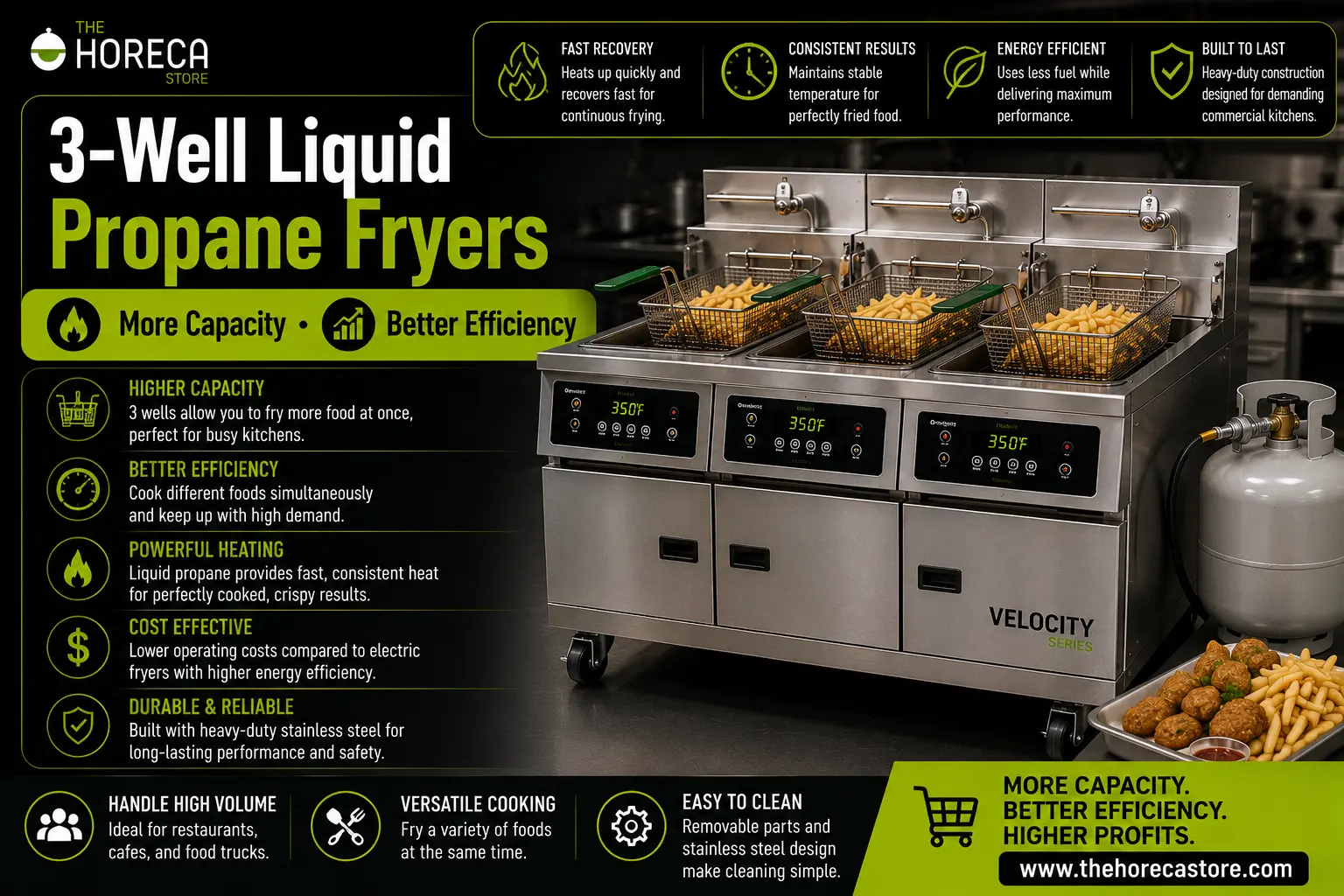
In the fast-paced, high-stakes environment of a modern commercial kitchen, the fry station is often the beating heart of the operation. Whether you are serving up golden-crisp french fries, perfectly breaded chicken wings, or delicate tempura vegetables, the demand for consistency, speed, and quality never stops. However, as any seasoned chef or restaurant operator will tell you, not all fryers are created equal.
Upgrading your kitchen infrastructure with the right propane cooking equipment can transform a chaotic, bottlenecked fry station into a streamlined engine of profitability. Specifically, exploring the advantages of using a 3-well liquid propane fryer (Computron 1000) reveals a synergy of heavy-duty heating power, precise digital control, and unparalleled operational flexibility.
In this comprehensive guide, we will dive deep into why this specific commercial fryer configuration is becoming the gold standard for high-volume restaurants. We will explore the thermodynamics of liquid propane, the genius of multi-well systems, the technological marvel of the Computron 1000, and actionable strategies for maximizing your kitchen’s output.
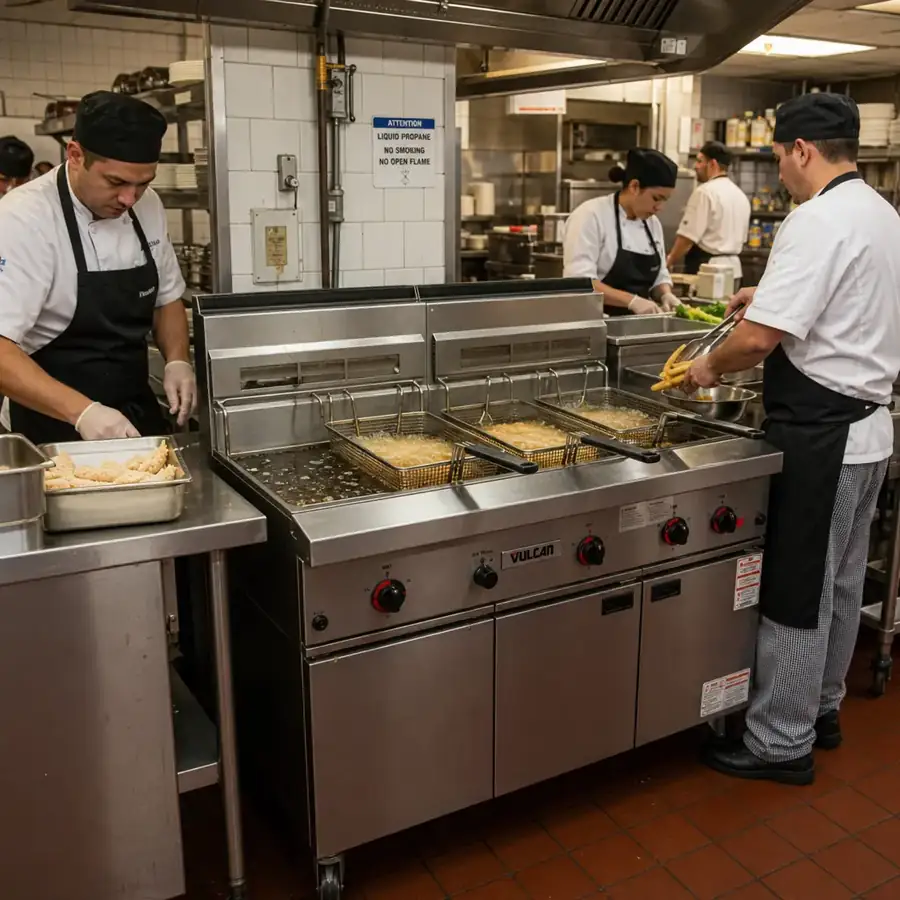
The Core Concept: What is a 3-Well Liquid Propane Fryer?
Before diving into the intricate benefits, it is crucial to understand the anatomy of this equipment. A 3-well liquid propane fryer is a heavy-duty commercial deep frying system divided into three distinct, independently controlled vats (or wells). Instead of using electricity or natural gas, it relies on liquid propane (LP) as its fuel source.
When you pair this robust hardware with the Computron 1000—a state-of-the-art digital control system—you elevate the unit from a simple heating vat to an intelligent, programmable cooking machine. This combination addresses some of the most persistent pain points in culinary operations, from oil degradation to inconsistent cooking temperatures.
The Power of Propane in Commercial Kitchens
Propane has long been a favorite fuel source in the culinary world, and for good reason. It offers unmatched mobility for kitchens that may not have access to municipal natural gas lines, making it perfect for rural restaurants, food trucks, and large-scale catering operations. But beyond logistics, the true magic lies in the liquid propane BTU output for rapid heating.
British Thermal Units (BTUs) measure the heat content of a fuel. Liquid propane burns incredibly hot and clean, transferring heat to the fryer's heat exchangers much faster than many alternative fuel sources. This rapid heat transfer is the foundational element of high volume commercial frying efficiency.
Advantage 1: Unmatched Workflow and Menu Flexibility
One of the most profound advantages of utilizing a 3-well design is the ability to compartmentalize your cooking processes. In a traditional single-vat fryer, the kitchen is forced to fry everything in the same oil, or constantly swap out fry baskets in a frantic dance to keep up with orders.
Simplifying Kitchen Workflow with Independent Fryer Wells
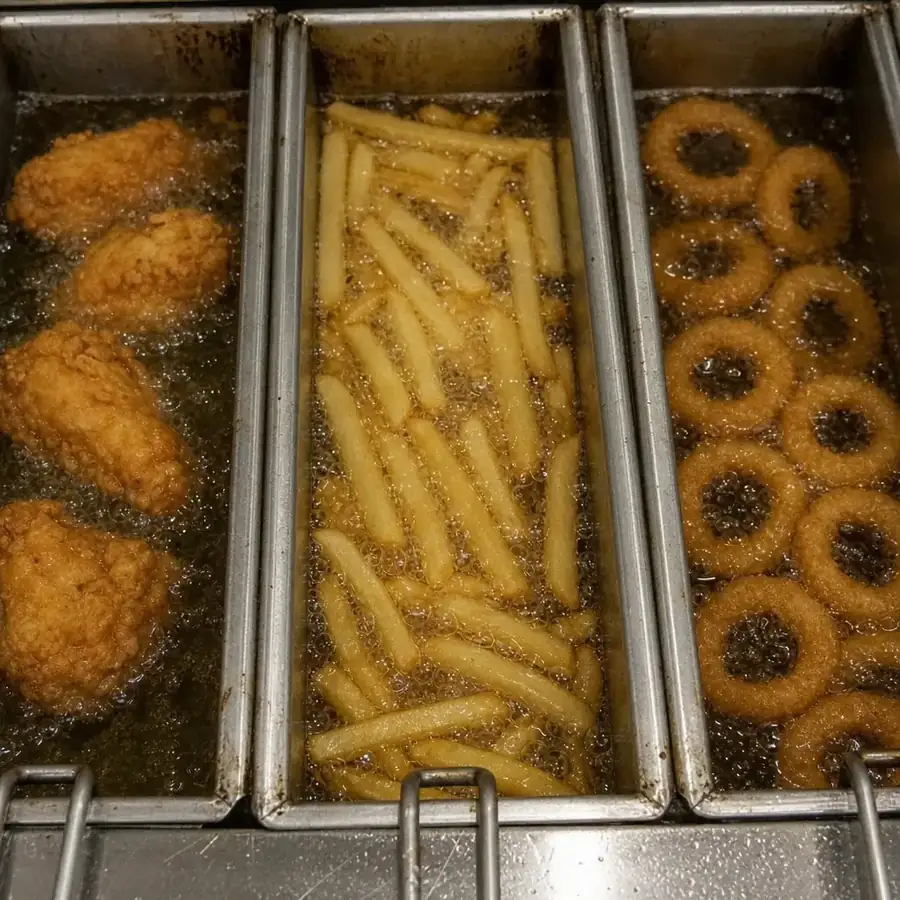
A 3-well liquid propane fryer changes the game by simplifying kitchen workflow with independent fryer wells. Imagine a busy Friday night dinner rush. With three separate vats, a chef can designate:
- Well 1: Exclusively for french fries and potato products, keeping the oil starch-free and the flavor pure.
- Well 2: Dedicated to heavy proteins like breaded chicken or fish.
- Well 3: Reserved for allergen-free items, vegan dishes, or delicate pastries that require a lower temperature.
This setup eliminates the bottleneck of waiting for one type of food to finish before dropping the next. Kitchen staff can operate simultaneously across all three wells, drastically improving ticket times and overall customer satisfaction.
Preventing Flavor Transfer Between Fryer Wells
Have you ever bitten into a french fry that tasted vaguely of calamari? That phenomenon is known as flavor transfer, and it is a quick way to ruin a restaurant's reputation. By utilizing a 3-well liquid propane fryer, chefs have a foolproof method for preventing flavor transfer between fryer wells.
Because the vats are physically separated and contain their own distinct batches of oil, the microscopic food particles and rendered fats from seafood or heavily spiced meats cannot contaminate the oil used for milder items. This guarantees that every dish tastes exactly as the chef intended, maintaining strict flavor profiles and elevating the overall dining experience.
Advantage 2: Maximizing Throughput and Recovery Time
In the commercial restaurant industry, throughput—the rate at which food can be cooked and served—dictates profitability. High demand commercial kitchen throughput requires equipment that can take a beating and bounce back instantly.
Understanding Oil Recovery Time
When you drop a basket of frozen french fries into 350°F (175°C) oil, the temperature of the oil plummets instantly. "Recovery time" is the duration it takes for the fryer to return the oil to the target cooking temperature. If a fryer has a slow recovery time, the food ends up boiling in lukewarm oil rather than frying. The result? Greasy, soggy, unappetizing food.
Reducing Oil Recovery Time in Multi-Well Units
Because of the exceptional liquid propane BTU output for rapid heating, an LP fryer naturally possesses incredibly fast recovery times. However, the 3-well system takes this a step further. By dividing the cooking volume across three smaller vats rather than one massive vat, the heating elements only have to recover the temperature of a smaller volume of oil at any given time.
Reducing oil recovery time in multi-well units means that even during the most punishing dinner rushes, the fryer is always ready for the next basket. The moment one basket is pulled from Well 1, the high-efficiency LP burners have already restored the heat, ensuring that the next drop achieves the perfect Maillard reaction for a crispy exterior and tender interior.
How to Optimize Throughput in a 3-Well System
To truly harness high demand commercial kitchen throughput, operators should employ strategic staging. Here is an actionable tip on how to optimize throughput in a 3-well system:
- Stagger Your Drops: Never drop frozen product into all three wells simultaneously. Drop basket A into Well 1, wait 60 seconds, drop basket B into Well 2, and so on. This prevents a massive ambient temperature drop in the surrounding kitchen and keeps the gas pressure optimally distributed to the burners.
- Temperature Zoning: Set Well 1 to 350°F for fries, Well 2 to 325°F for bone-in chicken (which requires longer, slower cooking), and Well 3 to 375°F for quick-flash items like tortilla chips.
- Utilize Idle Modes: During slow periods, keep one well at cooking temp and put the other two in a standby/idle mode to save fuel.
Advantage 3: The Intelligence of the Computron 1000
While the 3-well liquid propane setup provides the brawn, the Computron 1000 provides the brains. In the past, fry cooks relied on manual dials that were notoriously inaccurate, combined with physical egg timers that were easily ignored over the din of a busy kitchen.
Digital Temperature Precision for Consistent Food Quality
The Computron 1000 is an advanced digital control panel that takes the guesswork out of frying. It uses sensitive thermal probes submerged in the oil to monitor the temperature continuously. This digital temperature precision for consistent food quality ensures that the oil stays within a few degrees of the target setpoint.
Why does this matter? If oil is just 10 degrees too hot, breading will burn before the interior protein is safely cooked. If it is 10 degrees too cool, the food absorbs excess oil. The Computron 1000 prevents these fluctuations, ensuring that the first batch of the day and the last batch of the night are identical in color, texture, and taste.
Comparing Manual Timers with Computron 1000 LED Displays
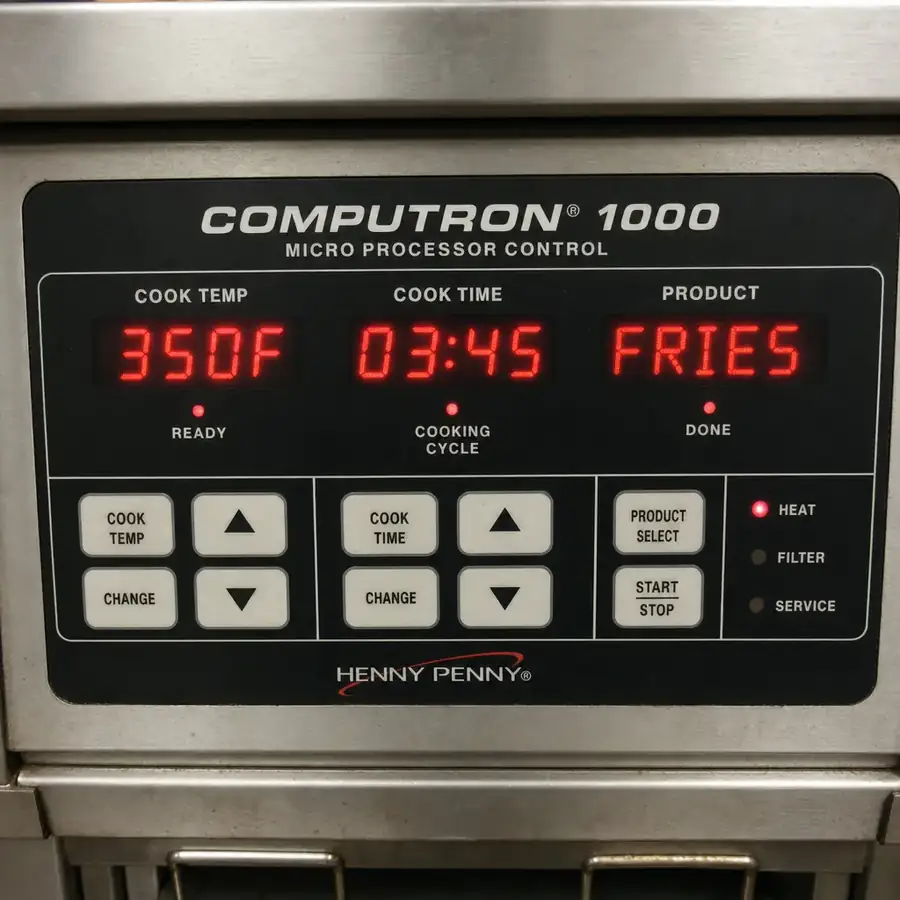
When comparing manual timers with Computron 1000 LED displays, the operational differences are stark. Manual timers require the cook to physically twist a dial or press a button on an external clock, then remember which timer corresponds to which basket.
The Computron 1000 allows operators to pre-program specific cook times for different menu items. A cook simply presses the "Fries" button, and the LED display begins counting down. Furthermore, the system often features "proportional control." If the system detects a significant drop in oil temperature (because a particularly large or frozen batch was dropped), the Computron 1000 will automatically adjust the cooking time, adding a few extra seconds to ensure the product is fully cooked. A manual timer cannot do this.
Calibrating Computron 1000 Digital Controls
To maintain this level of accuracy, routine calibration is necessary. Over time, heavy use can cause slight drifts in thermal sensor accuracy. Fortunately, calibrating Computron 1000 digital controls is a straightforward process that empowers restaurant managers to maintain their equipment without calling an expensive technician for minor adjustments.
Actionable Step-by-Step Calibration Tip:
- Turn on the fryer and set the temperature to a standard setpoint (e.g., 350°F).
- Allow the oil to heat and the burners to cycle on and off at least twice to ensure the temperature has stabilized.
- Using a high-quality, calibrated digital food thermometer, carefully measure the oil temperature right next to the fryer’s built-in probe (about one inch away).
- Compare your manual reading to the temperature displayed on the Computron 1000 LED screen.
- If there is a discrepancy of more than 5°F, enter the calibration mode on the Computron 1000 (usually accessed by pressing and holding the program button for several seconds, depending on the exact model version).
- Input the offset value to match your manual thermometer. This ensures the digital brain is reading the physical reality perfectly.
Advantage 4: Economic and Energy Efficiency
Running a commercial kitchen is incredibly expensive. Profit margins are notoriously thin, making equipment operating costs a primary concern for owners and investors.
Liquid Propane vs Electric Deep Fryer Operating Costs
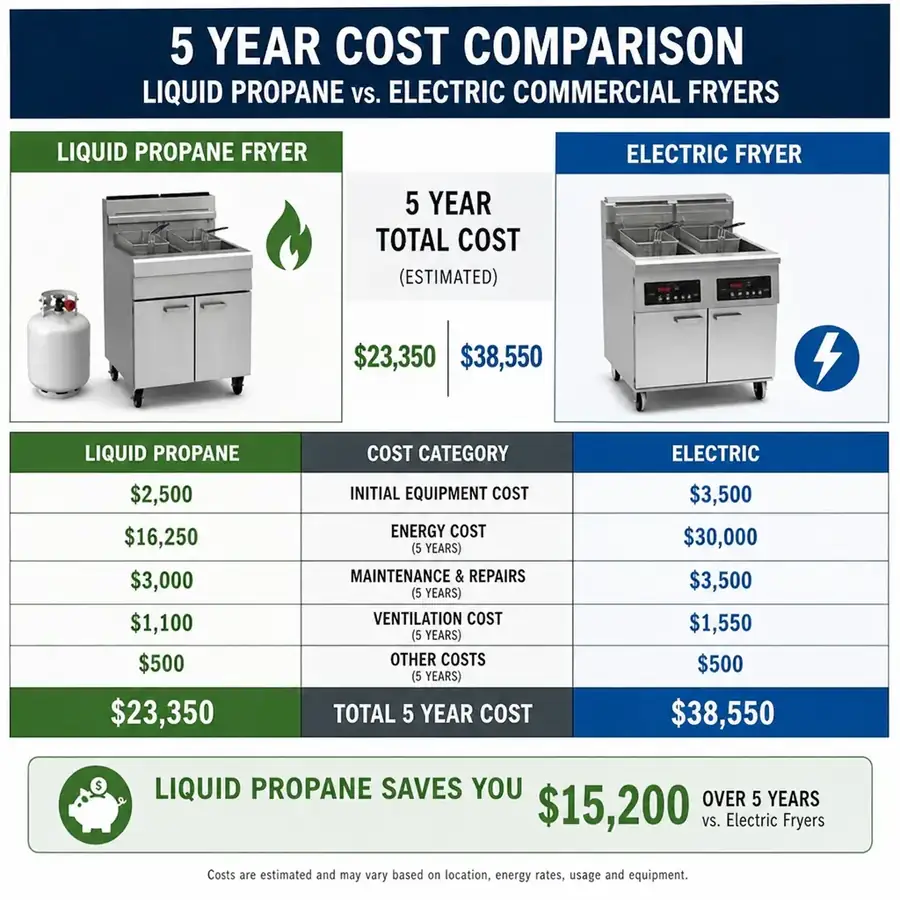
When outfitting a kitchen, operators frequently debate liquid propane vs electric deep fryer operating costs. While electric fryers are highly efficient at transferring heat directly into the oil (since the heating elements are submerged), liquid propane holds a distinct advantage in terms of raw utility costs in many regions.
Electricity pricing often involves peak demand charges. If your restaurant hits its maximum energy draw during the dinner rush, utility companies can penalize you with exorbitant rates. Propane, on the other hand, is purchased in bulk. You pay a flat rate per gallon regardless of when you use it.
Furthermore, a propane deep fryer typically boasts a lower total cost of ownership over its lifespan in high-volume settings. The heavy-duty cast-iron burners and heat exchangers found in a premium liquid propane fryer are incredibly durable, often outlasting the submersible elements of an electric fryer, which are prone to carbon buildup and burnout if not meticulously maintained.
Energy Efficiency of Liquid Propane Commercial Equipment
Modern engineering has vastly improved the energy efficiency of liquid propane commercial equipment. Today’s 3-well fryers utilize advanced baffle systems inside their heat exchange tubes. These baffles slow down the hot exhaust gases, forcing them to transfer maximum heat into the oil before escaping up the flue.
Combined with the Computron 1000’s idle mode—which drops the oil temperature to a cooler, energy-saving state during lulls in service—a modern 3-well liquid propane fryer uses significantly less fuel than models from just a decade ago, saving operators thousands of dollars annually.
Advantage 5: Advanced Oil Management and Sediment Control
Frying oil is one of the highest recurring consumable costs in a restaurant. If you do not manage your oil properly, it will break down quickly, smoking, foaming, and imparting bitter flavors to your food.
Cold Zone Sediment Management in Open Fryers
The physical design of a high-quality 3-well propane fryer usually incorporates an "open pot" or "tube-type" design with a designated "cold zone" at the very bottom of the vat.
Understanding cold zone sediment management in open fryers is critical for extending oil life. The cold zone is the area of oil situated beneath the heat exchangers or burner tubes. Because heat rises, the oil in this bottom V-shaped trough remains significantly cooler than the cooking oil above it—often up to 100 degrees cooler.
When breading falls off chicken or fries shed ice crystals and starch, these heavy particles sink past the heating elements and settle in the cold zone. Because the oil down there is cooler, the sediment does not continuously scorch and carbonize. If the sediment were allowed to burn, it would rapidly degrade the oil's chemical structure. The 3-well design amplifies this benefit; by dedicating specific wells to highly-breaded items, you contain the heavy sediment to one specific cold zone, keeping the oil in the other two wells pristine for much longer.
Integrating Built-in Filtration
Many modern 3-well liquid propane fryers are equipped with built-in filtration systems. With the push of a button on the Computron 1000 interface, operators can safely drain the oil from one well, pass it through a micron filter paper to remove microscopic sediment, and pump it back into the vat. Because there are three independent wells, you can filter Well 1 while continuing to cook and serve food out of Wells 2 and 3, ensuring zero downtime during operating hours.
Advantage 6: Streamlined Maintenance and Uncompromising Safety
No piece of commercial equipment is worth the investment if it is a nightmare to maintain or poses a danger to kitchen staff. The advantages of using a 3-well liquid propane fryer (Computron 1000) extend heavily into safety and ease of maintenance.
Following a Professional Maintenance Regimen
To protect your investment, routine maintenance is non-negotiable. While specific brand manuals vary, adopting principles found in a standard Henny Penny open fryer maintenance guide (or similar industry-leading manuals) will keep any 3-well LP fryer running like a dream.
Daily Maintenance:
- Wipe Down: Clean the stainless steel exterior with a mild degreaser to prevent sticky residue buildup.
- Filter Oil: Filter the oil in all three vats at least once a day (twice for heavy-breaded applications).
- Clean the Probes: Gently wipe the temperature probes connected to the Computron 1000 with a non-abrasive pad to ensure digital temperature precision.
Weekly Maintenance:
- Boil-Out: Drain the oil completely and perform a "boil-out" using a specialized deep fryer cleaner and water. The Computron 1000 often has a specific "Boil-Out" mode that safely heats the water without letting it reach a rolling, dangerous boil.
- Inspect Cold Zones: Ensure the drain valves in the cold zones are completely free of solidified sediment.
Gas Fryer Safety and Ventilation Requirements
When dealing with propane cooking equipment, safety must be the top priority. Liquid propane is heavier than air, meaning that in the event of a leak, the gas will pool near the floor rather than dissipate upward like natural gas.
Adhering to strict gas fryer safety and ventilation requirements is mandatory.
- Proper Exhaust Hoods: A 3-well commercial fryer produces a massive amount of heat and grease-laden vapor. It must be placed under a Type 1 commercial ventilation hood equipped with a fire suppression system (such as an ANSUL system).
- Make-up Air: The exhaust hood will pull massive amounts of air out of the kitchen. A proper make-up air system is required to replace that air, ensuring the LP burners on the fryer receive enough oxygen to burn cleanly and efficiently.
- Clearances: Always maintain the manufacturer's recommended clearances at the back and sides of the fryer to allow for proper airflow and to prevent combustible walls from overheating.
- Tethering: Mobile 3-well fryers on casters must be tethered to the wall. This prevents the fryer from being pulled too far forward during cleaning, which could rupture the liquid propane gas line.
Overcoming the Challenges of High-Volume Frying
Even with the best equipment in the world, high volume commercial frying efficiency requires trained staff. The beauty of combining a 3-well liquid propane fryer with the Computron 1000 is how drastically it flattens the learning curve for new employees.
In an industry currently facing massive labor shortages and high turnover rates, you cannot always rely on veteran fry cooks who know instinctively when a basket of fries is perfectly cooked by the sound of the sizzle. You need systems that guarantee consistency regardless of who is working the line.
By locking in your recipes via the Computron 1000, utilizing the rapid recovery of the propane burners, and isolating foods in the 3-well layout, you are essentially idiot-proofing your fry station. The machine dictates the time and temperature; the cook simply loads, drops, and pulls when the alarm sounds. This allows management to deliver consistent, five-star quality food, even with entry-level back-of-house staff.
Summary of the 3-Well Computron 1000 Advantage
To fully appreciate the advantages of using a 3-well liquid propane fryer (Computron 1000), let’s summarize the transformative impact it has on a commercial kitchen:
- Unrivaled Efficiency: The high liquid propane BTU output for rapid heating guarantees that recovery times are virtually non-existent, maximizing high demand commercial kitchen throughput.
- Culinary Integrity: The physical separation of the 3-well liquid propane fryer is the ultimate defense for preventing flavor transfer between fryer wells, protecting the taste profile of every dish.
- Smart Technology: Comparing manual timers with Computron 1000 LED displays highlights a leap in operational control. The digital temperature precision for consistent food quality ensures perfection in every basket.
- Cost Management: When evaluating liquid propane vs electric deep fryer operating costs, LP's flat-rate utility structure and the impressive energy efficiency of liquid propane commercial equipment provide long-term financial relief.
- Oil Preservation: Intelligent cold zone sediment management in open fryers keeps oil cleaner, longer, drastically reducing consumable costs.
Shop Commercial Fryers at The Horeca Store
Looking for a reliable 3-well liquid propane fryer for your commercial kitchen? The Horeca Store offers a wide range of professional restaurant equipment and cooking solutions designed for foodservice operations. Explore our selection of commercial fryers to find equipment that fits your cooking volume, kitchen layout, and operational requirements, helping your team deliver consistent results during every service.
Conclusion
Surviving and thriving in the restaurant industry requires more than just a good recipe; it requires the right tools to execute that recipe perfectly, hundreds of times a day, under immense pressure.
Investing in a 3-well liquid propane fryer equipped with Computron 1000 controls is not just an equipment upgrade—it is a strategic business decision. It is about simplifying kitchen workflow with independent fryer wells so your staff can breathe easier during a rush. It is about reducing oil recovery time in multi-well units so your customers never have to wait for sub-par food. And ultimately, it is about harnessing the raw, efficient power of propane cooking equipment to drive consistency, quality, and profitability in your commercial kitchen.
By understanding the hardware, leveraging the digital controls, and committing to proper maintenance and safety, operators can turn their fry station into the most reliable and lucrative component of their entire culinary operation.