
Walking into a bustling dining room, hearing the clinking of glasses, and smelling the aroma of perfectly seared steak can make anyone fall in love with the restaurant industry. It is a business built on passion, creativity, and hospitality. Yet, if you ask industry veterans about the reality of ownership, they will tell you that passion alone does not pay the bills.
In fact, a common question aspiring restaurateurs ask is: why do most restaurants fail financially? The harsh truth is that they do not fail because the food is bad or the service is lacking. They fail because the operators lose track of the math. Running a successful eatery requires a deep understanding of specific restaurant survival metrics that dictate your daily, weekly, and monthly operational health.
If you want to move past simply keeping your head above water and start building a profitable enterprise, you need to rely on concrete data. This means mastering the 3 numbers that decide if your restaurant survives.
In this comprehensive guide, we are going completely under the hood of restaurant finance. We will explore essential restaurant financial health metrics, demystify complex accounting jargon, and provide you with actionable tools to turn your business into a well-oiled, profit-generating machine.
Let us dive into the three non-negotiable numbers every restaurant owner must know by heart.
Number 1: Prime Cost (The Heavyweight of Restaurant Expenses)
If you only have time to look at one metric on your profit and loss (P&L) statement, make it your Prime Cost. It is the absolute holy grail of restaurant performance metrics.
What is Prime Cost?
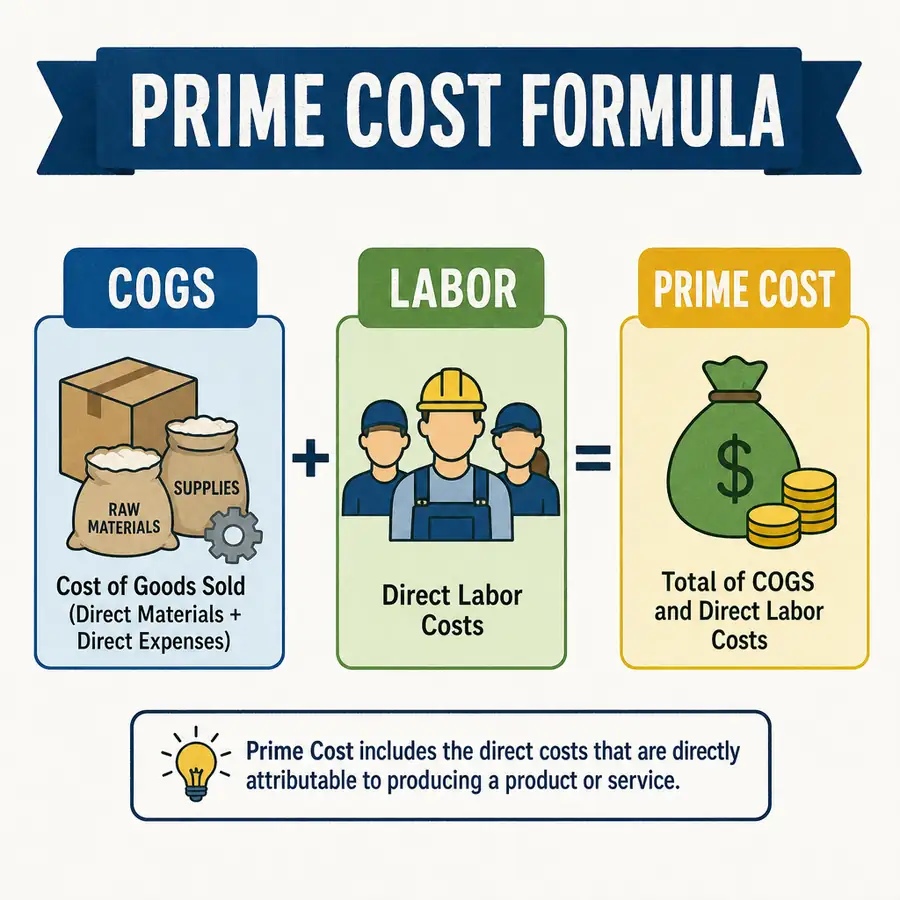
Prime cost represents the bulk of your controllable expenses. It is the combination of your total Cost of Goods Sold (COGS) and your total Labor Costs. Because these two categories eat up the largest portion of your revenue, keeping them in check is the most direct path to profitability.
Unlike fixed overhead expenses (like rent or insurance), prime costs are highly dynamic. They fluctuate based on your sales volume, the season, your scheduling, and even how carefully your kitchen staff preps ingredients. Understanding the relationship between prime cost vs total operating expenses is critical. While operating expenses include everything from marketing to utility bills, your prime cost focuses strictly on what it takes to produce your menu items and serve your guests.
Restaurant Prime Cost Calculation Guide
To calculate your prime cost, you simply add your COGS to your total labor costs.Formula:
Prime Cost = Total COGS + Total Labor Costs To find your Prime Cost Percentage (which is how you will benchmark your success), you divide that number by your total sales.Formula: Prime CostPercentage = (Prime Cost / Total Sales) x 100 What is a good prime cost percentage?Industry standardsdictate that a healthy, profitable restaurant should maintain a prime cost between60%and 65%. If your prime cost creeps up to 70% or higher, your margins will shrink to a point where one slow week could jeopardize your business.
Deep Dive into COGS (Food and Beverage Costs)
Your Cost of Goods Sold represents exactly how much you are spending on the ingredients and beverages that go out to your guests. Proper Cost of Goods Sold management is the first half of the prime cost equation.
To calculate COGS accurately for a given period, use this formula:Beginning Inventory + Purchases - Ending Inventory = COGS A common question among new operators is:what isa good food cost percentage?Generally, a healthy food cost sits between 28% and 32% of your food sales. However, this varies by concept. A high-end steakhouse might run a 35% food cost because the raw ingredients are incredibly expensive, but the high check average offsets the percentage. Conversely, a pizza shop or a breakfast diner might run a food cost closer to 20% due to the low cost of flour and eggs.
Actionable Tips for COGS Management
- Implement Strict Inventory Practices:You cannot managewhat you do not measure.
Conduct physical inventory counts weekly-not monthly.
- Focus on Inventory Turnover Ratio Optimization:Yourinventory turnover ratio tells
you how many times you sell and replace your stock over a period. If your ratio is too low, you have too much cash tied up in raw ingredients sitting on shelves and commercial shelving, risking spoilage.
Aim to order smaller amounts more frequently. Organized prep table workflows reduce waste during busy prep windows.
- Standardize Recipes:Every cook should make your signaturedish exactly the same
way. Over-portioning by just an ounce per plate can decimate your food cost percentage over a year.
Managing Restaurant Labor Cost Ratios
The second half of your prime cost is labor. Managing restaurant labor cost ratios is notoriously difficult in today’s climate of rising minimum wages and staff shortages. Total labor cost does not just mean hourly wages; it includes salaried management, payroll taxes, workers' compensation, and employee benefits.
Ideally, your labor cost should hover between 25% and 30% of your total gross sales.
How to Optimize Labor Costs
- Focus on Measuring Restaurant Labor Productivity:Look at your Sales Per Labor
Hour (SPLH). Divide your total sales for a shift by the number of labor hours worked. If your SPLH is low on a Tuesday afternoon, you are overstaffed.
- Cross-Train Your Staff:A bartender who can take tables,or a prep cook who can run the
dishwasher, makes your roster infinitely more flexible. This prevents you from having to call in extra hands during an unexpected rush.
- Use Food Service Analytics:Modern POS systems offerrobust analytics that predict
sales volume based on historical data and weather patterns. Use these tools to write smarter schedules rather than guessing how many servers you need.
By aggressively managing both COGS and Labor, you ensure that your Prime Cost stays within the survival zone, leaving enough room to pay for overhead and ultimately, take home a profit.
Number 2: The Break-Even Point (Your Financial Safety Net)
Once you have a grip on your prime costs, the next step is determining your baseline for survival. If you do not know exactly how much money you need to make to keep the lights on, you are flying blind. This is why understanding how to calculate restaurant break even point is non-negotiable.
What is the Break-Even Point?
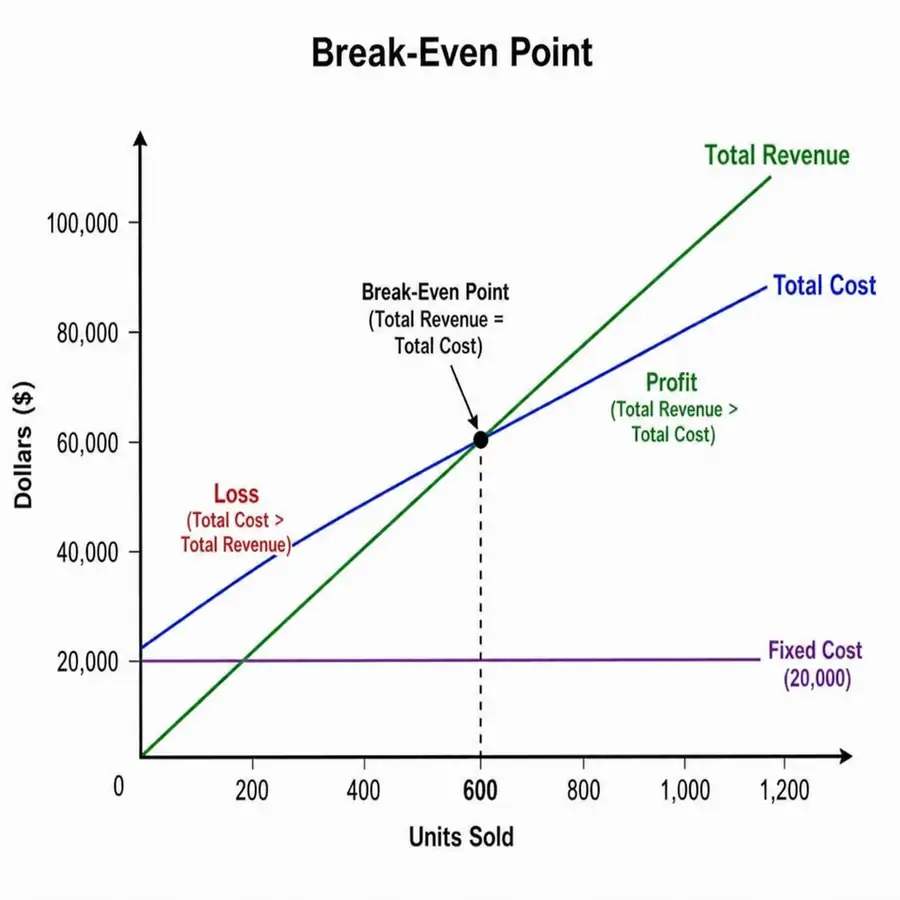
Your break-even point is the exact sales volume at which your restaurant neither makes a profit nor suffers a loss. Total revenues equal total expenses. Every dollar madebelowthis point is money burned; every dollar madeabovethis point startscontributing to your actual profit.
Knowing this number turns abstract financial fears into a tangible target. Instead of hoping for a "good month," you can tell your management team, "We need to hit $4,500 in sales a day just to break even." It aligns your entire operation around a concrete goal.
Fixed vs Variable Restaurant Costs
To calculate your break-even point accurately, you must first categorize every expense in your business into two buckets: fixed vs variable restaurant costs.
- Fixed Costs:These are the expenses that stay thesame regardless of how many guests
walk through your doors. Whether you serve one customer or a thousand, these bills are due.
- Rent or mortgage payments
- Insurance premiums
- Salaries (for management or fixed-wage staff)
- Loan payments
- Permits and licensing
- Base utility costs (like internet or phone lines)
- Variable Costs:These expenses fluctuate in directproportion to your sales volume.
- Cost of Goods Sold (food, beverage, packaging)
- Hourly wages (the more guests, the more staff you need)
- Credit card processing fees
- Certain utilities (water and gas usage will spike during busy periods)
How to Calculate Restaurant Break Even Point
Calculating your break-even point involves a straightforward formula, but you need accurate data from your P&L statement to do it right.
The Formula:Break-Even Point = Total Fixed Costs/ ((Total Sales - Total Variable Costs) / Total Sales)
Let’s look at a practical example:Imagine your restauranthas $15,000 in Fixed Costs for the month. Last month, your Total Sales were $60,000, and your Total Variable Costs (COGS, hourly labor, etc.) were $40,000.
- First, determine your variable cost margin: ($60,000 - $40,000) / $60,000 = $20,000 /
$60,000 = 0.33 (or 33%).
- Next, divide your fixed costs by this margin: $15,000 / 0.33 = $45,454.
In this scenario, your monthly break-even point is$45,454. Divide that by 30 days, and your daily break-even point is roughly$1,515.
If your POS tells you that you only made $1,200 on a Tuesday, you know you are in the red for that day and need to make up the difference by the weekend.
Why This Metric Matters for Survival
Your break-even point is one of the most critical restaurant survival metrics because it informs your pricing strategy, your operating hours, and your marketing budget. If your break-even point requires you to generate $3,000 a day, but your dining room only holds 40 seats, you have a fundamental structural problem. You would need unrealistic table turnover rates to survive.
Strategies to Lower Your Break-Even Point
If your break-even number is uncomfortably close to your maximum revenue capacity, you need to act fast. Lowering your break-even point requires a two-pronged approach: raising prices or reducing restaurant operational expenses.
- Renegotiate Fixed Costs:Talk to your vendors, insurance brokers, and even your
landlord. Can you get a better rate on waste disposal? Can you switch to a more cost-effective POS system to lower monthly fees? Every fixed dollar saved lowers your break-even point exponentially.
- Menu Engineering:Promote high-margin items. A plateof pasta costs pennies to make
but can sell for $20. Training your staff to suggestively sell these items increases revenue without significantly raising variable costs.
- Audit Operating Hours:If your daily break-even pointis $1,500, but your lunch service
only brings in $300 while costing $400 in labor and utilities, you are actually losing money by being open for lunch. Closing during unprofitable hours immediately lowers variable costs and helps secure your bottom line.
Number 3: Gross Profit Margin and Cash Flow (The Fuel for Growth)
You have mastered your prime costs and you hit your break-even point consistently. Are you safe? Not necessarily. Survival requires a safety net, but growth requires cash. The third critical pillar in the 3 numbers that decide if your restaurant survives is your Gross Profit Margin, which directly feeds into your overall cash flow.
What is Gross Profit Margin?
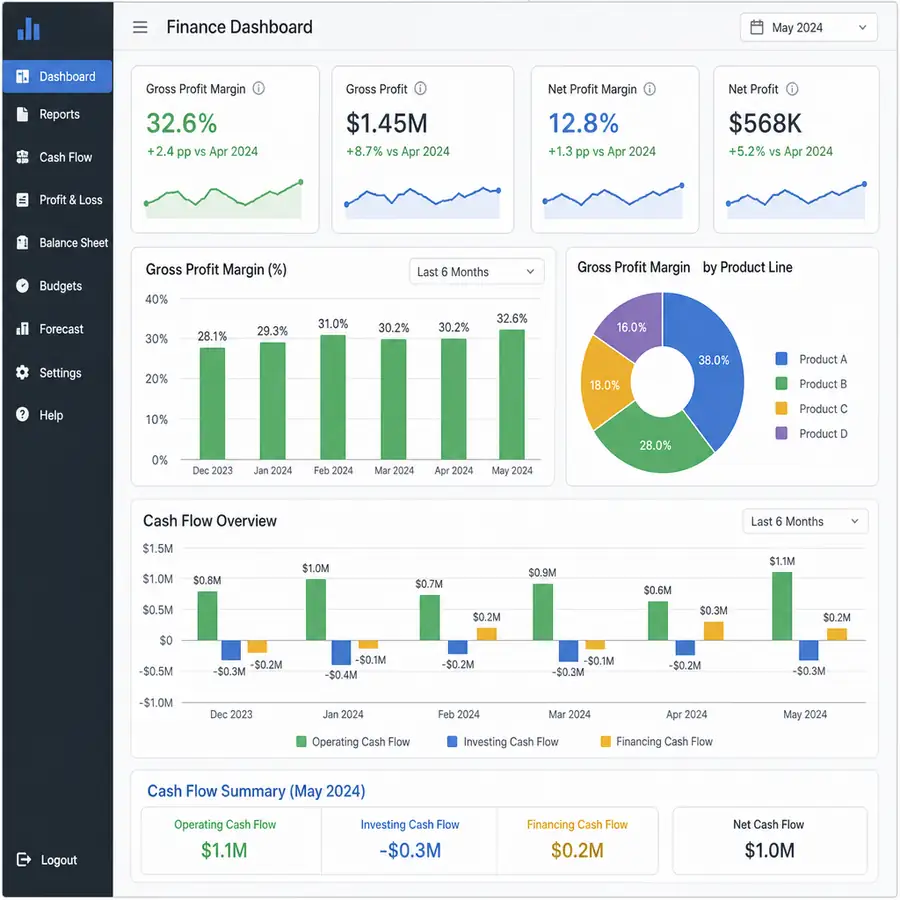
Gross profit margin is the percentage of total sales revenue that you retain after incurring the direct costs associated with producing your food and beverages (your COGS).
While prime cost includes labor, gross profit margin traditionally isolates the relationship between your menu prices and your ingredient costs. It is the purest indicator of whether your menu is priced correctly.
Gross Profit Margin Analysis for Owners
Performing a gross profit margin analysis for owners is a vital monthly exercise.
The Formula:Gross Profit = Total Revenue - Cost ofGoods Sold (COGS)Gross Profit Margin = (Gross Profit / Total Revenue) x 100 For example, if you sell a gourmet burger for $15, and the bun, meat, cheese, and garnish cost you $4.50, your gross profit on that item is $10.50. Your gross profit margin for that burger is ($10.50 / $15.00) x 100 =70%.
Why is this important?Because that 70% is what youuse to pay for everything else. That $10.50 gross profit has to cover the cook's hourly wage, the electricity to run cooking equipment and the grill, the rent for the building, the marketing to get the customer in the door, and ultimately, your own salary.
If your gross profit margin is too low-say, 50%-you simply will not have enough leftover cash to cover operating expenses, regardless of how busy your dining room is. Improving restaurant profit margins is fundamentally about widening the gap between what you charge and what you spend on raw materials.
Bridging the Gap: From Margin to Cash Flow
A healthy gross profit margin is great on paper, but you cannot pay vendors with percentages.
You pay them with cash. This brings us to the vital practice of deploying effective restaurant cash flow management strategies.
Many profitable restaurants have been forced to close their doors because they ran out of cash.
How is this possible? Because cash flow is about thetimingof money moving in and out of your business.
If you just paid $10,000 for a massive wine inventory (which hurts your cash flow today) but it will take you six months to sell that wine (which realizes your gross profit), you might struggle to make payroll next week.
Restaurant Cash Flow Management Strategies
- Vendor Payment Terms:Negotiate Net-15 or Net-30 termswith your suppliers. If you
can sell the food to your customers before you actually have to pay the vendor for the ingredients, you create positive cash flow.
- Manage Capital Expenditures:Do not buy a brand-new$20,000 walk-in freezer and commercial freezer with
cash if it depletes your operating reserves. Look into equipment financing or leasing to keep cash in the bank for emergencies.
- Maintain a Cash Reserve:Aim to keep at least threeto six months' worth of fixed
operating expenses in a liquid savings account. The restaurant industry is unpredictable-equipment breaks, pipes burst, and global events disrupt supply chains.
Cash reserves are your ultimate insurance policy.
Tactics to Boost Gross Profit Margin
If your gross profit margin analysis reveals that you are leaving money on the table, you must take immediate corrective action:
- Strategic Price Increases:Do not raise prices acrossthe board uniformly. Use menu
psychology. A 50-cent increase on a best-selling appetizer might go entirely unnoticed by guests but will drop thousands of dollars of pure profit to your bottom line over the year.
- Waste Reduction Programs:Every ounce of food thrownin the trash is gross profit
destroyed. Track waste rigorously. If you find your kitchen throwing away expired produce, your ordering pars are too high.
- Portion Control Enforcement:Buy portion scales andstandardize ladles. If a recipe
calls for 4 ounces of fries, do not let cooks grab handfuls. Consistency protects your margin and ensures guests receive the same experience every time.
Connecting the Dots: Building a Financial Ecosystem

Understanding the 3 numbers that decide if your restaurant survives-Prime Cost, Break-Even Point, and Gross Profit Margin-is not a one-time exercise. These metrics must form the core of a continuous financial ecosystem.
You cannot view these numbers in isolation. For instance, if you aggressively cut labor to improve yourPrime Cost, customer service might suffer.Poor service leads to fewer returning guests, which drops your total sales. Dropping sales means you will struggle to hit your Break-Even Point. Struggling to break even puts immensepressure on yourCash Flow. It is a delicate balancing act.
To maintain this balance seamlessly, leverage modernfood service analytics. The days of calculating these metrics with a pencil and ledger are over. Invest in a robust Point of Sale (POS) system integrated with dedicated restaurant accounting software and inventory management tools. Reliable refrigeration, a commercial refrigerator, and commercial refrigeration planning also protect food cost accuracy. Operators should also budget carefully for restaurant equipment, kitchen equipment, food prep equipment, and prep stations. These systems can track your COGS in real-time, generate automated prime cost reports, and alert you when your labor ratios are trending too high before the week even finishes.
Ultimately, financial mastery turns a reactive owner into a proactive leader. When you know your numbers, you stop managing by emotion and start managing by facts. You can confidently approve a marketing campaign because you know exactly how many extra covers it takes to break even on the ad spend. You can confidently give a high-performing manager a raise because you have calculated exactly how their improved labor productivity offsets the wage increase.
Conclusion
The restaurant industry will always be challenging, fiercely competitive, and demanding. But it does not have to be a financial mystery. By diligently monitoring yourPrime Cost(keeping COGS and labor tight), knowing exactly where yourBreak-Even Pointlies, and rigorously defending yourGross Profit Marginto ensure positivecash flow, you insulate your business against the most common pitfalls of the industry.
Passion gets you into the restaurant business; mastering the numbers keeps you in it. Pair strong financial controls with the right commercial kitchen equipment and restaurant supplies so operations stay efficient. Start pulling your reports today, apply the formulas outlined in this guide, and take absolute control of your restaurant's financial destiny. Your future self-and your bottom line-will thank you.