

Top Undercounter Refrigerators for Small Commercial Kitchens
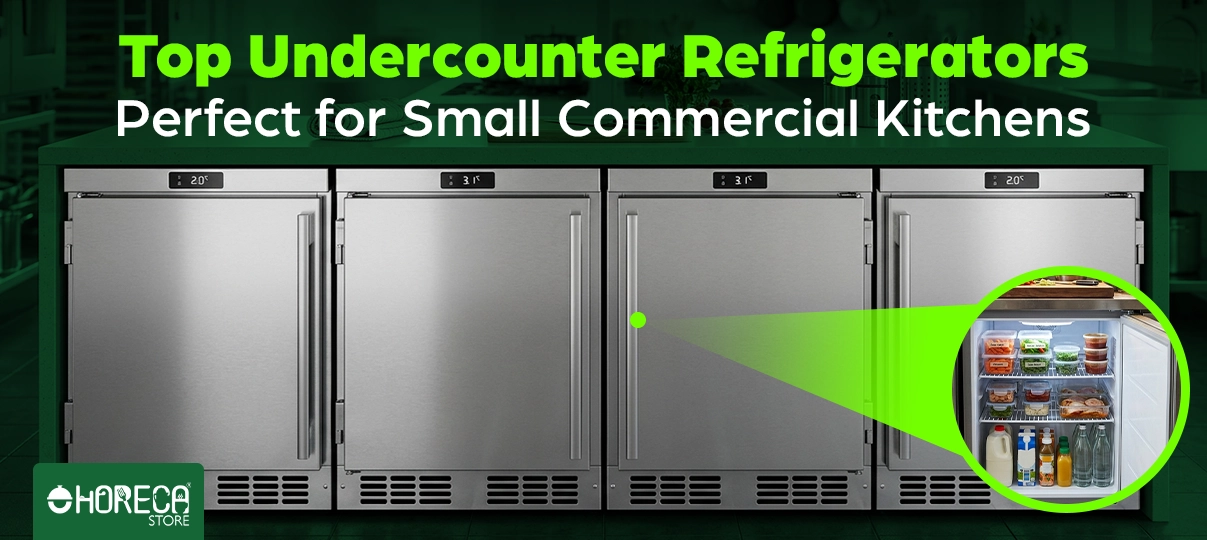
Table of Contents
Most new cafe owners hesitate when they see the price gap between a standard home fridge and a commercial undercounter unit. While a residential model works perfectly in an air-conditioned apartment, it often fails catastrophically when placed next to a hot oven or dishwasher. Industry experience indicates that residential compressors typically burn out quickly when battling the high ambient temperatures of a working kitchen, turning a bargain purchase into an expensive emergency.
You must also account for the "Lunch Rush Stress Test." A home refrigerator might be opened ten times a night, but a prep station unit often endures fifty openings an hour. Commercial systems utilize high-frequency door-opening recovery technology to blast cold air the moment the door shuts, ensuring ingredients stay safe despite constant access.
Then there is the absolute hurdle of legal compliance. Health inspectors specifically look for the NSF/ANSI certification mark, which proves a unit meets rigorous sanitation and temperature performance standards. Installing non-compliant equipment frequently leads to failing a health check, forcing business owners to replace brand-new appliances to stay open.
Selecting the right undercounter refrigerators for small kitchens is ultimately a calculation of risk versus reward. By prioritizing NSF-certified compact cooling units designed for commercial airflow, you protect your inventory and avoid the financial sting of downtime. Here is how to choose equipment capable of maintaining food safety without breaking your budget.
Does Your Fridge Have Room to Breathe? The Front-Breathing Advantage
In a tight commercial kitchen, where you place your equipment is just as important as what you buy. Residential refrigerators usually breathe from the back, requiring several inches of "elbow room" against the wall to exhale hot air. If you shove a rear-breathing commercial unit into a tight cabinetry slot, that heat gets trapped, forcing the compressor to run nonstop until it eventually burns out. This is where front-breathing refrigeration for tight spaces saves the day. These units pull cool air in and push exhaust out through a front grille, acting like a built-in dishwasher that can slide seamlessly between cabinets without overheating.
"Zero-clearance" installation is the industry term for this capability, allowing you to maximize every square inch of your floor plan. However, not all undercounter fridge models offer this luxury. Some budget-friendly units vent from the side or rear, which demands specific spacing to prevent failure. Before ordering, grab a tape measure and verify your setup with this quick safety checklist:
- Check the Rear Gap: Ensure rear-breathing models have at least 3–4 inches of "breathing room" from the back wall.
- Inspect the Sides: If the unit vents laterally, follow the manufacturer's guide on how to measure clearance for undercounter appliances, typically requiring 1 inch of open space on either side.
- Clear the Intake: Verify that floor mats or dropped linens won’t block the front grille, which suffocates the compressor.

Door vs. Drawer: Choosing the Right Access Pattern for Your Workflow
Deciding how your staff accesses ingredients is just as critical as where the unit sits. While a standard door feels familiar, it often forces staff to crouch and dig into the dark back corners of a shelf, costing valuable time during a rush. This is the core ergonomic trade-off when evaluating commercial drawer refrigerators vs door models. Drawers function like filing cabinets for food, bringing the ingredients out to the cook for rapid access without bending, whereas doors generally serve better for restocking or accessing items that aren't needed every few minutes.
Capacity also shifts significantly between these two styles. You might assume that identical exterior dimensions equal the same internal storage, but drawer slides and hardware consume internal volume, often reducing usable space by roughly 10% to 15%. That trade-off buys you organization, as drawers are pre-sized to hold standard food pans perfectly. In contrast, door units provide a large, open cavity ideal for tall items like milk gallons, kegs, or stacked bulk boxes that simply would not fit inside a shallow drawer compartment.
Floor space dictates the final decision, specifically regarding the "swing radius." A door needs room to arc open, which can completely block a narrow walkway in a food truck or tight galley kitchen, creating a traffic jam every time someone grabs a lemon.
Navigating the Legal Maze: NSF Certification and ADA Compliance
Nothing stops a kitchen inspection faster than equipment that traps bacteria or corrodes under daily use. While residential appliances often use plastic or lower-grade metals, commercial environments demand surfaces that resist harsh cleaning chemicals and acidic food spills. NSF-certified compact cooling units are built to these rigorous standards, verifying that the equipment is non-porous and easy to sanitize. Specifically, look for units constructed with 300-series stainless steel. This alloy contains nickel, making it highly resistant to rust and pitting—critical if you plan to store acidic ingredients like tomato sauce or citrus juice near the unit's exterior.
Accessibility laws strictly dictate the physical footprint of your equipment, specifically regarding counter height. If you are designing a front-of-house service area, a standard unit will likely be too tall to meet ADA compliant commercial refrigeration requirements. These mandates require accessible counters to be no higher than 34 inches, meaning the fridge beneath must be even shorter to fit. Manufacturers achieve this with low profile fridges that modify the compressor housing or wheel size.
- Standard Commercial Height: 35"–36" (Aligns with standard kitchen prep tables; typically uses 5"–6" casters).
- ADA Compliant Height: 32"–34" (Fits under accessible counters; typically uses 2.5"–3" low-profile casters).
Heavy-Duty Worktops: When Your Fridge Doubles as a Countertop
In a cramped galley kitchen, horizontal surface area is often more valuable than gold. You cannot afford an appliance that merely keeps ingredients cold; it must also serve as a sturdy prep station. Unlike standard undercounter models designed to slide beneath existing cabinetry, heavy-duty stainless steel worktop refrigeration comes with a reinforced top. These units are engineered to support the weight of heavy slicers or commercial blenders, effectively acting as space-saving reach-in coolers for food trucks and tiny cafes where every square inch of counter space is active territory.
Spills are inevitable during a lunch rush, but they become a major sanitation issue if liquids run down the back of the unit where you cannot clean. To combat this, many worktop units feature a "marine edge"—a raised lip around the perimeter that acts like a dam for spilled milk or vegetable juices. This simple design choice keeps messes contained on the stainless steel surface for a quick wipe-down, preventing sticky residue from seeping into the condenser coils or floor gaps.
Selecting these robust units ensures your kitchen remains efficient and sanitary, but physical durability is only half the battle in a customer-facing business. If you are placing this equipment near the register, the mechanical hum of a powerful compressor might unintentionally drown out your customers' orders.

The Best Units for Coffee Shops and Small Cafes: Quiet and Precise
Ambience is everything in a cafe. When your refrigeration sits front-of-house, the mechanical hum of a compressor shouldn't compete with your background jazz or conversation. Unlike back-of-house prep kitchens where noise is expected, the quietest undercounter commercial fridges are designed with sound-dampening insulation to ensure the only thing your customers hear is the grinder.
Heat management is the invisible killer in coffee bars. You are likely placing this unit next to an espresso machine or panini press, which generates a localized heat bubble far hotter than the rest of the shop. Standard units struggle here, so look for best under-bench chillers for small cafes that carry a "High Ambient Temperature" rating. This specification guarantees the motor can handle intake air over 100°F without overheating. Equally important is the recovery cycle; during the morning rush, that door opens every 30 seconds. You need a powerful system that can blast cold air to recover the safe zone temperature instantly between pulls.
To ensure your milk stays safe without driving up energy bills, prioritize these specific features:
- External Digital Displays: These allow you to verify safe temps at a glance without opening the unit and letting cold air escape.
- Front-Breathing Intake: Essential for digital temperature control for walk-behind coolers built directly into cabinetry so the motor doesn't suffocate.
- Self-Closing Doors: A spring-loaded mechanism that prevents "door bounce" when baristas are moving fast.
While cafes deal with heat and noise, mobile kitchens face a literal bumpy road.
Powering the Food Truck: Vibration-Resistant and Energy-Efficient Cooling
Taking your kitchen on the road changes the physics of equipment survival. Unlike a stationary brick-and-mortar restaurant, a mobile kitchen subjects its appliances to what is essentially a low-grade earthquake every time you drive to a new location. Standard compressors can rattle loose over time, leading to refrigerant leaks or motor failure. You need durable swing door units specifically reinforced for transport, featuring heavy-duty hinges and positive latching mechanisms that ensure your ingredients don't spill across the floor when you hit a pothole.
Power management is just as critical as physical durability when every amp is drawn from a limited generator. High-draw appliances can trip breakers during a service peak, shutting down your operation instantly. Investing in Energy Star rated low profile fridges offers a tangible ROI by reducing the continuous load on your power source, allowing you to run other high-wattage equipment like blenders or warmers without overloading the system. This efficiency translates directly to fuel savings and protects your generator from premature wear.
Inside the truck, the layout is often restricted to a tight "5x5 work triangle" where movement is minimal and efficiency is paramount. You simply cannot afford "dead space" caused by doors that swing too wide or units that require six inches of clearance for airflow. Space-saving reach-in coolers for food trucks are often designed as "zero-clearance" models, meaning they can be flush-mounted against walls or other equipment to maximize every square inch of your floor plan.

Maintaining Your Investment: The 5-Minute Coil Clean and Temperature Log
Your refrigerator acts less like a cold storage box and more like a heat pump. The condenser coil is the component responsible for dumping hot air out of the unit, but it acts like a magnet for flour, grease, and dust. When debris clogs this airway, the compressor effectively suffocates. This forces the motor to run continuously, leading to skyrocketing electric bills and premature failure—often just after your warranty expires.
Solving this issue rarely requires calling a professional. Cleaning condenser coils in limited access areas usually involves popping off the front grille and using a stiff brush and vacuum to remove the buildup. This five-minute task is critical for high-ambient temperature performance, ensuring your unit doesn't overheat and shut down during a sweltering summer lunch rush.
Mechanical failure isn't the only risk; invisible spoilage is a business killer. Maintaining food safety in compact kitchens requires active temperature logging, which serves as your early warning system. If you see the internal temperature creeping up from 35°F to 40°F over several days, your logbook has just warned you of a struggling compressor before you lose hundreds of dollars in spoiled inventory.
Protect your bottom line with this simple monthly rotation:
- Week 1: Wipe door gaskets with warm water to ensure an airtight seal.
- Week 2: Vacuum the condenser coil to restore airflow.
- Week 3: Calibrate the internal thermometer against a handheld probe.
- Week 4: Inspect hinges and latches for wear.
Your 3-Step Selection Strategy for the Perfect Kitchen Fit
Finding the right equipment for a compact space is no longer a guessing game. You now have the insight to distinguish between a unit that simply fits physically and one that thrives operationally. Whether you need a front-breathing workhorse for a crowded coffee bar or a high-capacity storage unit for prep, the choice comes down to matching the machine’s endurance to your specific workflow.
Before committing to a purchase, execute a final site check. Measure your available footprint again, but this time strictly account for that critical "breathing zone" to prevent overheating. Verify that your top choice carries the necessary NSF or ADA certifications for your local inspector, and ensure the door configuration supports your staff during the busiest hour of service rather than hindering them.
Ultimately, ask yourself the pocketbook question: is saving a small amount upfront worth the risk of a mid-service breakdown? Investing in one of the top undercounter refrigerators for small commercial kitchens is really an investment in business continuity. Your kitchen layout may be small, but with the right cold storage foundation, your operational capacity will be professional-grade from day one.

About Mike Anderson
Commercial Refrigeration & HORECA Industry Expert
The author is a seasoned specialist in commercial refrigeration systems, sharing practical insights to help hospitality businesses select the right equipment for efficiency, food safety, and long-term cost savings. With over 15 years of industry experience, he stays updated on global trends in energy-efficient and sustainable cooling solutions.
Frequently Asked Questions
An undercounter refrigerator is a compact commercial refrigeration unit designed to fit beneath standard countertops. It is ideal for small kitchens because it saves floor space while keeping ingredients within easy reach. These units typically range from 5 to 13 cubic feet in capacity and are widely used in restaurant kitchens, cafés, and food trucks for efficient workflow and space optimization.
An undercounter refrigerator should maintain temperatures between 33°F and 40°F (0°C to 4°C) to meet FDA food safety standards. Consistent temperature control prevents bacterial growth and ensures safe storage of perishable foods. Many commercial units include digital thermostats for precise control and monitoring in foodservice environments.
The best size depends on available space and storage needs, with most units ranging from 24 to 48 inches wide. Smaller 24-inch units suit tight kitchens, while 36–48 inch models provide more storage for higher demand. Choosing the right size ensures efficient use of limited kitchen space without compromising accessibility or performance.
Key features include stainless steel construction, digital temperature controls, adjustable shelves, and energy-efficient compressors. Many models also include auto-defrost systems and eco-friendly refrigerants like R290. These features improve durability, maintain consistent cooling, and reduce maintenance in commercial kitchen environments.
NSF certification is important because it ensures the refrigerator meets strict food safety and sanitation standards. NSF-certified units are designed for safe food storage and easy cleaning, making them suitable for restaurant kitchens and regulated foodservice environments. This certification is often required for compliance with health codes.
Small commercial kitchens typically require undercounter refrigerators with 5 to 12 cubic feet of storage capacity. This range provides enough space for essential ingredients while maintaining efficient airflow. Choosing the right capacity helps prevent overloading, which can affect cooling performance and food safety.
Undercounter refrigerators improve workflow by placing ingredients directly at prep stations, reducing movement between storage and work areas. This setup saves time during peak hours and increases efficiency in fast-paced restaurant kitchens. Their compact design also allows integration into existing workspaces without disrupting operations.
Common types include standard undercounter refrigerators, worktop refrigerators, and prep table units. Standard units focus on storage, worktop models provide a usable surface, and prep tables include ingredient pans for food assembly. Each type is designed to support specific tasks in commercial kitchens and improve operational efficiency.
Undercounter refrigerators can be energy efficient when equipped with modern compressors and insulation. Many units use eco-friendly refrigerants like R290 and smart cooling systems that adjust output based on demand. Energy-efficient models reduce electricity consumption and operating costs in small commercial kitchens.
Undercounter refrigerators typically last 7 to 10 years with proper maintenance, including regular cleaning and servicing. High-quality models with stainless steel construction and efficient compressors tend to last longer. Routine maintenance ensures consistent performance and reduces the risk of breakdowns in commercial foodservice operations.
Comments
0 comments
Login to Comment
Join the conversation! Please log in to share your thoughts.
No comments yet
Be the first to share your thoughts!