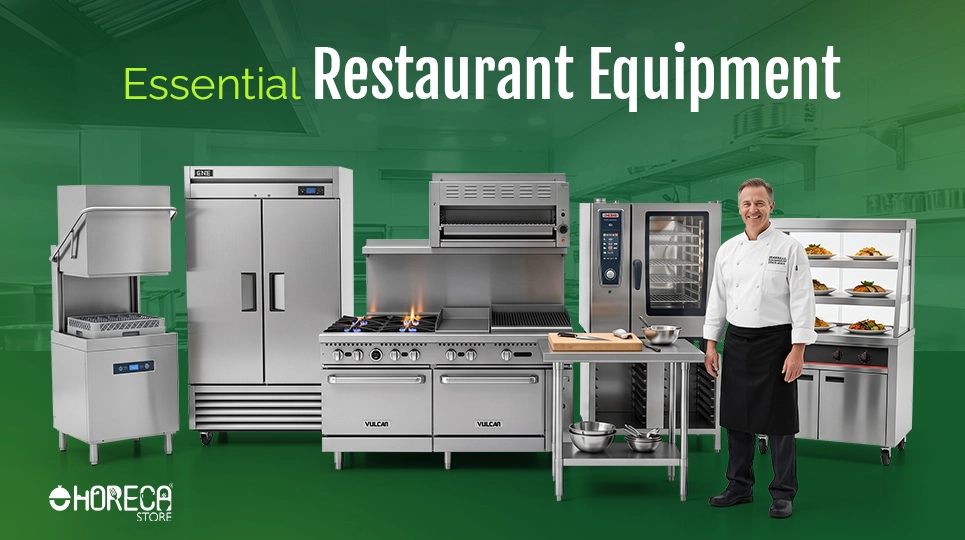


Essential Restaurant Supplies for New Owners
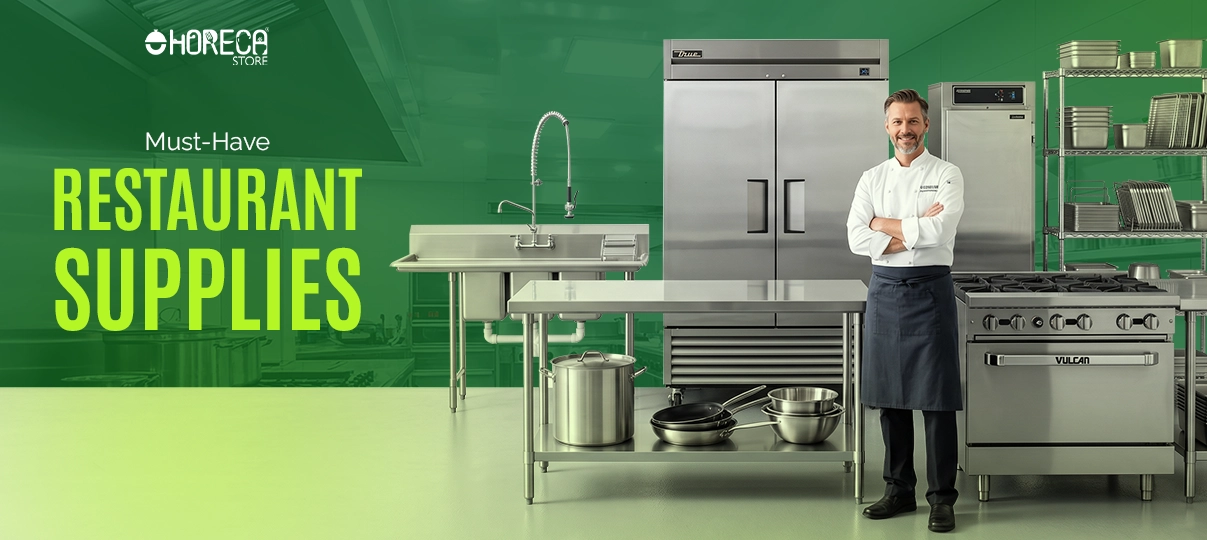
Table of Contents
You’ve seen a kitchen, but have you ever watched a machine sear forty steaks to perfection while simultaneously surviving a frantic Friday night rush? Welcome to the "Back of House" (BOH)—the industry term for the hidden, high-octane workspace where your meal is actually made. Cooking a family dinner is a relaxing hobby, but running a restaurant is a demanding industrial operation.
Think of a residential stove as a personal car, whereas commercial-grade durability requires the relentless stamina of a heavy-duty city bus. Industry data reveals that standard consumer ovens often fail within months under a 14-hour daily grind, simply because they aren't engineered for constant thermal stress. In food service, equipment specs represent a pure "survival" metric rather than luxury features, ensuring that your gear can withstand being scrubbed with harsh chemicals every single night.
Pushing out hundreds of meals forces a complete shift in how we measure efficiency, introducing the critical concept of throughput. Instead of focusing solely on a burner's maximum temperature, chefs evaluate culinary tools based on raw output, measuring performance in "burgers per hour." Selecting the right restaurant equipment for a new commercial kitchen means understanding that your machinery must match this relentless pace before it breaks down.

Harnessing Heat: Why Gas vs. Electric Range Choice Determines Your Output Speed
Cooking for four is a hobby; feeding a packed dining room requires mastering extreme heat. While you know a commercial kitchen uses massive power, the secret to its speed lies in BTUs (British Thermal Units). Think of BTUs as heat horsepower. A standard home stove tops out around 15,000 BTUs, but restaurant cooking ranges easily blast 30,000. This intense heat dictates how fast a chef can sear steaks or boil pasta water, directly impacting your dining wait time.
Raw power alone isn't enough; chefs truly obsess over "recovery time"—how quickly a pan regains its temperature after dropping cold food into it. Fast recovery equals faster table turnover. When balancing startup costs for professional culinary machinery, owners must evaluate gas vs electric range performance for their specific volume:
- Gas: Delivers instant, visual flame control for rapid recovery, but heats up the entire kitchen.
- Commercial Electric: Slower to heat and recover, but generally cheaper to install.
- Pro Induction: Uses magnets to turn the pan itself into the burner. It boils water faster than gas and keeps the kitchen cool, though it requires expensive specialized cookware.
Matching this equipment to your menu's specific heat intensity determines your daily output. Yet, once you master the fire, managing the opposite extreme—industrial cold storage—becomes your next operational challenge.
Industrial Cold Storage: How Energy-Efficient Refrigerators Protect Your Profits
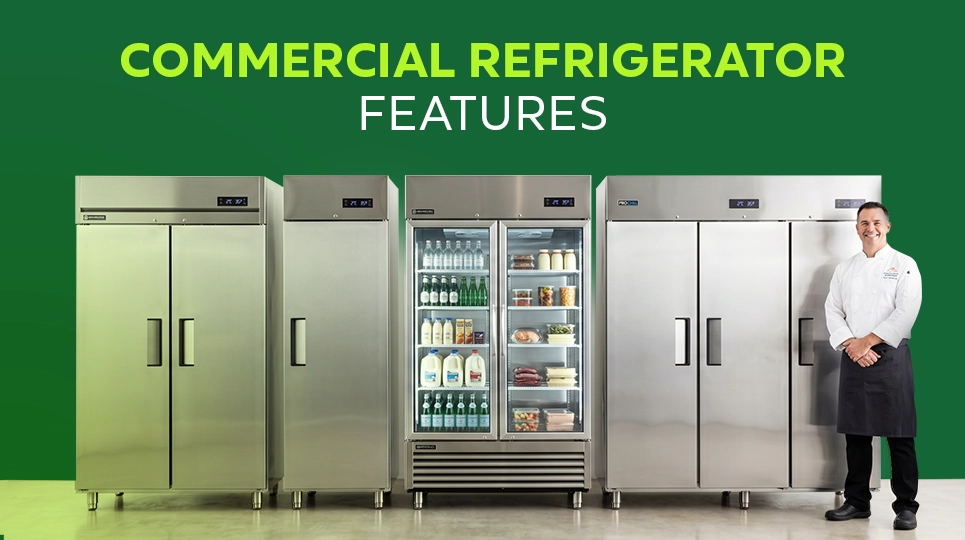
While your home fridge opens occasionally, a professional cooler door swings wide hundreds of times during a dinner rush. This constant exposure threatens the "cold chain"—the continuous temperature control required to prevent food spoilage. To combat blazing ambient kitchen heat, commercial units use sophisticated ambient temperature compensation to instantly blast chilled air the moment the door shuts, protecting thousands of dollars in delicate restaurant inventory.
Upgrading storage depends entirely on your daily customer volume. Small cafes rely on standard reach-in coolers, but high-volume kitchens inevitably graduate to walk-ins. These room-sized environments let chefs wheel entire ingredient carts straight inside. Since these giant spaces demand enormous power, investing in energy-efficient industrial refrigerators with advanced compressor motors provides a massive return on investment by drastically slashing monthly electricity bills.
Temperature alone cannot guarantee public health without strict food safety standards. When browsing any restaurant supply catalog, you will always notice the mandatory NSF Certification stamp. In the professional world, "clean" is a legal requirement, not a feeling. NSF-certified machines are meticulously engineered without tiny crevices, exposed screws, or sharp interior corners where bacteria could hide, ensuring complete sanitation.
Protecting ingredients is just the foundation of a profitable kitchen. Once your raw materials are securely chilled, the next challenge is cooking those massive volumes efficiently.

The Combi-Oven Secret: Mastering Multi-Tasking in a Single Appliance
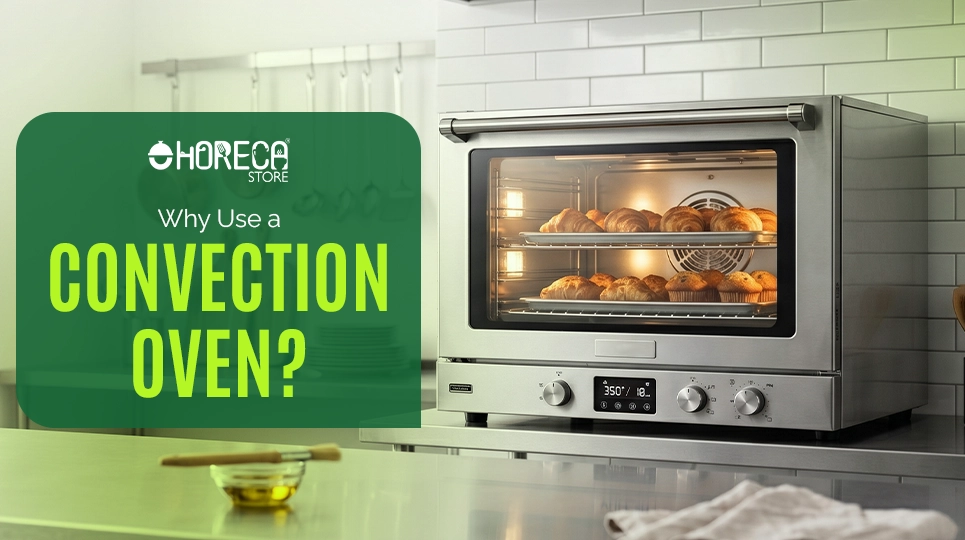
A combi-oven can seamlessly roast forty chickens to a crisp while perfectly poaching delicate salmon. Since commercial floor space is incredibly expensive, these massive multitaskers rank among the most essential appliances for new cafes. Instead of buying separate fryers, steamers, and bulky roasting setups, chefs use this single footprint to do it all. The secret starts with advanced convection flow—powerful internal fans that circulate hot air rapidly, cooking food far faster and more evenly than residential ovens.
The true magic, however, lies in precision humidity control. In any heavy-duty convection oven comparison, traditional units simply dry out ingredients. A combi-oven solves this by injecting exact amounts of water vapor, unlocking three distinct modes:
- Steam: Gently cooks vibrant vegetables and seafood.
- Convection: Uses dry, circulating heat for baking crusty bread.
- Combination: Blends both to rapidly cook proteins without shrinking them, saving restaurants thousands of dollars in lost meat weight.
More than just versatile kitchen appliances, these ovens act like an extra sous-chef. Programmable cycles allow cooks to select a recipe and let the machine automatically shift from steaming to roasting. Once that perfectly cooked food finishes, however, it requires immediate plating at a highly efficient prep station.
The Backbone of Prep: Designing Ergonomic Workstations with Stainless Steel
While high-tech ovens cook the food, the real muscle of any restaurant operates on flat metal surfaces. Every chopped onion passes across a prep table, making material choice critical. Pro kitchens rely on stainless steel because it offers a completely non-porous surface. Unlike wooden cutting boards at home, bacteria cannot hide in microscopic cracks during food prep, allowing safe, daily sanitation with industrial cleaners.
Not all metal surfaces are created equal. When reviewing stainless steel prep table specifications, buyers must choose the right "gauge," or metal thickness. A lower number means thicker steel. For heavy-duty butchering or dropping massive boxes of kitchen supplies, a thick 14-gauge table absorbs the shock without denting. Alternatively, a lighter 18-gauge table works perfectly for gentle salad assembly.
Beyond durability, optimizing workflow with ergonomic workstations prevents staff fatigue during long shifts. Restaurants achieve this through a "mise en place" station—a specialized setup where every necessary ingredient and tool sits strictly within arm's reach. Eliminating extra footsteps lets cooks plate meals in seconds. Once the physical workstation is optimized, chefs must stock it with durable culinary tools.

The Smallwares Checklist: Selecting Culinary Tools That Last for Decades
Cooking a dozen eggs at home is vastly different from flipping hundreds of omelets every weekend. When sourcing catering supplies or visiting a restaurant supply warehouse in Tulsa, the secret to survival lies in how everyday culinary tools are constructed. Unlike consumer pans with spot-welded handles that snap off, professional gear relies on heavy-duty steel rivets. These industrial fasteners lock the handle directly through the pan's body, ensuring heavy skillets won't fail mid-flip under 18-hour daily use.
Equipping a functional prep station requires following a strict professional smallwares checklist for bakeries and cafes:
- Knives: High-carbon blades designed for constant sharpening.
- Pans: Heavy-bottomed metals built for rapid heat transfer.
- Thermometers: Calibrated digital probes guaranteeing safe cooking.
- Storage: Commercial-grade, shatterproof bins known as Lexan containers.
Unlike chaotic home cabinets filled with mismatched Tupperware, pro kitchens standardize container sizes. Lexans are mathematically proportioned to stack perfectly, maximizing fridge organization while letting chefs instantly verify ingredient levels.
Beyond physical strength, these items are strategically designed to prevent disastrous mistakes. High-volume kitchens implement rigorous color-coding standards—like green cutting boards for produce and red for raw meat—to eliminate cross-contamination risks. Yet, even the most carefully managed prep tools eventually become coated in grease. Stripping away that mess safely requires extraordinary thermal power.
Sanitation at Scale: Why Commercial Dishwashers Must Hit 180 Degrees
At home, your dishwasher hums for two hours, but food service operations need dishes spotless in ninety seconds. This speed is measured in "racks per hour," dictating how fast plates return to the dining room. To succeed while maintaining food safety standards, kitchens choose between high-temp and low-temp machines. High-temp models blast dishes with 180-degree water to instantly melt grease. Conversely, low-temp machines use cooler water but inject chemical sanitizers to kill bacteria, saving energy while requiring careful chemical monitoring.
Meeting strict commercial grade dishwasher sanitation requirements involves "dwell time," meaning the exact seconds plates must be exposed to lethal heat or sanitizing solutions. Handling this intense wastewater requires specialized plumbing, including grease traps that intercept fats before they solidify and destroy city pipes. Savvy buyers browsing options at a restaurant supply warehouse in Henrietta often look for Energy Star-rated warewashers. These efficient machines drastically reduce water costs by recycling steam and minimizing overall consumption per cycle.
Processing scalding plates constantly inevitably turns the dishwashing area into a humid, suffocating environment. All that vaporized water and ambient heat has to go somewhere before it overwhelms the kitchen staff, making ventilation the next major operational challenge.
Breathing Room: Maintaining Kitchen Ventilation Systems for Safety and Comfort
While a residential stove fan gently redirects steam, a restaurant’s ventilation system acts as a massive mechanical lung. Proper commercial kitchen layout planning demands choosing the right canopy for the job. Type I hoods tackle anything producing grease or smoke—like fryers or grills—acting as the primary defense against fires. Meanwhile, Type II hoods manage standard heat and moisture from dishwashers. Hidden inside those Type I hoods are advanced fire suppression systems, designed to instantly smother flames with chemical foam if a dangerous grease fire erupts.
Sucking that exhaust outside creates a vacuum, meaning facilities must pump balanced "makeup air" back inside so doors don't slam and dining rooms stay comfortable. Routine kitchen ventilation system maintenance is non-negotiable in food service, because neglected filters quickly become severe fire hazards. Watch for these 3 signs your ventilation system needs immediate maintenance:
- Lingering smoke or odors escaping into the dining area.
- Strange rattling noises from the rooftop exhaust fan.
- Visible grease dripping from the hood edges.
Once this infrastructure breathes safely, outfitting the space affordably is the next hurdle, leading operators to browse a restaurant supply showroom in Albuquerque to weigh new versus pre-owned gear.
Smart Sourcing: Balancing Used vs. New Equipment Costs for Better ROI
Outfitting a high-volume kitchen requires a massive upfront investment, known in the business world as a Capital Expenditure, or CapEx. To lower this initial hurdle, owners constantly weigh used vs new catering supplies to stretch their budgets. While a gleaming new six-burner range offers ultimate peace of mind, buying pre-owned saves thousands. Just beware of red flags when inspecting used gas equipment, like rusted burner rings or warped grates, which indicate the previous owner skipped crucial daily maintenance.
Another strategy for protecting your bank account involves leasing vs buying industrial cookery tools. Instead of draining your cash reserves on heavy-duty walk-in coolers on day one, leasing acts like a long-term rental agreement. This spreads the massive cost into manageable monthly payments, preserving precious startup capital for unexpected emergencies and payroll while you build your daily order volume.
Mastering these acquisitions means understanding how distributors operate. By sourcing reliable food service wholesalers, operators can negotiate better wholesaler margins and bypass retail markups entirely. Tracking restaurant supply chain news also helps predict price fluctuations before they disrupt your budget. With your financial strategy locked in, you are ready to execute your launch roadmap and transform those equipment lists into a functional kitchen.
Your Launch Roadmap: Transforming Equipment Lists into a Functional Kitchen
You no longer look at a kitchen as just a place to cook; you now see an engine designed for industrial operation. As you finalize your commercial kitchen layout planning, remember that a restaurant isn't merely about heat—it's a machine built for survival. Prioritizing seamless workflow over aesthetics is what keeps that machine running. When balancing the reality of startup costs for professional culinary machinery, every investment from the largest ovens down to everyday dining essentials and prep kitchen supplies must earn its footprint by directly supporting your output.
To transform this knowledge into a functioning powerhouse in the final 30 days before opening, follow this step-by-step checklist:
- Prioritize any remaining equipment purchases based strictly on high-volume menu impact.
- Verify that all installations meet local health department codes.
- Execute a full "dry run" to test equipment workflow before opening day.
Your kitchen is now ready to conquer the Friday rush.

About David Thompson
Commercial Kitchen Equipment Consultant
David Thompson is a commercial kitchen equipment consultant with over a decade of experience in the U.S. food service industry. He helps restaurant and food truck owners choose reliable equipment to maximize efficiency and long-term performance.
Frequently Asked Questions
Essential supplies for new restaurant owners include commercial refrigerators, freezers, cooking equipment, sinks, shelving, cookware, knives, serving supplies, and sanitation products.
Restaurant startup supply costs can range from a few thousand dollars to over $100,000 depending on restaurant size, menu complexity, equipment quality, and seating capacity.
Most restaurants require ovens, fryers, ranges, grills, prep tables, refrigerators, freezers, sinks, dishwashers, and food preparation equipment based on their menu.
Commercial-grade restaurant equipment is designed for heavy daily use, faster performance, durability, and compliance with food safety regulations in professional kitchens.
Restaurants commonly need reach-in refrigerators, freezers, prep tables, walk-in coolers, beverage coolers, and commercial ice machines for safe food storage and efficient operations.
Comments
0 comments
Login to Comment
Join the conversation! Please log in to share your thoughts.
No comments yet
Be the first to share your thoughts!