

Best Refrigerators for Food Trucks and Food Trailers
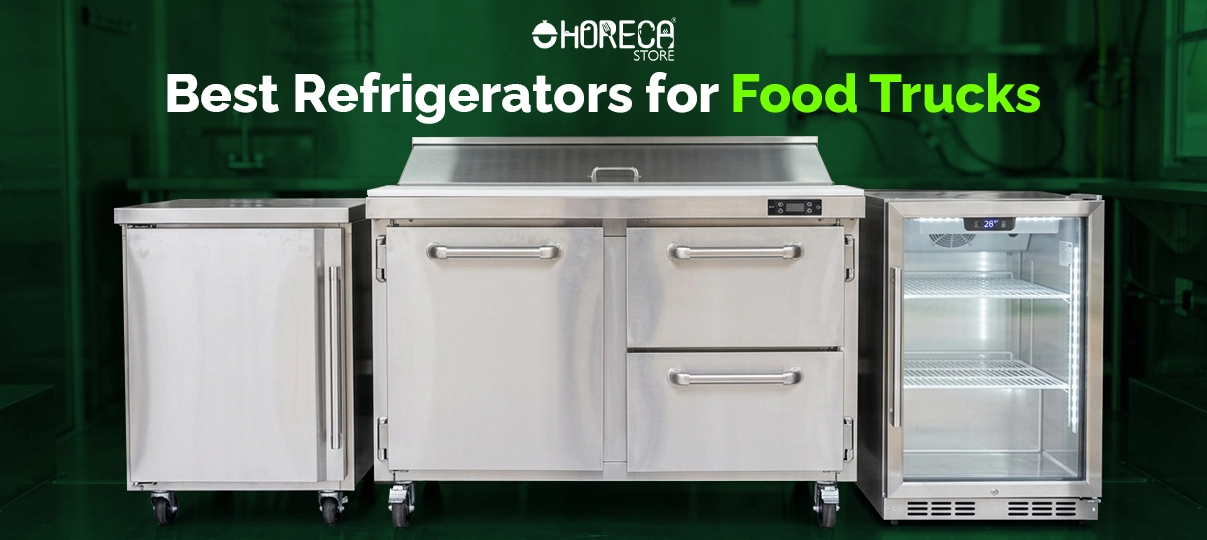
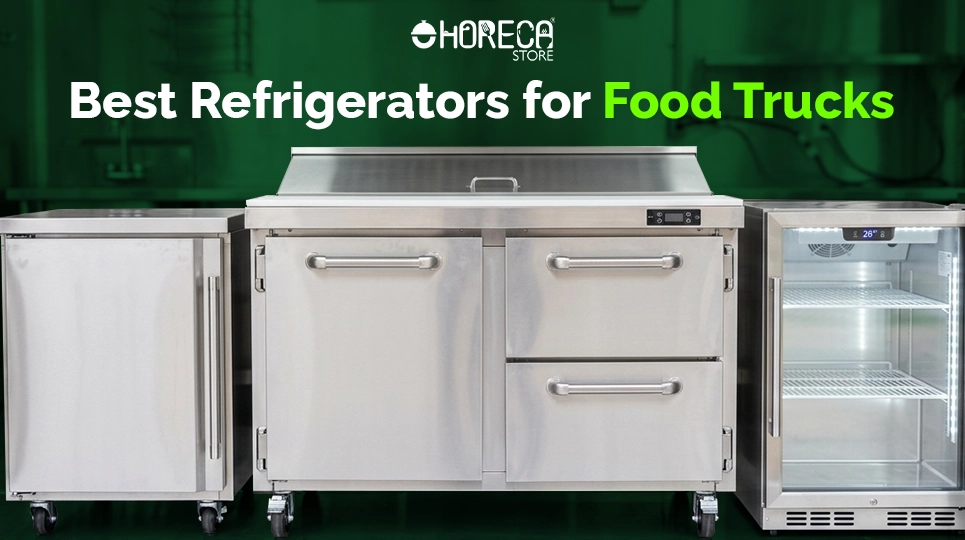
Table of Contents
A food truck is essentially a commercial kitchen trapped inside a metal box that experiences a minor earthquake every time you drive. While that might sound dramatic, seasoned operators know that standard appliances are rarely built to survive potholes, constant vibration, or the intense heat of a July afternoon. Choosing the best refrigerators for food trucks and food trailers isn't just about finding a unit that fits your layout; it represents the difference between a smooth service and a mid-shift disaster.
Many first-time builders attempt to cut costs by installing residential units from big-box stores, but this strategy often creates a massive liability. Household fridges are designed to sit still in a climate-controlled house, not to battle the 100°F ambient heat common in a mobile kitchen. According to industry repair data, compressors in residential units frequently fail when forced to run constantly against high temperatures, leading to fluctuating internal temperatures that can alert health inspectors.
Consider the financial reality of a single equipment failure during a busy festival weekend. If your refrigeration for trucks goes down, you lose not only the cost of the spoiled ingredients but also the potential sales for that entire day, a figure that often exceeds the price difference between a budget unit and a professional one. Your cooling system serves as the heartbeat of your business; when it stops, your service window slams shut.
Successfully outfitting your rig requires understanding three core pillars: durability against road vibration, compliance with strict health codes, and power efficiency for your generator. Proper selection of food truck appliances acts as an insurance policy for your inventory rather than a drain on your resources. These are the units that keep your food safe and your business moving.
Why Your Home Fridge is a Liability: The Costly Difference Between Residential and Commercial Units
It is incredibly tempting to walk into a big-box store and buy a standard kitchen refrigerator for a fraction of the price of a professional model, but that initial saving is often an illusion. The primary failure point isn't just raw cooling power; it is recovery time—the speed at which the unit returns to a safe temperature after the door is opened. While a home unit is designed for a family grabbing milk a few times a day, your service window involves opening that door dozens of times an hour during a rush. A residential compressor simply cannot catch up under that stress, leaving your ingredients in the "danger zone" long enough to spoil food or fail a surprise health inspection.
Commercial units are engineered specifically to combat the extreme ambient heat inside a metal truck box. To maintain internal temperatures when it is 100°F in your kitchen, manufacturers of the best refrigerators for food trucks utilize significantly different construction methods than what you find in a domestic model:
- Heavy-duty compressors designed to run almost continuously without overheating.
- High-density insulation that is often twice as thick to trap cold air effectively.
- Powerful fans for forced-air circulation rather than passive cooling.
- Ruggedized components built to withstand the constant vibration of the road.
Perhaps the most overlooked risk is financial protection. Most residential appliance warranties explicitly void coverage if the unit is used in a "commercial setting," meaning if your generic fridge dies in month two, you are on the hook for the full replacement cost. Investing in commercial reach-in refrigerators for mobile kitchens ensures you have a valid warranty and the durability to survive the job. Once the hardware is sorted, you need to prove it is safe to the authorities.
Demystifying NSF Certification: Your Legal Shield Against Health Inspectors
When a health official steps onto your truck, they aren't looking at the brand name on your fridge; they are hunting for the blue and white NSF seal. This certification from NSF International is your primary defense during inspections because it guarantees the equipment meets strict sanitation standards that residential models simply cannot match. Without this verification on your food truck appliances, you risk being shut down before you sell a single taco, as most local health codes make NSF certified refrigeration requirements for mobile food vendors mandatory rather than optional.
The actual difference in engineering often comes down to the corners inside the cabinet. Standard residential fridges have sharp, 90-degree angles where crumbs, spills, and bacteria accumulate, but NSF-rated units feature "coved corners"—smooth, curved internal edges that look like the bottom of a bathtub. This specific design choice ensures that a simple wipe-down removes all debris, preventing cross-contamination and satisfying the inspector’s need to see a visibly sterile environment.

Protecting your investment requires physically verifying this certification on the data plate usually found inside the door frame, as terms like "commercial style" in online descriptions are often misleading marketing fluff. Once you have confirmed the sanitation rating, your next major decision involves the mechanical layout of the unit, specifically whether the engine should sit above or below your food.
The Great Compressor Debate: Why Top-Mount vs. Bottom-Mount Matters for Dust and Heat
In a standard kitchen, the location of the compressor—the engine that cools the fridge—is a minor detail, but inside a sweltering mobile kitchen, it determines the lifespan of your equipment. Top-mounted units place the intake vents near the ceiling where heat naturally rises. While this protects the machinery from floor-level grime, it forces the system to ingest the hottest air in the trailer, which can strain the motor during summer shifts. If your concept involves heavy deep frying where grease vapor hangs high, a top-mount unit might also suck in sticky residue that coats the coils.
Conversely, units with the compressor at the base draw air from the coolest part of the room, right near the floor. This makes them efficient high-ambient temperature cooling units for outdoor food trucks, as the machinery isn't fighting the ceiling heat to keep your ingredients safe. The significant trade-off here is that these intakes act like vacuums for whatever lands on your floor. To decide which configuration suits your daily operations, consider these practical differences in the top-mount vs bottom-mount compressor for food trailers debate:
- Top-Mount: Best for bakeries or pizzerias where flour dust settles on the floor; offers lower, easier-to-reach storage shelves; hard to service without a ladder.
- Bottom-Mount: Best for hot climates; creates a "stoop" to reach the bottom shelf; requires frequent coil brushing to prevent clogging from gravel dust and shoe dirt.
Your choice ultimately relies on what is easier for you to manage: fighting heat or fighting dust. Regardless of placement, ensure the unit has enough clearance for airflow, or the compressor will fail regardless of where it sits. Once you’ve settled on the engine location, determine if you have the vertical space for a full upright unit or if you need to tuck your cooling equipment under a workstation.
Maximizing Every Inch: When to Choose Under-Counter Fridges vs. Prep Tables
Since you can likely touch both walls of your truck simultaneously, floor space is your most expensive commodity. Instead of forcing your line cook to sprint to a large upright unit, consider point-of-use refrigeration. This strategy places specific ingredients exactly where they are needed—like keeping burger patties in a low-boy unit right next to the grill—drastically reducing traffic in your narrow aisle and speeding up service times during a rush.
For assembly-heavy menus like tacos or subs, space-saving prep table refrigerators for small trailers usually offer the best return on investment. These units replace the "dead space" of a standard metal table with active cooling, combining a refrigerated cabinet below with a recessed pan rail on top. By merging your cutting board station with your cold storage, you effectively double your square footage utility, ensuring that your salsa and cheese stay at safe temperatures even while sitting out during service.
Physical access is just as important as storage capacity; in a 30-inch aisle, a swinging fridge door can bring your entire operation to a halt. Many operators minimize this friction by choosing a compact undercounter fridge for food trailers equipped with drawers rather than doors. These slide out flush with your body, allowing you to grab a restocking bin without blocking the walkway or forcing your coworkers to squeeze past you.
Your final configuration choice involves the trade-off found in solid door vs glass door refrigerators for mobile businesses. While glass allows you to check inventory without opening the unit, it offers significantly less insulation than stainless steel, causing the compressor to cycle more frequently to fight the ambient heat. This increased workload doesn't just threaten food safety; it drains your energy supply, a critical factor regarding the real-world wattage for your generator.

Avoiding the Power Trip: Calculating Real-World Wattage for Generators and Inverters
Your generator is the lifeline of your mobile business, but sizing it correctly requires understanding the physics of a refrigeration compressor. A common rookie mistake is adding up the "running watts" listed in user manuals and buying a generator that matches that exact total. However, fridge motors require a massive jolt of energy—often double or triple their standard operating power—just to kickstart the cooling cycle. This "surge wattage" lasts only a few seconds, but if your power supply cannot handle that momentary spike, your breaker will trip, plunging your kitchen into silence in the middle of a rush.
Locating the specific power requirements involves checking the electrical data plate, usually a silver sticker found inside the door frame or on the back of the unit. You will rarely see "Watts" listed directly; instead, manufacturers list "Amps." To calculate how much power does a food truck refrigerator draw, simply multiply the Volts (standard 115V) by the Amps. For instance, a unit rated at 4 Amps draws 460 running watts, but you should budget for roughly 1,200 watts to cover that initial startup load safely.
Typical Power Draws for Common Mobile Units
| Unit Type | Approx. Running Watts | Est. Surge Watts (Startup) | | :--- | :--- | :--- | | 27" Undercounter Fridge | 300W - 400W | 800W - 1,000W | | 48" Sandwich Prep Table | 500W - 700W | 1,200W - 1,500W | | 23 Cu. Ft. Upright Reach-In | 600W - 800W | 1,800W - 2,200W | | Countertop Merchandiser | 150W - 250W | 400W - 600W |
Efficiency is your next line of defense against blown fuses and high fuel costs. Seek out low energy consumption refrigeration units for food trucks that utilize LED lighting and high-density polyurethane insulation, which help retain cold air so the compressor cycles less frequently. Yet, even the most efficient electrical setup will struggle if the environment forces the motor to run non-stop, a critical issue regarding high-ambient cooling performance during peak summer heat.
Summer Survival: How High-Ambient Cooling Units Prevent Food Spoilage at 100°F
Operating a kitchen inside a metal box during July creates an environment where standard refrigeration often surrenders. While restaurant kitchens are usually climate-controlled, your workspace can easily surpass 100°F, causing standard compressors to run continuously until they fail. To protect your inventory, you must verify the "Ambient Temperature Rating" on the manufacturer's spec sheet. For mobile businesses, high-ambient temperature cooling units for outdoor food trucks rated for at least 100°F are necessary to prevent spoilage during the lunch rush.
Internal cooling mechanisms also dictate safety. Budget-friendly "static cooling" units rely on passive cold plates, often resulting in warm spots and slow recovery times. A superior choice for high-traffic trucks is a forced-air system, which uses fans to aggressively circulate cold air throughout the cabinet. This constant movement ensures that even if you open the door repeatedly to grab ingredients, the system quickly pushes the temperature back down below the danger zone.
Even robust machinery requires help to function, so solving how to keep food truck refrigerators cold in summer involves strategy. Ensure the compressor’s intake vents are never blocked by boxes or pushed flush against a wall, as this chokes the airflow needed to release heat. Once you have a system that withstands the sweltering heat, you must address the physical challenge of securing that heavy appliance so it survives the inevitable vibrations of the road.
Stop the Shake: Securing Commercial Refrigerators Against Road Vibrations and Potholes
Driving over potholes feels like a minor annoyance to the driver, but for your equipment, it represents a structural assault. Residential units typically use rigid copper piping that becomes brittle and cracks under constant shaking—a process engineers call "work-hardening"—which eventually leads to catastrophic refrigerant leaks. To avoid a dead compressor on opening day, prioritize vibration resistant commercial fridges for moving vehicles that utilize flexible tubing and reinforced brazed joints designed to absorb highway turbulence rather than shatter under stress.
Selecting a rugged unit is only half the battle; you must also ensure the appliance remains stationary during transit. While locking casters offer mobility for cleaning, fixed legs bolted directly to the chassis provide superior stability for top-heavy equipment. When securing commercial appliances in a mobile food trailer, use heavy-duty L-brackets attached to the unit’s base, but proceed with extreme caution when drilling into the refrigerator's body to avoid puncturing hidden cooling lines or insulation panels.

Proper installation turns your refrigeration into a permanent fixture capable of weathering sharp turns and sudden stops without shifting inches across the floor. By combining vibration-resistant construction with solid mounting points, you ensure your cold storage survives the commute as well as the heat. With these physical safeguards in place, the specific steps to select and purchase your ideal unit become clear.
Your Purchase Blueprint: The 5-Step Checklist for Buying Your First Unit
You’ve moved beyond guessing which appliances might work to understanding what your business actually needs to survive the road. By prioritizing commercial durability and power efficiency over initial savings, you are building a foundation that handles summer heat and pothole vibrations without skipping a beat. The right equipment choice doesn't just keep your ingredients safe; it keeps your service window open and your inspection scores high.
Before making your final purchase, run through this verification checklist to ensure you know exactly what size refrigerator fits in a standard food truck and your specific layout:
- Measure: Confirm door swing clearance and aisle width to prevent bottlenecks.
- Power-Check: Verify your generator can handle the unit's startup amperage.
- Inspect: Look for the NSF data plate to ensure health code compliance.
- Ventilate: Guarantee the compressor intake has adequate breathing room.
- Test: Run the empty unit for 24 hours to verify temperature stability.
Long-term reliability now relies on your routine. Commit to cleaning and maintaining mobile kitchen refrigeration systems by vacuuming condenser coils monthly to remove grease and road dust. This simple habit protects your compressor and ensures your kitchen remains the reliable heartbeat of your business. You are ready to buy with confidence—drive safe and keep it cool.

About Mike Anderson
Commercial Refrigeration & HORECA Industry Expert
The author is a seasoned specialist in commercial refrigeration systems, sharing practical insights to help hospitality businesses select the right equipment for efficiency, food safety, and long-term cost savings. With over 15 years of industry experience, he stays updated on global trends in energy-efficient and sustainable cooling solutions.
Frequently Asked Questions
The best refrigerator for a food truck is typically a compact commercial unit such as an undercounter, prep table, or upright refrigerator. These models are designed to fit tight spaces while maintaining safe temperatures. Undercounter refrigerators are especially popular because they fit beneath worktops and maximize space efficiency in mobile kitchens.
A food truck refrigerator should maintain temperatures at or below 41°F (5°C) to meet food safety standards. This aligns with FDA Food Code guidelines, which require cold storage to stay below this threshold to prevent bacterial growth. Maintaining consistent temperatures is critical in mobile environments where external heat can fluctuate.
The ideal size depends on menu and space, but most food trucks use compact units under 48 inches wide. These units provide enough storage without overcrowding limited kitchen space. Smaller trucks may rely on undercounter units, while larger trailers can accommodate upright or reach-in refrigerators.
Undercounter refrigerators are popular because they combine storage and workspace in one compact unit. They fit under prep counters, saving valuable floor space while keeping ingredients easily accessible. These units can hold up to 300+ liters depending on the model, making them suitable for small to medium food truck operations.
Key features include compact size, energy efficiency, durable construction, and consistent temperature control. Food truck refrigerators should also be vibration-resistant and capable of operating on generator or battery power. These features ensure reliable performance in mobile environments where conditions can be unpredictable.
Menu type directly impacts refrigerator selection because different foods require different storage needs. For example, taco or sandwich trucks need more compartmentalized storage for ingredients, sauces, and toppings. Choosing a refrigerator with adequate shelving and organization helps maintain efficiency and food safety during service.
Yes, upright refrigerators are suitable when vertical space is available, as they provide organized storage with shelves and compartments. These models make it easier to access ingredients quickly, improving workflow. However, they require more height clearance compared to undercounter units, making them better suited for larger food trailers.
Most commercial food truck refrigerators operate on 120V AC power, which can be supplied by generators or external electrical connections. Some advanced models also support alternative power setups for mobile use. Ensuring proper power compatibility is essential for uninterrupted operation during service.
Durability is important because food truck refrigerators are exposed to constant movement, vibrations, and temperature changes. Units designed for mobile use are built with reinforced components and stable compressors to maintain performance under these conditions. Durable construction reduces breakdowns and ensures long-term reliability.
Food truck refrigerators ensure food safety by maintaining consistent internal temperatures and preventing exposure to the temperature danger zone. High-quality units are designed to perform even in hot outdoor environments, ensuring ingredients remain fresh and safe for consumption. Reliable cooling systems are critical for preventing foodborne illnesses in mobile foodservice operations.
Comments
0 comments
Login to Comment
Join the conversation! Please log in to share your thoughts.
No comments yet
Be the first to share your thoughts!