
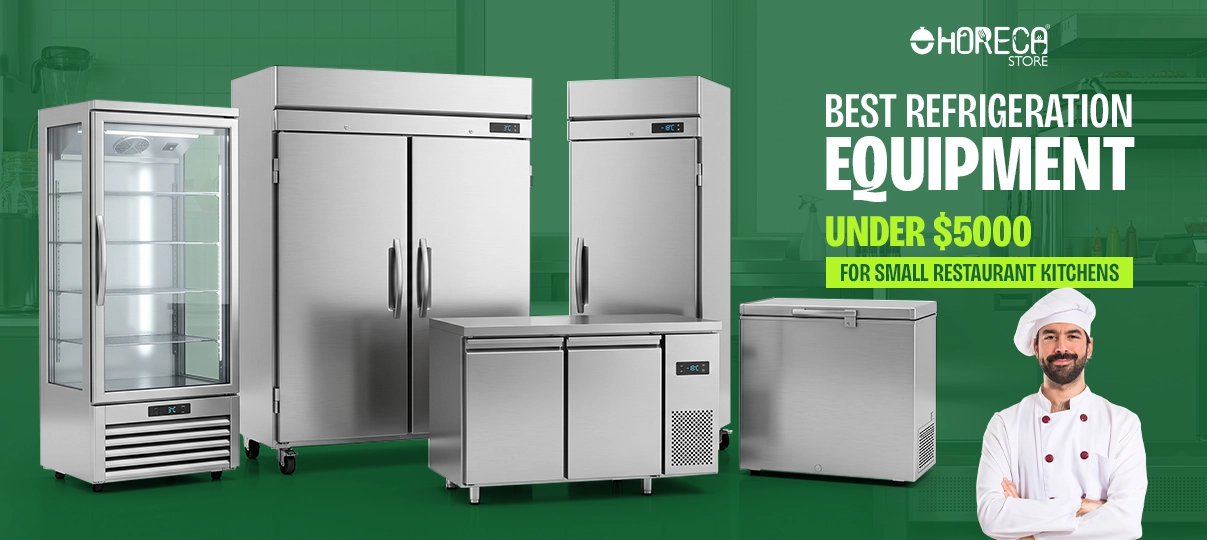
Imagine a Saturday lunch rush at your new food truck where the orders are flying in, but by 2:00 PM, your lettuce is wilting and your dairy is dangerously warm. You thought saving cash by bringing a standard home refrigerator into your commercial workspace was a smart business move. Unfortunately, this common rookie mistake often ends with tossing out hundreds of dollars of ruined prep before the weekend is even over. A standard home appliance simply isn't built for the relentless pace of a professional food service environment.
Behind that ruined inventory is a critical operational metric known as Thermal Recovery Time. Think of this concept as a bounce-back rate: it measures exactly how fast a refrigerator can return to a safe 38°F after someone opens the door to grab ingredients. In practice, a residential fridge might take hours to cool back down after being opened repeatedly during a rush, whereas commercial equipment uses heavy-duty compressors—much like a truck engine compared to a sedan—to chill the interior in mere minutes. That sheer mechanical speed is what ultimately prevents rapid food spoilage during your busiest hours.
Beyond just keeping your ingredients cold, upgrading your equipment is literally a matter of keeping your business open. Commercial health codes require refrigeration to meet NSF/ANSI 7 standards, which is a specific legal certification proving the unit can safely hold food temperatures even in a sweltering 86°F kitchen environment. According to public health guidelines, using uncertified residential units for commercial food storage is actually illegal in most jurisdictions and serves as a fast track to failing your health inspection. Purchasing certified equipment acts as an insurance policy for your hard-won business license.
Staring down the price tags of professional gear can certainly induce sticker shock, but shifting your mindset from seeing a short-term "cost" to making a long-term "investment" is vital. While a $5,000 budget might sound intimidating to a first-time cafe owner, it is a highly workable amount if you know how to allocate it across a few essential pieces. Navigating this market correctly means you can secure the best commercial refrigeration equipment for your small kitchen without sacrificing reliability. By identifying the right setup, you will discover heavy-duty solutions that protect your inventory and your bottom line.
Measuring the 'Invisible Footprint': How to Prevent $500 Delivery Failures and Ventilation Overheating
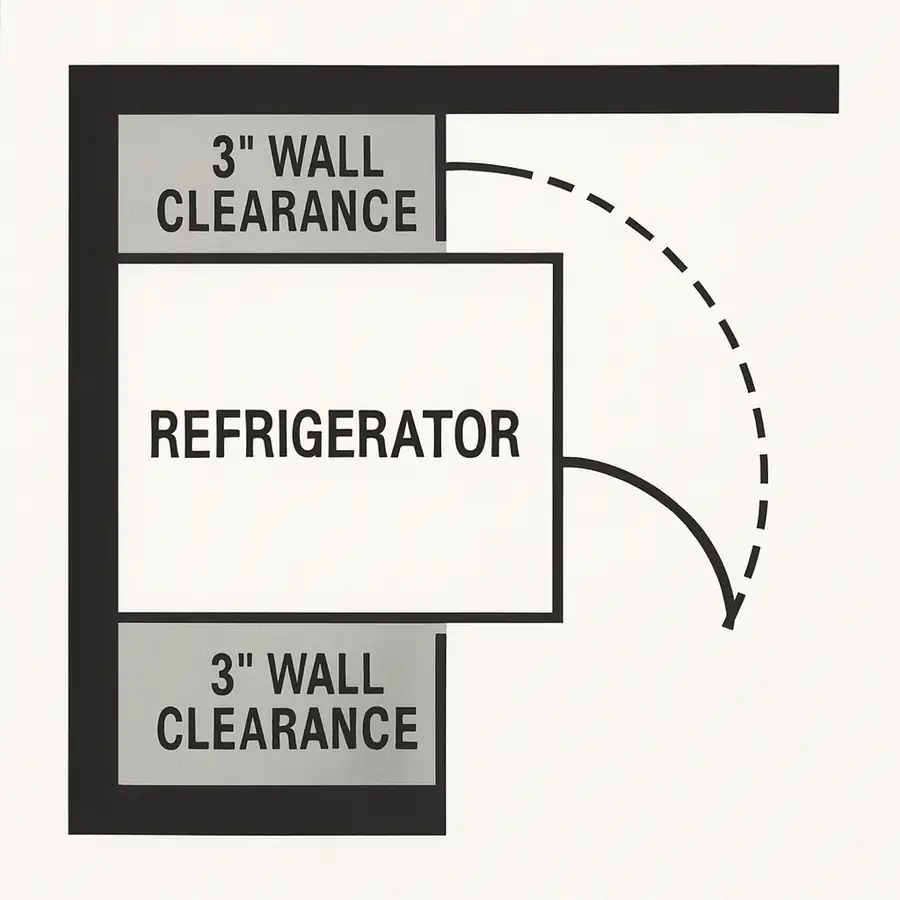
Placing your new reach-in seems simple until the delivery team leaves and you realize the door won't fully open. When sizing commercial refrigeration for compact layouts, you must account for the "invisible footprint"—the physical space required beyond the metal box. First, calculate the total door-swing clearance so your staff isn't trapped against a counter during the lunch rush. Crucially, commercial compressors also require the "3-inch rule." You must leave at least three inches of empty space between the unit and the wall. Choking off this airflow turns your kitchen into a sauna and drastically shortens the machine's lifespan.
Electrical compatibility is another hidden hurdle that catches many emerging entrepreneurs off guard. Unlike standard home appliances, commercial units use specific NEMA plug types to handle higher power draws. While a NEMA 5-15P looks like a normal household plug, a NEMA 5-20P features a horizontal prong requiring a dedicated 20-amp outlet. Overlooking this detail can trigger a frantic, $1,000 emergency visit from an electrician. Matching your electrical setup and confirming ventilation gaps is absolutely critical for high-ambient temperature cooling in small kitchens, where heat quickly overwhelms suffocated equipment.
Before ordering, grab a tape measure to ensure a seamless installation. Successfully maintaining commercial refrigeration in tight spaces relies on verifying this five-point checklist:
- Width of all delivery doorways and tight hallways.
- Height of the installation area, noting low-hanging fixtures.
- Total footprint depth with the refrigerator door open 90 degrees.
- The mandatory 3-inch ventilation gap on the back and sides.
- Distance to the correct, dedicated NEMA electrical outlet.
Once the physical fit is guaranteed, your next hurdle is legal compliance, which brings us to why NSF Certification is your baseline requirement.
Why NSF Certification is Your 'Health Inspection Insurance'
Finding a unit that fits your layout won't matter if the health inspector flags it during their walkthrough. Many new owners are tempted by sleek big-box store appliances that look professional but are simply faux-commercial residential models. To pass inspection instantly, you must verify the equipment meets NSF/ANSI 7 standards—the strict legal benchmark for food storage. This certification is your health inspection insurance, proving the machine rapidly recovers temperatures after frequent door openings to proactively prevent bacterial growth.
Beyond heavy-duty cooling power, genuine restaurant refrigeration solutions feature specific interior designs meant to eliminate hidden bacteria traps. Inside a true commercial fridge, you won't find sharp ninety-degree angles where the floor meets the wall. Instead, you will see "coved corners," meaning the metal edges are seamlessly curved. Rather than digging grime out of a tight crease, your staff can wipe down a coved interior in a single smooth motion, effectively cutting end-of-day cleaning time in half.
Spotting compliant equipment is as simple as finding the official NSF sticker, whether you buy new or shop for NSF certified refurbished restaurant coolers. Trusting reliable budget-friendly refrigeration brands ensures you secure these health-code features without emptying your startup funds. However, a legally compliant interior is only part of the equation for protecting your inventory. The engine driving that cold air dictates performance, leading us to our next critical layout question: top-mount vs. bottom-mount compressors.
Top-Mount vs. Bottom-Mount Compressors: Which One Survives Your Kitchen's Heat?
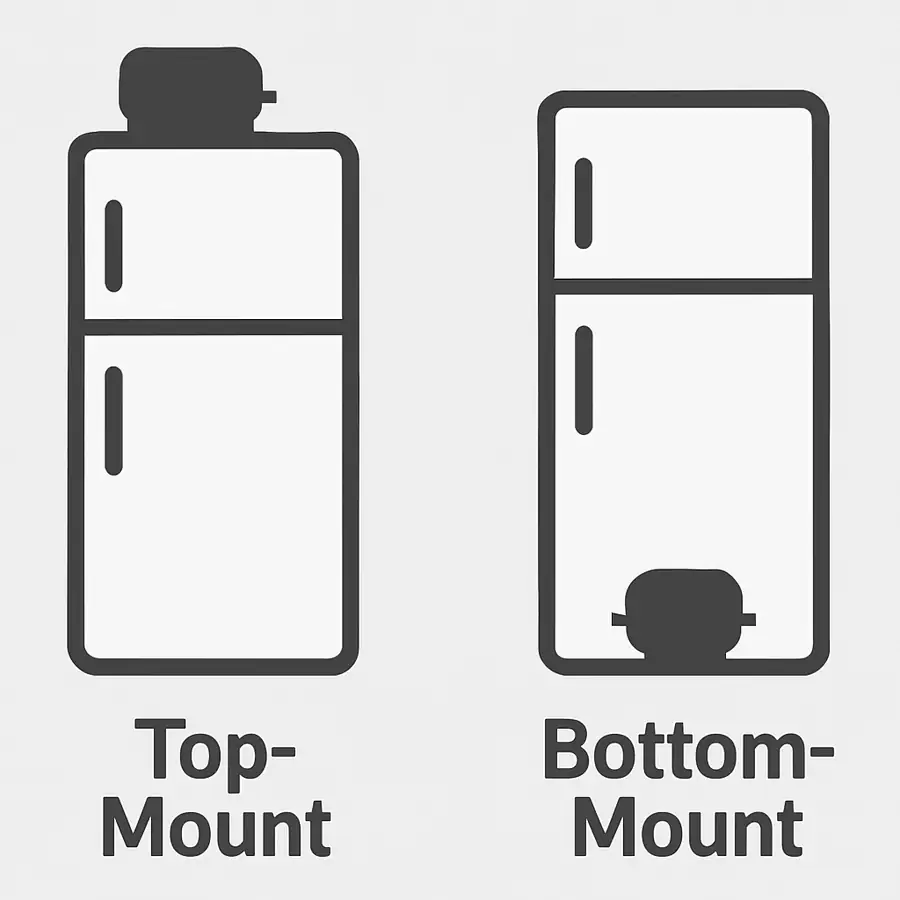
Every time your new fridge cools its interior, it dumps the extracted warmth right back into your kitchen—a process known as ambient heat discharge. Where that hot air goes depends entirely on where the unit's motor is located. When maintaining commercial refrigeration in tight spaces, choosing between a top or bottom compressor dictates how hard the machine works to survive your kitchen's daily grind.
Quick-Reference: Compressor Locations
- Top-Mount Pros: Avoids floor debris; maximizes lower storage space.
- Top-Mount Cons: Requires tall ceilings; harder to reach for maintenance.
- Bottom-Mount Pros: Coils are incredibly easy to vacuum; runs cooler near the floor.
- Bottom-Mount Cons: Sucks in spilled ingredients; sacrifices bottom-shelf interior space.
Analyzing your specific workspace debris dictates how you maximize these compressor benefits. If you operate a boutique bakery, the "Flour Factor" informs your choice: heavy flour dust settles on the ground, meaning a bottom-mount motor will constantly inhale that powder and drive up your maintenance labor. Conversely, a burger concept produces rising grease smoke, making a floor-level bottom-mount much safer from sticky overhead buildup.
Ignoring your room's physical layout can trigger compressor short-cycling, a damaging loop where trapped ambient heat forces the motor to rapidly turn on and off until it ultimately burns out. For example, shoving a top-mount fridge into a room with low ceilings traps its discharged heat, effectively suffocating the engine. Once you map out your ceiling clearances and primary debris types to prevent expensive burnout, you can confidently evaluate the equipment itself.
The $2,000 Reach-In: Finding a Reliable Single-Door Workhorse
Stepping up to a commercial appliance without draining your startup budget often feels like an impossible balancing act. Fortunately, the $2,000 price point happens to be the sweet spot for single-door units that balance professional reliability with tight margins. When hunting for quality equipment, brands like Arctic Air and Atosa dominate this tier by offering highly durable workhorses. These models intentionally skip the expensive digital frills of premium hospital-grade brands, focusing instead on rugged compressors that can survive the constant door-opening of a busy Saturday rush.
While that initial sticker price is attractive, your new appliance will continue costing you money every single hour it runs. This is where Energy Star rated low-cost commercial fridges prove their long-term value, as their thicker insulation and efficient motors can slash your monthly electric bills by up to thirty percent. More importantly, buying a certified unit often qualifies your business for local utility rebates. Power companies frequently pay commercial customers cash back—sometimes hundreds of dollars—simply for installing energy-efficient equipment, effectively dropping your true purchase price well below that initial two-thousand-dollar mark.
Inside the cabinet, the materials holding your ingredients matter just as much as the motor keeping them cold. Most entry-level, space-saving commercial reach-in refrigerators feature either aluminum or stainless steel interiors, and knowing the difference dictates how long your investment will actually last. Aluminum is cheaper and cools very quickly, but it dents easily and readily corrodes if exposed to acidic spills like vinaigrettes or tomato sauce. Upgrading to a unit with a 300-series stainless steel interior—a specific, high-quality grade of metal heavily alloyed to resist rust and chemical corrosion—ensures that accidental spills won't eat through your floor panels and flag a health inspector's attention.
Nailing this foundational purchase gives your kitchen a reliable anchor that protects your most valuable bulk ingredients from costly spoilage. Once your primary storage is confidently locked in, you can seamlessly shift your focus from simply holding raw food to actively preparing it.
Doubling Your Prep Speed with a Sub-$2000 Sandwich Table
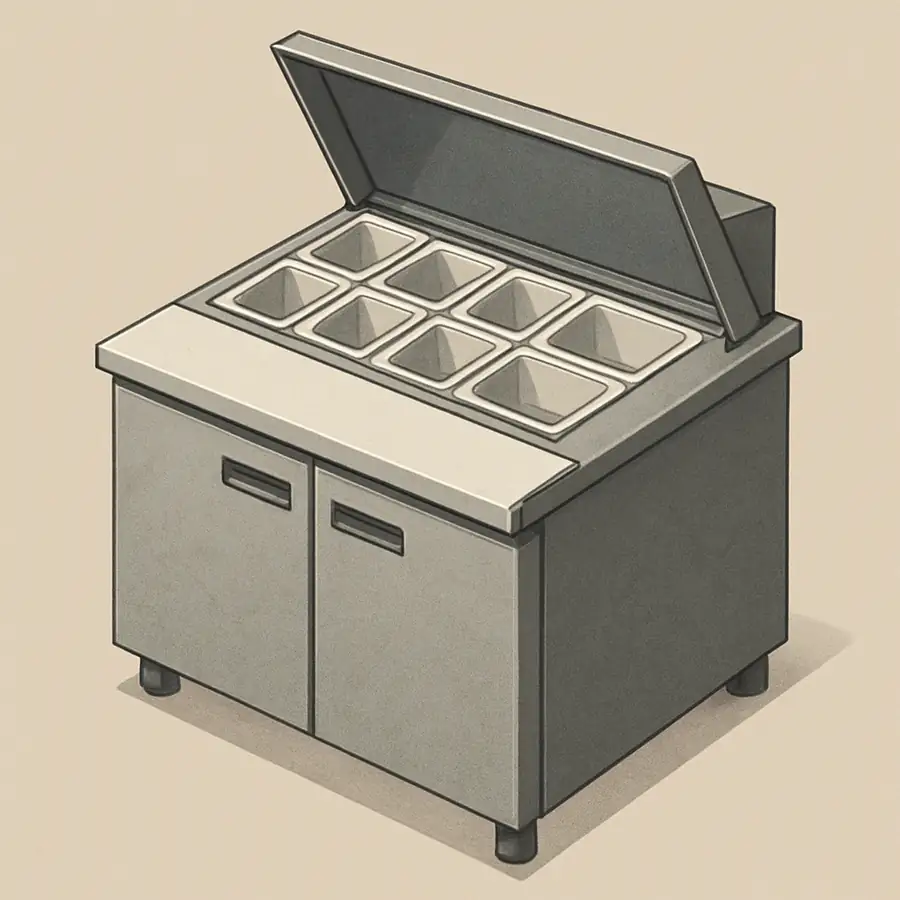
Picture a busy lunch rush where your staff has to walk across the kitchen every time someone orders a turkey club. By moving your ingredients out of the main reach-in and directly to the assembly line, you drastically optimize your "flow of service"—the physical path your food takes from storage to the customer. When budgeting for this upgrade, many new owners wonder exactly how much a commercial prep table costs without sacrificing quality. Fortunately, you can easily find a reliable 60-inch model that holds enough ingredients cafe leaving plenty of room for foot traffic, all well under the two-thousand-dollar mark.
Keeping an open container of mayonnaise safe during a 100°F kitchen heatwave requires a specific type of technology known as forced-air cooling. Unlike your home fridge that relies on passive cold zones, heavy-duty sandwich prep tables use fans to actively blow a protective blanket of freezing air across the top of your open ingredient pans. When the rush dies down, pulling down the insulated lid locks that cold air inside, maintaining health-code-compliant temperatures and preventing your fresh greens from wilting before the dinner shift begins.
Matching your equipment to your menu is the next critical step. A simple deli sandwich requires far fewer ingredients than a fully loaded custom pizza. This is where you must choose between a standard pan layout and a "Megatop" configuration, which extends the refrigerated opening further into the cutting board space to fit an extra row of ingredient compartments.
- Standard Configuration: Fits up to sixteen 1/6-size pans (perfect for basic cafes focusing on standard sandwiches or wraps).
- Megatop Configuration: Fits up to twenty-four 1/6-size pans (essential for build-your-own concepts, taco stands, or complex pizza lines).
Consolidating your chopping, assembling, and refrigerating into a single station turns wasted floor space into your kitchen's most profitable square footage. However, a massive prep station with rows of open pans isn't always the right fit if your menu relies more on the grill than the cutting board. If your primary goal is simply keeping bulk items cold but easily accessible right under your cooking equipment, you will want to explore the hidden savings in the undercounter cooler.
Hidden Savings in the 'Low-Boy': When to Use Undercounter Coolers
In a cramped food truck or boutique bakery, floor space is practically worth its weight in gold. When evaluating upright reach-in vs. undercounter coolers for small kitchens, the shorter "low-boy" units offer a massive layout advantage by maximizing your vertical space. Instead of forcing your cook to repeatedly walk across the room for raw burger patties, you can tuck these waist-high units directly beneath the cooking line. This strategy, known as "point-of-use" refrigeration, keeps essential ingredients exactly where the action happens. By converting a dead footprint into an active workstation, you effectively gain about five square feet of free counter space while cutting staff footsteps by up to 30 percent during a rush.
Before sliding just any low-profile fridge into your setup, you must understand the vital structural difference between a standard undercounter model and a true worktop. An undercounter fridge features a flat top designed to slide safely beneath your existing custom counters. Conversely, a stainless steel worktop refrigerator unit comes with a reinforced, heavy-duty surface and a built-in backsplash to act as a standalone prep station. If you plan to set a heavy commercial stand mixer or a tabletop griddle directly on the fridge, you must choose the reinforced worktop version. A standard undercounter roof will eventually bow under that intense weight, permanently damaging the cooling system inside.
Beyond the hot line, these compact dimensions work wonders for front-of-house service areas. Swapping a solid door for glass turns a basic low-boy into a merchandising tool, and placing compact single-door commercial glass chillers beneath your espresso machine ensures baristas can grab fresh milk without turning their backs on customers.
Protecting Your $5,000 Investment: The 5-Minute Maintenance Routine
The lifespan of entry-level commercial freezers and refrigerators heavily depends on basic care. A maintained unit can easily thrive for a decade, but neglect can kill a compressor in just three years. This distinction matters because modern units rely on R-290 refrigerant. This highly efficient, eco-friendly gas is the new industry standard, but it fundamentally changes the repair game. Unlike older systems that a technician could cheaply "top off" if they leaked, R-290 systems are tightly sealed and strictly regulated.
Preventing that catastrophic failure starts at the door seal, which takes a serious beating when maintaining commercial refrigeration in tight spaces where staff constantly bump the handles. A compromised rubber gasket continuously leaks cold air, forcing your system to run non-stop to compensate.
To catch energy leaks early, implement this simple routine to master essential refrigeration maintenance:
- The Paper Test: Close a piece of paper in the door and pull. If it slides out with zero resistance, your gasket is failing. Check all four sides weekly.
- The Wipe Down: Clean gaskets daily with warm, soapy water to prevent sticky, acidic deterioration.
- The Soft Brush Sweep: Clear floor debris off your condenser coils every single month.
That monthly coil sweep is your ultimate defense against sudden breakdowns, particularly for bottom-mounted fridges near floor dust. Using a soft-bristled brush, gently stroke the metal condenser fins in the direction they run to remove trapped flour and grease without bending the fragile metal. Giving your machine room to breathe extends equipment life by three to five years
Your $5,000 Shopping List: The Essential Selection Framework
Stepping up from residential appliances to commercial-grade units is an investment in your restaurant's survival. By choosing the right setup, your return on investment becomes clear the moment you breeze through your first health department inspection without a violation. Beyond legal compliance, locking in consistent temperatures translates directly into zero spoiled inventory and zero food waste, keeping your working capital exactly where it belongs.
To simplify your final decision, align your specific menu concept with a targeted budget bundle:
- The Cafe Bundle: Pairs a sleek glass-door display cooler with a space-saving undercounter fridge to maximize your front-of-house workflow.
- The Sandwich Shop Bundle: Combines a refrigerated prep table for rapid order assembly with a single-door reach-in to hold backup ingredients.
- The Ghost Kitchen Bundle: Focuses the entire budget on a high-capacity, heavy-duty bottom-mount reach-in that prioritizes sheer volume and rapid recovery times.
Before you hit the purchase button on any setup, execute a rigorous final checklist to guarantee your new equipment fits your space. Measure every single doorway, hallway, and ceiling clearance. Verify that your dedicated power outlets match the voltage requirements of your chosen model. Finally, double-check that the unit clearly displays its NSF certification to satisfy your local health inspector, and mentally commit to a weekly maintenance schedule.
With the right setup, you can source reliable commercial refrigeration for your small restaurant and stretch your budget effectively.
Best Commercial Refrigeration Equipment for Small Restaurant Kitchens Under $5000
Choosing the right commercial refrigeration equipment for a small restaurant kitchen is essential for maintaining food quality, improving storage efficiency, and supporting daily operations. The Horeca Store offers a wide range of reliable refrigeration solutions, including reach-in refrigerators, undercounter refrigerators, freezers, and display units designed for restaurants, cafés, cloud kitchens, and catering businesses. With options available under $5000, businesses can find durable equipment that delivers excellent cooling performance without exceeding their budget.
At The Horeca Store, we provide high-quality commercial refrigerators and freezers built to handle the demands of professional kitchens. Whether you need compact storage for a small café or a powerful refrigeration system for a growing restaurant, our collection helps improve organization, energy efficiency, and food safety. Explore our commercial refrigeration equipment to find the ideal solution for your kitchen needs and budget.